


Simulation production and experimental use of the burins from the Xiachuan site in Shanxi
Received date: 2024-03-07
Accepted date: 2024-05-28
Online published: 2025-08-07
Burins are one of the stone tool types that emerged in the late Paleolithic Age. In numerous European archaeological sites, burins are found in large quantities and constitute a significant proportion of the total number of stone tools at the same site. In contrast, the number of burins discovered in Chinese sites is generally small. The Xiachuan site, an important late Paleolithic site in China, was unearthed in the 1970s. After years of investigation, excavation, and specimen sorting, dozens of characteristic burins have been identified. Both domestic and international scholars have carried out multiple rounds of typological research on these specimens.
Since the beginning of the 21st century, several scholars have conducted a series of micro-trace observations and experimental studies on burins from several Chinese sites. These efforts have introduced a new approach to the study of Chinese burins.
In this paper, typical specimens of Xiachuan burins were selected for micro-trace observation. Subsequently, flint samples, identical to those used in the production of Xiachuan burins, were collected as experimental materials. In combination with environmental archaeology research, wood and bone/horn materials were also gathered for relevant experimental archaeological studies. Experimental designs for stone tool production and use were carried out, covering four categories: scraping, carving, drilling, and hafting. During the experiments, the process of stone tool use and the changes in the stone tools themselves were carefully observed and recorded to analyze the manufacturing and utilization methods of Xiachuan burins.
By comparing the observation results of relic traces, it is proposed that the main areas of use for Xiachuan burins are the lateral edge and the tip of the burin. The application methods are scraping and carving, respectively. The processing materials include soft materials like branches and hard materials such as bone and horn. The purpose of use is to scrape the material surface to achieve smoothness or create notch grooves for wedge - splitting or inlaying in subsequent processing. Meanwhile, no obvious traces of drilling use were detected, and the use method was likely hand - held rather than hafted.
This study adopts a new approach to fill the gaps in previous research on Xiachuan burins, enabling a better understanding of the production and use processes of these tools. It provides data support for further exploration of the use functions of Chinese burins, which are representative of the late Paleolithic sites in Northeast and North China..
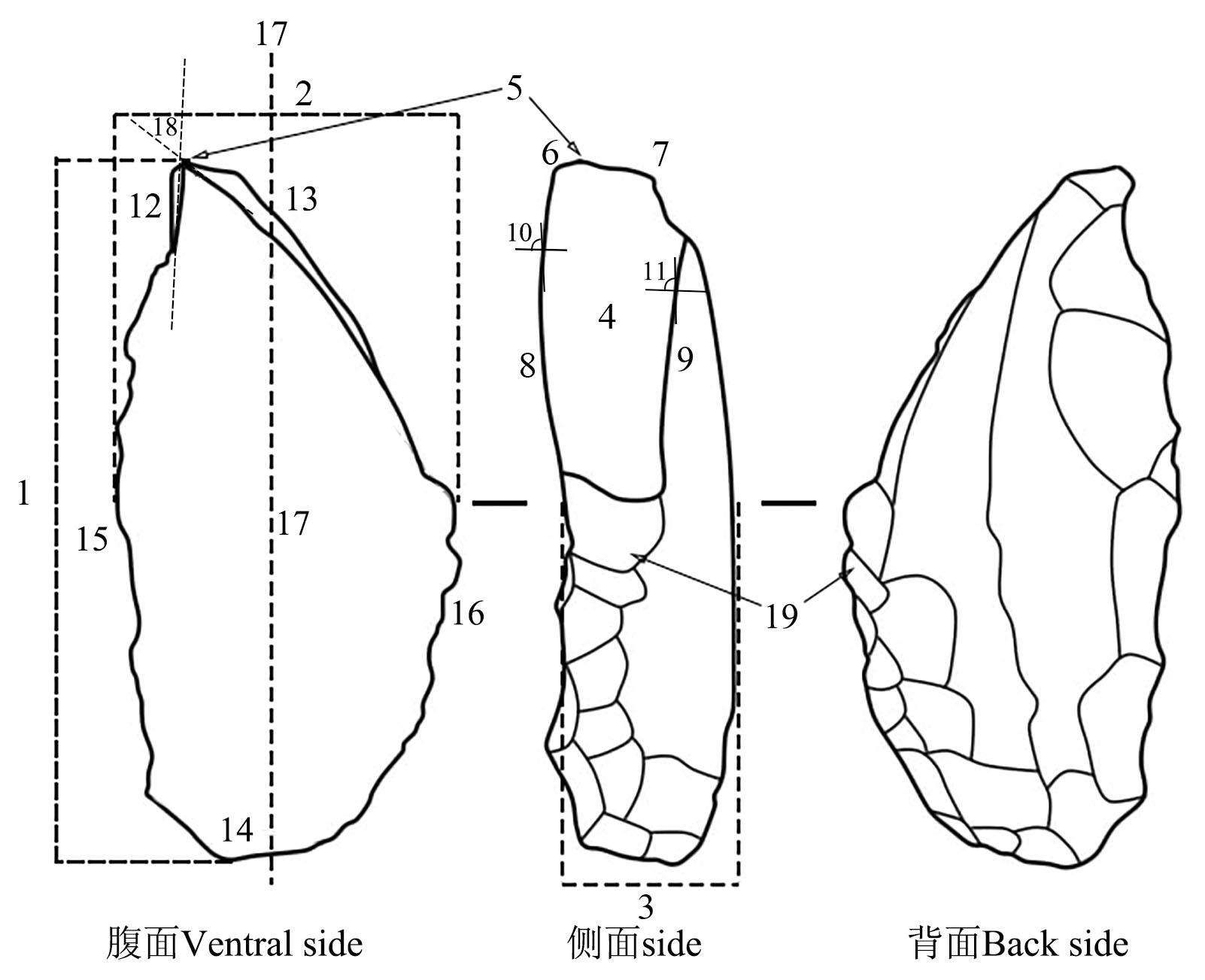
Key words: Xiachuan site; burins; function
REN Haiyun , WANG Yongxian , LI Xuedong , ZHAO Hailong . Simulation production and experimental use of the burins from the Xiachuan site in Shanxi[J]. Acta Anthropologica Sinica, 2025 , 44(04) : 583 -593 . DOI: 10.16359/j.1000-3193/AAS.2024.0105
| [1] | Tomá?ková S. What is a Burin? Typology, Technology, and Interregional Comparison[J]. Journal of Archaeological Method & Theory, 2005, 12: 79-115 |
| [2] | Demay L, Vasyliev PM, Belyaeva VI. Subsistence activities in the gravettian occupations of the Pushkari group: Pushkari I and Pushkari VIII (Pogon) (Ukraine)[J]. Quaternary International, 2021, 587-588: 291-309 |
| [3] | Donahue RE, Fischer A. A Late Glacial family at Trollesgave, Denmark[J]. Journal of Archaeological Science, 2015, 54: 313-324 |
| [4] | Kay M, Solecki R. Pilot Study of Burin Use-Wear from Shanidar Cave, Iraq[J]. Lithic technology, 2000, 25: 30-41 |
| [5] | Frahm E, Christian A. Tryon.Origins of Epipalaeolithic obsidian artifacts from Garrod's excavations at Zarzi cave in the Zagros foothills of Iraq[J]. Journal of Archaeological Science: Reports, 2018, 21: 472-485 |
| [6] | 王益人, 王建. 下川雕刻器研究[J]. 文物季刊, 1998, 3: 26-32+37-40+42-52 |
| [7] | 邱中郎, 李炎贤. 二十六年来的中国旧石器时代考古,古人类论文集[C]. 北京: 科学出版社, 1978 |
| [8] | 卫奇. 东谷坨旧石器初步观察[J]. 人类学学报, 1985, 4: 289-300+401-402 |
| [9] | 冯兴无, 侯亚梅. 泥河湾盆地霍家地发现的旧石器[J]. 人类学学报, 1998, 4: 66-72 |
| [10] | 黄慰文, 侯亚梅, 斯信强. 盘县大洞:贵州旧石器初期遗址综合研究[M]. 北京: 科学出版社, 2010 |
| [11] | 李罡. 泥河湾盆地旧石器时代晚期二道梁遗址初步研究[D].硕士研究生论文, 河北师范大学, 2009 |
| [12] | 宋艳花, 石金鸣. 山西吉县柿子滩遗址S29地点发掘简报[J]. 考古, 2017, 2: 35-51+2 |
| [13] | 万晨晨, 陈全家, 方启, 等. 吉林和龙大洞遗址的调查与研究[J]. 考古学报, 2017, 1: 1-30 |
| [14] | 王幼平, 夏正楷, 汪松枝. 李家沟遗址与旧石器时代过渡:嵩山东麓农业起源研究[M]. 北京: 科学出版社, 2018 |
| [15] | 王幼平. 雕刻器实验研究[J]. 考古学研究, 1992, 65-90 |
| [16] | 林圣龙. 楔劈技术、沟裂技术和雕刻器[J]. 人类学学报, 1993, 2: 182-193 |
| [17] | 杨霞, 陈虹, 王益人. 角页岩雕刻器的微痕实验研究[J]. 人类学学报, 2018, 37(1): 41-52 |
| [18] | 赵海龙, 徐廷, 马东东. 吉林和龙大洞遗址黑曜岩雕刻器的制作技术与功能[J]. 人类学学报, 2016, 35(4): 537-548 |
| [19] | 徐廷, 陈虹, 李尧. 吉林和龙大洞遗址2010年出土雕刻器的初步研究[J]. 人类学学报, 2023, 42(6): 751-763 |
| [20] | 中国社会科学院考古研究所、 山西考古研究所(编著). 下川:旧石器时代晚期遗址发掘报告[M]. 北京: 科学出版社, 2016 |
| [21] | 王建, 王向前, 陈哲英. 下川文化:山西下川遗址调查报告[J]. 考古学报, 1978, 3: 259-288+388-395 |
| [22] | 杜水生, 王晶, 王益人, 等. 山西沁水下川遗址小白桦圪梁地点2015年发掘报告[J]. 考古学报, 2019, 3: 383-408 |
| [23] | 申艳茹, 王益人, 杜水生. 山西下川遗址流水腰地点的细石叶工业[J]. 第四纪研究, 2020, 40(1): 264-274 |
| [24] | 刘亚林, 王春雪, 潘思捷, 等. 关于我国北方地区史前时期装饰品制作模拟实验的几点认识:以鸵鸟蛋皮串珠为例察[J]. 草原文物, 2012, 2: 95-98 |
/
| 〈 |
|
〉 |