


Survival paleoenvironment of the Hualongdong Hominid reflected by non-volant micromammalian fossils
Received date: 2025-03-26
Revised date: 2025-06-03
Online published: 2025-10-13
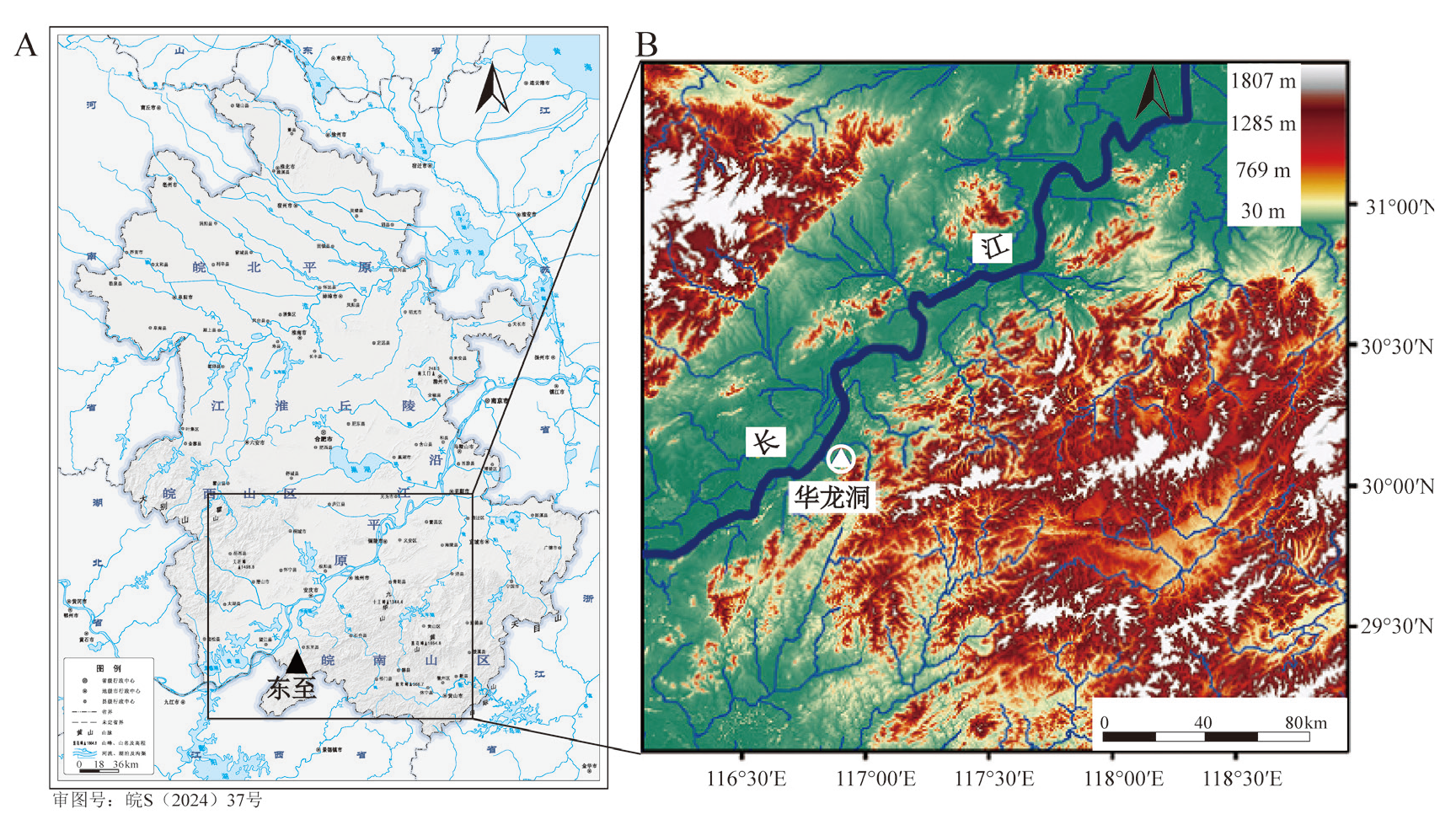
Hualongdong (HLD) site in Dongzhi County, Anhui Province is another important locality for early hominin skull fossils following notable sites such as Zhoukoudian in Beijing, Lantian in Shaanxi, Hexian in Anhui and Tangshan in Nanjing. The geological age of the site is approximately 300 ka. Since its discovery in 2004, multiple excavations have been conducted at HLD site, yielding abundant hominin and associated vertebrate fossils. This study focuses on the taxonomic identification, faunal analysis of non-volant small mammal fossils associated with hominin fossils from the 2015-2017 excavation, and paleoenvironmental reconstruction. A total of 5,645 non-volant micromammal fossil specimens have been discovered, primarily consisting of isolated teeth. These fossils represent 3 orders, 11 families, 38 genera, and 49 species (including two species indeterminata). In terms of both the number of species and the number of identified specimens, Rodentia is dominant at the ordinal level; Muridae is the most diverse at the familial level; and Apodemus is the most abundant at the generic level. The extinction proportion of HLD site is low (4.26%), which is obviously different from the Early Pleistocene and the early Middle Pleistocene non-volant small mammal assemblages with abundant Tertiary relict species, and the Late Pleistocene animal assemblages with almost complete disappearance of extinct species, but more similar to the late Middle Pleistocene small non-volant mammal assemblage in southern China. In terms of faunal composition, the non-volant micromammalian assemblage of the HLD site shows the higher similarity to that of Yumidong of Chongqing, Xinglogndong of Chongqing, Yanhuidong of Guizhou, and Baotansi of Chongqing. The comparison with the present small mammal assemblages shows that remarkable species alternations have taken place in this region, with the decline in species quantity of Soricinae, flying sciurids and Apodemus, the emergence of temperate species Myospalax and the disappearance of subtropical and tropical species since the late Middle Pleistocene to the present.
The 45 extant species at the HLD site collectively reflect a forest-dominated habitat; however, the top eight dominant species, as determined by minimum number of individuals (MNI), indicate a mixed forest-grassland environment. Based on the MNI, we analyzed the habitat preferences of these dominant species. Among them, Pteromys volans and Lasiopodomys brandtii are primarily distributed in temperate regions; Eothenomys melanogaster is usually inhabited subtropical and tropical shrublands; species of Apodemus and Niviventer andersoni are mainly found in temperate and subtropical areas; while Mus musculus is widely distributed from tropical to temperate zones. These species typically inhabit various forest types and meadow environments at forest edges. In light of the small mammal assemblage, we infer that the HLD site in Dongzhi, Anhui, during the late Middle Pleistocene, featured a mixed environment of forests and meadows. The mean annual temperature (MAT) and mean annual precipitation (MAP) reconstructed using the Random Forest algorithm for the late Middle Pleistocene HLD site were 12.57°C and 909.81 mm (based on the eight MNI dominant species) and 13.38°C and 1014.70 mm (based on all 45 extant species), respectively. These values are lower than the meteorological data from present-day Dongzhi (16.1°C and 1628.3 mm), indicating that the climate at that time was somewhat cooler and drier.
CHANG Meijing , LI Qiang , NI Xijun , ZHANG Xuan , TONG Haowen . Survival paleoenvironment of the Hualongdong Hominid reflected by non-volant micromammalian fossils[J]. Acta Anthropologica Sinica, 2025 , 44(05) : 799 -815 . DOI: 10.16359/j.1000-3193/AAS.2025.0067
| [1] | 黄万波, 方笃生, 叶永相. 安徽和县猿人化石及有关问题的初步研究[J]. 古脊椎动物与古人类, 1982, 20(3): 248-256 |
| [2] | 许春华, 张银运, 陈才第, 等. 安徽巢县发现的人类枕骨化石和哺乳动物化石[J]. 人类学学报, 1984, 3(3): 202-209 |
| [3] | 穆西南, 许汉奎, 穆道成, 等. 南京汤山古人类化石的发现及其意义[J]. 古生物学报, 1993, 32(4): 393-399 |
| [4] | 郑龙亭, 黄万波. 和县人遗址[M]. 北京: 中华书局, 2001, 1-126 |
| [5] | 吴汝康, 李星学, 吴新智, 等. 南京直立人[M]. 南京: 江苏科学出版社, 2002, 1-316 |
| [6] | Wu X, Pei S, Cai Y, et al. Archaic human remains from Hualongdong, China, and Middle Pleistocene human continuity and variation[J]. Proceedings of the National Academy of Sciences, 2019, 116(20): 9820-9824 |
| [7] | 刘武, 吴秀杰. 华龙洞古人类化石及其在人类演化中的意义[J]. 人类学学报, 2025, 44(5): 727-741 |
| [8] | 裴树文, 董哲, 耿帅杰, 等. 华龙洞遗址发现的石制品及人类行为[J]. 人类学学报, 2025, 44(5): 765-778 |
| [9] | 同号文, 江左其杲, 李强, 等. 安徽东至华龙洞哺乳动物化石新材料[J]. 人类学学报, 2025, 44(5): 779-798 |
| [10] | 江左其杲, 刘博轩, 刘驷统, 等. 华龙洞1号地点的食肉目哺乳动物化石及其时代和古生态意义[J]. 人类学学报, 2025, 44(5): 836-849 |
| [11] | 陈胜前, 罗虎. 安徽东至县华龙洞旧石器时代遗址发掘简报[J]. 考古, 2012, 4: 7-13 |
| [12] | 盛锦朝, 董哲, 金泽田. 华龙洞——古人类的家园 (1)[J]. 化石, 2017, 1: 28-36 |
| [13] | 董哲, 金泽田, 盛锦朝. 华龙洞——古人类的家园(3):发现人类头骨化石[J]. 化石, 2018, 2: 70-75 |
| [14] | 盛锦朝, 金泽田, 董哲. 华龙洞——古人类的家园 (2):重返华龙洞[J]. 化石, 2018, 1: 25-31 |
| [15] | 李潇丽, 董哲, 裴树文, 等. 安徽东至华龙洞洞穴发育与古人类生存环境[J]. 海洋地质与第四纪地质, 2017, 37(3): 169-179 |
| [16] | 裴树文, 蔡演军, 董哲, 等. 安徽东至华龙洞遗址洞穴演化与古人类活动[J]. 人类学学报, 2022, 41(4): 593-607 |
| [17] | 董哲, 战世佳. 安徽东至县华龙洞旧石器时代遗址出土石制品研究[J]. 东南文化, 2015, 6: 63-71 |
| [18] | 董哲, 裴树文, 盛锦朝, 等. 安徽东至华龙洞古人类遗址 2014-2016 年出土的石制品[J]. 第四纪研究, 2017, 37(4): 778-788 |
| [19] | 宫希成, 郑龙亭, 邢松, 等. 安徽东至华龙洞出土的人类化石[J]. 人类学学报, 2014, 33(4): 427-436 |
| [20] | 张邦启. 安徽东至华龙洞遗址出土直立人头骨化石探析[J]. 化石, 2019, 1: 28-31 |
| [21] | 同号文, 吴秀杰, 董哲, 等. 安徽东至华龙洞古人类遗址哺乳动物化石的初步研究[J]. 人类学学报, 2018, 37(2): 284-305 |
| [22] | Jiangzuo QG, Werdelin L, Zhang K, et al. Prionailurus kurteni (Felidae, Carnivora), a new species of small felid from the late Middle Pleistocene fossil hominin locality of Hualongdong, southern China[J]. Annales Zoologici Fennici, 2024, 61(1): 335-342 |
| [23] | Ni X, Qiu Z. The micromammalian fauna from the Leilao, Yuanmou hominoid lo+cality: Implications for biochronology and paleoecology[J]. Journal of Human Evolution, 2002, 42(5): 535-546 |
| [24] | 金昌柱, 秦大公, 潘文石, 等. 广西崇左三合巨猿大洞早更新世小哺乳动物群[J]. 第四纪研究, 2008, 28(6): 1129-1137 |
| [25] | Blanco-Lapaz A, Mata-González M, Starkovich BM, et al. Late Pleistocene environments in the southern Zagros of Iran and their implications for human evolution[J]. Archaeological and Anthropological Sciences, 2022, 14(8): 161 |
| [26] | 李强, 倪喜军. 小化石筛洗法[J]. Bio-101, 2021: e1010613 |
| [27] | 李传夔, 邱铸鼎, 等. 啮型类II:啮齿目I. 中国古脊椎动物志·第3卷(总第十八册上·第5册上)[M]. 北京: 科学出版社, 2019, 1-545 |
| [28] | 邱铸鼎, 李传夔, 郑绍华, 等. 啮型类II:啮齿目II. 中国古脊椎动物志·第3卷(总第十八册上·第5册下)[M]. 北京: 科学出版社, 2020, 1-535 |
| [29] | 魏辅文, 杨奇森, 吴毅, 等. 中国兽类分类与分布[M]. 北京: 科学出版社, 2022, 1-622 |
| [30] | 张荣祖. 中国动物地理[M]. 北京: 科学出版社, 2011, 1-330 |
| [31] | 蒋志刚, 马勇, 吴毅, 等. 中国哺乳动物多样性及地理分布[M]. 北京: 科学出版社, 2015, 1-400 |
| [32] | R Core Team. R: A language and environment for statistical computing[CP/OL]. URL: https://www.R-project.org/, 2023-10-31 |
| [33] | Breiman L. Random forests[J]. Machine learning, 2001, 45: 5-32 |
| [34] | Wickham H, Fran?ois R, Henry L, et al. dplyr: A grammar of data manipulation[CP]. URL: https://CRAN.R-project.org/package=dplyr, 2023-11-17 |
| [35] | Wickham H, Vaughan D, Girlich M. tidyr: tidy messy data[CP]. URL: https://CRAN.R-project.org/package=tidyr, 2023-01-24 |
| [36] | Kuhn M. Building predictive models in R using the caret package[J]. Journal of Statistical Software, 2008, 28: 1-26 |
| [37] | Liaw A, Wiener M. Classification and regression by randomForest[J]. R News, 2002, 2(3): 18-22. |
| [38] | Ridgeway G. gbm: Generalized Boosted Regression Models[CP]. URL: https://www.R-project.org/, 2024-06-28 |
| [39] | Wickham H. ggplot2: Elegant Graphics for Data Analysis[M]. Springer-Verlag New York, 2016 |
| [40] | 郑绍华, 张联敏. 翼手目及啮齿类[A]. 见:黄万波,方其仁(主编). 巫山猿人遗址[M]. 北京: 海洋出版社, 1991, 46-86 |
| [41] | 黄万波, 徐自强. 14万年前“奉节人”——天坑地缝地区发现古人类遗址[M]. 北京: 中华书局, 2002, 1-83 |
| [42] | 郑绍华. 建始人遗址[M]. 北京: 科学出版社, 2004, 1-412 |
| [43] | 张兆群. 中国更新世兔属化石的厘定[J]. 古脊椎动物学报, 2010, 48(3): 262-274 |
| [44] | 郑绍华. 川黔地区第四纪啮齿类[M]. 北京: 科学出版社, 1993, 1-270 |
| [45] | 陈少坤, 裴健, 易军, 等. 重庆巫山玉米洞遗址出土哺乳动物化石初步观察及时代分析[J]. 第四纪研究, 2017, 37(4): 845-852 |
| [46] | 陈少坤, 庞丽波, 吴雁, 等. 重庆巫山玉米洞遗址晚更新世鼠科动物化石[J]. 第四纪研究, 2023, 43(3): 803-818 |
| [47] | Shao Q, Philippe A, He C, et al. Applying a Bayesian approach for refining the chronostratigraphy of the Yumidong site in the Three Gorges region, central China[J]. Quaternary Geochronology, 2022, 70: 101304 |
| [48] | 沈冠军, 金林红. 桐梓人遗址岩灰洞的铀系年龄[J]. 人类学学报, 1991, 10(1): 65-72 |
| [49] | 王岐山. 安徽兽类志[M]. 合肥: 安徽科学技术出版社, 1990, 1-315 |
| [50] | 裴枭鑫, 曲潍滢, 张敏, 等. 中国巢鼠属分类与分布的讨论[J]. 兽类学报, 2021, 41(6): 631-640 |
| [51] | 裴枭鑫, 曲潍滢, 任学洋, 等. 皖南地区非飞行小型兽类多样性调查及编目[J]. 生物多样性, 2022, 30(4): 21301 |
| [52] | Chen Z, Hu J, He K, et al. Molecular and morphological evidence support a new species of Asiatic short-tailed shrew (Eulipotyphla: Soricidae)[J]. Journal of Mammalogy, 2023, 104(6): 1455-1467 |
| [53] | Shi Z, Yao H, He K, et al. A new species of forest hedgehog (Mesechinus, Erinaceidae, Eulipotyphla, Mammalia) from eastern China[J]. ZooKeys, 2023, 1185: 143 |
| [54] | Xu Y, Hu J, Shi Z, et al. Integrative systematics and evolutionary history of Berylmys bowersi (Mammalia, Rodentia, Muridae)[J]. Ecology and Evolution, 2023, 13(7): e10234 |
| [55] | Chassovnikarova T, Dimitrov H, Markov G, et al. Distribution and habitat association of field mouse (Apodemus agrarius, Pallas, 1771) in national park “Strandja”[A]. In: Gruev B, Nikolova M, Donev A (eds.). Proceedings of the Balkan Scientific Conference of Biology[C]. Plovdiv, 2005, 428-436 |
| [56] | Liu X, Wei F, Li M, et al. Molecular phylogeny and taxonomy of wood mice (genus Apodemus Kaup, 1829) based on complete mtDNA cytochrome b sequences, with emphasis on Chinese species[J]. Molecular phylogenetics and evolution, 2004, 33(1): 1-15 |
| [57] | Wilson DE, Lacher E, Mittermeier RA. Handbook of the mammals of the world: Rodents II[M]. Barcelona: Lynx Editions, 2017, 7 |
| [58] | Lv X, Cheng J, Meng Y, et al. Disjunct distribution and distinct intraspecific diversification of Eothenomys melanogaster in South China[J]. BMC Evolutionary Biology, 2018, 18: 1-14 |
| [59] | Alexeeva N, Erbajeva M, Khenzykhenova F. Lasiopodomys brandti in Pleistocene of Transbaiklia and adjacent territories: distribution area, evolutionary development in context of global and regional events[J]. Quaternary International, 2015, 355: 11-17 |
| [60] | Baca M, Popovi? D, Lemanik A, et al. Highly divergent lineage of narrow-headed vole from the Late Pleistocene Europe[J]. Scientific reports, 2019, 9(1): 17799 |
| [61] | Li K, Kohn MH, Zhang S, et al. The colonization and divergence patterns of Brandt's vole (Lasiopodomys brandtii) populations reveal evidence of genetic surfing[J]. BMC Evolutionary Biology, 2017, 17: 1-17 |
| [62] | Hanski IK. Home ranges and habitat use in the declining flying squirrel Pteromys volans in managed forests[J]. Wildlife Biology, 1998, 4(1): 33-46 |
| [63] | Selonen V, Hanski IK. Young flying squirrels (Pteromys volans) dispersing in fragmented forests[J]. Behavioral Ecology, 2004, 15(4): 564-571 |
| [64] | Suzuki H, Aplin KP, Pialek J. Phylogeny and biogeography of the genus Mus in Eurasia[A]. In: Macholan M, Baird SJE, Munclinger P, et al (eds.). Evolution of the house mouse [M]. Cambridge: Cambridge University Press, 2012, 35-64 |
| [65] | Suzuki H. Evolutionary history of the subgenus Mus in Eurasia with special emphasis on the House Mouse Mus musculus[J]. Records Australian Museum, 2020, 72(5): 317-323 |
/
| 〈 |
|
〉 |