


Palm print marks of mat cake from the Yaotianling site of Song Dynasty in Yongfu, Guangxi
Received date: 2025-01-07
Accepted date: 2025-08-12
Online published: 2026-02-13
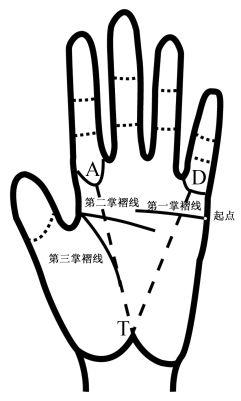
The Yantianling site in Yongfu, Guangxi, is one of the larger Song Dynasty celadon kiln sites discovered in Guangxi. It is located between Fangjiacun Yantianling in Nanxiong Village, Yongfu Town, Yongfu County, Guilin City, Guangxi Zhuang Autonomous Region and Datun in Longxi Village, Guangfu Township. It is a kiln site complex composed of several kilns of different sizes. A batch of very special supporting tools - pad cakes with clear palm print marks were unearthed at this site. These pad cakes are the only specimens with human skin texture marks found among the Song Dynasty kiln sites discovered in Guangxi so far. The palm print marks on the pad cakes were formed during their production process. After the firing process was completed, due to the hardening of the clay and its stable chemical state, they were less affected by the burial environment, allowing these palm print marks to be preserved for a long time. This paper takes the pad cakes with palm prints unearthed at the Yantianling site as the research object, and uses the relevant research results of modern dermatoglyphics and trace evidence examination in criminal investigation to identify the individuals of the potter group, and extract physical information such as handedness, age, gender, height, and diseases of the potters. Then, from the perspective of dermatoglyphics, it discusses the number of individuals, gender ratio, and age composition of the potter group at the site. Through this research process, it also explores the research methods for palm print marks on pottery, and hopes to establish a relatively complete research system and observation standards for palm prints on pottery during this process, providing new ideas and methods for the study of artifacts. The research shows that at least 40 potters participated in the production of pad cakes at the Yantianling site, and it is estimated that there were many minors among them, with most of their heights below 160 cm. Left palm print marks were more common than right ones, and one person was suspected of having a genetic disease. The skin texture marks left on pottery and kiln supporting tools provide the possibility to explore the physical characteristics and pathologies of related populations. This study provides a new perspective for exploring the physical characteristics of the Song Dynasty potter group and also offers a new idea for physical anthropology research, especially in regions where bones are difficult to preserve, such artifacts with soft tissue imprints may provide a new direction for studying the physical data of ancient humans in the region.
Key words: Guangxi; Song Dynasty; Yaotianling site; palm prints; physical characteristics
CAO Wei , YUAN Junjie , HUANG Yihua , HE Anyi . Palm print marks of mat cake from the Yaotianling site of Song Dynasty in Yongfu, Guangxi[J]. Acta Anthropologica Sinica, 2026 , 45(01) : 101 -115 . DOI: 10.16359/j.1000-3193/AAS.2025.0104
| [1] | 张海国. 人类肤纹学[M]. 上海: 上海交通大学出版社, 2006, 119-122 |
| [2] | Primas M. Fingerabdrücke auf Keramik der Eisenzeit im Tessin[J]. Arch?ologisches Korrespondenzblatt, 1975, 5(2): 129-131 |
| [3] | Fowler KD, Walker E, Greenfield HJ, et al. The identity of potters in early states: determining the age and sex of fingerprints on Early Bronze Age pottery from Tell e?-?afi/Gath, Israel[J]. Journal of Archaeological Method and Theory, 2019, 26(2): 1470-1512 |
| [4] | Kimberlee SM. Unintentional Artefacts: fingerprinting material culture[J]. Joumnal of Ancient Fingerprint, 2007, 3(1): 17-19 |
| [5] | Mikael J. Documentation of fingerprints on ancient artefacts[J]. Journal of ancient fingerprint, 2007, 3(1): 20-26 |
| [6] | 秦戈. 指纹分析与古代陶器研究[N] .中国文物报,2010-12-10(007) |
| [7] | 彭小军. 古代指纹与陶工年龄分析:以二里头遗址出土陶器资料为例[J]. 南方文物, 2011, 23(1): 54-62 |
| [8] | 李英宏, 郎俊彦, 白彬. 四川广元、绵阳出土汉代画像砖掌印纹的痕检学分析[J]. 考古与文物, 2007, 161(3): 64-75 |
| [9] | 韦璇. 两广地区汉晋时期出土手印纹砖的体质人类学分析[D]. 硕士研究生毕业论文, 桂林: 广西师范大学, 2017 |
| [10] | 刘琳琳. 从陶器上的指纹痕迹看西头遗址的古代陶工[D]. 硕士研究生毕业论文, 西安: 西北大学, 2022 |
| [11] | 广西文物保护与考古研究所. 静江瓷音:广西永福窑田岭窑址出土腰鼓[M]. 南宁: 广西科学技术出版社, 2022, 6-34 |
| [12] | 广西壮族自治区文物工作队.广西永福窑田岭宋代址发掘简报[A].见:文物编辑委员会(编).中国古代窑址调查发掘报告集[C]. 北京: 文物出版社, 1984, 201-212 |
| [13] | 汪常明, 何安益, 陈彪, 等. 广西宋代永福窑瓷器科技分析[J]. 广西民族大学学报(自然科学版), 2019, 25(2): 23-41 |
| [14] | 刘少聪. 新指纹学[M]. 合肥: 安徽人民出版社, 1984, 365-414 |
| [15] | 陆齐红. 犯罪现场手印的分析[J]. 铁道警官高等专科学校学报, 2003, 6(3): 88-90 |
| [16] | 陈基平. 皮肤纹理与遗传病[J]. 生物学通报, 2005, 54(8): 16-17 |
| [17] | 赵阳, 傅晓海. 掌纹ATD角与21-三体综合症相关性研究[J]. 科技视界, 2016, 6(24): 59+121 |
| [18] | 曹巍. 广西永福宋代窑田岭遗址陶工肤纹研究:以垫饼掌纹为视角[D]. 硕士研究生毕业论文, 桂林: 广西师范大学, 2024 |
| [19] | 邵华信. 汉族人手表皮脊线宽度的测量[J]. 黑龙江医药科学, 1984, 12(3): 8-13, 81-82 |
| [20] | 马端临. 文献通考(卷十一)[M]. 北京: 中华书局, 1986, 113 |
| [21] | 杨仲良:续资治通鉴长编纪事本末(卷71)[M]. 广州: 广雅书局, 1893, 1 |
| [22] | 谢深甫:庆元条法事类(卷48)[M]. 哈尔滨: 黑龙江人民出版社, 2002, 658 |
| [23] | 戴建国. 宋代籍帐制度探析:以户口统计为中心[J]. 历史研究, 2007, 54(3): 33-52+189-190 |
| [24] | 中国社会科学院历史研究所宋辽金元研究室. 名公书判清明集[M]. 北京: 中华书局, 1987, 217 |
| [25] | 薛梅卿(点校). 宋刑统[M]. 北京: 法律出版社, 1998, 100 |
| [26] | 周有光.桂北古代窑址调查与研究[A].见:广西壮族自治区博物馆(编).广西博物馆文集[C]. 南宁: 广西人民出版社, 2014, 201-211 |
| [27] | 韩康信, 潘其风. 广东佛山河宕新石器时代晚期墓葬人骨[J]. 人类学学报, 1982, 1(1): 42-52+107-108 |
| [28] | 刘文, 罗安鹄, 朱芳武, 等. 柳州大龙潭鲤鱼嘴新石器时代遗址的人骨[J]. 广西民族研究, 1994, 10(3): 22-37 |
| [29] | 张子模, 漆招进, 朱芳武, 等. 桂林甑皮岩新石器时代遗址的人骨[J]. 广西民族研究, 1994, 10(3): 1-21+37 |
| [30] | 彭书琳, 张文光, 魏博源. 广西贵县罗泊湾西汉墓殉葬人骨[J]. 考古, 1986, 32(6): 563-570+584 |
| [31] | 陈博宇. 广州市执信中学墓地明清时期人骨研究[J]. 文博学刊, 2021, 4(4): 4-20 |
| [32] | 中国解剖学会体质调查委员会(编). 中国人体质调查:续集[M]. 上海: 上海科学技术出版社, 1990, 117 |
| [33] | 白焜. 宋·蒋祈《陶记》校注[J]. 景德镇陶瓷, 1981, 9(S1): 36-52 |
| [34] | 漆侠. 宋代经济史[M]. 北京: 中华书局, 2009, 689 |
| [35] | 郝柯羽. 中原地区北宋制瓷手工业遗存考古学研究[D]. 硕士研究生毕业论文, 郑州: 郑州大学, 2023 |
| [36] | 王斌, 陈英耀, 石琦, 等. 我国唐氏综合征的疾病经济负担研究[J]. 中国卫生经济, 2006, 25(3): 24-26 |
| [37] | 张文. 宋朝社会保障的成就与历史地位[J]. 中国人民大学学报, 2014, 28(1): 21-27 |
/
| 〈 |
|
〉 |