


Variation pattern of normal human walking gait
Received date: 2024-02-06
Accepted date: 2024-07-19
Online published: 2026-02-13
In the past decade, research on gait analysis in healthy individuals has advanced rapidly, emerging as a focal point in the fields of sports medicine and forensic science. This research area is of great significance for disease diagnosis and treatment, and it also plays a vital role in suspect identification and pursuit during criminal investigations.
Although previous gait research has been extensive, it has often been fragmented and lacked strong interconnections, making it challenging to establish a unified theoretical framework. Therefore, there is an urgent need to summarize and integrate these research findings to form a more coherent body of knowledge.
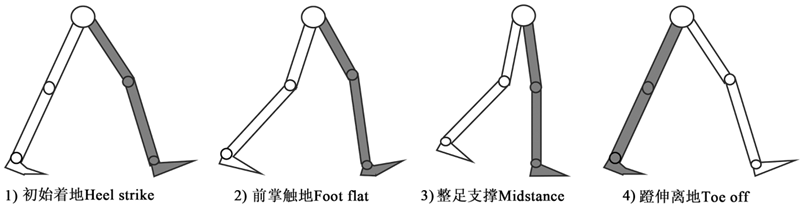
This paper offers a comprehensive review of the current status of gait analysis research both at home and abroad. It introduces the commonly used gait parameters in the field, such as stride characteristics, cadence, gait speed, gait cycle, and gait phases. These parameters are crucial for understanding the mechanics of human movement and serve as fundamental indicators in gait studies.
Moreover, the paper clarifies the basic gait patterns during locomotion in healthy individuals and summarizes the factors influencing gait parameter variations from multiple perspectives. Specifically, this study classifies the factors affecting gait into five main categories: age, gender, health status, behavioral activities, and external conditions. Furthermore, health status is divided into three specific factors: obesity level, fatigue level, and frailty. Behavioral activities are categorized as walking posture, walking duration, and walking speed, while external conditions include factors like load-bearing and treadmill exercise. These aspects are systematically analyzed to summarize their respective impacts on gait parameter variations in healthy individuals.
From the above - mentioned five domains (age, gender, health status, behavioral activities, and external conditions), this study thoroughly explores their individual and combined influences on gait characteristics, providing a detailed understanding of how these variables interact to shape gait dynamics. By isolating and analyzing the effects of these factors, this research highlights patterns and variations that can serve as benchmarks for healthy gait and potentially assist in identifying abnormal gait characteristics.
In addition, the paper proposes directions for experimental improvements, stressing the need for more rigorous methodologies. Finally, this study identifies the limitations in existing research, such as the fragmented nature of findings and the lack of standardized frameworks. Based on these observations, the paper discusses the future development of gait analysis research, envisioning progress through the integration of emerging technologies and interdisciplinary approaches.
Key words: normal people; walking gait; pattern
WANG Kun , GUO Wei , WANG Xiaobin , HAN Wenqiang . Variation pattern of normal human walking gait[J]. Acta Anthropologica Sinica, 2026 , 45(01) : 154 -164 . DOI: 10.16359/j.1000-3193/AAS.2025.0009
| [1] | Feldman R, Schreiber S, Pick CG, et al. Gait, balance, mobility and muscle strength in people with anxiety compared to healthy individuals[J]. Human movement science, 2019, 67: 102513 |
| [2] | Iersel MB, Rikkert MGMO, Borm GF. A method to standardize gait and balance variables for gait velocity[J]. Gait & posture, 2007, 26(2): 226-230 |
| [3] | Alexander RMN. Walking and running: Legs and leg movements are subtly adapted to minimize the energy costs of locomotion[J]. American Scientist, 1984, 72(4): 348-354 |
| [4] | Inman VT, Ralston HJ, TODD E. Human Walking[M]. Baltimore: Williams and Wilkins, 1981 |
| [5] | Winter DA. Biomechanics and Motor Control of Human Movement (4th edition)[M]. Hoboken: Wiley, 2009 |
| [6] | Noble JW, Prentice SD. Adaptation to unilateral change in lower limb mechanical properties during human walking[J]. Experimental brain research, 2006, 169: 482-495 |
| [7] | De Cock A, Vanrenterghem J, Willems T, et al. The trajectory of the centre of pressure during barefoot running as a potential measure for foot function[J]. Gait & posture, 2008, 27(4): 669-675 |
| [8] | Rudisch J, J?llenbeck T, Vogt L, et al. Agreement and consistency of five different clinical gait analysis systems in the assessment of spatiotemporal gait parameters[J]. Gait & posture, 2021, 85: 55-64 |
| [9] | Herssens N, Verbecque E, Hallemans A, et al. Do spatiotemporal parameters and gait variability differ across the lifespan of healthy adults? A systematic review[J]. Gait & posture, 2018, 64: 181-190 |
| [10] | 吴立娟. 我国4-11岁儿童足型参数测量和动态足底压力分析[D]. 博士学位毕业论文, 北京: 北京体育大学, 2011 |
| [11] | Kobsar D, Olson C, Paranjape R, et al. Evaluation of age-related differences in the stride-to-stride fluctuations, regularity and symmetry of gait using a waist-mounted tri-axial accelerometer[J]. Gait & posture, 2014, 39(1): 553-557 |
| [12] | 刘义坤.一定速度下不同年龄女性穿跑鞋行走的下肢生物力学研究[A].见:中国解剖学会.2021年年会论文文摘汇编[C]. 《解剖学杂志》编辑部, 2021, 68-69 |
| [13] | 汤澄清, 和焕胤, 佟苏洋, 等. 基于生物力学的踏痕形成与特点研究[J]. 中国刑警学院学报, 2018, 4: 106-108 |
| [14] | Lindle RS, Metter EJ, Lynch NA, et al. Age and gender comparisons of muscle strength in 654 women and men aged 20-93 yr[J]. Journal of applied physiology, 1997, 83(5): 1581-1587 |
| [15] | 隋心怡. 7-15岁青少年下肢形态及足底压力分布特征研究[D]. 硕士学位毕业论文, 广州: 广州体育学院, 2018 |
| [16] | Wearing SC, Hennig EM, Byrne NM, et al. The biomechanics of restricted movement in adult obesity[J]. Obesity reviews, 2006, 7(1): 13-24 |
| [17] | 王琪. 4-6岁肥胖儿童跑步步态特征的运动学研究[D]. 硕士学位毕业论文, 太原: 山西师范大学, 2020 |
| [18] | 曾玉冰. 男性肥胖大学生步行与慢跑步态特征分析[D]. 硕士学位毕业论文, 大连: 大连理工大学, 2021 |
| [19] | 宗鹭冶. 步行疲劳对老年人步态影响的生物力学研究[D]. 硕士学位毕业论文, 长春: 吉林大学, 2022 |
| [20] | Granacher U, Wolf I, Wehrle A, et al. Effects of muscle fatigue on gait characteristics under single and dual-task conditions in young and older adults[J]. Journal of neuroengineering and rehabilitation, 2010, 7(1): 1-12 |
| [21] | Kowalski KL, Boolani A, Christie AD. Sex differences in the impact of state and trait fatigue on gait variability[J]. Human Movement Science, 2021, 80: 102884. |
| [22] | 杨子琪, 方子龙.不同衰弱状态的老年人三种不同行走任务的步态特征研究[A].见:中国体育科学学会运动医学分会,等(编).2022年第七届广州运动与健康国际学术研讨会论文集[C]. 北京: 中国体育科学学会, 2022, 243-244 |
| [23] | Rockwood K, Song X, MacKnight C, et al. A global clinical measure of fitness and frailty in elderly people[J]. Cmaj, 2005, 173(5): 489-495. |
| [24] | 吴梦余, 于卫华, 戈倩, 等. 社区老年人不同衰弱状态下双重任务行走步态特征的研究[J]. 护理学杂志, 2019, 34(1): 16-19 |
| [25] | 陈琪. 北欧式行走与健步走下肢步态特征比较研究[D]. 硕士学位毕业论文, 南京: 南京师范大学, 2019 |
| [26] | 史洪飞, 魏晓辉, 蒋敬, 等. 基于6种不同行走状态下步幅特征对3种体态特征推定的研究[J]. 中国人民公安大学学报(自然科学版), 2021, 27(4): 5-13 |
| [27] | 王乃军, 李树屏.健康中年人不同速度长程行走时步态及生理功能特征研究[A].见:中国力学学会,中国生物医学工程学会,生物力学专业委员会(编).第十四届全国运动生物力学学术交流大会论文集[C]. 上海: 《医用生物力学》编辑部, 2010, 115-119 |
| [28] | Thomas KS, Russell DM, Van Lunen BL, et al. The impact of speed and time on gait dynamics[J]. Human movement science, 2017, 54: 320-330. |
| [29] | Taniguchi Y, Kitamura A, Seino S, et al. Gait performance trajectories and incident disabling dementia among community-dwelling older Japanese[J]. Journal of the American Medical Directors Association, 2017, 18(2): 192. e13-192. e20 |
| [30] | Silder A, Heiderscheit B, Thelen DG. Active and passive contributions to joint kinetics during walking in older adults[J]. Journal of biomechanics, 2008, 41(7): 1520-1527 |
| [31] | 刘敏, 李玉茹, 王健, 等. 不同步速条件下超重肥胖老年人步态运动学特征[J]. 中国老年学杂志, 2022, 42(13): 3216-3220 |
| [32] | Hebenstreit F, Leibold A, Krinner S, et al. Effect of walking speed on gait sub phase durations[J]. Human movement science, 2015, 43: 118-124 |
| [33] | 曹钰琳, 董宇. 行走速度对步幅特征影响研究[J]. 法制博览, 2018, 1: 90-91 |
| [34] | 高毅. 不同步速对步幅影响的比较研究[J]. 河北公安警察职业学院学报, 2012, 12(2): 5-8 |
| [35] | 白啸天, 霍洪峰. 行走支撑期足弓变化规律与足功能转换机制[J]. 医用生物力学, 2022, 37(6): 1165-1170 |
| [36] | 明安华. 不同跑速对男大学生下肢关节负荷特征研究[D]. 硕士学位毕业论文, 北京: 北京体育大学, 2020 |
| [37] | 高雅. 不同性别大众跑者跑步下肢生物力学特征的研究[D]. 硕士学位毕业论文, 南京: 南京体育学院, 2020 |
| [38] | Kim S, Lockhart TE. The effects of 10% front load carriage on the likelihood of slips and falls[J]. Industrial health, 2008, 46(1): 32-39 |
| [39] | Simpkins C, Ahn J, Yang F. Effects of anterior load carriage on gait parameters: A systematic review with meta-analysis[J]. Applied Ergonomics, 2022, 98: 103587 |
| [40] | 穆成成. 穿袜足底压力特征与四种典型负重方式关联性研究[D]. 硕士学位毕业论文, 北京: 中国人民公安大学, 2021 |
| [41] | 王建设, 张泽昊, 余贝贝, 等.不同负重和背包形式对足底压力特征影响研究[A].见:中国体育科学学会(编).第十二届全国体育科学大会论文摘要汇编[C]. 北京: 中国体育科学学会, 2022, 152-153 |
| [42] | Simpkins C, Ahn J, Yang F. Effects of anteriorly-loaded treadmill walking on dynamic gait stability in young adults[J]. Gait & Posture, 2022, 94: 79-84 |
| [43] | 武明, 季林红, 金德闻, 等. 人体背部负重对于步态特征的影响及相应补偿策略的实验研究[J]. 生物医学工程学杂志, 2003, (4): 574-579 |
| [44] | 陈建军. 负重状态下中学生步态分析研究[J]. 体育研究与教育, 2019, 34(1): 94-96 |
| [45] | Hollman JH, Watkins MK, Imhoff AC, et al. A comparison of variability in spatiotemporal gait parameters between treadmill and overground walking conditions[J]. Gait & posture, 2016, 43: 204-209 |
| [46] | Chiu SL, Chang CC, Chou LS. Inter-joint coordination of overground versus treadmill walking in young adults[J]. Gait & posture, 2015, 41(1): 316-318 |
| [47] | Strutzenberger G, Leutgeb L, Clau?en L, et al. Gait on slopes: Differences in temporo-spatial, kinematic and kinetic gait parameters between walking on a ramp and on a treadmill[J]. Gait & Posture, 2022, 91: 73-78 |
| [48] | Dingwell JB, Cusumano JP, Cavanagh PR, et al. Local dynamic stability versus kinematic variability of continuous overground and treadmill walking[J]. J. Biomech. Eng, 2001, 123(1): 27-32 |
| [49] | Donlin MC, Ray NT, Higginson JS. User-driven treadmill walking promotes healthy step width after stroke[J]. Gait & posture, 2021, 86: 256-259 |
| [50] | Legrand T, Younesian H, Gélinas-Trudel C, et al. Influence of the overground walking speed control modality: Modification to the walk ratio and spatio-temporal parameters of gait[J]. Gait & Posture, 2021, 83: 256-261 |
/
| 〈 |
|
〉 |