


Implications of the chronological age recorded in the epitaphs for the age-at-death estimation methods of ancient residents
Received date: 2025-01-02
Revised date: 2025-07-17
Online published: 2026-10-16
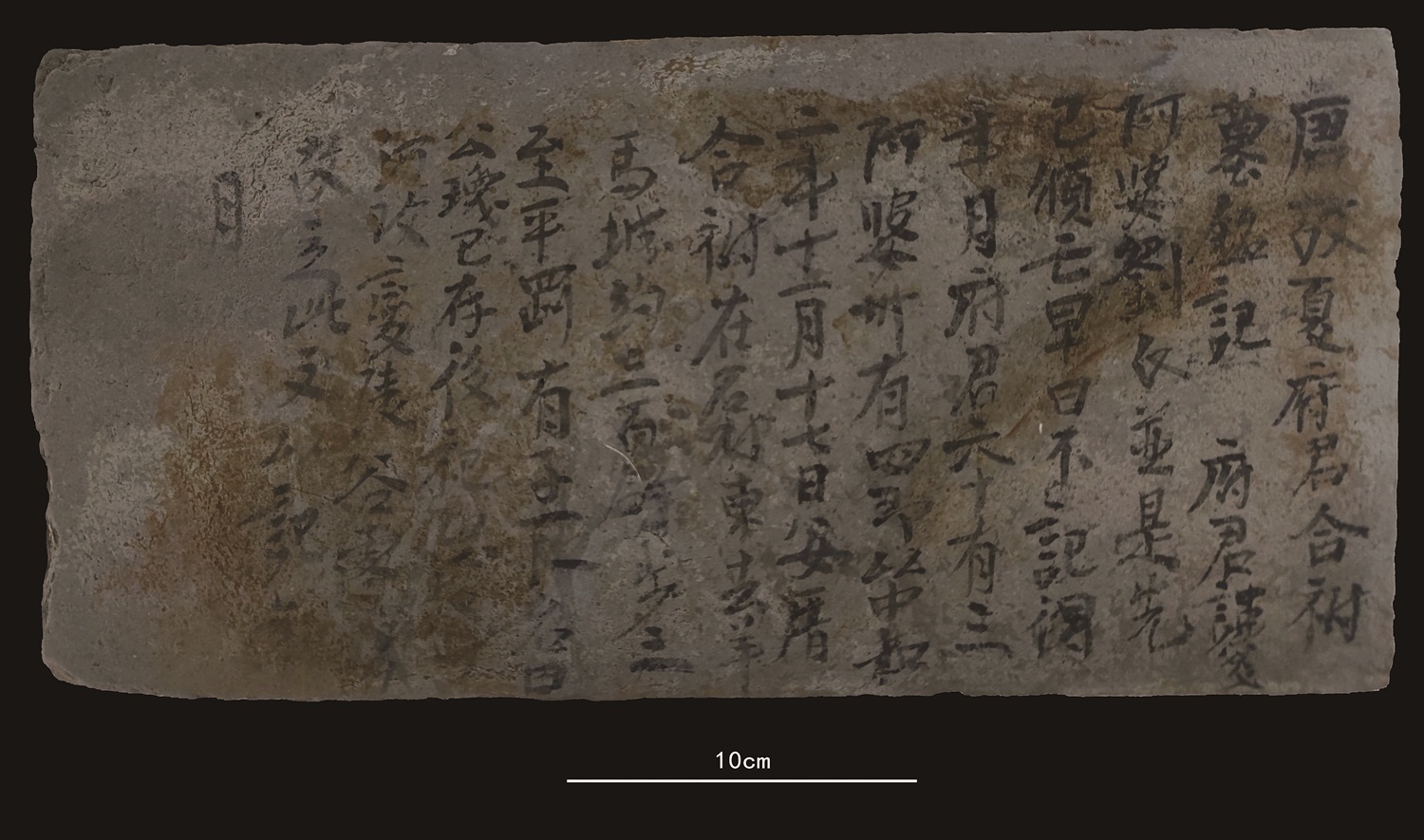
The estimation of age-at-death for ancient human skeletal remains excavated from archaeological sites constitutes a fundamental and critical task for researchers in the field of human osteoarchaeology. This foundational work provides essential data for reconstructing demographic profiles, understanding paleoepidemiology, analyzing ancient lifestyles and health patterns, and interpreting funerary practices and social structures of past populations. Currently, the most frequently employed methodological approaches for age estimation in this context are the traditional observational method, which synthesizes morphological changes observed on the skeleton and dentition, and the transition analysis method, which is grounded in Bayesian statistics. Each method serves a distinct purpose in the analysis of human remains.The primary objective of both the traditional observational method and the transition analysis method is to estimate the biological age-at-death of an individual—that is, the physiological age reflected by the skeletal remains themselves. These methods rely on the well-established principle that the human skeleton and teeth undergo progressive, age-related changes in their morphology. In contrast, obtaining the chronological age—the actual calendar age since birth—of the deceased individual presents a significantly greater challenge in archaeological contexts. For historical periods in certain cultures, particularly in China, documentary sources, most notably epitaphs inscribed on burial tablets or stones, emerge as the primary and most reliable means of ascertaining the tomb owner’s precise chronological age at death. These inscriptions provide a direct historical record against which osteological age estimates can be compared and validated.
This paper presents a practical application and comparative evaluation of these two osteological methods. The research focuses on human skeletal remains excavated from two distinct cemetery sites in Shandong Province: the Fudamen Cemetery located in Liaocheng and the Dalan Village cemetery in Yantai. The core of the methodological approach involved independently applying both the traditional observational method and the transition analysis method to estimate the age-at-death for individuals from these assemblages. Subsequently, a crucial comparative analysis was undertaken by juxtaposing these osteological estimates against the chronological ages recorded in the epitaphs associated with the tombs, where available.The findings of this comparative study reveal significant and noteworthy patterns. The traditional observational method was found to systematically underestimate the age-at-death of the ancient residents interred at these sites. This underestimation bias was particularly pronounced and concerning for older adult individuals, whose ages were consistently assessed as younger than their documented chronological age. This phenomenon is widely recognized in osteology; age-related morphological changes in the skeleton become less distinctive and more variable after an individual reaches full maturity, making precise age estimation for older adults inherently challenging and often leading to systematic under-aging.
In contrast, the estimation results derived from the transition analysis method demonstrated a markedly closer alignment with the chronological ages provided by the epitaphs. The Bayesian statistical framework underlying transition analysis, which incorporates probability distributions of age-related changes derived from known-age reference populations, appears to provide a more robust and accurate estimation, especially for older individuals, by better accounting for the increased variability in skeletal aging.Therefore, this research successfully verifies the applicability and enhanced reliability of the transition analysis method for age estimation in an archaeological context, using historically documented epitaph ages as a robust verification benchmark. This empirical validation carries direct and profound implications for current practice. It strongly suggests that human osteoarchaeologists, when undertaking the crucial task of estimating age-at-death from ancient skeletal materials, must carefully consider the methodological framework they adopt. The choice between methods should not be arbitrary but should be a calculated decision based on several factors, with the preservation quality and completeness of the bone material itself being a primary consideration. In many cases, a combined approach, utilizing both the traditional observational method for a broad assessment and the transition analysis method for a more statistically refined estimate on key skeletal elements, might represent the most comprehensive strategy. Ultimately, this study underscores the importance of methodological rigor and cross-validation in human osteoarchaeology, contributing to the generation of more accurate and reliable paleodemographic data.
LYU Jing , LIU Wentao , SUN Huinan , YANG Zhangqiaochu , ZHAO Yongsheng . Implications of the chronological age recorded in the epitaphs for the age-at-death estimation methods of ancient residents[J]. Acta Anthropologica Sinica, 2026 , 45(05) : 884 -895 . DOI: 10.16359/j.1000-3193/AAS.2025.0103
| [1] | Mittnik A, Wang CC, Svoboda J, et al. A molecular approach to the sexing of the triple burial at the Upper Paleolithic site of Dolní Věstonice[J]. PloS ONE, 2016, 11(10): e0163019 |
| [2] | 张宝帅, 吴晓桐, 吴高, 等. 釉原蛋白微损分析方法鉴定人骨性别的有效性与优化[J]. 人类学学报, 2023, 42(4): 472-487 |
| [3] | Halcrow SE, Tayles N. The bioarchaeological investigation of childhood and social age: problems and prospects[J]. Journal of Archaeological Method and Theory, 2008, 15(2): 190-215 |
| [4] | Lowsky DJ, Olshansky SJ, Bhattacharya J, et al. Heterogeneity in healthy aging[J]. Journals of Gerontology Series A: Biological Sciences and Medical Sciences, 2014, 69(6): 640-649 |
| [5] | Borkan GA. Biological age assessment in adulthood[A]. In: Bittles AH, Collins KJ(Eds.). The Biology of Human Ageing[M]. Cambridge: Cambridge University Press, 1986 |
| [6] | Corsini MM, Schmitt A, Bruzek J. Aging process variability on the human skeleton: artificial network as an appropriate tool for age at death assessment[J]. Forensic Science International, 2005, 148(2-3): 163-167 |
| [7] | Todd TW. Age changes in the pubic bone I. The male white pubis[J]. American Journal of Physical Anthropology, 1920, 3(3): 285-334 |
| [8] | Brooks S, Suchey JM. Skeletal age determination based on the os pubis: a comparison of the Acsádi-Nemeskéri and Suchey-Brooks methods[J]. Human Evolution, 1990, 5(3): 227-238 |
| [9] | Buckberry JL, Chamberlain AT. Age estimation from the auricular surface of the ilium: a revised method[J]. American Journal of Physical Anthropology, 2010, 119(3): 231-239 |
| [10] | Lovejoy CO, Meindl RS, Pryzbeck TR, et al. Chronological metamorphosis of the auricular surface of the ilium: A new method for the determination of adult skeletal age at death[J]. American Journal of Physical Anthropology, 1985, 68(1): 15-28 |
| [11] | Iscan MY, Loth SR, Wright RK. Age estimation from the rib by phase analysis: white males[J]. Journal of Forensic Sciences, 1984, 29(4): 1094-1104 |
| [12] | Iscan MY, Loth SR, Wright RK. Metamorphosis at the sternal rib end: a new method to estimate age at death in white males[J]. American Journal of Physical Anthropology, 1984, 65(2): 147-156 |
| [13] | Meindl RS, Lovejoy CO. Ectocranial suture closure: a revised method for the determination of skeletal age at death based on the lateral-anterior sutures[J]. American Journal of Physical Anthropology, 1985, 68(1): 57-66 |
| [14] | 吴汝康, 柏蕙英. 华北人颅骨臼齿磨耗的年龄变化[J]. 古脊椎动物与古人类, 1965, 9(2): 217-222 |
| [15] | Lovejoy CO. Dental wear in the Libben population: its functional pattern and role in the determination of adult skeletal age at death[J]. American Journal of Physical Anthropology, 1985, 68(1): 47-56 |
| [16] | 邵象清. 人体测量手册[M]. 上海: 上海辞书出版社, 1985, 34-56 |
| [17] | 吴汝康, 吴新智, 张振标. 人体测量方法[M]. 北京: 科学出版社, 1984, 11-18 |
| [18] | 朱泓. 体质人类学[M]. 北京: 高等教育出版社, 2004, 97-106 |
| [19] | Milner G, Wood J, Boldsen J, et al. Advances in Paleodemography [M]. In: Katzenberg MA, Saunders SR(Eds.). Biological anthropology of the human skeleton[M]. New York: Wiley, 2007, 561-600 |
| [20] | Bullock M, Márquez L, Hernández P, et al. Paleodemographic age-at-death distributions of two Mexican skeletal collections: a comparison of transition analysis and traditional aging methods[J]. American Journal of Physical Anthropology, 2013, 152(1): 67-78 |
| [21] | Cappella A, Cummaudo M, Arrigoni E, et al. The issue of age estimation in a modern skeletal population: are even the more modern current aging methods satisfactory for the elderly?[J]. Journal of Forensic Sciences, 2017, 62(1): 12-17 |
| [22] | Bocquet-Appel JP, Masset C. Farewell to paleodemography[J]. Journal of Human Evolution, 1982, 11(4): 321-333 |
| [23] | Getz SM. Improved skeletal age-at-death estimation and its impact on archaeological analyses[D]. PhD thesis, PA: The Pennsylvania State University, 2017, 40-41 |
| [24] | Bolden JL, Milner GR, Konigsberg LW, et al. Transition analysis: a new method for estimating age from skeletons[A]. In: Hoppa RD, Vaupel JW(Eds.). Paleodemography: Age Distributions from Skeletal Samples[M]. New York: Cambridge University Press, 2002, 73-106 |
| [25] | Milner GR, Boldsen JL, Ousley SD, et al. Great expectations: the rise, fall, and resurrection of adult skeletal age estimation[A]. In: Algee-Hewitt BFB, Kim J(Eds.). Remodeling Forensic Skeletal Age[M]. London: Elsevier, 2021, 139-154 |
| [26] | Clark MA, Cheverko CM, Simon A, et al. The decade under review: recent trends and challenges in the use of macroscopic age-at-death estimation methods in bioarchaeology[J]. International Journal of Osteoarchaeology, 2023, 33(1): 150-163 |
| [27] | Clark MA, Simon A, Hubbe M. Aging methods and age-at-death distributions: Does transition analysis call for a re-examination of bioarchaeological data?[J]. International Journal of Osteoarchaeology, 2020, 30(2): 206-217 |
| [28] | Kim J, Algee-Hewitt BFB. Age-at-death patterns and transition analysis trends for three Asian populations: implications for [paleo]demography[J]. American Journal of Biological Anthropology, 2022, 177(2): 207-222 |
| [29] | 侯侃. 山西榆次高校园区先秦墓葬人骨研究[D].硕士学位论文, 长春: 吉林大学, 2017, 57-73 |
| [30] | 侯侃. 过渡分析在先秦时期人骨年龄估计中的应用[J]. 人类学学报, 2022, 41(3): 439-449 |
| [31] | 李楠, 孙战伟, 赵艺蓬, 等. 年龄鉴定的转换分析法及其在月家庄墓地人骨中的应用[J]. 人类学学报, 2023, 42(1): 75-86 |
| [32] | 李法军, 盛立双. 有关古人骨年龄鉴定的问题——以天津蓟县明清时期敦典夫妇合葬墓和桃花园墓地为例[J]. 文物春秋, 2011, 3: 24-27 |
| [33] | Ubelaker DH. Human Skeletal Remains:Excavation, Analysis, Interpretation(2nd edition)[M]. Washington DC: Taraxacum, 1989 |
| [34] | Buikstra JE, Ubelaker DH. Standards for data collection from human skeletal remains[M]. Fayetteville: Arkansas Archeological Survey, 1994 |
| [35] | Scott GR, Turner CG. Dental anthropology[J]. Annual Review of Anthropology, 1998, 17: 99-126 |
| [36] | Smith BH. Patterns of molar wear in hunter-gatherers and agriculturalists[J]. American Journal of Physical Anthropology, 1984, 63(1): 39-56 |
| [37] | Johari AN, Anjum R. Lengthening in congenital posteromedial bowing of tibia: a follow-up series at skeletal maturity[J]. International Orthopaedics, 2024, 48(6): 1439-1452 |
| [38] | Hoppa R. Paleodemography: looking back and thinking ahead[A]. In: Hoppa R, Vaupel J(Eds.). Paleodemography: Age Distributions from Skeletal Samples[M]. Cambridge Studies in Biological and Evolutionary Anthropology. Cambridge: Cambridge University Press 2002, 9-28 |
| [39] | Gocha TP, Ingvoldstad ME, Kolatorowicz A, et al. Testing the applicability of six macroscopic skeletal aging techniques on a modern Southeast Asian sample[J]. Forensic Science International, 2015, 249: 318. e1-318.e7 |
| [40] | Simon AM, Hubbe M. The accuracy of age estimation using transition analysis in the Hamann-Todd collection[J]. American Journal of Physical Anthropology, 2021, 175(3): 680-688 |
/
| 〈 |
|
〉 |