


Review of experimental research on pressure flaking technology
Received date: 2022-03-17
Revised date: 2022-09-08
Online published: 2026-10-16
Laminar remains and pressure flaking technique are landmarks of the Upper Paleolithic. Keeping track of areas where pressure flaking technique was present is valuable for discussing the crucial issues in Paleolithic archaeology, such as migration, environmental adaption, etc. Researchers used to believe that some laminar remains, e.g., bladelets and microblades, are the product of pressure flaking technique. However, modern flint-knappers proved that laminar remains could also be produced by percussion flaking technique. Tracing pressure flaking technique solely by laminar remains is no longer acceptable. In light of this, researchers have tried to propose certain criteria to distinguish pressure laminar remains based on lithic replication experiments.
This paper questions the reliability of such criteria. Based on analyzing the rationality and effectiveness of lithic replication experiment in pressure laminar, we raise concern about differentiated conclusions reached by replication experiments. Then, the reliability of existing criteria is denied by revealing such conflict between four classic experimental cases. These discussions also make clear that the attempt to construct universal distinguishing criteria is hard to realize because the conclusions of replication experiments lack generalizability. Therefore, it is necessary to conduct contextualised replication experiments to determine the production of given laminar remains. While the reasons for lacking of universality deserves to be discussed because it helps to improve subsequent replication experiments.
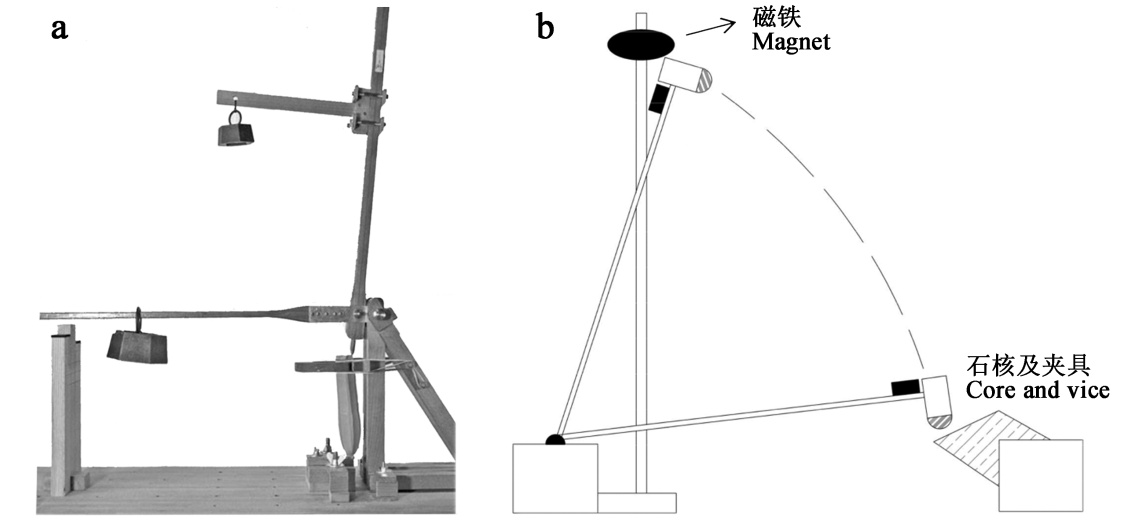
Newcomer’s trichotomy of replication experiments’ design, namely method, mode and technique, indicates that the physical property of pressure flaking tools influences the production of laminar products and finally, the viewpoints about distinguishing criteria. But it is critically recognized that his negligence in assigning pressure into mode reflects academics’ common unawareness of the variability of pressure flaking tools. Previous researches on fracture mechanism of flaking demonstrated how pressure flaking tools affect pressure replication experiments. Hence, these researches suggest that replication experiments are not finished by simply imitating the appearance of remains. For more reliable experimental results, researchers should pay attention to pressure flaking tools in archaeological context.
Two referential methods are presented for reconstructing archaeological pressure flaking tools: Listing usable local resources for pressure tools and analyzing the use-wear of laminar remains or cores. However, it is acknowledged that solely retrospecting the pressure laminar remains distinguishing studies from the perspective of sample production is not enough. More reflection is needed.
WANG Chengxiang , CHEN Shengqian . Review of experimental research on pressure flaking technology[J]. Acta Anthropologica Sinica, 2026 , 45(05) : 965 -975 . DOI: 10.16359/j.1000-3193/AAS.2026.0014
| [1] | 陈淳, 张萌. 细石叶工业研究的回顾与再思考[J]. 人类学学报, 2018, 37(4): 577-589 |
| [2] | 李锋. 石叶概念探讨[J]. 人类学学报, 2012, 31(1): 41-50 |
| [3] | 加藤真二. 中国的石叶技术[J]. 人类学学报, 2006, 25(4): 343-351 |
| [4] | Desrosiers PM. Palaeoeskimo lithic technology: Constraints and adaptation[J]. Lithic Technology, 2007, 32(1): 17-38 |
| [5] | Inizan ML, Lechevallier M, Plumet P. A technological marker of the penetration into North America: Pressure microblade debitage, its origin in the Paleolithic of North Asia and its diffusion[J]. Pittsburgh: Material Research Society, 1992, 661-681 |
| [6] | Desrosiers PM. Breaking stones without striking them[A]. In: Desrosiers PM(Ed). The Emergence of Pressure Blade Making: From Origin to Modern Experimentation[C]. New York: Springer, 2012, 3-9 |
| [7] | Gómez Coutouly YA. The emergence of pressure knapping microblade technology in northeast Asia[J]. Radiocarbon, 2018, 60(3): 1-35 |
| [8] | Keates SG, Postnov AV, Kuzmin YV. Towards the origin of microblade technology in Northeastern Asia[J]. Vestnik of Saint Petersburg University. History, 2019, 64(2): 390-414 |
| [9] | Brunet F. The technique of pressure knapping in Central Asia: innovation or diffusion[A]. In: Desrosiers PM(Ed.). The Emergence of Pressure Blade Making: From Origin to Modern Experimentation[C]. New York: Springer, 2012, 307-328 |
| [10] | Madsen B. Late Palaeolithic cultures of south Scandinavia: tools, traditions and technology[A]. In: Larsson L(Ed.). The Earliest Settlement of Scandinavia and Its Relationship with Neighbouring Areas[C]. Stockholm: Almqvist & Wiksell, 1996, 61-73 |
| [11] | 陈胜前. 考古推理的结构[J]. 考古, 2007, 10: 42-51 |
| [12] | Jennings TA, Smallwood AM, Pevny CD. Reviewing the role of experimentation in reconstructing Paleoamerican lithic technologies[J]. PaleoAmerica, 2021, 7(1): 53-67 |
| [13] | Gifford-Gonzalez D. Bones are not enough: Analogues, knowledge, and interpretive strategies in zooarchaeology[J]. Journal of Anthropological Archaeology, 1991, 10(3): 215-254 |
| [14] | Cameron D. Uniformitarianism and prehistoric archaeology[J]. Australian Archaeology, 1993, 36(1): 42-49 |
| [15] | Johnson LL. A history of flint-knapping experimentation, 1838-1976 (and comments and reply)[J]. Current Anthropology, 1978, 19(2): 337-372 |
| [16] | Nami HG. Reflections on experimental archaeology and lithic technology: Issues on actualistic stone tools analysis and interpretation[A]. In: Nami HG(Ed). Experiments and Interpretation of Traditional Technologies: Essays in Honor of Errett Callahan[C]. Buenos Aires: Ediciones de Arqueología Contemporánea, 2010, 91-168 |
| [17] | 何华青, 吴彤. 实验的可重复性研究——新实验主义与科学知识社会学比较[J]. 自然辩证法通讯, 2008, 4: 42-48 |
| [18] | Shea JJ. Stone tool analysis and human origins research: Some advice from uncle Screwtape[J]. Evolutionary Anthropology, 2011, 20(2): 48-53 |
| [19] | Thomas DH. Points on points - A reply to Flenniken and Raymond[J]. American Antiquity, 1986, 51(3): 619-627 |
| [20] | Kelterborn P. Measurable flintknapping[A]. In: Hirth K(Ed.). Mesoamerican Lithic Technology: Experimentation and Interpretation[C]. Salt Lake City: University of Utah Press, 2002, 120-131 |
| [21] | Pelcin AW. Controlled Experiments in the Production of Flake Attributes[D]. PhD thesis, Philadelphia: University of Pennsylvania, 1996 |
| [22] | Faulkner A. Mechanical Principles of Flintworking[D]. PhD thesis, Pullman: Washington State University, 1974 |
| [23] | Eren MI, Lycett SJ, Patten RJ, et al. Test, model, and method validation: The role of experimental stone artifact replication in hypothesis-driven archaeology[J]. Ethnoarchaeology, 2016, 8(2): 103-136 |
| [24] | Campbell DT, Stanley JC. Experimental and Quasi-Experimental designs for research[M]. Belmont: Wadsworth Publishing, 1963, 4-6 |
| [25] | Speth JD. Mechanical basis of percussion flaking[J]. American Antiquity, 1972, 37(1): 34-60 |
| [26] | Inizan ML. Pressure débitage in the old world: Forerunners, researchers, geopolitics-Handing on the baton[A]. In: Desrosiers PM(Ed). The Emergence of Pressure Blade Making: From Origin to Modern Experimentation[C]. New York: Springer, 2012, 11-42 |
| [27] | Clark JE. Stoneworkers’ approaches to replicating prismatic blades[A]. In: Desrosiers PM(Ed.). The Emergence of Pressure Blade Making: From Origin to Modern Experimentation[C]. New York: Springer, 2012, 43-135 |
| [28] | Texier PJ. Un débitage expérimental de silex par pression pectorale à la béquille[J]. Bulletin de la Société préhistorique fran?aise, 1984, 25-27 |
| [29] | Sollberger JB, Patterson LW. Prismatic blade replication[J]. American Antiquity, 1976, 41(4): 517-531 |
| [30] | Flenniken JJ. The paleolithic Dyuktai pressure blade technique of Siberia[J]. Arctic Anthropology, 1987, 24(2): 117-132 |
| [31] | Ohnuma K. Experimental studies in the determination of manners of micro-blade detachment[J]. Al-Rafidan, 1993, 14: 153-181 |
| [32] | Crabtree DE. An introduction to flintworking[M]. Pocatello: Idaho State University Museum, 1972 |
| [33] | Inizan ML, Reduron-Ballinger M, Roche H, et al. Technology and terminology of knapped stone: Followed by a multilingual vocabulary Arabic, English, French, German, Greek, Italian, Portuguese, Spanish[M]. Nanterre: CREP, 1999, 30-32 |
| [34] | Newcomer MH. “Punch technique” and Upper Paleolithic blades[A]. In: Swanson E(Ed.). Lithic Technology: Making and Using Stone Tools[C]. Paris: Mouton Publishers, 1975, 97-102 |
| [35] | Cotterell B, Kamminga J. The mechanics of flaking[A]. In: Hayden B(Ed). Lithic use-wear analysis[C]. New York: Academic Press, 1979, 97-112 |
| [36] | Cotterell B, Kamminga J. The formation of flakes[J]. American antiquity, 1987, 52(4): 675-708 |
| [37] | Baker T. Digital Crabtree: computer simulation of Folsom fluting[A]. In: Clark JE, Collins MB(Eds). Folsom Technology and Lifeways (Lithic Technology, Special Publication)[C]. Tulsa: Department of Anthropology, University of Tulsa, 2002, 209-226 |
| [38] | Dibble HL, Pelcin AW. The effect of hammer mass and velocity on flake mass[J]. Journal of Archaeological Science, 1995, 22(3): 429-439 |
| [39] | Pelcin AW. The effect of core surface morphology on flake attributes: Evidence from a controlled experiment[J]. Journal of Archaeological Science, 1997, 24(8): 749-756 |
| [40] | Pelegrin J. New Experimental observations for the characterization of pressure blade production techniques [A]. In: Desrosiers PM(Ed). The Emergence of Pressure Blade Making: From Origin to Modern Experimentation[C]. New York: Springer, 2012, 465-500 |
| [41] | Outram AK. Introduction to experimental archaeology[J]. World Archaeology, 2008, 40(1): 1-6 |
| [42] | Tabarev AV. Paleolithic wedge-shaped microcores and experiments with pocket devices[J]. Lithic Technology, 1997, 22(2): 139-149 |
| [43] | Wobst HM. The archaeo-ethnology of hunter-gatherers or the tyranny of the ethnographic record in archaeology[J]. American antiquity, 1978, 43(2): 303-309 |
| [44] | Clark JE. Platforms, bits, punches and vises: A potpourri of Mesoamerican blade technology[J]. Lithic Technology, 1985, 14(1): 1-15 |
| [45] | Healan DM, Kerley JM. Edge damage induced by core immobilization in prismatic blade manufacture[J]. Lithic Technology, 1984, 13(1): 1-10 |
| [46] | Lin SC, Rezek Z, Dibble HL, et al. Experimental design and experimental inference in stone artifact archaeology[J]. Journal of Archaeological Method and Theory, 2018, 25(3): 663-688 |
| [47] | Shott MJ, Trail BW. Exploring new approaches to lithic analysis: Laser scanning and geometric morphometrics[J]. Lithic Technology, 2010, 35(2): 195-220 |
| [48] | González-José R, Charlin J. Relative importance of modularity and other morphological attributes on different types of lithic point weapons: Assessing functional variations[J]. PLoS ONE, 2012, 7(10): e48009 |
| [49] | Hutchings WK. Quantification of fracture propagation velocity employing a sample of Clovis channel flakes[J]. Journal of Archaeological Science, 1999, 26: 1437-1447 |
| [50] | Takakura J. Towards improved identification of obsidian microblade and microblade-like debitage knapping techniques: A case study from the Last Glacial Maximum assemblage of Kawanishi-C in Hokkaido, Northern Japan[J]. Quaternary International, 2021, 596: 65-78 |
/
| 〈 |
|
〉 |