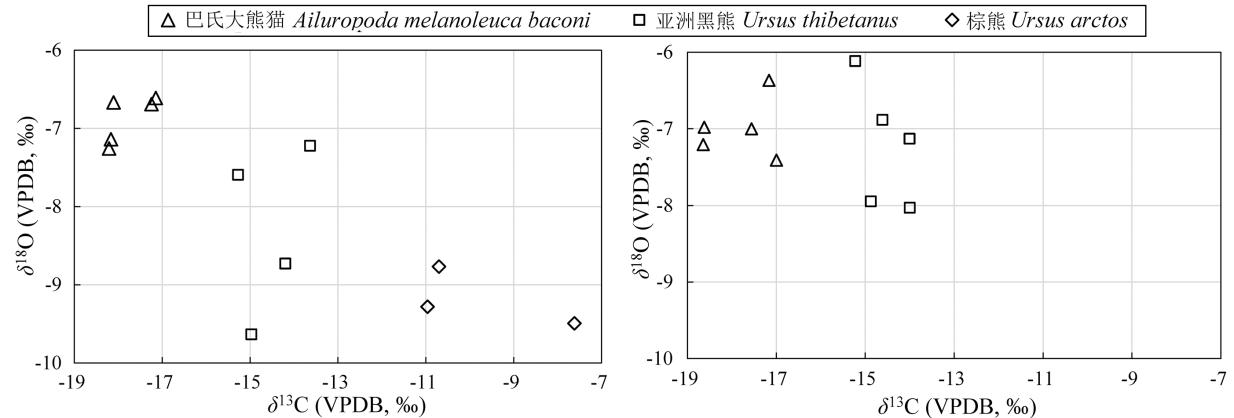
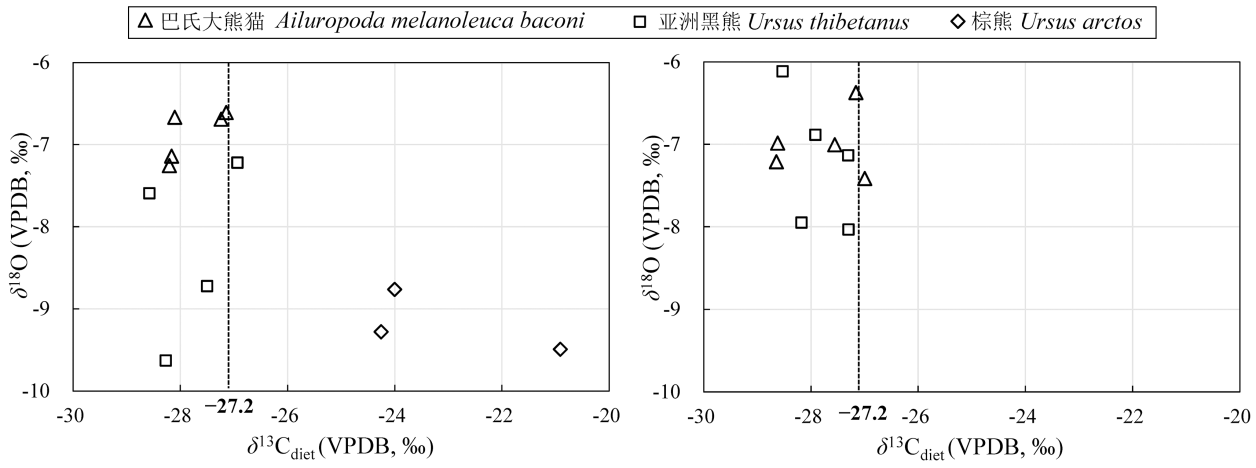
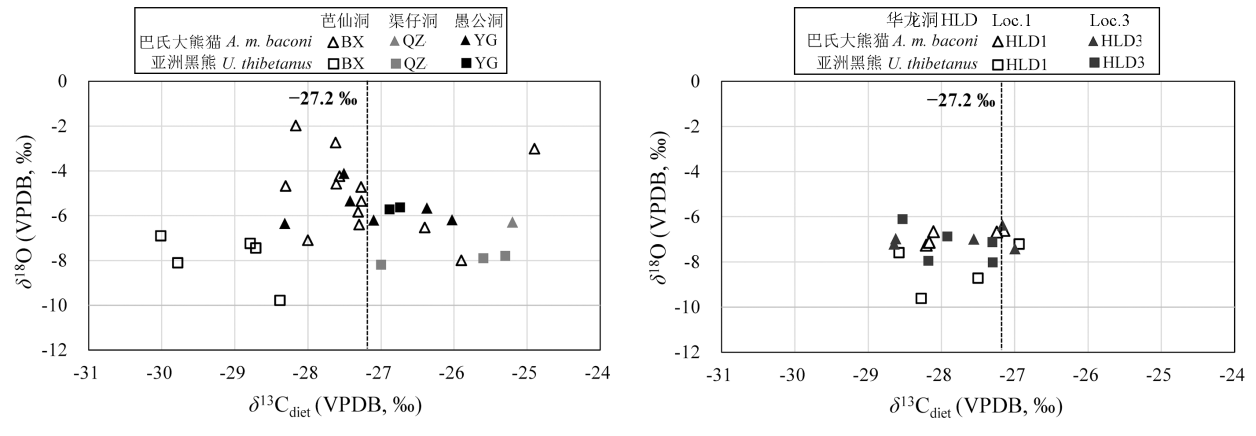
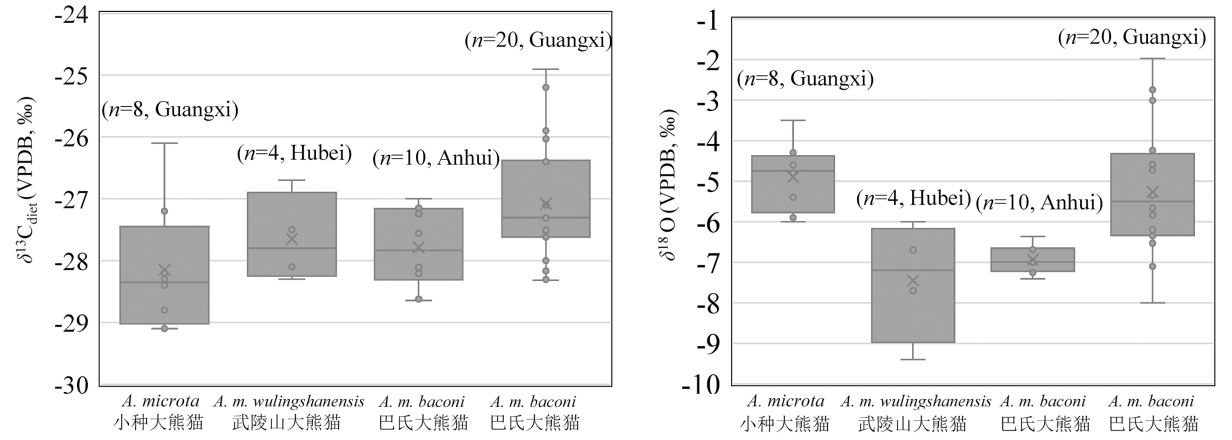
| [1] |
江左其杲, 刘金毅, 王元, 等. 大连骆驼山金远洞埃楚斯堪熊(Ursus etruscus)新材料及中国Ursus cf. etruscus材料的简要回顾[J]. 第四纪研究, 2017, 37(4): 828-837
|
| [2] |
刘金毅, 赵凌霞, 陈津, 等. 贵州毕节扒耳岩巨猿动物群的年代与环境——来自食肉类化石的分析和研究[J]. 第四纪研究, 2011, 31(4): 654-666
|
| [3] |
魏辅文, 杨奇森, 吴毅, 等. 中国兽类名录(2024版)[J]. 兽类学报, 2025, 45: 1-16
|
| [4] |
胡锦矗. 大熊猫的分类地位与演化[J]. 四川师范学院学报:自然科学版, 1992, 13: 151-155
|
| [5] |
H.D.卡尔克, 胡长康. 关于中国南方剑齿象-熊猫动物群和巨猿的时代[J]. 古脊椎动物学报, 1961, (2): 3-28
|
| [6] |
金昌柱, 郑家坚, 王元, 等. 中国南方早更新世主要哺乳动物群层序对比和动物地理[J]. 人类学学报, 2008, 27(4): 304-317
|
| [7] |
Jiangzuo QG, Huang Z, Yu C, et al. Dental shape evolution of the giant panda (Ailuropoda, Ursidae) during the Quaternary[J]. Historical Biology, 2025, 37: 695-701
|
| [8] |
Hu H, Tong H, Yu H, et al. New study sheds light on the impressive intraspecific variation of Quaternary Asiatic black bears in China[J]. Quaternary International, 2023, 22-33
|
| [9] |
Qiu Z. Quaternary environmental changes and evolution of large mammals in North China[J]. Vertebrata PalAsiatica, 2006, 44(2): 109-132
|
| [10] |
王文, 马建章, 余辉亮, 等. 小兴安岭地区黑熊的食性分析[J]. 兽类学报, 2008, 28: 7-13
|
| [11] |
Dahle B, Sørensen OJ, Wedul EH, et al. The diet of brown bears Ursus arctos in central Scandinavia: effect of access to free-ranging domestic sheep Ovis aries[J]. Wildlife Biology, 1998, 4(1): 147-158
|
| [12] |
Kohn MJ, Cerling TE. Stable isotope compositions of biological apatite[J]. Reviews in Mineralogy and Geochemistry, 2002, 48(1): 455-488
|
| [13] |
O'Leary MH. Carbon isotope fractionation in plants[J]. Phytochemistry, 1981, 20(4): 553-567
|
| [14] |
林光辉. 稳定同位素生态学[M]. 北京: 高等教育出版社, 2013
|
| [15] |
Ehleringer JR, Lin ZF, Field CB, et al. Leaf carbon isotope ratios of plants from a subtropical monsoon forest[J]. Oecologia, 1987, 72(1): 109-114
doi: 10.1007/BF00385053
pmid: 28312905
|
| [16] |
Cernusak LA, Tcherkez G, Keitel C, et al. Why are non-photosynthetic tissues generally 13C enriched compared with leaves in C3 plants? Review and synthesis of current hypotheses[J]. Functional Plant Biology, 2009, 36(3): 199-213
doi: 10.1071/FP08216
pmid: 32688639
|
| [17] |
Cerling TE, Harris JM. Carbon isotope fractionation between diet and bioapatite in ungulate mammals and implications for ecological and paleoecological studies[J]. Oecologia, 1999, 120(3): 347-363
doi: 10.1007/s004420050868
pmid: 28308012
|
| [18] |
Clark ID, Fritz P. Environmental isotopes in hydrogeology[M]. Boca Raton: Lewis Publishers, 1997
|
| [19] |
Dansgaard W. Stable isotopes in precipitation[J]. Tellus, 1964, 16(4): 436-468
|
| [20] |
Quade J, Cerling TE, Andrews P, et al. Paleodietary reconstruction of Miocene faunas from Paşalar, Turkey using stable carbon and oxygen isotopes of fossil tooth enamel[J]. Journal of Human Evolution, 1995, 28(4): 373-384
|
| [21] |
Dongmann G, Nürnberg HW, Förstel H, et al. On the enrichment of H218O in the leaves of transpiring plants[J]. Radiation and environmental biophysics, 1974, 11(1): 41-52
pmid: 4832051
|
| [22] |
Luz B, Kolodny Y. Oxygen isotope variations in phosphate of biogenic apatites, IV. Mammal teeth and bones[J]. Earth and planetary science letters, 1985, 75(1): 29-36
|
| [23] |
Hillson S. Teeth[M]. Cambridge: Cambridge university press, 2005
|
| [24] |
Wu X, Pei S, Cai Y, et al. Archaic human remains from Hualongdong, China, and Middle Pleistocene human continuity and variation[J]. Proceedings of the National Academy of Sciences, 2019, 116(20): 9820-9824
|
| [25] |
Wu X, Pei S, Cai Y, et al. Morphological description and evolutionary significance of 300 ka hominin facial bones from Hualongdong, China[J]. Journal of Human Evolution, 2021, 161: 103052
|
| [26] |
同号文, 吴秀杰, 董哲, 等. 安徽东至华龙洞古人类遗址哺乳动物化石的初步研究[J]. 人类学学报, 2018, 37(2): 284-305
|
| [27] |
Wright LE, Schwarcz HP. Stable carbon and oxygen isotopes in human tooth enamel: identifying breastfeeding and weaning in prehistory[J]. American Journal of physical anthropology, 1998, 106(1): 1-18
pmid: 9590521
|
| [28] |
Tieszen LL, Boutton TW, Tesdahl KG, et al. Fractionation and turnover of stable carbon isotopes in animal tissues: Implications for δ13C analysis of diet[J]. Oecologia, 1983, 57(1-2): 32-37
doi: 10.1007/BF00379558
pmid: 28310153
|
| [29] |
Tejada-Lara JV, Macfadden BJ, Bermudez L, et al. Body mass predicts isotope enrichment in herbivorous mammals[J]. Proceedings of the Royal Society B: Biological Sciences, 2018, 285: 20181020
|
| [30] |
Han H, Wei W, Nie Y, et al. Distinctive diet-tissue isotopic discrimination factors derived from the exclusive bamboo-eating giant panda[J]. Integrative Zoology, 2016, 11(6): 447-456
doi: 10.1111/1749-4877.12208
pmid: 27135884
|
| [31] |
Passey BH, Robinson TF, Ayliffe LK, et al. Carbon isotope fractionation between diet, breath CO2, and bioapatite in different mammals[J]. Journal of Archaeological Science, 2005, 32: 1459-1470
|
| [32] |
Bacon A, Bourgon N, Welker F, et al. A multiproxy approach to exploring Homo sapiens' arrival, environments and adaptations in Southeast Asia[J]. Scientific Reports, 2021, 11: 21080
|
| [33] |
Stacklyn S, Wang Y, Jin C, et al. Carbon and oxygen isotopic evidence for diets, environments and niche differentiation of early Pleistocene pandas and associated mammals in South China[J]. Palaeogeography, Palaeoclimatology, Palaeoecology, 2017, 468: 351-361
|
| [34] |
Kohn MJ. Carbon isotope compositions of terrestrial C3 plants as indicators of (paleo) ecology and (paleo) climate[J]. Proceedings of the National Academy of Sciences, 2010, 107: 19691-19695
|
| [35] |
Tejada JV, Flynn JJ, Antoine PO, et al. Comparative isotope ecology of western Amazonian rainforest mammals[J]. Proceedings of the National Academy of Sciences, 2020, 117: 26263-26272
|
| [36] |
Smith A, 解焱. 中国兽类野外手册[M]. 长沙: 湖南教育出版社, 2009
|
| [37] |
Bryant JD, Froelich PN. A model of oxygen isotope fractionation in body water of large mammals[J]. Geochimica et Cosmochimica Acta, 1995, 59: 4523-4537
|
| [38] |
Sponheimer M, Lee-Thorp JA. Oxygen isotopes in enamel carbonate and their ecological significance[J]. Journal of Archaeological Science, 1999, 26(6): 723-728
|
| [39] |
Hashimoto Y. Seasonal food habits of the Asiatic black bear (Ursus thibetanus) in the Chichibu Mountains, Japan[J]. Mammal Study, 2002, 27(1): 65-72
|
| [40] |
Ma J, Wang Y, Jin C, et al. Isotopic evidence of foraging ecology of Asian elephant (Elephas maximus) in South China during the Late Pleistocene[J]. Quaternary International, 2017, 443: 160-167
|
| [41] |
Ma J, Wang Y, Jin C, et al. Ecological flexibility and differential survival of Pleistocene Stegodon orientalis and Elephas maximus in mainland southeast Asia revealed by stable isotope (C, O) analysis[J]. Quaternary Science Reviews, 2019, 212: 33-44
|
| [42] |
Sun F, Wang Y, Wang Y, et al. Paleoecology of Pleistocene mammals and paleoclimatic change in South China: Evidence from stable carbon and oxygen isotopes[J]. Palaeogeography, Palaeoclimatology, Palaeoecology, 2019, 524: 1-12
|
| [43] |
Zhang Y, Westaway KE, Haberle S, et al. The demise of the giant ape Gigantopithecus blacki[J]. Nature, 2024, 625: 535-539
|
| [44] |
Jiang Q, Zhao L, Hu Y. Isotopic (C, O) variations of fossil enamel bioapatite caused by different preparation and measurement protocols: a case study of Gigantopithecus fauna[J]. Vertebrata Palasiatica, 2020, 58: 159-168
|
| [45] |
Zhang Y, Harrison T. Gigantopithecus blacki: a giant ape from the Pleistocene of Asia revisited[J]. American Journal of Physical Anthropology, 2017, 162: 153-177
|
| [46] |
Zhang Y, Jin C, Kono RT, et al. A fourth mandible and associated dental remains of Gigantopithecus blacki from the Early Pleistocene Yanliang Cave, Fusui, Guangxi, South China[J]. Historical Biology, 2016, 28: 95-104
|
| [47] |
Jiang Q, Zhao L, Guo L, et al. First direct evidence of conservative foraging ecology of early Gigantopithecus blacki (-2 Ma) in Guangxi, southern China[J]. American Journal of Physical Anthropology, 2021, 176(1): 93-108
doi: 10.1002/ajpa.24300
pmid: 33964022
|
| [48] |
Nelson SV. The paleoecology of early Pleistocene Gigantopithecus blacki inferred from isotopic analyses[J]. American Journal of Physical Anthropology, 2014, 155(4): 571-578
|
| [49] |
Pederzani S, Britton K. Oxygen isotopes in bioarchaeology: Principles and applications, challenges and opportunities[J]. Earth-Science Reviews, 2019, 188: 77-107
doi: 10.1016/j.earscirev.2018.11.005
|
| [50] |
Wang X, Su DF, Jablonski NG, et al. Earliest giant panda false thumb suggests conflicting demands for locomotion and feeding[J]. Scientific Reports, 2022, 12(1): 10538
doi: 10.1038/s41598-022-13402-y
pmid: 35773284
|
| [51] |
Jiangzuo Q, Wang D, Zhang C, et al. Body mass evolution of the Quaternary giant panda coincides with climate change of southern China[J]. The Innovation Geoscience, 2024: 100096
|
| [52] |
Louys J, Roberts P. Environmental drivers of megafauna and hominin extinction in Southeast Asia[J]. Nature, 2020, 586: 402-406
|
| [53] |
Qin Z, Sun X. Glacial-interglacial cycles and early human evolution in China[J]. Land, 2023, 12(9): 1683
|
| [54] |
An Z, Zhou W, Zhang Z, et al. Mid-Pleistocene climate transition triggered by Antarctic Ice Sheet growth[J]. Science, 2024, 385(6708): 560-565
doi: 10.1126/science.abn4861
pmid: 39088600
|
| [55] |
金昌柱, 郑龙亭, 董为, 等. 安徽繁昌早更新世人字洞古人类活动遗址及其哺乳动物群[J]. 人类学学报, 2000, 19: 184-198
|