Acta Anthropologica Sinica ›› 2025, Vol. 44 ›› Issue (06): 1120-1130.doi: 10.16359/j.1000-3193/AAS.2025.0088

• Paleolithic Archaeology of South China • Previous Articles    

A preliminary report of 2022 excavation of Shangbaitang site in Anji County, Zhejiang Province

LIU Yalin1(), WEI Tianxu2(), SHI Xiao1, WANG Chunxue3, SUN Xuefeng4, QIU Hongliang5   

  1. 1. Zhejiang Provincial Institute of Cultural Relics and Archaeology, Hangzhou 310014
    2. School of History and Culture, Hubei University, Wuhan 430062
    3. School of Archaeology, Jilin University, Changchun 130012
    4. School of Geography and Ocean Science, Nanjing University, Nanjing 210023
    5. Anji County Museum, Anji 313300
  • Received:2024-12-19 Accepted:2025-05-28 Online:2025-12-15 Published:2025-12-15

Abstract:

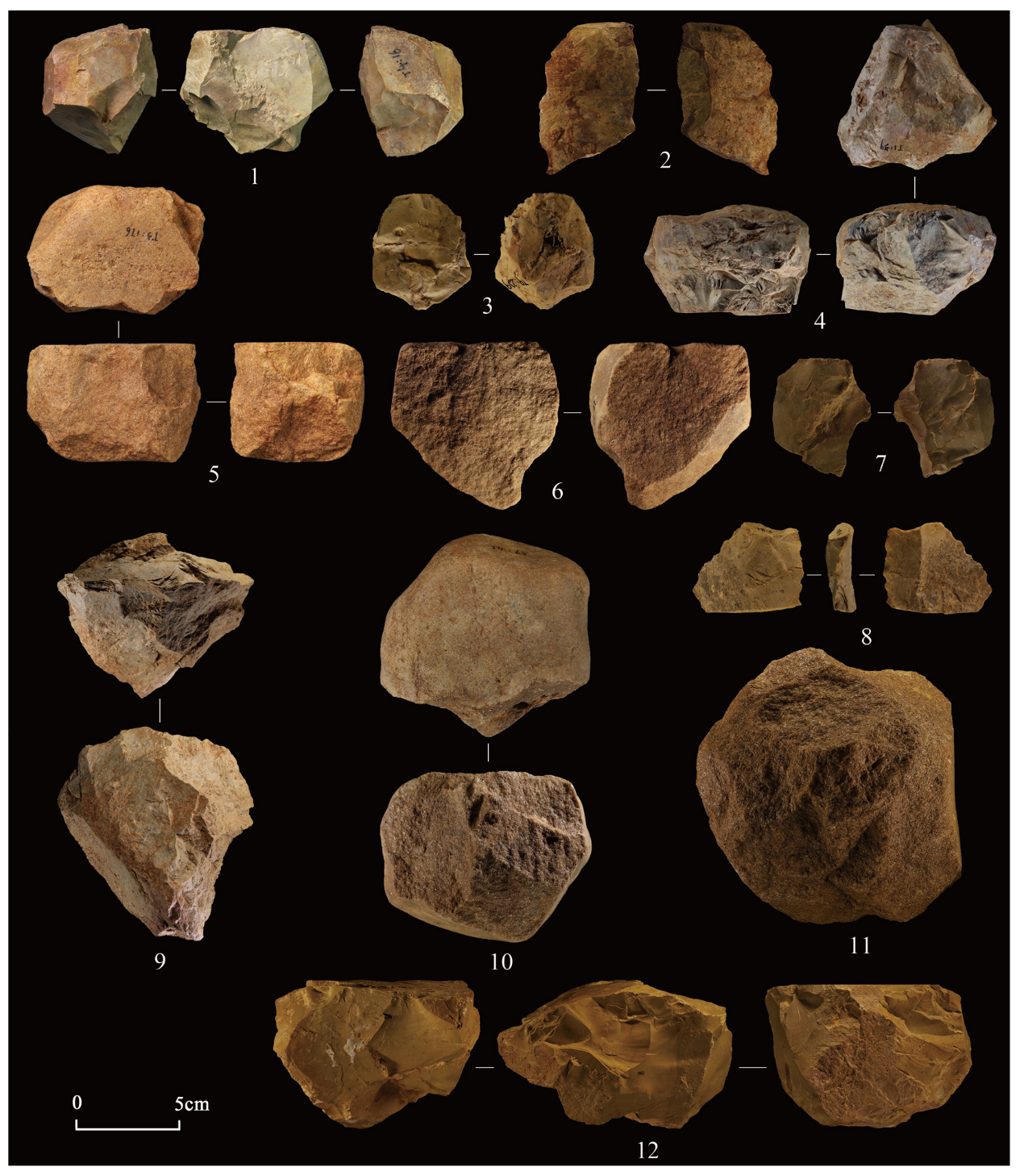
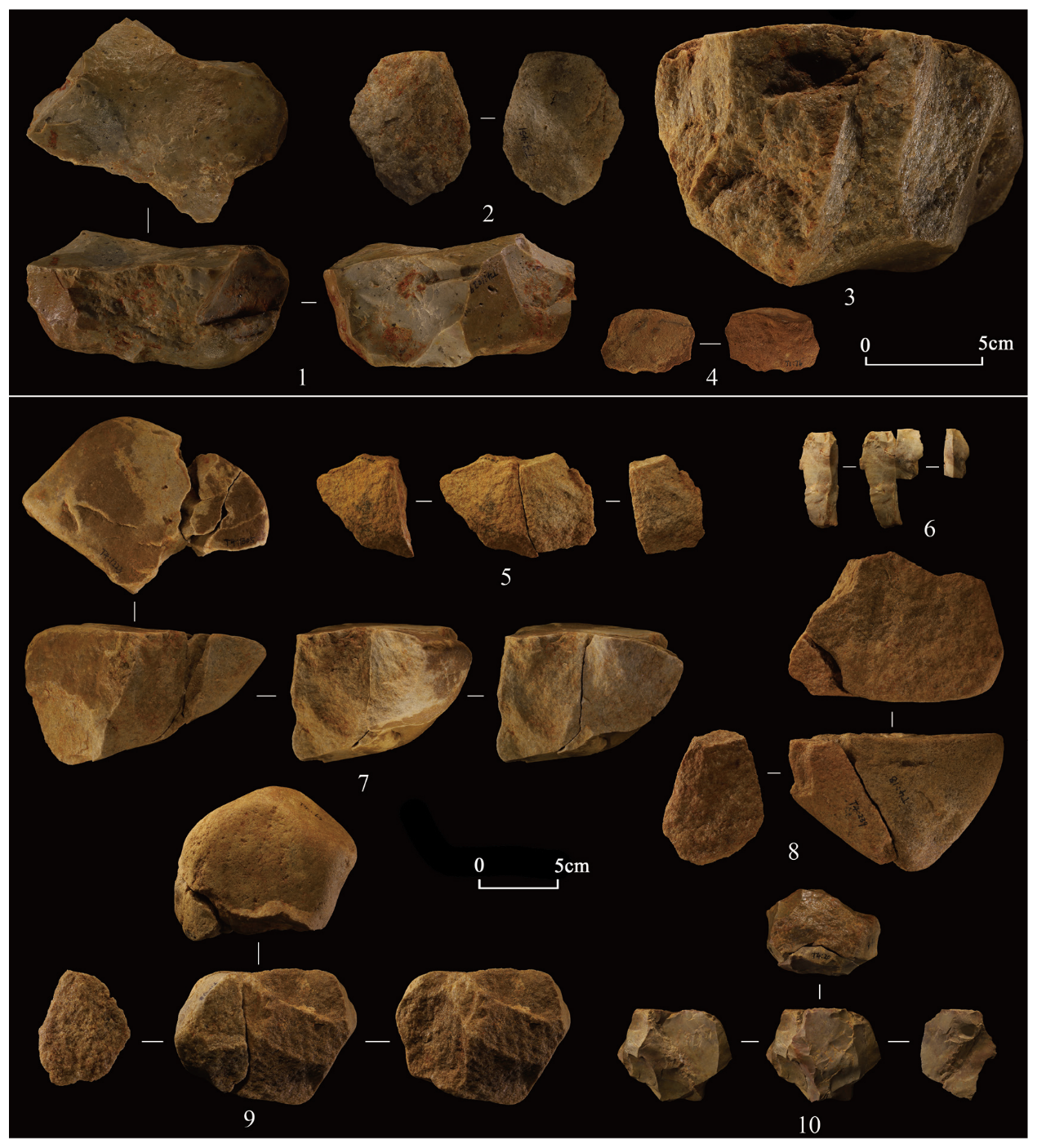
The Shangbaitang site is located in Anji County, Huzhou City, Zhejiang Province. The site is buried in red clay deposits within the Xitiaoxi River basin. In 2022, the Zhejiang Provincial Institute of Cultural Relics and Archaeology and the Anji County Museum carried out excavations at the Shangbaitang site, covering an area of 1100 m2. Stone artifacts were unearthed in layer 3 and layer 4. Layer 3 is a homogeneous red soil layer, and stone products were mainly unearthed in this layer. Layer 4 is a reticulated red soil layer, and just unearthed a small amount of stone artifacts. According to the dating results, the age of layer 3 is 35~88 ka before present, and the age of layer 4 is more than 100 ka before present. A total of 889 stone artifacts were founded at this site, including 817 from Layer 3 and 47 from Layer 4, along with 25 collected from ground survey. The artifacts include stone cores, flakes, tools, broken blocks and fragments. Preliminary analysis indicates that the raw materials were mainly local gravels, primarily quartz sandstone and a high proportion of siliceous cobbles. Stone cores were percussed through freehand hammering without a prepared process, but the presence of discoidal and prismatic cores suggests some degree of organization in the reduction sequence, reflecting a progressive aspect of core-flake industry. Flakes were predominantly small. There is a low proportion of tools. Scraper was the dominant tool type, along with a small number of choppers, spheriods, and hammers. Tool blanks were mostly flakes with limited retouching, and finely retouched tools were almost absent. Additionally, 18 refitted groups of artifacts were identified, indicating minimal post-depositional disturbance. The early and middle Late Pleistocene was a crucial phase in human evolutionary history. During this period, the majority of sites in northern South China transformed into a lithic industry dominated by flake tools, but the cultural landscape of the lower Yangtze River region during this period remains unclear. Shangbaitang is a rare site that has undergone scientific excavation and dating, and has yielded a large number of stone artifacts. Compared to the Middle Pleistocene, the raw materials, sizes, and types of stone artifacts at this site have undergone significant changes. The proportion of small and medium-sized flake tools is significantly higher than that of large pebble tools, making it a typical representative site of the miniaturization and flaking of the pebble industry. In conclusion, the chronological data and lithic assemblages from the Shangbaitang site provide crucial materials for understanding the emergence and development of small flake tool industries in southern China.

Key words: Shangbaitang site, stone artifacts, Late Pleistocene, core-flake industry

CLC Number: