


A preliminary study of protein preservation in animal fossils from the Hualongdong site in Dongzhi County, Anhui
Received date: 2025-04-07
Revised date: 2025-07-10
Online published: 2025-10-13
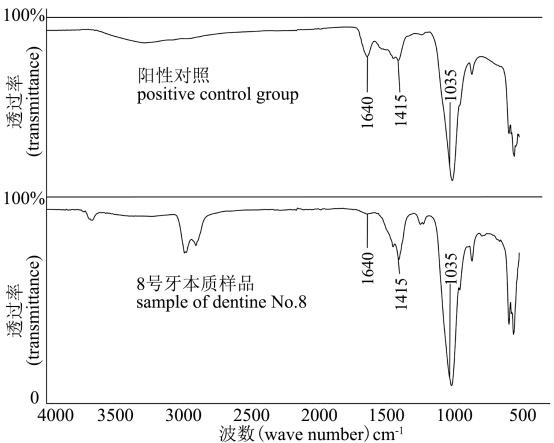
The Hualongdong(HLD) site (30°06′34″N, 116°56′54″E, 40 m above sea level) is located in Dongzhi County, Anhui Province, China. Dated to 331~275 ka, it corresponds to the critical transition period from Homo erectus to early Homo sapiens in East Asia. Morphological studies of its hominin fossils suggest that these remains may represent the earliest pre-modern humans in the region.This study adopted a strategy of evaluating the protein preservation of animal fossils to preliminarily assess the overall protein preservation in the same site, aiming to investigate the feasibility of proteomic analysis for Hualongdong hominins without damaging hominin specimens. In this study, we analyzed 49 teeth and femoral bone specimens excavated from No.1 Site, which is the same site where the ancient human fossils were discovered.Mass spectrometry analysis detected no endogenous collagen markers in any of the 40 bone samples. Among nine dentine samples, two exhibited abundant collagen-specific peptide markers. Enamel protein analysis detected endogenous peptide signals in six out of seven enamel samples. These results indicate that part of dental specimens from Hualongdong site retain sufficient endogenous proteins to support large-scale screening of hominin fossils, thereby enabling further proteomic analysis of hominin fossils from this critical site to help track east Asian human evolution.
TANG Siyuan , LIU Sitong , ZHOU Kai , RAO Huiyun , WU Xiujie , FU Qiaomei . A preliminary study of protein preservation in animal fossils from the Hualongdong site in Dongzhi County, Anhui[J]. Acta Anthropologica Sinica, 2025 , 44(05) : 917 -926 . DOI: 10.16359/j.1000-3193/AAS.2025.0069
| [1] | Wu XJ, Pei SW, Cai YJ, et al. Archaic human remains from Hualongdong, China, and Middle Pleistocene human continuity and variation[J]. Proceedings of the National Academy of Sciences of the United States of America, 2019, 116: 9820-9824 |
| [2] | 宫希成, 郑龙亭, 邢松, 等. 安徽东至华龙洞出土的人类化石[J]. 人类学学报, 2014, 33(4): 427-436 |
| [3] | 陈胜前, 罗虎. 安徽东至县华龙洞旧石器时代遗址发掘简报[J]. 考古, 2012, 4: 7-13 |
| [4] | 同号文, 吴秀杰, 董哲, 等. 安徽东至华龙洞古人类遗址哺乳动物化石的初步研究[J]. 人类学学报, 2018, 37(2): 284-305 |
| [5] | 裴树文, 蔡演军, 董哲, 等. 安徽东至华龙洞遗址洞穴演化与古人类活动[J]. 人类学学报, 2022, 41(4): 593-607 |
| [6] | 董哲, 战世佳. 安徽东至县华龙洞旧石器时代遗址出土石制品研究[J]. 东南文化, 2015, 6: 63-71 |
| [7] | 董哲, 裴树文, 盛锦朝, 等. 安徽东至华龙洞古人类遗址2014-2016年出土的石制品[J]. 第四纪研究, 2017, 37(4): 778-788 |
| [8] | 李潇丽, 董哲, 裴树文, 等. 安徽东至华龙洞洞穴发育与古人类生存环境[J]. 海洋地质与第四纪地质, 2017, 37(3): 169-179 |
| [9] | 刘武, 吴秀杰, 邢松. 更新世中期中国古人类演化区域连续性与多样性的化石证据[J]. 人类学学报, 2019, 38(4): 473-490 |
| [10] | Jiangzuo QG, Werdelin L, Zhang K, et al. Prionailurus kurteni (Felidae, Carnivora), a new species of small felid from the late Middle Pleistocene fossil hominin locality of Hualongdong, southern China[J]. Annales Zoologici Fennici, 2024, 61(1): 335-342 |
| [11] | Wu XJ, Pei SW, Cai YJ, et al. Morphological description and evolutionary significance of 300 ka hominin facial bones from Hualongdong, China[J]. Journal of Human Evolution, 2021, 161: 103052 |
| [12] | Xing S, Wu XJ, Liu W, et al. Middle Pleistocene human femoral diaphyses from Hualongdong, Anhui Province, China[J]. American Journal of Physical Anthropology, 2021, 174(2): 285-298 |
| [13] | Wu XJ, Pei SW, Cai YJ, et al. Morphological and morphometric analyses of a late Middle Pleistocene hominin mandible from Hualongdong, China[J]. Journal of Human Evolution, 2023, 182: 103411 |
| [14] | 吴秀杰, 张伟. 中国古人类颅容量的推算方法比较[J]. 人类学学报, 2019, 38(4): 513-524 |
| [15] | 刘武, 惠家明, 何嘉宁, 等. 门齿孔位置在中国古人类化石与现代人群的表现及其演化意义[J]. 人类学学报, 2021, 40(5): 739-750 |
| [16] | 刘武, 吴秀杰. 中更新世晚期中国古人类化石的形态多样性及其演化意义[J]. 人类学学报, 2022, 41(4): 563-575 |
| [17] | Liu W, Athreya S, Xing S, et al. Hominin evolution and diversity: A comparison of earlier-Middle and later-Middle Pleistocene hominin fossil variation in China[J]. Philosophical Transactions of the Royal Society B, 2022, 377(1849): 20210040 |
| [18] | 刘武. 二十一世纪中国人类演化研究的发现、认识与理论探索[J]. 人类学学报, 2024, 43(6): 881-899 |
| [19] | Chen FH, Welker F, Shen CC, et al. A late Middle Pleistocene Denisovan mandible from the Tibetan Plateau[J]. Nature, 2019, 569: 409-412 |
| [20] | Xia H, Zhang DJ, Wang J, et al. Middle and Late Pleistocene Denisovan subsistence at Baishiya Karst Cave[J]. Nature, 2024, 632: 108-113 |
| [21] | Welker F, Hajdinjak M, Talamo S, et al. Palaeoproteomic evidence identifies archaic hominins associated with the Chatelperronian at the Grotte du Renne[J]. Proceedings of the National Academy of Sciences, 2016, 113: 201605834 |
| [22] | Welker F, Ramos-Madrigal J, Gutenbrunner P, et al. The dental proteome of Homo antecessor[J]. Nature, 2020, 580: 235-238 |
| [23] | Demeter F, Shackelford L, Zanolli C, et al. A Middle Pleistocene Denisovan molar from the Annamite Chain of northern Laos[J]. Nature Communications, 2022, 13: 2557 |
| [24] | Welker F, Ramos-Madrigal J, Kuhlwilm M, et al. Enamel proteome shows that Gigantopithecus was an early diverging pongine[J]. Nature, 2019, 576: 262-265 |
| [25] | Paterson RS, Mackie M, Capobianco A, et al. A 20+ Ma Old Enamel Proteome from Canada's High Arctic Reveals Diversification of Rhinocerotidae in the Middle Eocene-Oligocene[CP/OL]. bioRxiv, 2024. 06.07.597871. doi: https://doi.org/10.1101/2024.06.07.597871 |
| [26] | Demarchi B, Stiller j, Grealy A, et al. Ancient proteins resolve controversy over the identity of Genyornis eggshell[J]. Proceedings of the National Academy of Sciences, 2022, 119 (43): e2109326119 |
| [27] | Demarchi B, Mackie M, Li ZH, et al. Survival of mineral-bound peptides into the Miocene[J]. eLife, 2022, 11: e82849 |
| [28] | Demarchi B, Hall S, Roncal-Herrero T, et al. Protein sequences bound to mineral surfaces persist into deep time[J]. eLife, 2016, 5: e17092 |
| [29] | Stolarski J, Drake J, Coronado I, et al. First paleoproteome study of fossil fish otoliths and the pristine preservation of the biomineral crystal host[J]. Scientific Reports, 2023, 13: 3822 |
| [30] | Cappellini E, Welker F, Pandolfi L, et al. Early Pleistocene enamel proteome from Dmanisi resolves Stephanorhinus phylogeny[J]. Nature, 2019, 574: 103-107 |
| [31] | Cappellini E, Jensen LJ, Szklarczyk D, et al. Proteomic analysis of a Pleistocene mammoth femur reveals more than one hundred ancient bone proteins[J]. Journal of Proteome Research, 2012, 11(2): 917-926 |
| [32] | Rybczynski N, Gosse J C, Richard Harington C, et al. Mid-Pliocene warm-period deposits in the high arctic yield insight into camel evolution[J]. Nature Communications, 2013, 4: 1550 |
| [33] | Warinner C, Rodrigues JFM, Vyas R, et al. Pathogens and host immunity in the ancient human oral cavity[J]. Nature Genetics, 2013, 4(4): 336-344 |
| [34] | Sawafuji R, Cappellini E, Nagaoka T, et al. Proteomic profiling of archaeological human bone[J]. Royal Society Open Science, 2017, 4(6): 161004 |
| [35] | Tsutaya T, Sawafuji R, Taurozzi AJ, et al. A male Denisovan mandible from Pleistocene Taiwan[J]. Science, 2025, 388(6743): 176-180 |
| [36] | Presslee S, Penkman K, Fischer R, et al. Assessment of different screening methods for selecting palaeontological bone samples for peptide sequencing[J]. Journal of Proteomics, 2021, 230: 103986 |
| [37] | Hollund HI, Ariese F, Fernandes R, et al. Testing an alternative High-throughput tool for investigating bone Diagenesis: FTIR in attenuated Total reflection (ATR) mode[J]. Archaeometry, 2013, 55: 507-532 |
| [38] | Scaggion C, Marinato M, Dal Sasso G, et al. A fresh perspective on infrared spectroscopy as a prescreening method for molecular and stable isotopes analyses on ancient human bones[J]. Scientific Reports, 2024, 14: 1028 |
| [39] | Buckley M, Collins M, Thomas-Oates J, et al. Species identification by analysis of bone collagen using matrix-assisted laser desorption/ionisation time-of-flight mass spectrometry[J]. Rapid Commun Mass Spectrometr, 2009, 23(23): 3843-3854 |
| [40] | Buckley M, Fraser S, Herman J, et al. Species identification of archaeological marine mammals using collagen fingerprinting[J]. Journal of Archaeological Science, 2014, 41(Suppl. C): 631-641 |
| [41] | Welker F, Soressi M, Rendu W, et al. Using ZooMS to identify fragmentary bone from the late middle / early upper Palaeolithic sequence of les Cottes, France[J]. Journal of Archaeological Science, 2015, 54: 279-286 |
| [42] | Harvey VL, Daugnora L, Buckley M, et al. Species identification of ancient Lithuanian fish remains using collagen fingerprinting[J]. Journal of Archaeological Science, 2018, 98: 102-111 |
| [43] | Lacruz RS, Habelitz S, Wright JT, et al. Dental Enamel Formation and Implications for Oral Health and Disease[J]. Physiological Reviews, 2017, 97(3): 939-993 |
| [44] | Kontopoulos I, Penkman K, Mullin VE, et al. Screening archaeological bone for palaeogenetic and palaeoproteomic studies[J]. PLoS ONE, 2020, 15(6): e0235146 |
| [45] | Pal Chowdhury M, Wogelius R, Manning PL, et al. Collagen deamidation in archaeological bone as an assessment for relative decay rates[J]. Archaeometry, 2019, 61(6): 1382-1398 |
| [46] | Taurozzi AJ, Ruther PL, Patramanis I, et al. Deep-time phylogenetic inference by paleoproteomic analysis of dental enamel[J]. Nature Protocols, 2024, 19(5): 2085-2116 |
| [47] | Porto IM, Laure HJ, Tykot RH, et al. Recovery and identification of mature enamel proteins in ancient teeth[J]. European Journal of Oral Sciences, 2011, 119: 83-87 |
/
| 〈 |
|
〉 |