Loading...

Table of Content

    15 June 2025, Volume 44 Issue 03
    An excavation report of the Yahuai Cave site in Long’an, Guangxi
    XIE Guangmao, LIN Qiang, YU Minghui, LU Jieying
    2025, 44(03):  365-388.  doi:10.16359/j.1000-3193/AAS.2025.0046
    Asbtract ( 663 )   HTML ( 76)   PDF (8486KB) ( 321 )  
    Figures and Tables | References | Related Articles | Metrics

    The Yahuai Cave site is situated at a limestone tower near Bolang Village, Long’an County, Guangxi Zhuang Autonomous Region, South China (107°45′35″E, 23°6′25″N). It is a prehistoric site predominantly characterized by Palaeolithic deposits. Between 2015 and 2018, the Guangxi Institute of Cultural Relic Protection and Archaeology carried out excavations at this site. Four areas, namely A, B, C, and D, were opened, with a total exposure area of 50 m². A burial containing a complete Palaeolithic human skull was discovered. A multitude of cultural remains, such as chipped stone tools, ground stone tools, shell and bone artifacts, and potsherds, were unearthed. The majority of the stone tools are made of small quartz sandstone, tektite, chert, or crystal stones, exhibiting features typical of the “core-flake industry” commonly found in North China. Three hearths and an ash pit were identified, suggesting frequent fire usage at the site. Ochres were found throughout all cultural layers, and some of them were discovered to be ground into powder. Numerous bones of terrestrial and aquatic animals were excavated. The site was dated using the AMS 14C dating method to a period between 43,000 and 4,000 BP cal. Four cultural phases were recognized, with phases 1~3 belonging to the Palaeolithic period and phase 4 to the Neolithic period.

    Sex and age-at-death of the Yahuai Cave Man from the Late Pleistocene of Guangxi
    HE Letian, XIE Guangmao, LIN Qiang, LI Dawei, WU Xiujie
    2025, 44(03):  389-403.  doi:10.16359/j.1000-3193/AAS.2025.0034
    Asbtract ( 519 )   HTML ( 76)   PDF (4375KB) ( 289 )  
    Figures and Tables | References | Related Articles | Metrics

    Obtaining accurate information about an individual’s sex and age at death constitutes the cornerstone of biological anthropological research. The estimation of adult sex from skeletal samples relies on two types of characteristics: those associated with functional differences between the sexes, and those manifested as variations in the size and shape of bones and teeth. Most methods for age estimation are based on the assessment of osteological degenerative changes. The identification of sex and age in human fossils often sparks controversy due to their evolutionary traits and preservation limitations, particularly when the hip bone is unavailable.

    This study utilized visual observation, measurement, and micro-CT scanning to examine the Late Pleistocene crania, mandible, and teeth (YH1) excavated from the Yahuai Cave site in Guangxi, southern China. Regarding non-metric characteristics, the cranial and mandibular morphology indicates that Yahuai 1 is more likely to be female. However, certain robusticity-related features are more pronounced in YH1 compared to most recent-modern females in East Asia. The sexual dimorphism observed in late Pleistocene human skulls differs from that of modern humans, as evidenced by cranio-facial metric features. Comparisons with late Pleistocene human skulls from East and Southeast Asia reveal that YH1 shows no obvious sexual dimorphism in craniometric characteristics. When compared with recent populations from the same region, YH1 is found to be larger in size, and exhibits similarity to recent female samples after size calibration. YH1 has a medium-sized mandible overall and a high corpus robusticity index, which is comparable to that of late Pleistocene and Neolithic females.

    In terms of age-at-death estimation, YH1 displayed a low degree of synostosis in the cranial sutures, and no age-associated features were observed. Moreover, by comparing with two Neolithic populations from South China, the relationship between dental wear and age estimation was adjusted. Collectively, these findings suggest that YH1 was not elderly, but rather a young adult aged between 30 and 40 years.

    Paleolithics excavated from Area B of the Yahuai Cave site, Guangxi
    LI Hao, XIE Guangmao, LI Dawei, LI Sanling, XIAO Peiyuan, CHEN Qingyi, WANG Yuqing, JIA Zhenxiu, WU Yan, LU Jieying
    2025, 44(03):  404-412.  doi:10.16359/j.1000-3193/AAS.2025.0047
    Asbtract ( 458 )   HTML ( 41)   PDF (1645KB) ( 413 )  
    Figures and Tables | References | Related Articles | Metrics

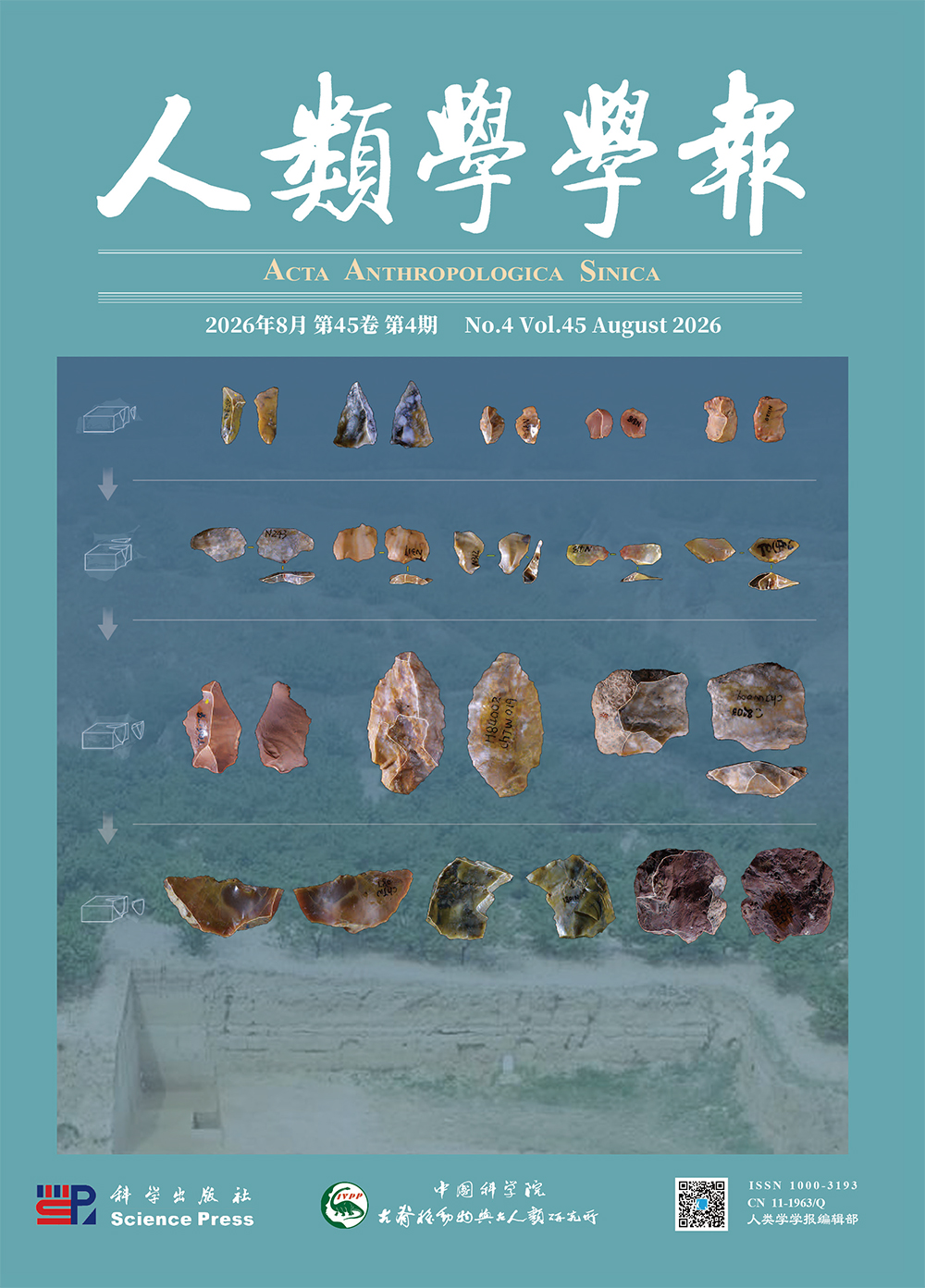
    The Yahuai Cave site is a newly discovered Late Paleolithic to Neolithic site in South China. The site has yielded rich cultural remains spanning a relatively long period. Three Paleolithic cultural phases have been identified from the site. Analysis of lithic assemblages shows that two distinctive flaking systems co-existed at the site. One is featured by the steep-angled flaking cores made on sandstone, while the other is featured by the bipolar flaking cores made on tektite, chert, quartz and crystal. Bipolar technology is mainly related to the production of miniaturized flakes and flake tools. Miniaturized lithic assemblages or minialithic technology have been widely documented in the Upper Paleolithic sites in South and Southeast Asia, as well as the different regions of China, likely indicating the migration and dispersal process of early modern humans. The study of knapped stone artifacts at Yahuai Cave provides important materials and evidence for understanding the behavioral diversity and complexity of early modern humans in East Asia.

    A study of the miniaturized stone artifacts from the Yahuai Cave site in Long’an, Guangxi
    DENG Wanwen, XIE Ying
    2025, 44(03):  413-426.  doi:10.16359/j.1000-3193/AAS.2025.0040
    Asbtract ( 392 )   HTML ( 40)   PDF (1717KB) ( 274 )  
    Figures and Tables | References | Related Articles | Metrics

    The Yahuai Cave site in Long’an, Guangxi, preserves stratified deposits dated to 43~14 kaBP cal, yielding a significant collection of lithic artifacts predominantly reflecting a simple core-flake reduction strategy. The lithic raw materials include quartz sandstone, sandstone, tektite, quartz, and flint. Hard-hammer percussion and bipolar techniques were primarily employed for flake production, with cores predominantly exhibiting single-platform, unidirectional reduction. Some cores show minimal preparation of platform edges prior to flaking. Retouched tools, primarily on flake blanks, were modified via unifacial hard-hammer percussion, with small portions of marginal edge retouch. The tool kit is dominated by scrapers (mostly <5 cm in size), alongside choppers and points, collectively representing a miniaturized lithic industry characteristic of the Late Paleolithic in the Lingnan region.

    Similar miniaturized lithic industries have been documented at contemporaneous sites in Lingnan, the middle-lower reaches of the Yangtze River, the Yunnan-Guizhou Plateau, and Southeast Asia. Comparative analyses reveal that these small flake tool industries in Yahuai Cave and adjacent areas predominantly utilized flint, supplemented by lower-quality quartz, crystal, and other fine-grained raw materials. The preferential selection of flint and other fine-grained raw materials marks a distinctive feature of late Late Pleistocene small flake tool industries in South China. Notably, certain sites, such as the Bailian Cave in Liuzhou, Xianrendong and Diaotonghuan Cave sites in Jiangxi, and some others in the Lishui River valley of Hunan, sourced flint from distant outcrops up to 20 km away. In contrast, other sites in Guizhou, including the Da’erwo rockshelter site in Kaiyang, Laoyadong Cave site in Bijie, and Qingshuiyuan Dadong Cave site, utilized locally available materials such as flint, crystal, basalt, and siliceous limestone from nearby bedrock sources. It should also be noted that the early deposits of Yahuai Cave contain both small flint tools and retouched flakes detached from quartz sandstone cobbles. The use of small cobble flakes was also observed at the Nguom rockshelter site in northern Vietnam.

    Technologically, small flake industries across Lingnan and neighbouring regions during the late Late Pleistocene are characterized by hard-hammer direct percussion, unidirectional retouch, and short, shallow, and overlapping retouch scars. Some micro-sized lithics may reflect bipolar reduction, with no evidence of prepared core technologies. At the Yahuai Cave site, cobble cores with steep edge angles exhibit unidirectional flake removal surfaces resulting from intensive, hierarchical reduction. The shared types of raw materials and technological patterns, combined with the small dimensions of retouched tools, correspond to the global trend of lithic miniaturization during the Late Pleistocene.

    Although these miniaturized lithic artefacts in South China and Southeast Asia represent simple core-flake technologies, they may have functioned as composite tool components, as well demonstrated by examples from the Ille Cave site in northern Palawan, Philippines. Moreover, the Xiamabei site in the Nihewan Basin (North China) provides evidence of composite tool use associated with early modern human behavioural complexity. The presence of ochre at the Yahuai Cave site further supports the emergence of complex cultural behaviours.

    Scholars have debated the origins of these small flake industries in South China-Southeast Asia. While some attribute their appearance to north-to-south migration driven by Late Pleistocene climatic cooling events, others emphasize indigenous adaptation to local arid-cool conditions, as seen in the long-standing small flake tool traditions in Southwest China since the late Middle Pleistocene. Notably, the early emergence of Yahuai Cave’s miniaturized lithic artefacts (43 kaBP cal) predates comparable assemblages in northern Jiangxi (26 kaBP), northern Vietnam, and southern Thailand. Geographically, these sites form a descending gradient from mid-altitude mountainous regions (e.g., Guizhou, Guangxi) to low-altitude hilly areas, suggesting a potential southward and eastward diffusion of modern human populations from the hinterland of East Asia. However, the relationship between climatic fluctuations and human behavioural evolution remains complex, requiring further interdisciplinary investigations.

    The discoveries at the Yahuai Cave site underscore that the subtropical-tropical zones of South China and Southeast Asia witnessed the development of complex cultural behaviours among modern humans since 40 kaBP. Detailed technological comparisons of these miniaturized lithic industries will advance our understanding of population dynamics and cultural trajectories during the Late Pleistocene in eastern Eurasia.

    Origin of the miniaturized lithics during Late Pleistocene in Guangxi
    FU Yongxu
    2025, 44(03):  427-438.  doi:10.16359/j.1000-3193/AAS.2025.0039
    Asbtract ( 448 )   HTML ( 26)   PDF (5353KB) ( 147 )  
    Figures and Tables | References | Related Articles | Metrics

    During the 1980s, archaeological excavations at the Bailian Cave site in Liuzhou, Guangxi Zhuang Autonomous Region, unearthed a large number of stone artifacts associated with both the small flake tool tradition and the pebble tool tradition. The former, made from flint and generally small in size, are classified as “miniaturized lithics”. These mainly include scrapers, pointed tools, utilized flakes, and lithic production byproducts like cores, flakes, and debris. The cores are mainly characterized by natural platforms, with no signs of prepared striking platforms. The main reduction technique used was direct hard-hammer percussion, complemented by hammer percussion. Most tools were fabricated on flake blanks through unifacial inverse retouching with hammer percussion, showing minimal secondary edge modification. Scrapers are the predominant tool type, including single straight-edged, curved-edged, and double/multi-edged varieties. Historically, the small flake tool tradition has been seen as emblematic of northern China, while the Lingnan region (represented by Guangxi) has been recognized as the core distribution zone of the pebble tool tradition. The stratigraphic coexistence of miniaturized lithics and pebble tools at Bailian Cave triggered extensive academic discussions about the technological origins of small flake tool industries and their relationship with pebble tools.

    Subsequent decades of excavations in the Liujiang River basin (centered on Liuzhou, including sites such as Liyuzui, Fengyan, Maohedong, and Luguling), the Hongshui River basin (Beidaling site), and the Youjiang-Yongjiang River basin (Yahuai Cave, Zhongshan Yansha, and Dingsishan sites) have uncovered more assemblages of small flake artifacts. Despite regional differences in raw material procurement, these artifacts show significant consistency with those from Bailian Cave in both reduction techniques and typological composition, thus justifying their classification as miniaturized lithics. Notably, excavations at Long’an Yahuai Cave and Liuzhou Fengyan confirmed that the small flake tool tradition associated with miniaturized lithics emerged in Guangxi at least 40,000 years ago. Meanwhile, stratigraphic investigations at the Fengyan site clarified the chronological relationship between layers containing miniaturized lithics and those with pebble tools in this region.

    A systematic analysis of Guangxi’s sites with miniaturized lithics, combined with chronological data, reveals that such sites from different time phases are concentrated near major river systems originating from the Yunnan-Guizhou Plateau. A comparative evaluation of the distribution patterns of related sites in adjacent regions, along with geoenvironmental considerations, strongly suggests that Guangxi’s miniaturized lithics, as represented by Bailian Cave, likely originated from the Yunnan-Guizhou Plateau since the terminal Late Pleistocene, rather than directly from areas north of the Yangtze River. Additionally, it is hypothesized that different human populations or technological traditions may have migrated into Guangxi from the plateau in successive periods, possibly spreading as far as Guangdong.

    Perforated stone tools from the Yahuai Cave site in Long’an, Guangxi
    XIE Ying, FU Lin
    2025, 44(03):  439-450.  doi:10.16359/j.1000-3193/AAS.2025.0036
    Asbtract ( 562 )   HTML ( 28)   PDF (3575KB) ( 326 )  
    Figures and Tables | References | Related Articles | Metrics

    Perforated stones are widely distributed in prehistoric sites across South China and Southeast Asia. Typically coexisting with chipped stone tools, ground stone tools, and other relics, they constitute a significant element of the regional prehistoric culture. However, due to the limited number of perforated stones unearthed at each site, in-depth research opportunities are substantially restricted, leading to diverse academic viewpoints regarding their functions and usage.

    In Guangxi, the perforated stones excavated date from the late Paleolithic to the late Neolithic period, indicating their long - term utilization. In recent years, a substantial quantity of perforated stones has been discovered at Yahuai Cave in Guangxi. These artifacts not only date back to as early as 25,000 years ago but also exhibit diverse shapes and distinct usage traces.

    This study conducts a comprehensive analysis of the shape characteristics, raw materials, and usage traces of the perforated stones from Yahuai Cave. The size characteristics of the perforated stones and the presence or absence of a grinding surface serve as the classification criteria. Archaeological evidence at the site reveals that prehistoric inhabitants of Yahuai Cave utilized stone anvils to process these perforated stones. The raw materials of the Yahuai Cave perforated stones are predominantly flat, round, or nearly round sandstone cobbles. They were perforated through a two - face piercing method at the center of the stone body, with stone awls employed as the primary processing tool.

    Most of the perforated stones display usage traces in the hole area and on parts of the stone body, and some are stained with ochre pigment. Integrating the site context, this study reveals the functional diversity of these perforated stones. It is speculated that they might have been used for plant rope making, as fire - making tools, and digging tools. Additionally, they could have served as stone hammers, stone anvils, and stone grinding tools, participating in ochre processing activities such as grinding and crushing. The extensive usage traces on various parts of the perforated stones suggest a high overall utilization rate, indicating that they were versatile utility tools.

    On one hand, the functional diversity of perforated stones reflects the innovative tool - using practices of prehistoric people; on the other hand, it also demonstrates the wisdom and environmental adaptation strategies of prehistoric communities.

    Research on the tektite artifacts unearthed at the Yahuai Cave site in Guangxi
    GUO Yunhao, CHEN Hong, LI Dawei, XIE Guangmao, XUE Liping
    2025, 44(03):  451-465.  doi:10.16359/j.1000-3193/AAS.2025.0049
    Asbtract ( 399 )   HTML ( 55)   PDF (5922KB) ( 321 )  
    Figures and Tables | References | Related Articles | Metrics

    Tektites are frequently discovered in prehistoric sites in Guangxi, yet research on the associated artifacts remains limited. This study conducts an in-depth archaeological analysis of the tektite artifacts unearthed at the Yahuai Cave site in Guangxi, exploring their role and significance in the lives of ancient humans. These tektite specimens originate from the Australasian strewn field and exhibit identical provenance to those tektites recovered from sedimentary strata within Baise Basin, Guangxi. Their formation correlates with the Australasian tektite event, dating to approximately 700,000~800,000 years before present. A comprehensive approach we employed that includes methods such as technological analysis, statistical analysis, energy dispersive X-ray spectroscopy (EDXRF) analysis,and use-wear analysis to investigate the physical and chemical characteristics, flaking strategies, retouch logic, post-depositional modification, and usage conditions of the tektite assemblages.

    The results of EDXRF analysis demenstrate that the tektites from the Yahuai Cave site are chemically consistent with those from surrounding areas. Regarding to the tool manufacturing, two flaking strategies were employed: the bipolar knapping and the "strike-rotate" knapping. Additionally, comprehensive and meticulous or localized retouched methods were adopted based on actual needs, demonstrating a profound understanding and adaptation to the material properties. It also reveals the optimization and improvement in stone tool manufacturing by ancient people. The evaluation of post-depositional modification indicates that the tektites experienced a certain degree of wear during the post-depositional process, but it did not significantly affect the use-wear traces of their surfaces.

    The analysis of usage logic suggests that the use of tektites at the Yahuai Cave site was primarily related to the development and exploitation of animal resources, possibly closely associated with hunting and butchering activities. These findings not only provide new insights into the trend of miniaturization of stone artifacts in southern regions but also offer valuable information for understanding how ancient humans adapted to environmental changes, utilized resources, and the evolution of social structures.

    Overall, this article discusses the uniqueness of these tektites and their prevalence in the Yahuai Cave site, highlighting their important role in ancient toolkits. The results suggests that the utilization of tektites reflects the ability of ancient humans to adapt to their environment and make economic strategy choices. Furthermore, it provides a new perspective and evidence for exploring both the trend of stone artifacts miniaturization in southern China and the dispersal routes of modern humans.

    A preliminary study of the newly found ochres at the Yahuai Cave site, Guangxi
    LI Dawei, ZHOU Guangchao, LI Fan, CUI Jingyi, XU Xiulan, XIE Guangmao, JIA Zhenxiu, LI Hao
    2025, 44(03):  466-476.  doi:10.16359/j.1000-3193/AAS.2025.0042
    Asbtract ( 405 )   HTML ( 30)   PDF (2552KB) ( 165 )  
    Figures and Tables | References | Related Articles | Metrics

    The use of ochre has often been regarded as an important indicator of “modern human behavior” or “behavioral modernity”, reflecting the development of cognitive abilities and the pursuit of art and spirituality during human evolution. In this study, we conducted a systematic analysis of the newly discovered ochre samples from the prehistoric Yahuai Cave site in Guangxi. To better understand the processing and utilization strategies of ochres at Yahuai Cave, this study focuses on a large collection of ochres found in the disturbed layers of the site. It is worth noting that these ochres may originally have come from the Paleolithic layers, which have been disturbed due to recent human activities. Such a phenomenon is commonly documented in cave sites in Guangxi. Raman Spectroscopy and EDX (Energy Dispersive Spectroscopy) analyses show that haematite is the main mineral component of ochres at the Yahuai Cave site. A total of 72 specimens were identified with traces of grinding, scraping, and knapping, indicating complex and diverse behaviors in the use of ochres. Grinding was the primary processing method for producing ochre powder at the Yahuai Cave. The grinding surfaces usually exhibit two distinct types of traces. One is characterized by either parallel or intersecting marks on one or multiple surfaces, caused by repeated grinding against hard stones, such as grinding slabs; the other is characterized by smooth and polished surfaces, displaying a granular texture under metallographic microscopy. These traces have been suggested to be related to hide - processing activities. Scraping was another commonly used method for producing ochre powder. Hard stone tools with sharp edges were used to extract powder, leaving parallel scraped grooves. Direct percussion with hard hammers was also applied to obtain ochre flakes or fragments, and remarkable flake scars or percussion points were often retained on them. The detached ochre flakes or fragments could then be further processed through grinding or scraping to produce powder. In addition, 20 specimens directly associated with ochre processing and utilization were identified, among which grinding stones were used to obtain ochre powders. Moreover, ochre residues observed on the inner hole of perforated stone tools likely indicate the potential functions of ochres at the Yahuai Cave site. The Yahuai Cave is an important prehistorical site in China, with the largest quantity of ochre discovered so far, the most complex processing techniques, and potential evidence for the use of ochre. These findings provide crucial evidence for a comprehensive understanding of prehistoric cultural practices and human behaviors in East Asia.

    Shell tools excavated from the Yahuai Cave site in Guangxi
    HU Zhanghua, CHEN Hongbo, XIE Li, WANG Yuqing, XIE Guangmao
    2025, 44(03):  477-487.  doi:10.16359/j.1000-3193/AAS.2025.0041
    Asbtract ( 497 )   HTML ( 42)   PDF (2946KB) ( 201 )  
    Figures and Tables | References | Related Articles | Metrics

    Yahuai Cave site is located near the Bolang village, Longan county, Guangxi Zhuang Autonomous Region in South China. The site has been dated to between 43000 and 4000 years ago, with both Paleolithic and Neolithic cultural remains. This study presents a preliminary technological and typological analysis of shell tools found from Yahuai Cave. The type of shell tools from Yahuai Cave includes shell knives, shell shovels and perforated shells, with shell knives being the most representative. The type of shells was dominated by Lamprotula mansuyi. Technologically, shell tools at Yahuai Cave were mainly made by direct bifacial percussion. Bifacial knapping and battering of the hinge portion indicate the deliberate shaping of the handling edge to improve its ergonomic properties. Simple retouching is also recorded from the dorsal to ventral aspects along the lip margin, suggesting an attempt to sharpen the functional edge.

    Based on the morphological and technological characteristics, shell tools at Yahuai Cave can be categorized into four phases, covering the whole cultural sequences of the site. Comparative analysis with shell artifact assemblages from surrounding sites reveals both shared and distinctive traits. These edged knives bear a close resemblance in form and production technology, suggesting that they were optimized for cutting softer organic materials and may also have functioned in the cutting and sawing food resources. And comparative analysis with other sites also reveals the distinctive features, notably the presence or absence of perforation. These similarities and divergences might reflect the transmission and evolution of prehistoric shell-working traditions across successive cultural phases.

    Importantly, the temporal span of shell tool production at Yahuai Cave represents the longest documented record of shell artifact utilization in any prehistoric Chinese site to date. This continuous sequence supplies invaluable data for charting the beginning and development of shell-based technologies in southern China and facilitates further studies with contemporaneous Southeast Asian shell artifact traditions. These organic tools provide a crucial insight into the complex cultural adaptations of Homo sapiens groups. By integrating technological analysis with stratigraphic context, the shell tool assemblage from Yahuai Cave significantly advances our understanding of human-environment interactions, freshwater resources exploitation strategies, and the broader evolutionary trajectory of non-lithic tool manufacture in Pleistocene-Holocene prehistoric societies.

    Utilization of plant by humans at the Yahuai Cave site in Long’an, Guangxi
    WANG Jingyi, ZHAO Zhijun, XIE Guangmao, LIN Qiang, WU Yan
    2025, 44(03):  488-498.  doi:10.16359/j.1000-3193/AAS.2025.0037
    Asbtract ( 398 )   HTML ( 24)   PDF (2370KB) ( 166 )  
    Figures and Tables | References | Related Articles | Metrics

    This study systematically investigates the subsistence economy patterns of early human populations in Guangxi and the functional applications of stone tools, with a particular focus on Yahuai Cave in Long’an County. Employing an integrated methodological approach that combines chronological analysis, micro-botanical remains examination, and morphological studies, we conduct comprehensive research on both micro-plant remains and carbonized plant remains retrieved from the site. The AMS 14C dating results establish a chronological framework for Yahuai Cave, spanning approximately from 43,000 to 4,000 calibrated years before present, which can be clearly divided into four cultural phases.

    Our phytolith analysis of stone artifacts provides significant insights into how early humans utilized different types of tools in various periods and their preferential selection of plant resources. Notably, carbonized grape seeds obtained through flotation have been taxonomically identified as Vitis bryoniaefolia, a wild grape species within the Vitis genus. The synthetic analysis of phytolith assemblages from both sediment samples and stone tool surfaces, combined with the study of macro-botanical remains, reveals a clear evolutionary trajectory of plant resource utilization strategies.

    During Phases 1~2 (43,000~21,000 BP cal), the inhabitants adopted a diversified subsistence strategy involving both woody plants and Poaceae species. The phytolith record provides substantial evidence of the processing of various plant materials, including potential wild rice varieties, using stone implements. A significant transition in subsistence patterns becomes evident in Phase 3 (17,000~14,000 BP cal) and Phase 4 (4,000 BP cal). Our data indicate a marked shift towards greater reliance on herb species and climbing plant fruits. This change in dietary focus is reflected in both the micro-botanical remains and the functional analysis of stone tools, suggesting an adaptation to changing environmental conditions or the development of more specialized processing techniques.

    The discovery of carbonized Vitis bryoniaefolia seeds represents the earliest direct evidence of wild grape utilization in the region, offering new insights into Paleolithic foraging behaviors. Moreover, the phytolith analysis of grinding stones and other processing tools reveals distinct use-wear patterns corresponding to different plant taxa, enabling the reconstruction of ancient food preparation methods.

    Our findings make several important contributions to the understanding of pre-agricultural economies in southern China. First, we establish a detailed chronology of plant use patterns from the Late Pleistocene to the Middle Holocene periods. Second, we document the technological evolution of stone tools in relation to changing subsistence needs. Third, we provide a comprehensive record of wild plant exploitation strategies in Guangxi prior to the advent of agriculture. The micro-botanical evidence shows that early inhabitants developed sophisticated knowledge of local flora, selectively utilizing various plant resources according to availability and nutritional value. The presence of both woody plant and grass phytoliths in early phases suggests a broad-spectrum foraging strategy, while the later focus on Poaceae and vine fruits indicates a possible intensification of certain food resources.

    This research not only fills critical gaps in our understanding of prehistoric subsistence patterns in subtropical China but also establishes a methodological framework for future studies of early human-plant interactions in similar ecological contexts.

    Comparison of faunal remains between the Yahuai Cave site and the Bailiandong Cave site, Guangxi
    LIN Minghao, SONG Yanbo, ZHANG Ying, ZHAO Wenya, XIE Guangmao
    2025, 44(03):  499-513.  doi:10.16359/j.1000-3193/AAS.2025.0035
    Asbtract ( 356 )   HTML ( 23)   PDF (2542KB) ( 255 )  
    Figures and Tables | References | Related Articles | Metrics

    Guangxi, located in the southwestern part of China, is a crucial region for investigating human origin and evolution from the Palaeolithic to the Neolithic period. During the Upper Palaeolithic, the Last Glacial Maximum and subsequent temperature fluctuations likely posed significant challenges to human subsistence. However, the palaeo-environments and human adaptive strategies in response to local conditions in Guangxi remain largely unexplored.

    This peper focuses on faunal remains excavated from the Yahuai Cave and Bailiandong Cave sites, both spanning a long period from the Upper Palaeolithic to the Neolithic. Based on the modelled radiocarbon dating chronology of the two sites, we investigated human adaptive subsistence behaviours over the past approximately 50,000 years in this region.

    The results show that both the Yahuai Cave and Bailiandong Cave sites were surrounded by low hills, forests, shrubs, and water bodies, which were rich in diverse faunal and floral resources. The appearance of common carps, black carps, and anatids in the Late Upper Palaeolithic period (20,000~12,000 BP) indicates that the water bodies surrounding the sites expanded as the Last Glacial Maximum declined and temperature and precipitation increased.

    Overall, humans at these sites exploited a variety of animals, including mammals, birds, fishes, reptiles, and molluscs. Among them, mammals, especially deer, were the most abundant, highlighting the importance of terrestrial faunal resources to local human groups. Although techniques such as chopping, percussing, cutting, and sawing were used, humans preferred to burn these faunal remains during food preparation. At the Bailiandong Cave site, only two antlers were crafted into tools. In contrast, bone tools made from antlers and shells appeared in all cultural sub-periods at the Yahuai Cave site, indicating the Yahuai Cave community’s continuous need for and utilization of bone tools.

    To estimate the mammalian dietary contribution in different periods at the Yahuai Cave, aurochs and wild boars seemed to contribute the most meat weight, suggesting that local humans employed a “high risk, high return” hunting strategy for subsistence. In the Late Upper Palaeolithic period, humans exploited fishes, molluscs, and other fauna more extensively. Meanwhile, diverse nearby plant resources, including wild rice, were also significantly utilized, indicating the emergence and development of a broad-spectrum subsistence economy. The chronological changes in the type and degree of exploited faunal resources at the two sites provide a valuable case for better understanding human adaptive subsistence in response to fluctuating palaeo-environments in the evolutionary process.

    A taphonomic study of early Pleistocene mammalian assemblages from the Chuifeng Cave site in South China
    YAO Yanyan, HUANG Shengmin, LIAO Wei, LI Jinyan, ZHANG Yijing, MO Jinyou, WANG Wei
    2025, 44(03):  514-528.  doi:10.16359/j.1000-3193/AAS.2025.0033
    Asbtract ( 395 )   HTML ( 36)   PDF (4599KB) ( 214 )  
    Figures and Tables | References | Related Articles | Metrics

    Caves in South China yield abundant and well-preserved vertebrate fossils, which provide a significant foundation for the study of Quaternary biostratigraphy, species evolution, and palaeoecology. These fossils offer crucial insights into the exploration of human evolution and activities. However, the origin, burial processes, and characteristics of cave fossils in South China have not been sufficiently explored. This insufficiency impedes a comprehensive understanding of the taphonomic processes of fauna assemblages across different temporal periods in the region.

    This study presents a detailed analysis of the burial characteristics of nearly 1,000 fossil mammalian teeth and fragmented bones unearthed from the Early Pleistocene Chuifeng Cave site (ca. 1.9 MaBP) in the Bubing Basin, Guangxi. The age-at-death was determined by the degree of tooth abrasion of the dominant populations, and the causes of death were analyzed based on the mortality patterns of the species.

    The mortality profile of rhinos shows an attritional pattern, with fewer sub-adults. This is likely the result of both natural mortality and predation. In addition, the mortality profiles of cervids and suids exhibit a prime-dominated structure, which is usually associated with human hunting. However, since no human fossils have been found at the Chuifeng Cave site and no remains of human activities from this period have been found in the Bubing Basin, it is possible that the mortality profiles of these species are the result of a combination of factors.

    The gnawing marks on the surface of the fossils suggest that the death of the dominant population could have been due to predation or natural death. The gnawing marks could have been caused either by a predator’s (e.g., hyena) consumption or handling or by porcupines collecting bones. The varying degrees of rounding and weathering marks on the surface of the fossils indicate that the accumulation of faunal bones was not a one-off burial following a disaster. This further demonstrates that the phenomenon may have been a relatively slow burial process resulting from natural death or predation by carnivores.

    The present case-study of the taphonomy of Chuifeng Cave provides an important reference for re-conceptualizing the origin and accumulation process of fossils from caves in South China. Admittedly, there are numerous fossil-producing caves in South China, with diverse accumulation conditions and complex causes. Further in-depth studies are needed to comprehensively reveal the burial characteristics of South China’s caves and to lay an important foundation for paleoanthropological research.

    Mammalian fauna of the Zhongshan rock shelter site in Bubing Basin, Guangxi
    FAN Yaobin, WANG Wei
    2025, 44(03):  529-544.  doi:10.16359/j.1000-3193/AAS.2025.0013
    Asbtract ( 395 )   HTML ( 29)   PDF (2731KB) ( 247 )  
    Figures and Tables | References | Related Articles | Metrics

    The caves in southern China, especially those in the Bubing Basin and Chongzuo region of Guangxi, yield abundant Quaternary mammal fossils. In recent years, a large number of mammal faunas from different Pleistocene periods have been discovered there. These fossil materials have significantly contributed to laying the foundation for understanding the evolution of the Pleistocene mammal fauna. However, due to the scarcity of reports on the late Pleistocene to early Holocene faunas, the evolution of the mammal fauna during this crucial transitional period remains poorly understood.

    Recent research on the Zhongshan rock shelter site in the Bubing Basin, Guangxi, which dates back approximately 14,523~8,472 BP cal, has provided new perspectives on this transitional phase. Based on the detailed identification of mammalian tooth fossils unearthed from the Zhongshan rock - shelter site, the fauna comprises 31 species belonging to 17 families and 6 orders, mainly consisting of medium to large mammals. Among them, Primates and Artiodactyla are the most abundant, reflecting their dominant position in the fauna.

    The fauna from the end of the Pleistocene to the beginning of the Holocene, represented by the Zhongshan rock - shelter site in the Bubing Basin, is mainly characterized by the replacement of extinct species by extant ones. Since the early Pleistocene, the series of cave faunas in the Bubing Basin has shown a gradual decrease in the proportion of extinct species and an increase in extant species. The study of the fauna at the Zhongshan rock shelter site is particularly significant as it fills a critical gap in the biochronological sequence documenting the transition from the Pleistocene fossil fauna to the Holocene modern fauna. This provides a valuable reference for understanding the evolutionary dynamics of Quaternary mammalian faunas in southern China.

    The fossil record highlights the ecological changes in the region during this transitional period, presenting a clearer picture of how mammalian communities adapted to environmental changes. Notably, the richness in the types of primate and deer fossils at the site reflects a diverse ecological landscape dominated by forests. This indicates that the Bubing Basin experienced vegetation recovery after the Last Glacial Maximum, creating a favorable environment for both wildlife and human populations. The presence of biodiversity and abundant resources likely supported human activities in this region.

    In summary, the Zhongshan rock shelter site provides crucial evidence for understanding the late Pleistocene to early Holocene faunal transition in southern China. This research establishes a fundamental framework for further studies on Quaternary mammalian evolution and its environmental context.