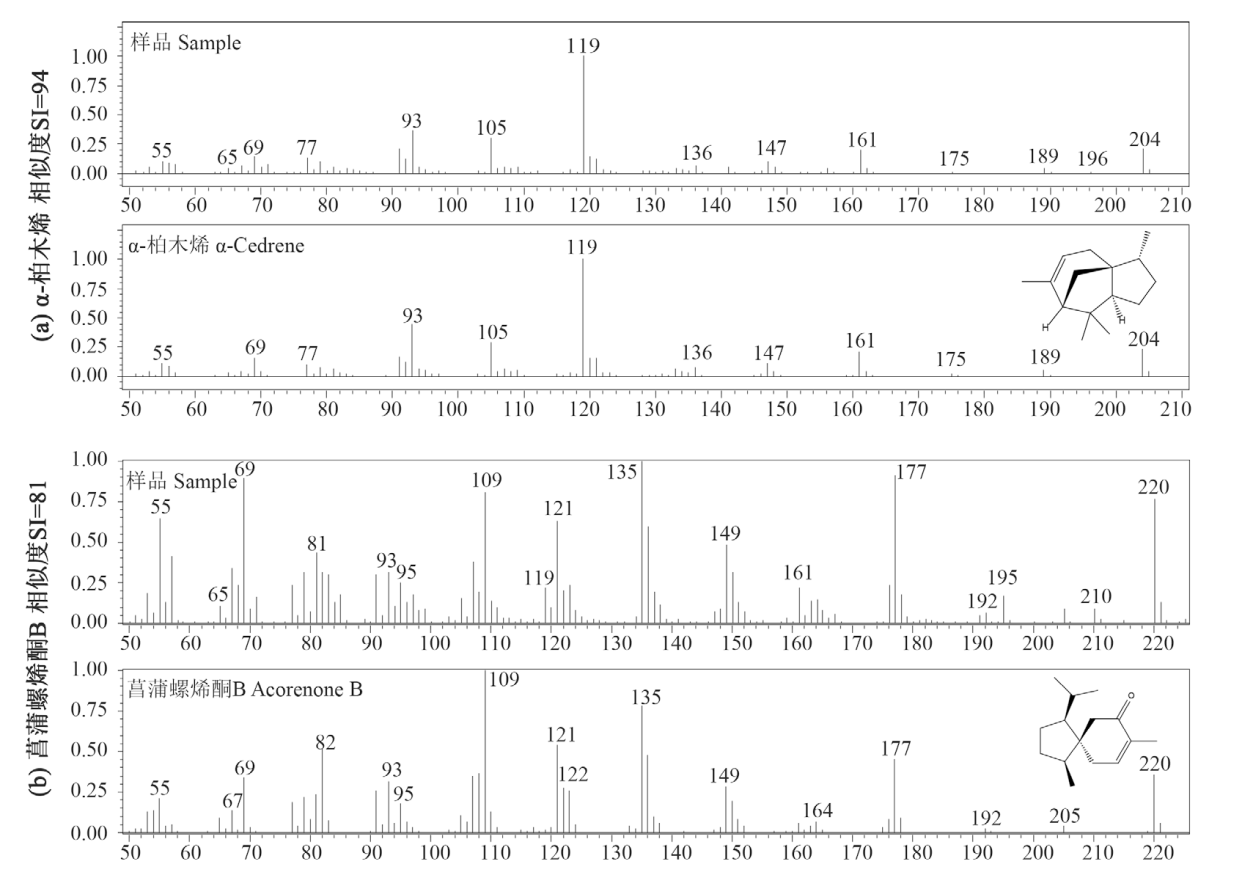
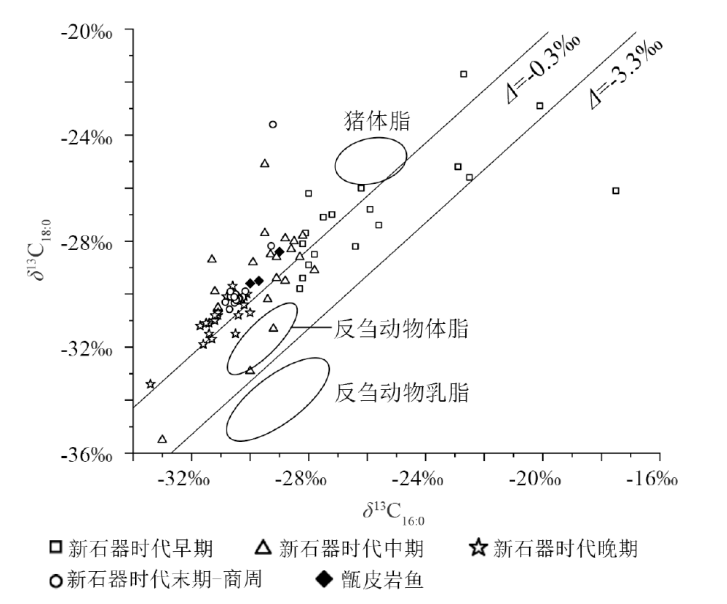
| [1] |
王星. 试析自然环境对漓江流域史前文化发展的影响[A].见:广西壮族自治区博物馆,广西文物保护与考古研究所(编). 处于变革世界中的博物馆:新挑战、新启示——广西壮族自治区博物馆第五届学术研讨会[C]. 南宁: 广西科学技术出版社, 2013, 260-267
|
| [2] |
谢光茂, 余明辉, 卢杰英. 广西隆安娅怀洞遗址发掘取得重要收获[N]. 中国文物报, 2018-01-19(004)
|
| [3] |
赵志军, 傅宪国, 吕烈丹. 广西邕宁县顶蛳山遗址出土植硅石的分析与研究[J]. 考古, 2005, 11: 76-84+104+102
|
| [4] |
向安强, 张文绪, 何安益, 等. 广西资源县晓锦遗址第二期出土古稻研究[J]. 科学与管理, 2014, 34(5): 67-71
|
| [5] |
黄路, 陈洪波. 块茎植物与华南及东南亚地区农业起源问题[J]. 文博学刊, 2024, 4: 44-53
|
| [6] |
Cohen DJ, Bar-Yosef O, Wu X, et al. The emergence of pottery in China: Recent dating of two early pottery cave sites in South China[J]. Quaternary International, 2017, 441: 36-48
doi: 10.1016/j.quaint.2016.08.024
URL
|
| [7] |
陈宥成, 曲彤丽. 中国早期陶器的起源及相关问题[J]. 考古, 2017, 6: 82-92+82
|
| [8] |
卜工. 岭南文明进程的考古学观察[J]. 历史人类学学刊, 2005, 2: 1-23
|
| [9] |
吴启昌. 浅析岭南地区新石器时代陶器的发展与演变[J]. 文物鉴定与鉴赏, 2015, 12: 108-109
|
| [10] |
傅宪国. 岭南地区的新石器时代早期文化[J]. 考古学研究, 2012, 37-48
|
| [11] |
Craig OE, Saul H, Lucquin A, et al. Earliest evidence for the use of pottery[J]. Nature, 2013, 496(7445): 351-354
doi: 10.1038/nature12109
|
| [12] |
杨益民. 中国有机残留物分析的研究进展及展望[J]. 人类学学报, 2021, 40(3): 535-545
|
| [13] |
杨益民. 古代残留物分析在考古中的应用[J]. 南方文物, 2008, 66(2): 20-25
|
| [14] |
Evershed RP, Dudd SN, Copley MS, et al. Identification of animal fats via compound specific δ13C values of individual fatty acids: assessments of results for reference fats and lipid extracts of archaeological pottery vessels[J]. Documenta Praehistorica, 2002, 29: 73-96
doi: 10.4312/dp.29
URL
|
| [15] |
Craig OE, Allen RB, Thompson A, et al. Distinguishing wild ruminant lipids by gas chromatography/combustion/isotope ratio mass spectrometry[J]. Rapid Communications in Mass Spectrometry, 2012, 26(19): 2359-2364
doi: 10.1002/rcm.6349
pmid: 22956328
|
| [16] |
刘晓迪, 胡耀武, 王树芝, 等. 广西大岩和顶蛳山遗址陶器残留物分析及相关问题[J]. 考古, 2023, 104-120
|
| [17] |
Zhang M. Organic residue analysis of hunter-gatherer pottery from Zengpiyan, China, to investigate vessel use and diet[D]. MA thesis, Bristol: The University of Bristol, 2020
|
| [18] |
韦军, 苏勇, 周海, 等. 广西桂林父子岩遗址发掘获重要收获[N]. 中国文物报, 2018-12-28(008)
|
| [19] |
Regert M. Analytical strategies for discriminating archeological fatty substances from animal origin[J]. Mass Spectrometry Reviews, 2011, 30(2): 177-220
doi: 10.1002/mas.20271
pmid: 21337597
|
| [20] |
Romanus K, Poblome J, Verbeke K, et al. An evaluation of analytical and interpretative methodologies for the extraction and identification of lipids associated with pottery sherds from the site of Sagalassos, Turkey[J]. Archaeometry, 2007, 49(4): 729-747
doi: 10.1111/arch.2007.49.issue-4
URL
|
| [21] |
Cramp LJE, Evershed RP. Reconstructing Aquatic Resource Exploitation in Human Prehistory using Lipid Biomarkers and Stable Isotopes[M]. In: Holland HD, Turekian KK(eds.). Treatise on Geochemistry(vol 12)[M]. Oxford: Amsterdam: Elsevier, 2014, 319-339
|
| [22] |
Evershed RP, Copley MS, Dickson L, et al. Experimental evidence for the processing of marine animal products and other commodities containing polyunsaturated fatty acids in pottery vessels[J]. Archaeometry, 2008, 50(1): 101-113
doi: 10.1111/arch.2008.50.issue-1
URL
|
| [23] |
Patalano R, Roberts P, Boivin N, et al. Plant wax biomarkers in human evolutionary studies[J]. Evolutionary Anthropology: Issues, News, and Reviews, 2021, 30(6): 385-398
doi: 10.1002/evan.v30.6
URL
|
| [24] |
Regert M, Bland HA, Dudd SN, et al. Free and bound fatty acid oxidation products in archaeological ceramic vessels[J]. Proceedings of the Royal Society of London Series B: Biological Sciences, 1998, 265(1409): 2027-2032
|
| [25] |
Evershed R P. Experimental approaches to the interpretation of absorbed organic residues in archaeological ceramics[J]. World Archaeology, 2008, 40(1): 26-47
doi: 10.1080/00438240801889373
URL
|
| [26] |
Evershed RP, Arnot KI, Collister J, et al. Application of isotope ratio monitoring gas chromatography-mass spectrometry to the analysis of organic residues of archaeological origin[J]. The Analyst, 1994, 119(5): 909-914
doi: 10.1039/AN9941900909
URL
|
| [27] |
Evershed RP. Organic residue analysis in archaeology: The archaeological biomarker revolution[J]. Archaeometry, 2008, 50(6): 895-924
doi: 10.1111/arch.2008.50.issue-6
URL
|
| [28] |
Craig OE, Forster M, Andersen SH, et al. Molecular and Isotopic Demonstration of the Processing of Aquatic Products in Northern European Prehistoric Pottery[J]. Archaeometry, 2007, 49(1): 135-152
doi: 10.1111/arch.2007.49.issue-1
URL
|
| [29] |
Lucquin A, Gibbs K, Uchiyama J, et al. Ancient lipids document continuity in the use of early hunter-gatherer pottery through 9,000 years of Japanese prehistory[J]. Proceedings of the National Academy of Sciences, 2016, 113(15): 3991-3996
doi: 10.1073/pnas.1522908113
URL
|
| [30] |
Drieu L, Lucquin A, Cassard L, et al. A Neolithic without dairy? Chemical evidence from the content of ceramics from the Pendimoun rock-shelter (Castellar, France, 5750-5150 BCE)[J]. Journal of Archaeological Science: Reports, 2021, 35: 102682
doi: 10.1016/j.jasrep.2020.102682
URL
|
| [31] |
Bull ID, Berstan R, Vass A, et al. Identification of a disinterred grave by molecular and stable isotope analysis[J]. Science & Justice, 2009, 49(2): 142-149
|
| [32] |
张明华. 中国南方新石器时代遗址哺乳动物群初探[J]. 兽类学报, 2011, 4(3): 177-185
|
| [33] |
中国社会科学院考古研究所, 广西壮族自治区文物工作队, 桂林甑皮岩遗址博物馆, 等. 桂林甑皮岩[M]. 北京: 文物出版社, 2003
|
| [34] |
Liu X, Ren M, Fu Y, et al. New insights into the use of Neolithic pottery in Guangxi of South China: Organic residue analysis of experimental and archaeological pottery[J]. Heritage Science, 2023, 11(1): 201
doi: 10.1186/s40494-023-01045-9
|
| [35] |
Steele VJ, Stern B, Stott AW. Olive oil or lard?: Distinguishing plant oils from animal fats in the archeological record of the eastern Mediterranean using gas chromatography/combustion/isotope ratio mass spectrometry[J]. Rapid Communications in Mass Spectrometry, 2010, 24(23): 3478-3484
doi: 10.1002/rcm.4790
pmid: 21072805
|
| [36] |
Carmody RN, Wrangham RW. The energetic significance of cooking[J]. Journal of Human Evolution, 2009, 57(4): 379-391
doi: 10.1016/j.jhevol.2009.02.011
pmid: 19732938
|
| [37] |
Jones M. Moving North: Archaeobotanical Evidence for Plant Diet in Middle and Upper Paleolithic Europe[M]. In: Hublin JJ, Richards MP(Eds.). The Evolution of Hominin Diets[M]. Dordrecht: Springer Netherlands, 2009, 171-180
|
| [38] |
Mcgovern PE, Zhang J, Tang J, et al. Fermented beverages of pre- and proto-historic China[J]. Proceedings of the National Academy of Sciences, 2004, 101(51): 17593-17598
doi: 10.1073/pnas.0407921102
URL
|
| [39] |
Lander V, Schreier P. Acorenone and γ-asarone: indicators of the origin of calamus oils (Acorus calamus, L.)[J]. Flavour and fragrance journal, 1990, 5(2): 75-79
doi: 10.1002/ffj.v5:2
URL
|
| [40] |
Carroll JF, Tabanca N, Kramer M, et al. Essential oils of Cupressus funebris, Juniperus communis, and J. chinensis (Cupressaceae) as repellents against ticks (Acari: Ixodidae) and mosquitoes (Diptera: Culicidae) and as toxicants against mosquitoes[J]. Journal of Vector Ecology, 2011, 36(2): 258-268
doi: 10.1111/jvec.2011.36.issue-2
URL
|
| [41] |
Feng XL, Yu Y, Qin DP, et al. Acorus Linnaeus: a review of traditional uses, phytochemistry and neuropharmacology[J]. RSC Advances, 2015, 5(7): 5173-5182
doi: 10.1039/C4RA12049C
URL
|
| [42] |
Goldberg I, Rokem JS. Organic and Fatty Acid Production, Microbial[M]. Oxford: Academic Press, 2009, 421-442
|
| [43] |
Wu GA, Terol J, Ibanez V, et al. Genomics of the origin and evolution of Citrus[J]. Nature, 2018, 554(7692): 311-316
doi: 10.1038/nature25447
URL
|
| [44] |
徐强, 黄跃, 邓秀新. 基于全基因组信息的“柑”“橘”定义、分类与演化[J]. 中国科学:生命科学, 2024, 54(3): 525-536
|
| [45] |
Kumar D, Jain VK, Shanker G, et al. Utilisation of fruits waste for citric acid production by solid state fermentation[J]. Process Biochemistry, 2003, 38(12): 1725-1729
doi: 10.1016/S0032-9592(02)00253-4
URL
|
| [46] |
Garnier N, Valamoti SM. Prehistoric wine-making at Dikili Tash (Northern Greece): Integrating residue analysis and archaeobotany[J]. Journal of Archaeological Science, 2016, 74: 195-206
doi: 10.1016/j.jas.2016.03.003
URL
|
| [47] |
张弛, 洪晓纯. 华南和西南地区农业出现的时间及相关问题[J]. 南方文物, 2009, 3: 64-71
|
| [48] |
邓振华. 粟黍的起源与早期传播[J]. 考古学研究, 2022, 1: 172-214
|
| [49] |
刘晓迪, 王然, 胡耀武. 桂林市甑皮岩与大岩遗址人和动物骨骼的碳氮稳定同位素研究[J]. 考古, 2021, 7: 83-95+82
|
| [50] |
陈洪波. 从“广谱革命”到稻作农业:岭南地区的“新石器化”进程[J]. 广西民族大学学报(哲学社会科学版), 2022, 44(1): 156-164
|