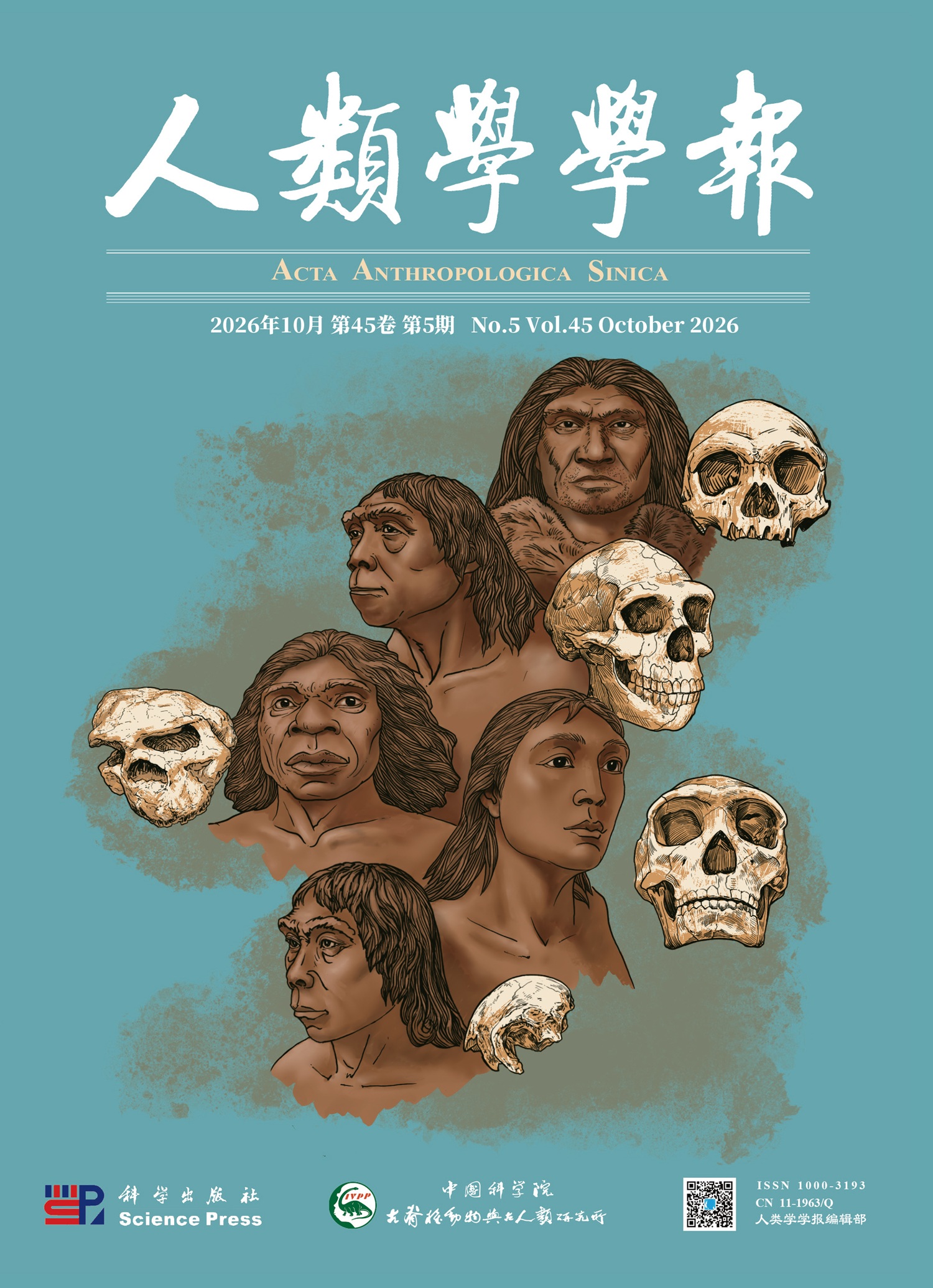
Loading...

Table of Content

    15 October 2026, Volume 45 Issue 05
    Invited Article
    Discussion on the major topics in Chinese paleoanthropology
    BAE Christopher J, CHEN Yiying
    2026, 45(05):  815-838.  doi:10.16359/j.1000-3193/AAS.2026.0061
    Asbtract ( 174 )   HTML ( 43)   PDF (1892KB) ( 113 )  
    Figures and Tables | References | Related Articles | Metrics

    The current state of the Chinese paleoanthropological record is quite interesting to say the least. There are so many research groups active in the field right now that a number of important questions/hypotheses are being resolved and tested on a regular basis. As a result, reports of Chinese paleoanthropological discoveries appear quite regularly in international media outlets. Many of these findings revolve around questions related to the earliest peopling of China and exactly who these hominins were, to the “mystery ape”, to the Movius Line (a line that will apparently never die), to Homo juluensis and H. longi, and to modern human origins. The number of major questions/hypotheses being asked and tested currently using the Chinese data is too numerous to list. However, in this brief review we touch upon a number of these questions/hypotheses, with a particular focus on how the field has changed over the past several decades. As noted at the end of this paper, it is an amazing time to be riding the crest of the wave into the field of Chinese paleoanthropology. The “old guard” should take pride in the fact that many of these questions/hypotheses developed from the firm foundation they established, while the “current guard” should be recognized for not only coming up with innovative ways to answer many of these older questions, but developing further models/questions that need to be tested. This means that the “future guard” will be well positioned to expand on what is happening now in Chinese paleoanthropology.

    Research Articles
    Formation processes of the Yangshang Paleolithic site, Gansu
    ZHAO Yuchao, LI Feng, ZHOU Jing, CHEN Fuyou, LIAO Lishan, SHAO Xinya, GAO Xing
    2026, 45(05):  839-850.  doi:10.16359/j.1000-3193/AAS.2025.0102
    Asbtract ( 95 )   HTML ( 11)   PDF (6051KB) ( 30 )  
    Figures and Tables | References | Related Articles | Metrics

    The Quaternary “loess-paleosol” sequence on the Loess Plateau preserves a complete record of global glacial-interglacial cycles and a continuous chronological framework, making it an essential reference for studying Paleolithic archaeological site formation processes in terms of chronology and paleoclimate. Research on snail fossils, phytoliths, pollen, grain size, and magnetic susceptibility within the loess strata also provides effective indicators of sedimentary environments. The Yangshang site, one of the earliest Middle Pleistocene sites in the western Loess Plateau, spans a human activity period of from 220 to 104 ka BP. This study employs geoarchaeological methods and taphonomic analysis of unearthed artifacts to evaluate the intensity of natural modifications during the formation of the Yangshang site.

    The results indicate that the lower to middle stratigraphic layers (L6~L9) primarily represent in situ slow sedimentation with minimal post-depositional disturbance. The brownish-red paleosol layers of L9 and L8, characterized by their high fine-grained particle content and elevated magnetic susceptibility (MS) values, indicate that the utilization of the site began during the warm and humid MIS 7 interglacial period, with the sediments belonging to the S2 layer of the loess-paleosol sequence. In contrast, L7, which corresponds to the MIS 6 glacial period, exhibits a yellowish soil color, with peak values in sand content and median grain size, alongside a significant decline in MS, classifying it as part of the L2 layer of the loess-paleosol sequence. Although L6 also falls within MIS 6, its soil color, grain size, and MS point to a strong pedogenic environment, distinguishing it from typical loess. This may be attributed to smaller-scale climatic fluctuations within the glacial period, L6 could represent a weakly developed paleosol formed during an interstadial phase of MIS 6. In contrast, the overlying deposits (above L6) exhibit severe tilting, uneven thickness, and unconformable contacts between layers, indicating that the late cultural deposits of the site have undergone significant erosion, transport, and large-scale secondary sedimentation.

    Spatial distribution patterns of artifacts reveal a strong correlation between hominin activity intensity and large-scale climatic fluctuations. During the MIS 7 interglacial (L9~L8), hominin occupation gradually intensified, culminating in the formation of the first high-density artifact concentration zone in the upper part of L8. However, the transition into the MIS 6 glacial period (L7~L6) is marked by dispersed artifact distributions in L7 and a near-absence of cultural materials at the L7/L6 boundary, suggesting increased mobility of site occupants due to increased resource patchiness and a consequent decline in site occupation continuity. It was not until the subsequent pedogenic enhancement during the MIS 6 interstadial (L6) that hominin activity at the Yangshang site regained intensity.

    Lithic technology of ancient hominins of the Guanshan site in Shuiyangjiang River Basin, Anhui Province
    DONG Zhe, ZHAN Shijia
    2026, 45(05):  851-860.  doi:10.16359/j.1000-3193/AAS.2025.0086
    Asbtract ( 79 )   HTML ( 8)   PDF (3119KB) ( 27 )  
    Figures and Tables | References | Related Articles | Metrics

    The Guanshan site is located in the Shuiyangjiang River Basin, Ningguo City, and was confirmed in 1987. Guanshan site is near another famous site, Maozhushan, where a pebble semicircle was recovered and believed by researchers to be an artificial structure. Two further excavations were conducted in 1993 and 1996 by the Institute of Archaeology and Cultural Relics of Anhui Province. A total of two hundred and twenty-two lithics were discovered on the surface and in the red clay deposit from a two-hundred-square-meter digging area. The raw materials of these lithics were mainly nearby quartzite river cobbles and quartz was less common. Most of the stone artifacts were medium to large in size. The assemblages of stone artifacts included cores, flakes, chunks, utilized materials, and stone tools. The majority of core platforms had cortex, and chopper cores were predominant. The situation is similar to the whole flakes, whose natural platforms were also predominant. All of the tools were large size and heavy-duty scrapers, choppers and picks were more common. There were also a few knives manufactured from large flakes. Most of the lithics were produced by stone hammer free-hand percussion, although bipolar products also existed. According to the stone artifacts buried in the homogeneous red clay and vermiculated red clay, it is reasonable to anticipate that early humans occupied the site during the Middle Pleistocene. Although the OSL dating work was also conducted at this site, unfortunately there was still no result because of lacking proper testing specimens. Several large flakes detached from large cores and some Acheulean large cutting tools especially picks were recognized at the site. The situation is somewhat similar to other Middle Pleistocene sites that are also buried in the Shuiyangjiang River Basin. All of these sites exhibited characteristics resembling Acheulean-like technology. The research also bears great significance for studying the diffusion and variation of Acheulean technology in China.

    Hesperotherium remains newly discovered in the Renzidong Cave site, Fanchang, Anhui and its paleoecological significance
    SUN Boyang, WANG Yuan, ZHAO Keliang, HUANG Baiting, HU Xiaowei, JIN Changzhu
    2026, 45(05):  861-870.  doi:10.16359/j.1000-3193/AAS.2026.0060
    Asbtract ( 111 )   HTML ( 8)   PDF (4269KB) ( 17 )  
    Figures and Tables | References | Related Articles | Metrics

    The Renzidong Cave site is one of the oldest Paleolithic localities in East Asia. During the excavation as part of the State Key Project of the Ninth Five-Year Plan, numerous stone and bone artifacts were discovered during 1998 to 2005. In addition, abundant vertebrate fossils were also yielded. All four Quaternary perissodacty l families (Equidae, Rhinocerotidae, Tapiridae, and Chalicotheriidae) have been reported, including Hesperotherium huaiheense. From 2020 to 2024, a joint team from the Institute of Vertebrate Paleontology and Paleoanthropology (Chinese Academy of Sciences) and the People’s Government of Fanchang District, Wuhu City, conducted a second round of excavations at the Renzidong Site. Several well-preserved teeth of Chalicotheriidae were collected. Quaternary chalicotheres represent a relict Neogene lineage and were among the first fossil vertebrates reported from China. After decades of debate and revision, most Quaternary chalicothere specimens had been as assigned to Hesperotherium sinense. The known distribution of H. huaiheense is limited to the Renzidong site. The new chalicothere specimens from Renzidong are much better preserved than the type specimens and exhibit a moderate degree of wear, thereby retaining important morphological characters. The new molars exhibit a reduced posterior part of the metacone and a distinctly trapezoidal occlusal outline of M3 with a constricted posterior part; the lingual cingulum is absent at the opening of the central valley of M3. All of these features are identical to those of H. huaiheense but differ from typical H. sinense. Some authors once regarded H. huaiheense as a subspecies of H. sinense based on the view that all morphological differences fall within the variation of H. sinense. We interpret the reduced metacone and absent lingual cingulum as having evolutionary and ecological significance, respectively. We therefore recognize H. huaiheense as a valid species. Another subspecies, H. sinense primigenius, retains primitive characters (e.g., a remnant protoloph), which also have evolutionary significance. Hesperotherium had a long temporal range spanning much of the Early Pleistocene (from 2.6 Ma to 1.0 Ma). Recognizing multiple species within this genus is a reasonable approach, although it depends on further discovery and research. Morphological similarities between Hesperotherium and the South American Megatherium suggest analogous ecological adaptations. Recent paleoecologic analyses indicate that both genera likely occupied similar habitats.

    Entheseal changes and limb bone morphological variation of the population from the Wenchi Cemetery in Yu County, Shanxi
    SUN Xiaofan, LIU Yan, ZHANG Quanchao
    2026, 45(05):  871-883.  doi:10.16359/j.1000-3193/AAS.2025.0085
    Asbtract ( 80 )   HTML ( 6)   PDF (834KB) ( 10 )  
    Figures and Tables | References | Related Articles | Metrics

    Entheseal changes and the cross-sectional geometry of long bone diaphyses have emerged as the most widely used skeletal markers in bioarchaeology for reconstructing the activity patterns of ancient populations. This study examines entheseal change patterns and limb bone morphological characteristics in a mortuary population excavated from the Ming-Qing Dynasty Wenchi Cemetery. Comparative analyses were conducted from three perspectives: between males and females, and between females with and without footbinding.

    The results are as follows: 1) Correlation analysis between entheseal changes and indicators of age and body size revealed that age is the primary factor influencing entheseal changes, whereas body size is not significantly associated with their degree; 2) High levels of entheseal changes were observed in males, as well as in older and larger-bodied individuals; 3) Males exhibited greater entheseal robustness and more pronounced entheseal changes, indicating that they undertook heavier activity loads; 4) A clear sexual division of labor is evident within the Wenchi population: females were more likely to engage in production activities relying primarily on repetitive upper limb movements, while males’ daily labor not only centered on upper limb activities but also demanded higher weight-bearing capacity of the lower limbs and waist; 5) Females participated in household production activities regardless of whether they had bound feet.

    By integrating skeletal evidence with the geographical environment, mineral resource distribution, and historical records from Yu County, the production activities of the Wenchi population during the Ming and Qing Dynasties can be further inferred. The enhanced musculoskeletal development of the shoulders, elbows, forearms, and feet in males can be attributed to the frequent use of upper limb movements—such as extension, flexion, pronation, supination, and lifting—in coal mining and iron smelting, as well as the frequent mechanical stress on the feet during coal transportation. In addition to farming, males in Wenchi may have engaged in handicraft production activities such as coal mining and iron smelting during their leisure time.

    For females, the musculoskeletal characteristics—including increased extension and flexion of the acromioclavicular and elbow joints, coupled with lower intensity of lower-limb activity—suggest their possible participation in textile production. The rapid development of the cotton textile industry in Shanxi Province during the Ming and Qing Dynasties provides supporting evidence for the daily labor activities of Wenchi females. Both females with and without footbinding were involved in textile work and agricultural production as part of the household production system.

    Implications of the chronological age recorded in the epitaphs for the age-at-death estimation methods of ancient residents
    LYU Jing, LIU Wentao, SUN Huinan, YANG Zhangqiaochu, ZHAO Yongsheng
    2026, 45(05):  884-895.  doi:10.16359/j.1000-3193/AAS.2025.0103
    Asbtract ( 109 )   HTML ( 13)   PDF (2234KB) ( 18 )  
    Figures and Tables | References | Related Articles | Metrics

    The estimation of age-at-death for ancient human skeletal remains excavated from archaeological sites constitutes a fundamental and critical task for researchers in the field of human osteoarchaeology. This foundational work provides essential data for reconstructing demographic profiles, understanding paleoepidemiology, analyzing ancient lifestyles and health patterns, and interpreting funerary practices and social structures of past populations. Currently, the most frequently employed methodological approaches for age estimation in this context are the traditional observational method, which synthesizes morphological changes observed on the skeleton and dentition, and the transition analysis method, which is grounded in Bayesian statistics. Each method serves a distinct purpose in the analysis of human remains.The primary objective of both the traditional observational method and the transition analysis method is to estimate the biological age-at-death of an individual—that is, the physiological age reflected by the skeletal remains themselves. These methods rely on the well-established principle that the human skeleton and teeth undergo progressive, age-related changes in their morphology. In contrast, obtaining the chronological age—the actual calendar age since birth—of the deceased individual presents a significantly greater challenge in archaeological contexts. For historical periods in certain cultures, particularly in China, documentary sources, most notably epitaphs inscribed on burial tablets or stones, emerge as the primary and most reliable means of ascertaining the tomb owner’s precise chronological age at death. These inscriptions provide a direct historical record against which osteological age estimates can be compared and validated.

    This paper presents a practical application and comparative evaluation of these two osteological methods. The research focuses on human skeletal remains excavated from two distinct cemetery sites in Shandong Province: the Fudamen Cemetery located in Liaocheng and the Dalan Village cemetery in Yantai. The core of the methodological approach involved independently applying both the traditional observational method and the transition analysis method to estimate the age-at-death for individuals from these assemblages. Subsequently, a crucial comparative analysis was undertaken by juxtaposing these osteological estimates against the chronological ages recorded in the epitaphs associated with the tombs, where available.The findings of this comparative study reveal significant and noteworthy patterns. The traditional observational method was found to systematically underestimate the age-at-death of the ancient residents interred at these sites. This underestimation bias was particularly pronounced and concerning for older adult individuals, whose ages were consistently assessed as younger than their documented chronological age. This phenomenon is widely recognized in osteology; age-related morphological changes in the skeleton become less distinctive and more variable after an individual reaches full maturity, making precise age estimation for older adults inherently challenging and often leading to systematic under-aging.

    In contrast, the estimation results derived from the transition analysis method demonstrated a markedly closer alignment with the chronological ages provided by the epitaphs. The Bayesian statistical framework underlying transition analysis, which incorporates probability distributions of age-related changes derived from known-age reference populations, appears to provide a more robust and accurate estimation, especially for older individuals, by better accounting for the increased variability in skeletal aging.Therefore, this research successfully verifies the applicability and enhanced reliability of the transition analysis method for age estimation in an archaeological context, using historically documented epitaph ages as a robust verification benchmark. This empirical validation carries direct and profound implications for current practice. It strongly suggests that human osteoarchaeologists, when undertaking the crucial task of estimating age-at-death from ancient skeletal materials, must carefully consider the methodological framework they adopt. The choice between methods should not be arbitrary but should be a calculated decision based on several factors, with the preservation quality and completeness of the bone material itself being a primary consideration. In many cases, a combined approach, utilizing both the traditional observational method for a broad assessment and the transition analysis method for a more statistically refined estimate on key skeletal elements, might represent the most comprehensive strategy. Ultimately, this study underscores the importance of methodological rigor and cross-validation in human osteoarchaeology, contributing to the generation of more accurate and reliable paleodemographic data.

    Morphology variability of human crania from the Hengyuan Road Cemetery, Datong of Shanxi
    HOU Kan, LI Shuyun, XU Nan, LI Jun
    2026, 45(05):  896-911.  doi:10.16359/j.1000-3193/AAS.2025.0054
    Asbtract ( 94 )   HTML ( 12)   PDF (1786KB) ( 25 )  
    Figures and Tables | References | Related Articles | Metrics

    Cranial morphological variability and potential European ancestry factors in human skeletal remains from the Northern Wei Dynasty cemetery at Hengyuan Road were examined in this study. A total of 62 craniums were analyzed, focusing on 18 male and 22 female adult individuals. The research aimed to address methodological limitations in traditional cranial analysis by integrating multivariate statistics and machine learning algorithms, thereby reducing subjectivity in ancestry estimation. The study began with an assessment of within-group variability using Principal Component Analysis (PCA) and biological distance analysis. Specifically, the mean pairwise Euclidean distance (dm) was calculated to quantify intra- and intergroup variation, revealing that male craniums exhibited significantly lower variability compared to females. This disparity suggests that females may have originated from more diverse genetic or geographic backgrounds, potentially linked to intermarriage or migration practices during the Northern Wei period.

    To identify non-Mongoloid individuals, discriminant analysis was conducted using W. W. Howells’ global craniometric database. The results suggested the presence of Europoid traits in some individuals, particularly those resembling the Mediterranean East Type (e.g., M35) and the Central Asian-Two Rivers Type (e.g., M13-2), which are two branches of Europoid. Machine learning algorithms, including random forest (via Ancestrees) and linear discriminant analysis (via Fordisc 3.1), were employed to validate these findings. For instance, M13-2 exhibited a 77.73% probability of Northern / Central European ancestry using Ancestrees’ tournamentForest algorithm, while Fordisc classified M35 as closest to ancient Egyptian and Zalavar groups (probabilities: 34.9% and 31.2%, respectively). These results highlight the advantage of algorithmic approaches in mitigating observer bias inherent in traditional visual assessments.

    Biological distance analysis using unrooted neighbor-joining trees further contextualized these individuals within broader Eurasian populations. M35 clustered closely with Mediterranean East Type groups (e.g., Alagou I and Shampula), historically associated with ancient Silk Road populations like the Cheshi and Yutian. Conversely, M13-2 aligned with Central Asian-Two Rivers Type groups (e.g., Jilintai and Zhaosu), suggesting ties to Wusun or Xiongnu-affiliated populations. Notably, the mixed ancestry observed in females like M8-1 and M38 may reflect the multicultural dynamics of Pingcheng (modern Datong), which served as a hub for trade, warfare, and religious exchange during the Northern Wei Dynasty.

    The socio-political context of Pingcheng as a cosmopolitan center underpins these findings. Between the 4th and 6th centuries CE, the Northern Wei court relocated millions of people from conquered territories, including Central Asian, Xianbei, and Xiongnu groups. Additionally, the presence of Buddhist artifacts in the Hengyuan Road cemetery aligns with historical records of Sogdian and Persian monks contributing to religious dissemination, possibly introducing Europoid genetic lineages. This multicultural exchange is reflected in the coexistence of European and East Asian cranial traits within the burial population.

    Finally, the study underscores the transformative potential of advanced statistical methods in bioarchaeology. By combining PCA, machine learning, and phylogenetic networks, this research provides a replicable framework for analyzing cranial variability and ancestry in fragmented or incomplete datasets. However, limitations such as missing data emphasize the need for cautious interpretation. This work not only enriches our understanding of population diversity in medieval China but also challenges historical narratives by demonstrating that Europoid individuals in the Yellow River Basin were likely isolated cases rather than large-scale migrants, consistent with Han Kangxin’s earlier conclusions. Ultimately, these findings illustrate how cultural assimilation and the Silk Road’s connectivity shaped the biological landscape of ancient Pingcheng, reaffirming the integrative power of Chinese civilization.

    Obesity rate and its regional distribution characteristics in the Chinese population
    LI Yonglan, HAN Yuan, ZHANG Xinghua, YU Keli, BAO Jinping, ZHENG Lianbin
    2026, 45(05):  912-925.  doi:10.16359/j.1000-3193/AAS.2025.0114
    Asbtract ( 85 )   HTML ( 7)   PDF (957KB) ( 23 )  
    Figures and Tables | References | Related Articles | Metrics

    In this study, the weight, height, and waist circumference of 69549 Chinese individuals (32152 males and 37397 females) were measured, and their Is and Irvalues were calculated. The results showed that the Isvalues of Chinese males and females were 0.802±0.058 and 0.800±0.106, respectively, indicating that the Is values were close between the two genders. For Ir values, males scored 3.746±1.175 while females scored 4.194±1.530, with females showing significantly higher values than males.

    With the increase of age, both Is and Irvalues of the Chinese population present an upward trend. Correlation analysis revealed a significant positive correlation between Ir and Is. Moreover, Is and Ir are closely associated with blood pressure: an increase in Is and Ir values will lead to elevated blood pressure and heart rate in Chinese people.

    It was found that the Is and Ir values of the systolic hypertensive population were significantly higher than those of the non-hypertensive population. Overall, regional variations in Isand Irexist among the Chinese population. For both Chinese males and females, Isshowed significant positive correlations with longitude, age, precipitation, per capita disposable income, and per capita consumption expenditure. Similarly, Ir exhibited significant positive correlations with latitude, age, sunshine duration,per capita disposable income, and per capita consumption expenditure, while showing significant negative correlations with annual average temperature and precipitation.

    Preliminary estimates indicate that among individuals with Im≥ 24 kg/m² (BMI, denoted as Im in this study), those with an Ir value of 4.241 for males and 5.086 for females are at risk of obesity. This study employed a comprehensive obesity assessment method, revealing that the obesity rate in China is 27.3% for men and 21.7% for women, with the male obesity rate being higher than that of females. Additionally, a regression analysis between Ir and latitude was conducted, resulting in a regression equation describing the relationship between latitude and Ir.

    A preliminary investigation on the morphology and evolutionary mechanisms of leaf-like patterns
    CHEN Shitao, LUO Yaping, ZHAO Yabin
    2026, 45(05):  926-938.  doi:10.16359/j.1000-3193/AAS.2025.0081
    Asbtract ( 44 )   HTML ( 4)   PDF (3256KB) ( 10 )  
    Figures and Tables | References | Related Articles | Metrics

    Traditional fingerprint classification systems exhibit limitations in the precise categorization and biological interpretation of special or complex fingerprint morphological features, thereby hindering the interdisciplinary research and applications of fingerprints. This study introduces a systematic framework for leaf-like patterns (LLPs), encompassing four subtypes: semi-leaf loops, full-leaf loops, semi-leaf whorls, and full-leaf whorls. Using data from 161 families (626 individuals) in northeastern China, we conducted morphological observations and statistical analyses to investigate the morphological principles, inheritance patterns, and evolutionary mechanisms of LLPs. Following standard dermatoglyphic research protocols, high-resolution (1,000 dpi) ink-rolled fingerprints were collected, and samples with congenital anomalies or distortions were excluded. Statistical analyses included Kolmogorov-Smirnov testing, Pearson correlation analysis, and multivariate regression modeling to quantify parental contributions to LLP expression in offspring. Key findings include: 1) LLPs accounted for 12.00% of loops and 19.28% of whorls. Notably, LLPs were concentrated on the ring finger, occurring approximately 1.93 times as frequently as on other digits. 2) Maternal lineage may play a relatively prominent role in the transmission of LLPs. Maternal-offspring correlations (r=0.227, P<0.01) and the explanatory power of the regression model (adjusted R²=0.046) significantly surpassed paternal contributions. Multivariate regression models further confirmed maternal dominance, with maternal regression coefficients (β=0.130 to 0.268) consistently exceeding paternal values (β=0.095 to 0.113) across offspring groups. 3) Comparative analysis of fingerprint ridge counts revealed that the morphological complexity of LLPs is intermediate between non-leaf loops (loops excluding semi-leaf and full-leaf loops) and non-leaf whorls (whorls excluding semi-leaf and full-leaf whorls). Analysis of isogeneic combinations revealed a marked affinity for LLP homotypic pairs (LLP/LLP observed frequency was about 2.2-fold higher than expected, P<0.001), while allogeneic combinations with simpler fingerprint patterns (arches and non-leaf loops) displayed incompatibility. By proposing a novel taxonomic framework for fingerprint morphological features, we advance the systematic classification of dermatoglyphic diversity and shed light on its evolutionary mechanisms. The study of LLPs provides foundational insights in three areas: 1) A deeper understanding of population-specific fingerprint variation; 2) Refinement of fingerprint identification through LLP-specific pattern recognition algorithms and likelihood ratio estimation; 3) Potential correlations between LLP distributions and developmental disorders, which require further investigation. The methodological approach and empirical results contribute to the advancement of dermatoglyphic research in anthropology, forensic science, and medicine.

    Excavation / Investigation Reports
    A preliminary report on the excavation of Wujialiang Paleolithic Locality 1 in the Nihewan Basin, North China
    MA Chao, TIE Weidong, QIU Wenyan, XUE Feng, DEMIANA YG Rishmawi, NIU Dongwei, HOU Jiaqi, WANG Fagang
    2026, 45(05):  939-947.  doi:10.16359/j.1000-3193/AAS.2026.0053
    Asbtract ( 103 )   HTML ( 8)   PDF (2326KB) ( 37 )  
    Figures and Tables | References | Related Articles | Metrics

    As a key area to explore the origin and evolution of human beings in the world, Nihewan Basin is renowned for the continuity of Quaternary sediments and the richness of ancient human occupations. Wujialiang Locality 1 (WJL 1) is an important site of the Shandui Site cluster, located in the southern part of Datianwa platform on the eastern edge of Nihewan Basin. It was first discovered in 1992, and a small area of archaeological excavation was carried out in 2015. The site is buried in the upper part of Nihewan bed, and the stratigraphic sequence is complete. The cultural layer is well preserved, and a large number of cultural remains such as stone artifacts and animal fossils have been unearthed. It is estimated by the OSL dating that the age of this site is between 378 ka BP—359 ka BP, which belongs to the middle Middle Pleistocene.

    It could be inferred from the geomorphological environment, the lithic assemblages and their preservation conditions that Wujialiang Locality 1 belongs to an in-situ burial type of archaeological site, with ancient human activities being the primary cause of cultural artifact accumulation and deposition at the site. Analysis of lithic raw materials reveals that ancient humans mainly utilized locally abundant materials such as rhyolite, flint, and siliceous limestone for lithic core reduction and tool fabrication. Lithic technological analysis indicates that ancient humans primarily employed the hard hammer percussion method for core reduction, supplemented by bipolar technique; cores were not systematically prepared before flake removal, primarily utilizing core rotation to obtain more flake products, resulting in mostly wide and thin flakes with irregular shape. Tool types mainly consist of small scrapers, with blanks predominantly being large-sized flakes, indicating a preference for the unifacial development and utilization of tool edges by ancient humans.

    Overall, based on the types and technological characteristics of lithic artifacts, the lithic technology at Wujialiang Locality 1 belongs to the predominant flake tool technology system in northern China. The features of lithic industry at the Shandui site cluster are relatively consistent, representing the inheritance and development of earlier stages of lithic industry in this region.

    Stone artifacts unearthed in 1990 from the Banjingzi site locality 1
    REN Jincheng, LU Yao, CHEN Fuyou, WANG Fagang, LI Feng
    2026, 45(05):  948-964.  doi:10.16359/j.1000-3193/AAS.2026.0059
    Asbtract ( 66 )   HTML ( 9)   PDF (5137KB) ( 15 )  
    Figures and Tables | References | Related Articles | Metrics

    This paper presents a detailed technological analysis of the lithic assemblage recovered from the 1990 excavation at Locality 1 of the Banjingzi site, Nihewan Basin, dated to 90-80 ka. Based on the examination of 2535 artifacts, this study investigates raw material utilization, core reduction strategies, debitage characteristics, and tool typology to characterize the technological behaviors of early Late Pleistocene hominins in northern China.

    The assemblage demonstrates a highly selective raw material economy, overwhelmingly dominated by chert sourced from the local Zhoujiashan area (94.64% of all artifacts). This indicates a focused exploitation strategy targeting the most suitable lithic resource available in the immediate landscape, with minimal use of other raw material types like dolomite, quartz. Core reduction was primarily based on simple and expedient strategies, utilizing small chert blocks and fragments. A distinctive technical feature is the common practice of localized, longitudinal trimming of core platforms. In addition to this dominant approach, a small but consistent presence of discoid cores (6% of total cores) signifies the application of a more structured, centripetal flaking method. The resulting debitage consists predominantly of small, wide-thin flakes, about 92.8% of which have a length of less than 40 mm. Although 10 longer flakes were produced—often by exploiting natural ridges on core surfaces—there is no evidence for systematic blade production. The formal tool component is substantial and typologically diverse. Scrapers of various forms (e.g. side scrapers, double scrapers, convergent scrapers, and transversal scrapers) constitute the dominant group, accompanied by notable frequencies of notches, borers, and denticulates, etc. A defining characteristic is the manufacture of “steep-edged” tools, primarily over 65 specimens of scrapers, which were produced through intensive, invasive retouch on thick blanks. This resulted in durable working edges with steep angles (commonly 60°~90°), suggesting a deliberate design for heavy-duty processing activities. Evidence of limited tool resharpening flakes and the strategic selection of blanks with natural backs further reflects planned technological behaviors related to tool maintenance and prehension.

    The Banjingzi assemblage provides a well-dated and analytically robust benchmark for the early Late Pleistocene in northern China. While the industry aligns with the broader regional small flake-tool tradition, it exhibits distinct local technological signatures, including specific core platform management, the low-frequency but persistent use of discoid technology, and the standardized production of steep-edged tools. These features illustrate adaptive complexity and regional innovation, contributing to a more nuanced understanding of technological variability and hominin behavioral adaptations during this key transitional period in East Asia.

    Reviews
    Review of experimental research on pressure flaking technology
    WANG Chengxiang, CHEN Shengqian
    2026, 45(05):  965-975.  doi:10.16359/j.1000-3193/AAS.2026.0014
    Asbtract ( 60 )   HTML ( 6)   PDF (1500KB) ( 28 )  
    Figures and Tables | References | Related Articles | Metrics

    Laminar remains and pressure flaking technique are landmarks of the Upper Paleolithic. Keeping track of areas where pressure flaking technique was present is valuable for discussing the crucial issues in Paleolithic archaeology, such as migration, environmental adaption, etc. Researchers used to believe that some laminar remains, e.g., bladelets and microblades, are the product of pressure flaking technique. However, modern flint-knappers proved that laminar remains could also be produced by percussion flaking technique. Tracing pressure flaking technique solely by laminar remains is no longer acceptable. In light of this, researchers have tried to propose certain criteria to distinguish pressure laminar remains based on lithic replication experiments.

    This paper questions the reliability of such criteria. Based on analyzing the rationality and effectiveness of lithic replication experiment in pressure laminar, we raise concern about differentiated conclusions reached by replication experiments. Then, the reliability of existing criteria is denied by revealing such conflict between four classic experimental cases. These discussions also make clear that the attempt to construct universal distinguishing criteria is hard to realize because the conclusions of replication experiments lack generalizability. Therefore, it is necessary to conduct contextualised replication experiments to determine the production of given laminar remains. While the reasons for lacking of universality deserves to be discussed because it helps to improve subsequent replication experiments.

    Newcomer’s trichotomy of replication experiments’ design, namely method, mode and technique, indicates that the physical property of pressure flaking tools influences the production of laminar products and finally, the viewpoints about distinguishing criteria. But it is critically recognized that his negligence in assigning pressure into mode reflects academics’ common unawareness of the variability of pressure flaking tools. Previous researches on fracture mechanism of flaking demonstrated how pressure flaking tools affect pressure replication experiments. Hence, these researches suggest that replication experiments are not finished by simply imitating the appearance of remains. For more reliable experimental results, researchers should pay attention to pressure flaking tools in archaeological context.

    Two referential methods are presented for reconstructing archaeological pressure flaking tools: Listing usable local resources for pressure tools and analyzing the use-wear of laminar remains or cores. However, it is acknowledged that solely retrospecting the pressure laminar remains distinguishing studies from the perspective of sample production is not enough. More reflection is needed.

    New advances in the study of the origin of the earliest humans on the American continent
    YUAN Zengjian, CEN Hui, LI Yinghua
    2026, 45(05):  976-990.  doi:10.16359/j.1000-3193/AAS.2025.0115
    Asbtract ( 73 )   HTML ( 9)   PDF (2320KB) ( 40 )  
    Figures and Tables | References | Related Articles | Metrics

    The investigation into the origins of the earliest humans in the Americas is a pivotal area of interdisciplinary research, offering critical insights into modern human intercontinental migration and ancient human environmental adaptation and survival strategies. Initially, the “Clovis First Model” proposed in the 1920s, dominated explanations of the peopling of the Americas, positing a single migration from Northeast Asia via a land bridge during the Last Glacial Maximum. However, the discovery of pre-Clovis sites has prompted a reevaluation, leading to alternative models such as the “Tripartite Model”.

    Advancements in the identification of pre-Clovis sites and the development of ancient DNA technology have further refined these discussions. The “Multiple Migration Hypothesis” has emerged as a more integrative and universal framework, suggesting multiple migratory events from Northeast Asia to the Americas along both land bridge and Pacific coastal routes.

    Methodologically, research has transitioned from reliance on singular archaeological data to a multidisciplinary approach, incorporating ancient DNA analysis, stone tool techno-functional studies, and paleoenvironmental reconstructions. This shift underscores the necessity of integrating multidisciplinary data to construct a comprehensive evidence chain, providing a robust foundation for understanding the complex migratory patterns that shaped the peopling of the Americas.

    Research on the initial peopling of the Americas has moved from an early “single-route, single-population, single-technology, single-subsistence” model to a phase in which multiple competing hypotheses coexist, and finally to the proposal of integrative, universal frameworks. Methodologically, it has shifted from simple artifact comparisons to the synthesis of ancient-DNA, lithic techno-functional, paleoenvironmental and other datasets, continuously widening and deepening the field. Several long-standing assumptions have been overturned, giving rise to new—and increasingly consensual—understandings within the scholarly community.With the steady influx of new discoveries and the growing power of analytical technologies, future work must pursue two complementary tracks. First, archaeology within the Americas itself needs to be intensified, especially on the now-submerged Pacific continental shelf and at sites that pre-date the Last Glacial Maximum. Second, collaborative archaeological investigations linking the Americas and Asia must be strengthened, ensuring that trans-continent comparative data inform every stage of the inquiry.

    A wide range of evidence indicates that the ancestors of present-day Native Americans are closely related to Late Pleistocene populations of East and Northeast Asia. Consequently, research on the first peopling of the Americas is inseparable from the study of ancient humans and Paleolithic archaeology across Asia. Our investigations should adopt a transcontinental perspective that integrates the American and Asian landmasses within the broader framework of modern human origins. By linking the origin and evolution of modern humans in East Asia with prehistoric gene flow across Eurasia, we can provide a more comprehensive and macroscopic lens through which to understand the source and dispersal of the earliest inhabitants of the Americas.

    Advances and future directions in Paleolithic composite tool research
    LIN Nairu, SANO Katsuhiro, YANG Shixia
    2026, 45(05):  991-1006.  doi:10.16359/j.1000-3193/AAS.2025.0107
    Asbtract ( 106 )   HTML ( 10)   PDF (2203KB) ( 64 )  
    Figures and Tables | References | Related Articles | Metrics

    The manufacture of composite tools is often seen as a hallmark of cognitive sophistication, and played important role in the process of “behavioral modernity”. The emergence of composite tools can be traced back to the Middle Stone Age in Africa and the Middle Palaeolithic in Europe, with marked progress evident in later-stage lithic assemblages, culminating in the refinement of microlithic techniques. This technological innovation in tool production catalyzed the intensification of hunting practices and the systematization of resource-processing behaviors—adaptations likely rooted in selective pressures to optimize caloric returns and reduce energy expenditure. Distinct from monolithic tools—defined as implements crafted exclusively from stone—composite tools are engineered systems integrating multiple material components: (1) a lithic working element (e.g., blade, point), (2) an organic haft (wooden or bone shaft), and (3) adhesive / binder substances (e.g., plant resins, animal-derived glues). Therefore, the manufacture of composite tools requires the integration of diverse materials and involves multi-layered cognitive organization and fine motor skills. This techno-behavioral complexity positions composite toolmaking as a keystone innovation in hominin biocultural evolution, bridging material culture and emerging cognitive architectures. Notably, neurosciences analysis hypothesized a coevolutionary relationship between hafting technologies and the emergence of syntactic language, suggesting that the neural circuitry required for tool assembly may have scaffolded the development of recursive symbolic communication.

    The composite tools can be classified into two principal categories: single-component composite tools (featuring a singular lithic element, such as hafted projectile points) and multi-component composite tools (integrating multiple lithic elements, exemplified by bone shafts inset with microlithic blades). Archaeological records from Africa demonstrate that single-component variants, notably hafted stone points, emerged as early as 500,000 years ago. In contrast, multi-component innovations—characterized by the strategic embedding of microliths or microblades into organic shafts—appear significantly later, with definitive examples dating to around 70,000 years ago. Although organic shaft and binder components are seldom preserved, the frequent analysis of adhesive and hafting traces provides verifiable evidence for composite tool identification. The emergence of composite tools represents not only a pivotal technological innovation in the Paleolithic Age but also a catalyst for advancing resource exploitation strategies and tool production systems. Despite their transformative role in human cultural evolution, the geographic distribution of documented composite tool assemblages remains heavily skewed, with robust evidence predominantly documented in Western Eurasia, Africa, and North America. By contrast, East Asian cases remain conspicuously underrepresented in global archaeological discourse. This disparity is particularly pronounced within Chinese archaeological research, where systematic investigations of composite tools have long remained understudied.

    In this paper, we first establish a conceptual framework for composite tool analysis, addressing critical definitional challenges and proposing a functional classification system grounded in technological behavior. We then evaluate interdisciplinary methodological approaches for identifying composite tools, integrating techno-typological analysis, traceology, and residue analysis to reconstruct hafting techniques and material interactions. Through this synthesis, we further explore how composite tool studies can refine perspectives on human evolutionary trajectories. By reviewing these analytical frameworks, we highlighted the potential for composite tool studies to reveal previously unrecognized patterns in hominin adaptability and cultural dynamics in East Asia.

    Research progress on stable isotopes of carbon and oxygen in human bone bioapatite
    HU Hewen, GUO Yi
    2026, 45(05):  1007-1018.  doi:10.16359/j.1000-3193/AAS.2025.0078
    Asbtract ( 59 )   HTML ( 5)   PDF (888KB) ( 23 )  
    Figures and Tables | References | Related Articles | Metrics

    Bioapatite constitutes the mineral component of bone. The stable carbon and oxygen isotopes within it carry crucial information about the lifetime activities of ancient populations, and thus this material has been widely applied in reconstructing ancient diets, tracing population migrations, and investigating individual life histories. In tropical and subtropical regions, where collagen in bone remains is generally degraded, bone bioapatite becomes the sole viable material for isotopic analysis.

    As early as the 1950s, scholars engaged in radiocarbon dating had already noted that bone bioapatite contains biogenic carbon. However, due to its extreme susceptibility to diagenetic alteration during burial—which leads to contamination of its original chemical composition—the scientific application of this material has long been controversial. This controversy has also extended to the field of stable isotope research. Bioapatite crystals feature a high surface area-to-mass ratio and exhibit thermodynamic instability. During burial, they are highly prone to a series of alterations, including the adsorption of exogenous impurity minerals, ion exchange, and recrystallization; these processes can thus compromise the authenticity of their isotopic composition.

    To systematically address this challenge, the international academic community has conducted multi-faceted research on the diagenetic contamination of bone bioapatite over the past three decades, yielding substantial findings. In China, however, despite the gradual publication of research cases involving the analysis of stable carbon and oxygen isotopes in bioapatite in recent years, there remains a lack of systematic reviews on the application of this material in archaeology overall. In particular, comprehensive reviews focusing on diagenetic contamination issues are still insufficient—a research gap that is especially prominent in southern China.

    Owing to the hot and humid climate in southern China, collagen preservation in bone remains is generally poor, while research on bioapatite preservation is relatively underdeveloped; this has severely restricted the advancement of related paleoanthropological research in the region. To address these issues, this paper systematically reviews relevant international and domestic studies on stable isotopes in bone bioapatite. It focuses on elaborating the progress made in applying stable carbon and oxygen isotopes in bioapatite to reconstruct ancient human diets and reveal the complex behavioral patterns of ancient populations.

    On this basis, the paper discusses the current research status, existing problems, and specific strategies regarding bioapatite diagenesis—encompassing its mechanisms, contamination identification, and decontamination methods. Finally, it proposes future research perspectives for the application of bone bioapatite in archaeological studies.