人类学学报 ›› 2026, Vol. 45 ›› Issue (02): 372-386.doi: 10.16359/j.1000-3193/AAS.2025.0031

• 简报/考古报告 • 上一篇    下一篇

怀来盆地南家沟旧石器时代遗址2015年度发掘报告

薛峰1(), 牛东伟1,2(), 李鼎元3   

  1. 1.河北师范大学历史文化学院考古学系,石家庄 050024
    2.河北省东方人类起源与文明探源重点实验室,石家庄 050024
    3.怀来县博物馆,张家口 075400
  • 收稿日期:2024-09-12 修回日期:2025-01-12 出版日期:2026-04-15 发布日期:2026-04-17
  • 通讯作者: 牛东伟,教授,主要研究方向为旧石器时代考古学。E-mail: ndw1986@163.com
  • 作者简介:薛峰,博士研究生,研究方向为旧石器时代考古学。E-mail: xfeng1993@126.com
  • 基金资助:
    国家社科基金一般项目(23BKG001)

The 2015 excavation of the Nanjiagou Paleolithic site in Huailai Basin

XUE Feng1(), NIU Dongwei1,2(), LI Dingyuan3   

  1. 1. Department of Archaeology, College of History and Culture, Hebei Normal University, Shijiazhuang 050024
    2. Hebei Key Laboratory of East Asian Human Origin and Civilization Research, Shijiazhuang 050024
    3. Huailai Museum, Huailai County, Zhangjiakou 075400
  • Received:2024-09-12 Revised:2025-01-12 Online:2026-04-15 Published:2026-04-17

摘要:

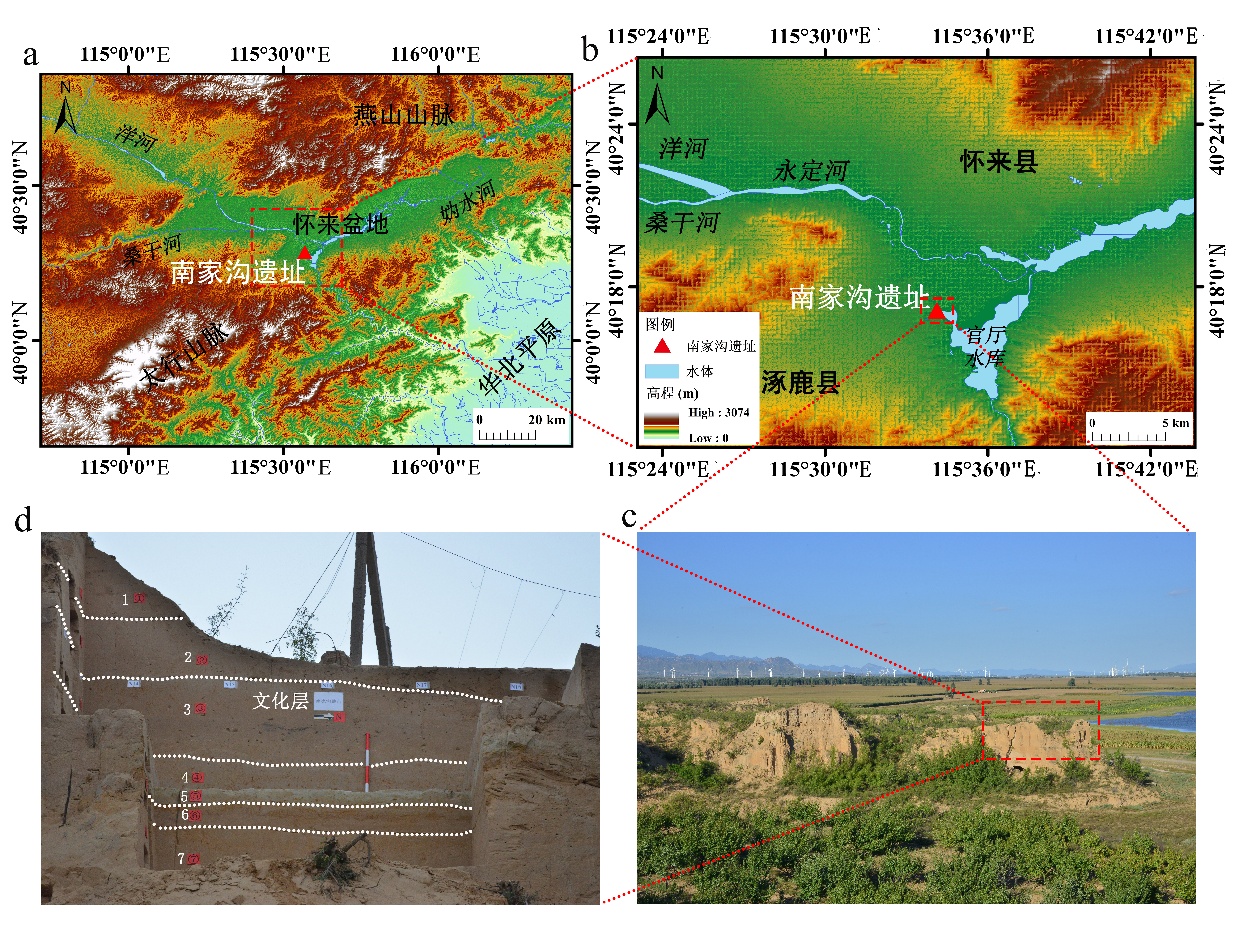
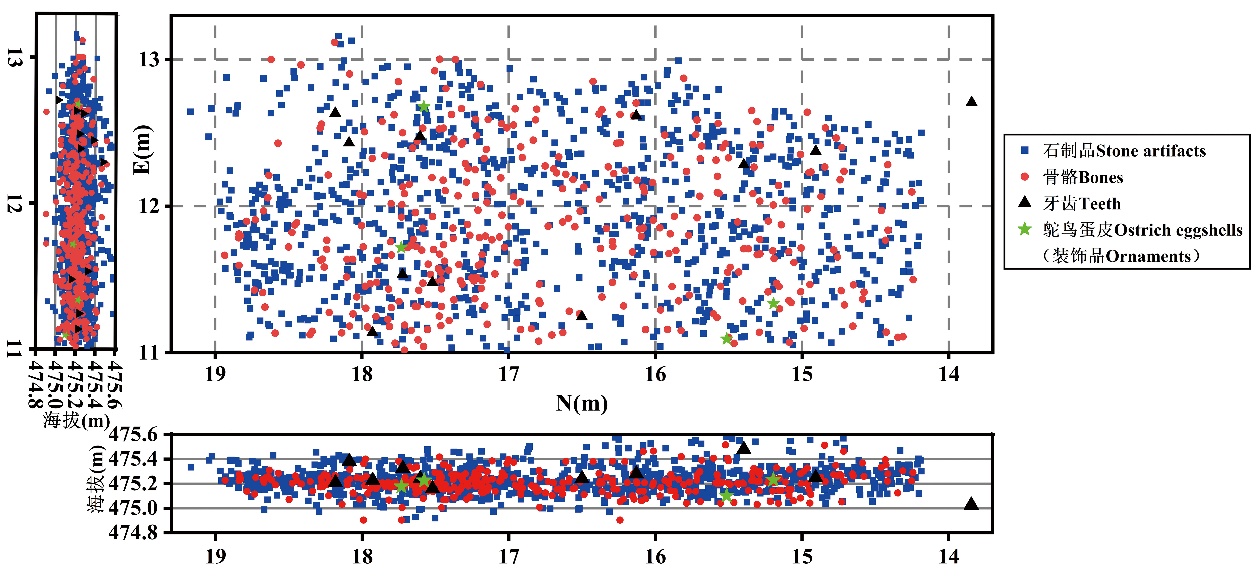
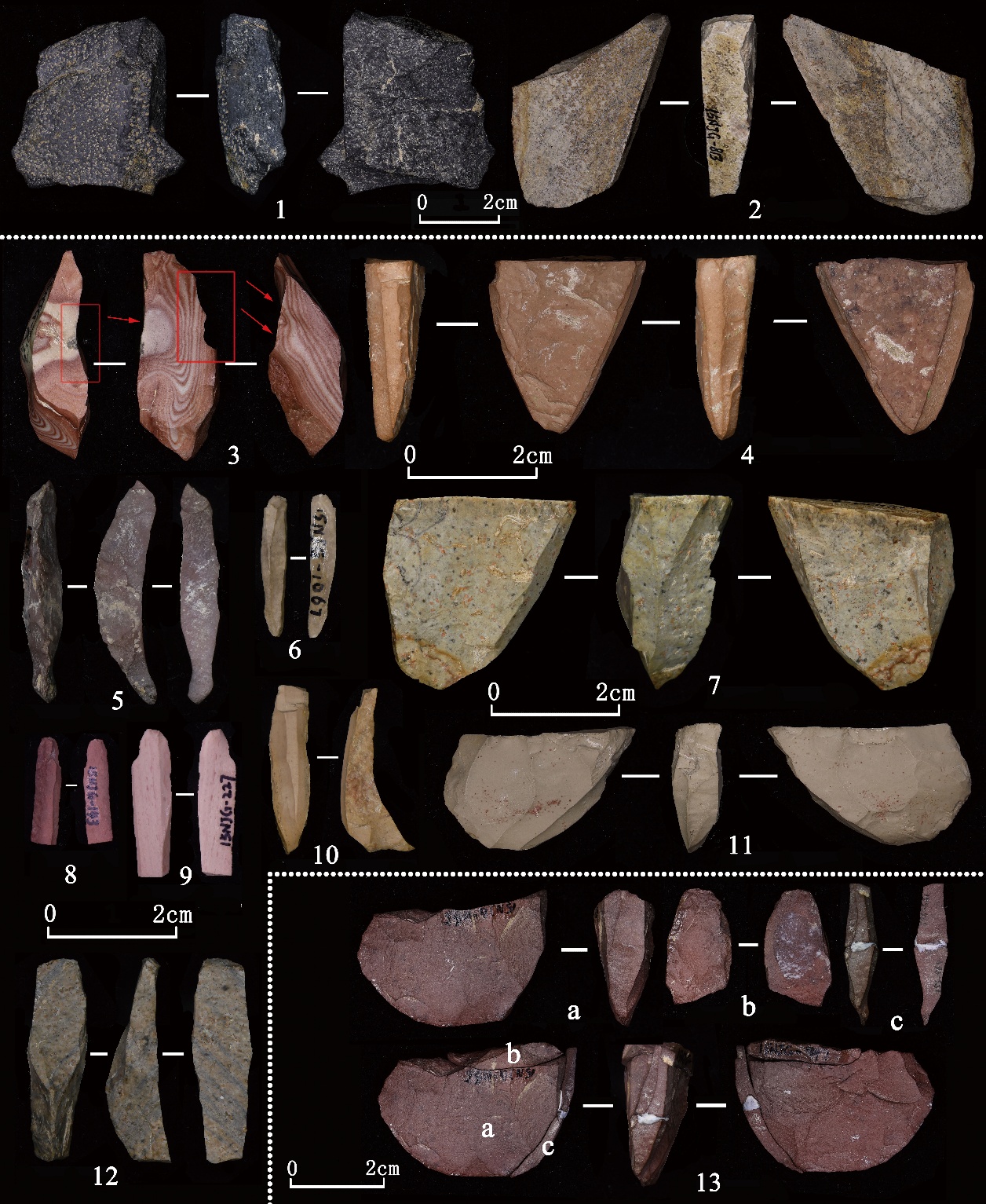
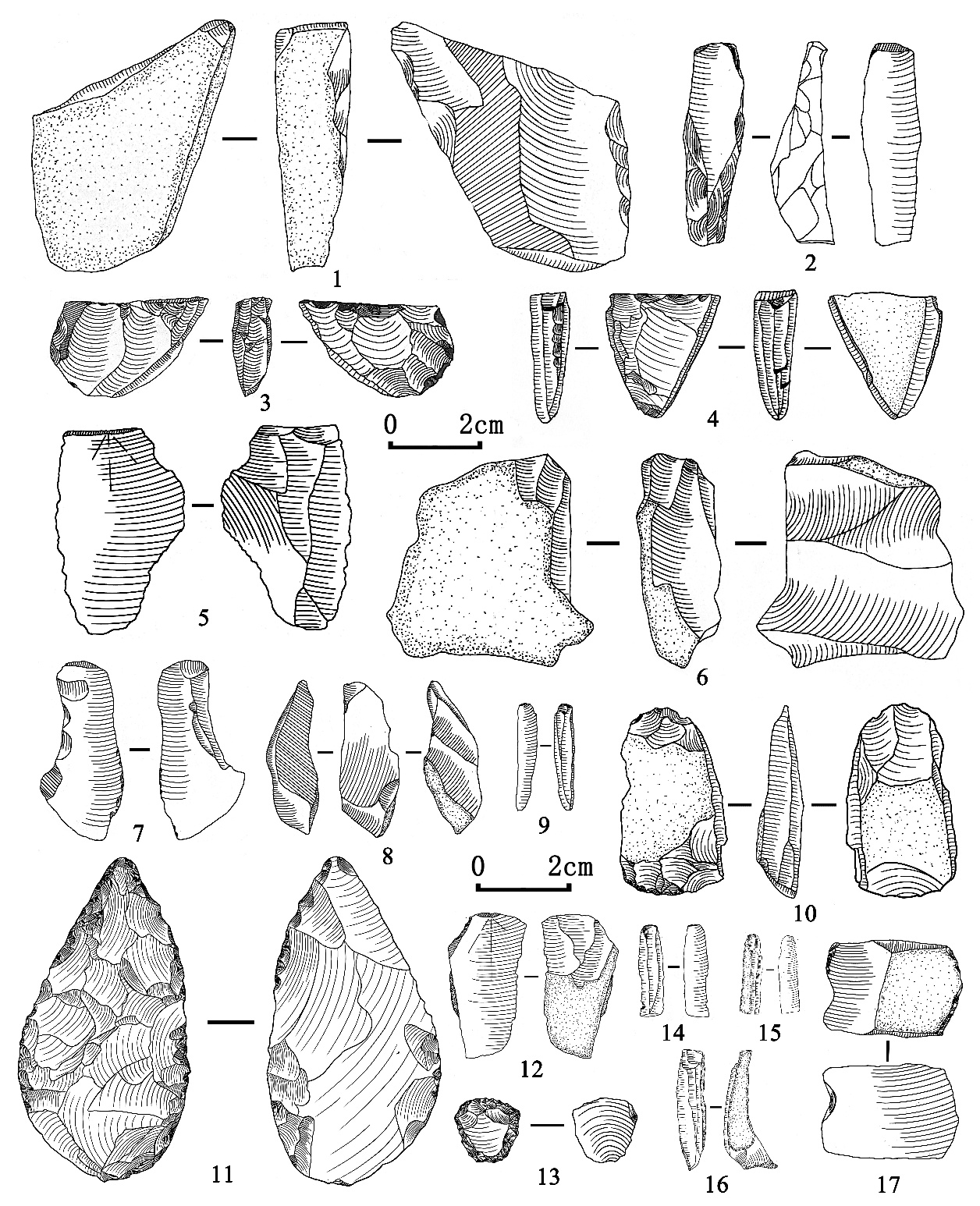
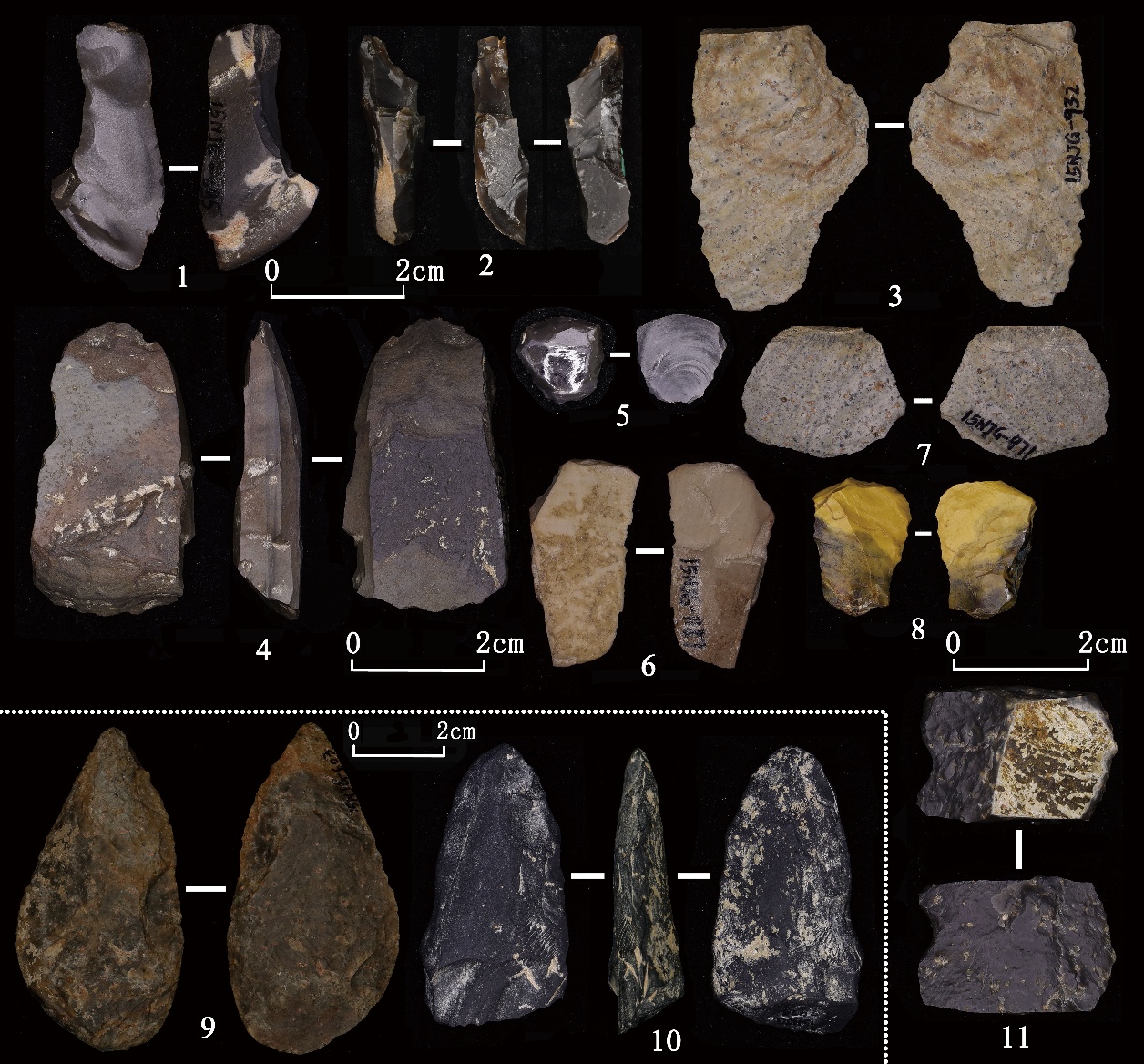
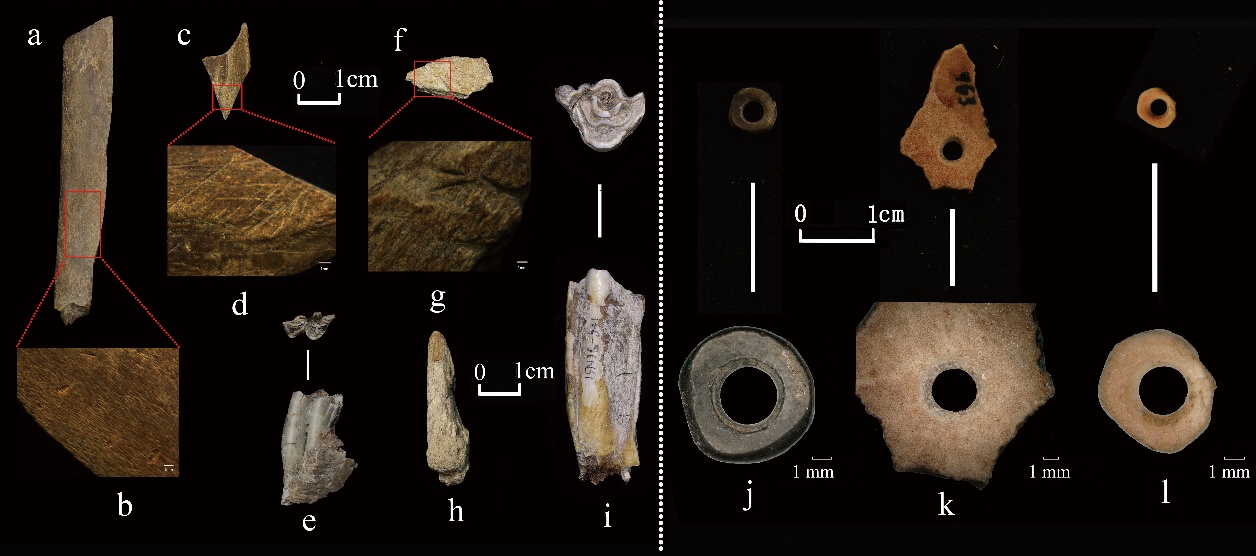
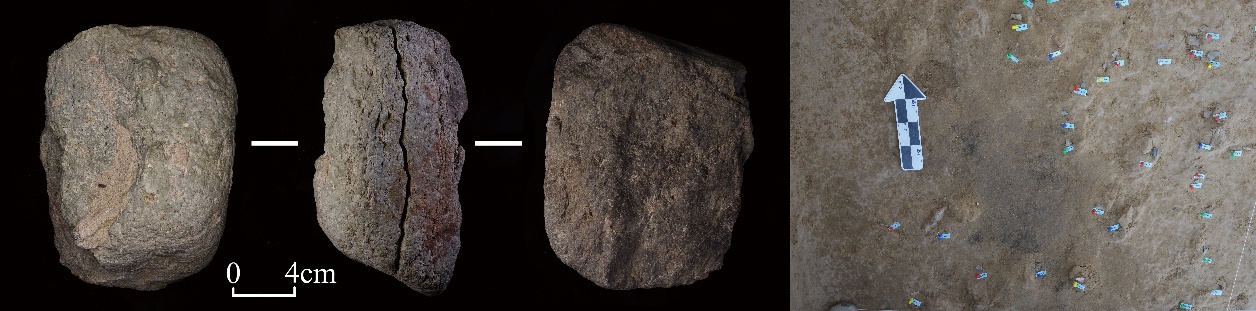
南家沟遗址是近年来怀来盆地新发现和发掘的旧石器遗址。2015年9月,发掘面积约10 m2,发现用火遗迹1处、石制品950件、动物化石355件(包含蛋皮和蛋皮装饰品)以及烧骨、大量的石质碎屑和碎骨等。AMS 14C测定遗址的年代为距今1.7~1.6万年,处于末次盛冰期结束后,文化时代为旧石器时代晚期晚段。石制品原料以白云岩、硅质灰岩和凝灰岩为主,主要为就地取材;石制品包含石片石器技术和细石叶技术两种技术体系,石器类型包括刮削器、端刮器、凹缺器和两面尖状器等;细石核全部为楔形细石核,部分拼合组的存在显示古人类具备熟练的细石叶剥制技术。动物化石保存状况不佳,初步鉴定的动物种类包括鹿科、马科、鸟类和食肉类等。南家沟遗址的发现为完善怀来盆地晚更新世晚期石器技术演化序列,以及系统探究该区域古人类生存行为的多样性具有重要意义。

关键词: 南家沟遗址, 石片石器技术, 细石叶技术, 怀来盆地, 旧石器时代晚期晚段

Abstract:

The Nanjiagou Paleolithic site, located in Huailai County of Hebei Province, is a newly discovered and excavated site in North China. The site is situated in the Xinyao Village, Sangyuan Town and buried in the front margin of the second terrace on the right bank of the Yongding River. In September 2015, a joint archaeological team conducted a small-scale test excavation at the site. The excavation exposed one cultural layer with an area of about 10 m2. An ash-heap and a total of 953 stone specimens, 355 animal fossils (including 1 ostrich eggshell and 3 ornaments), burned bones, a large amounts of lithic debris, as well as bone fragments were unearthed. The existing AMS 14C dating indicate that the age of this site is 17 ka~16 ka cal. BP, which also puts the site to the late stage of Upper Paleolithic in North China. The general features lithic assemblage include: 1) The raw materials for stone artifacts were mainly quarried from the gravel layers around the site, while a small amount of high-quality volcanic breccia may have been transported from a distance, and dolomite, siliceous limestone, and lava dominate the rock type; 2) The categories of 950 lithic assemblages include simple cores (n=4; 0.4%), microblade cores (n=50; 5.3%), simple flakes (n=604; 63.6%), microblades (n=86; 9.1%), bipolar flakes (n=3; 0.3%), retouched tools (n=61; 6.4%), chunks (n=142; 14.9%) with small in size. 3) The simple cores were made by direct hammer percussion and most flakes were produced from non-cortical platforms (96.4%) which indicating that they are mostly secondary flake products. All the microblade cores are wedge-shaped cores, with small size, and their refitted groups discovered at Nanjiagou site can reflect the technological procedure of knapping strategy. Some scholars divided wedge-shaped cores into four stages based on their production procedures and degree: prepared, flaking, suspended, and exhausted. The microblade cores and their refitted groups discovered at Nanjiagou site can reflect the technological process of these three stages. 4) The retouched tools are mostly made of chert which can be classified into scrapers, notches, endscrapers, bifacial points, adze-shaped tools, and choppers. There are also cases of using debris and gravel to produce stone tools, as well as reworking waste wedge-shaped cores into tools. Most of animal fossils are in poor condition and the fauna assemblage includes Cervus sp., Equus sp., Aves, Antilopinae, Rodentia, Carnivora and Bovidae, etc. It can be inferred that the discovery of the Nanjiagou site make great significance for improving the evolutionary sequence of lithic technology and systematically exploring the diversity of human survival behaviors during the late Upper Pleistocene in the Huailai Basin even North China.

Key words: Nanjiagou site, flake tool technology, microblade technology, Huailai Basin, late Upper Paleolithic

中图分类号: