| [1] |
Toth N, Schick K. Evolution of tool use[A]. In: Michael P. Muehlenbein, Basics in Human Evolution[C]. Academic Press, 2015
|
| [2] |
Beyene Y, Katoh S, Wolde-Gabriel G, et al. The characteristics and chronology of the earliest Acheulean at Konso, Ethiopia[J]. Proceedings of the National Academy of Sciences, 2013, 110(5): 1584-1591
|
| [3] |
Larick R, Ciochon RL. The African emergence and Asian early dispersals of Genus Homo[J]. American Anthropologist, 1996, 84: 538-551
|
| [4] |
Kuman K. The Acheulean industry complex[A]. In: SmithCEds. Encyclopedia of global archaeology[M]. New York: Springer, 2014
|
| [5] |
Clarke R.The history of research in human evolution in Africa and what lessons have been learned[A]. In: Sanz N(Eds). Human origin sites and the World Heritage Convention in Africa[C]. Paris: United Nations Educational, Scientific and Cultural Organization 7, 2012
|
| [6] |
Wang W, Lycett SJ, von Cramon-Taubadel N, et al. Comparison of Handaxes from Bose Basin (China) and the Western Acheulean Indicates Convergence of Form, Not Cognitive Differences[J]. PLoS one, 2012, 7(4): e35804
|
| [7] |
Pope MI. The Signi cance of biface-rich assemblages: an examination of behavioural controls on lithic assemblage formation in the Lower Palaeolithic[D]. Southampton: University of Southampton, PhD dissertation, 2002
|
| [8] |
Sharon G, Alperson-Afil N, Goren-Inbar N. Cultural conservatism and variability in the Acheulian sequence of Gesher Benot Ya'aqov[J]. Journal of Human Evolution, 2011, 60: 387e397
doi: 10.1016/j.jhevol.2009.11.012
pmid: 20303143
|
| [9] |
Gamble C, Marshall G. The shape of handaxes, the structure of the Acheulian world[A]. In: Milliken S, Cook J(Eds). A very remote period indeed: Papers on the Palaeolithic presented to Derek Roe[M]. Oxford: Oxbow Books, 2001
|
| [10] |
Lycett SJ. Acheulean variation and selection: does handaxe symmetry neutral expectations?[J]. Journal of Archaeological Science, 2008, 35(9): 2640e2648
|
| [11] |
Schick K, Clark JD.Biface technological development and variability in the Acheulean industrial complex in the Middle Awash Region of the Afar Rift, Ethiopia[A]. In: Soressi M, Dibble HL (Eds). Multiple approaches to the study of bifacial technologies[D]. Philadelphia: University of Pennsylvania Museum of Archaeology and Anthropology, PhD dissertation, 2003
|
| [12] |
McPherron SP.Technological and typological variability in the bifaces from Tabun Cave, Israel[A]. In: Soressi M, Dibble HL(Eds).Multiple approaches to the study of bifacial technologies[D]. Philadelphia: University of Pennsylvania Museum of Archaeology and Anthropology, PhD dissertation 2003
|
| [13] |
Archer W, Braun DR. Variability in bifacial technology at Elandsfontein, Western cape, South Africa: a geometric morphometric approach[J]. Journal of Archaeological Science, 2010, 37: 201e209
|
| [14] |
Semaw S, Rogers M, Stout D. The Oldowan-Acheulean transition: Is there a “Developed Oldowan” artifact tradition?[A]. In: Camps M, Chauhan P (Eds). Sourcebook of Paleolithic transitions[M]. Springer Science+Business Media, LLc, 2009
|
| [15] |
雷蕾, 李大伟, 麻晓荣, 等. 阿舍利大石片的生产方式与策略[J]. 人类学学报, 2020, 39(2): 183-192
|
| [16] |
Sharon G. Large flake Acheulian[J]. Quaternary International, 2010, 223(5): 226-233
|
| [17] |
安徽省地矿局区域地质调查队. 安徽省地层志:第四系分册[M]. 合肥: 安徽科学技术出版社,1985
|
| [18] |
许春华, 张银运, 陈才弟, 等. 安徽巢县发现的人类枕骨化石和哺乳动物化石[J]. 人类学学报, 1984, 3(3): 202-209, 301
|
| [19] |
许春华, 张银运, 方笃生. 安徽巢县人类化石地点的新材料[J]. 人类学学报, 1986, 5(4): 305-310
|
| [20] |
方笃生, 韩立刚. 安徽巢湖市钓鱼台发现第四纪哺乳动物化石[J]. 文物研究, 1986, 2: 34-36
|
| [21] |
郑龙亭. 安徽巢县猫儿洞哺乳动物群[J]. 文物研究, 1988, 4: 35-46
|
| [22] |
方笃生. 巢湖市望城岗旧石器的发现与研究[J]. 文物研究, 1990, 6: 19-35
|
| [23] |
方笃生, 韩立刚. 巢湖市望城岗旧石器地点发掘报告[J]. 文物研究, 1993, 8: 80-92
|
| [24] |
Sharon G. Acheulian large flake industries: technology, chronology, and significance[M]. British Archaeological Reports Ltd, 2007
|
| [25] |
Kleindienst MR. Components of the East African Acheulian assemblage: An analytic approach[A]. In: Mortelmans G(Ed.). Actes du IVe`me Congre`s Panafricain de Pre-histoire et de l'Etude du Quaternaire, vol 40[C]. Tervuren (Belgique): Muse e Royal de l'Afrique Centrale, 1962, 81-105
|
| [26] |
Goren-Inbar N, Sharon G, Alperson-Afil N, et al. The Acheulean massive scrapers of Gesher Benot Ya'aqov— a product of the biface chaîne opératoire[J]. Journal of Human Evolution, 2008, 55: 702-712
doi: 10.1016/j.jhevol.2008.07.005
pmid: 18757076
|
| [27] |
Tixier J. Le hachereau dans l' Acheulèen nord aficain. notes typologique[A]. In: Congrès Prèhistorique de Française, 15ème session, Poitiers-Angoulème[C]. Paris: Sociètè prèhistorique française, 1956, 914-923
|
| [28] |
Isaac GL. Olorgesailie: archaeological studies of a Middle Pleistocene lake basin, Kenya[M]. Chicago: The University of Chicago Press, 1977
|
| [29] |
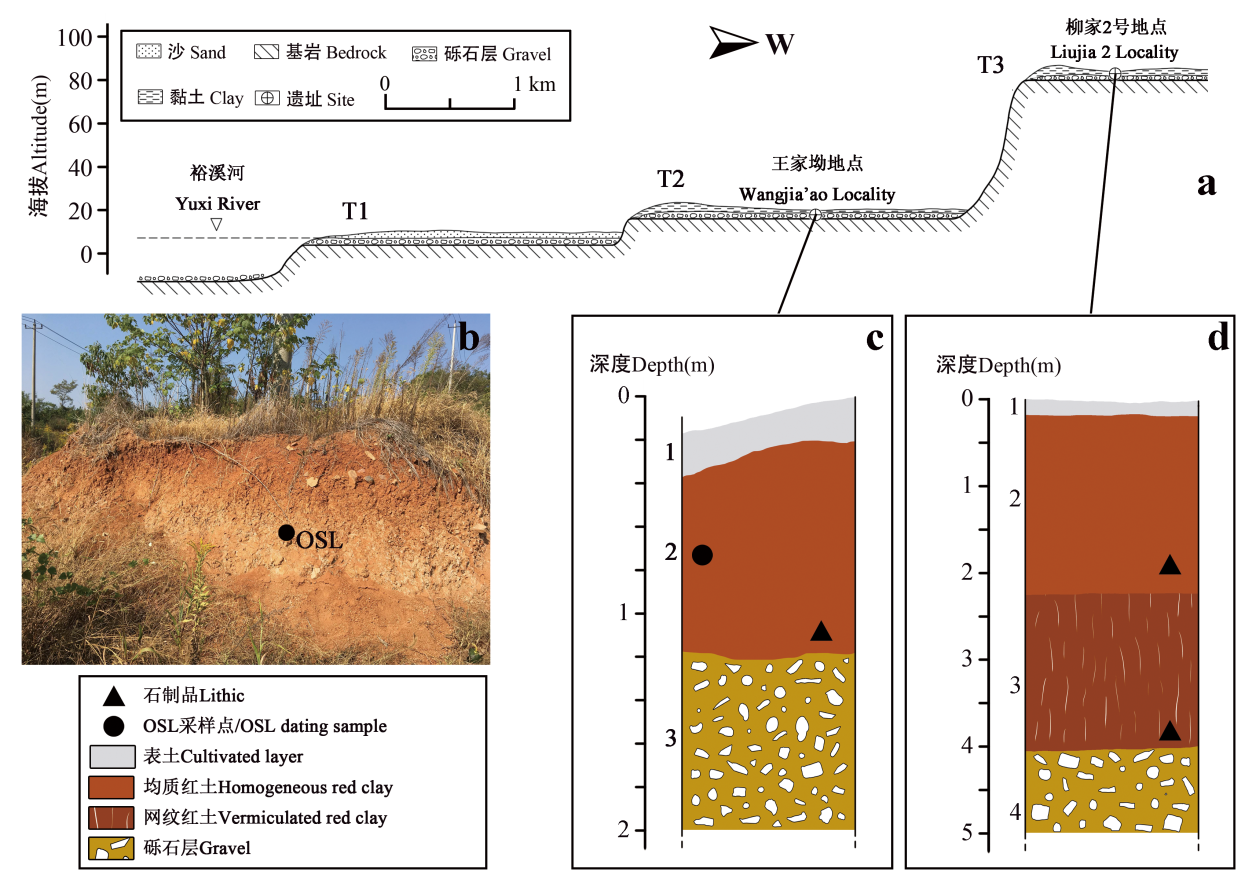
董哲. 安徽巢湖市柳家2号旧石器时代遗址的发掘[J]. 考古, 2025, 6: 3-17
|
| [30] |
战世佳, 董哲, 弋双文, 等. 安徽巢湖地区2019年旧石器考古调查的新发现[J]. 人类学学报, 2022, 41(5): 927-935
|
| [31] |
Wang SJ. Perspectives on hominid behaviour and settlement patterns: a study of the Lower Palaeolithic sites in the Luonan Basin, China[M]. British Archaeological Reports International Series 1406, Oxford, 2005
|
| [32] |
Yang SX, Hou YM, Pelegrin J. A Late Acheulean Culture on the Chinese Loess Plateau: The techno-economic behavior of the Dingcun lithic industry[J]. Quaternary International, 2016, 400: 73-85
|
| [33] |
赵清坡, 张水木, 宿凯, 等. 河南汝州温泉遗址的发现与初步研究[J]. 人类学学报, 2023, 42(5): 616-625
|
| [34] |
Leaky MD. Olduvai Gorge, volume 3: Excavations in Beds I and II, 1960-1963[M]. London: Cambridge University Press, 1971
|
| [35] |
Goren-Inbar N, Alperson-Afil N, Sharon G, et al. The Acheulian Site of Gesher Benot Ya'aqov (Volume IV)[M]. Springer International Publishing, 2018
|
| [36] |
Li H, Wang SJ, Lotter MG, et al. The temporal-spatial evolution of handaxe technology in China: Recent progress and future directions[J] Science Bulletin, 2024, 69: 2161-2165
|