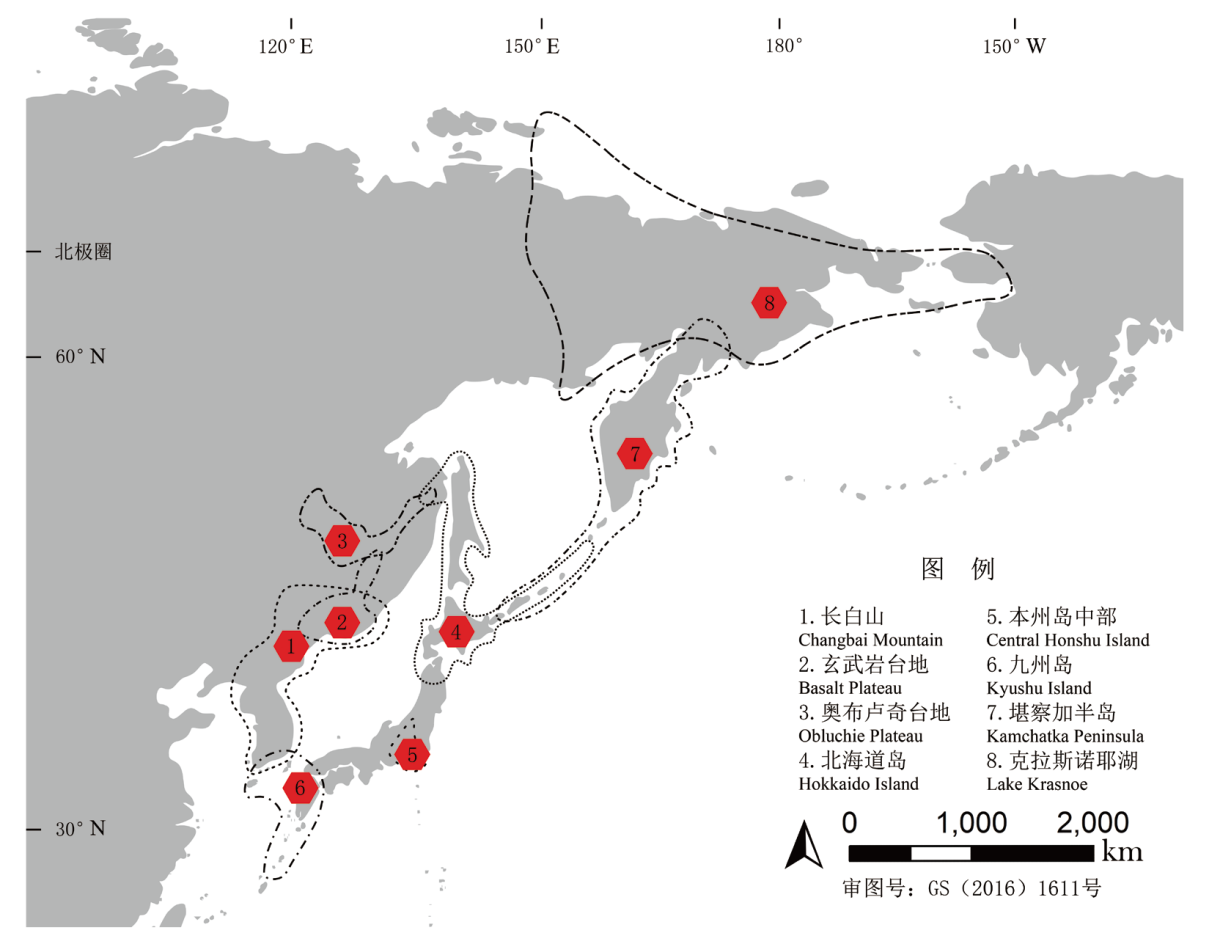
| [1] |
Kuzmin Y. Geoarchaeological Aspects of Obsidian Source Studies in the Southern Russian Far East and Brief Comparison with Neighbouring Regions[A]. In: Ono A, Glascock M, Kuzmin Y, et al. Methodological Issues for Characterisation and Provenance Studies of Obsidian in Northeast Asia[C]. Oxford: BAR Publishing, 2014: 143-166
|
| [2] |
Grebennikov A, Popov V, Kuzmin Y. Geochemistry of Volcanic Glasses and the Search Strategy for Unknown Obsidian Sources on Kamchatka Peninsula (Russian Far East)[A]. In: Ono A, Glascock M, Kuzmin Y, et al. Methodological Issues for Characterisation and Provenance Studies of Obsidian in Northeast Asia[C]. Oxford: BAR Publishing, 2014: 95-110
|
| [3] |
Ono A, Glascock M, Kuzmin Y, et al. Methodological Issues for Characterisation and Provenance Studies of Obsidian in Northeast Asia[M]. Oxford: BAR Publishing, 2014
|
| [4] |
Kuzmin Y. Obsidian as a commodity to investigate human migrations in the Upper Paleolithic, Neolithic, and Paleometal of Northeast Asia[J]. Quaternary International, 2017, 442: 5-11
doi: 10.1016/j.quaint.2016.03.021
URL
|
| [5] |
徐廷, 赵海龙, 顾聆博. 吉林省和龙大洞旧石器遗址2010年发掘报告[J]. 人类学学报, 2023, 42(5): 651-666
|
| [6] |
李万博, 陈全家, 张福有. 吉林枫林旧石器遗址发现的石制品[J]. 人类学学报, 2019, 38(2): 191-199
|
| [7] |
陈全家, 赵海龙, 方启, 等. 延边和龙石人沟旧石器遗址2005年试掘报告[J]. 人类学学报, 2010, 29(2): 105-114
|
| [8] |
陈全家, 赵海龙, 王春雪. 抚松新屯子西山旧石器遗址试掘报告[J]. 人类学学报, 2009, 28(2): 147-153
|
| [9] |
陈全家, 王春雪, 方启, 等. 吉林和龙柳洞2004年发现的旧石器[J]. 人类学学报, 2006, 3: 208-219
|
| [10] |
陈全家. 延边地区图们江流域旧石器考古新发现[J]. 人类学学报, 2003, 1: 62
|
| [11] |
刘嘉麒. 中国火山[M]. 北京: 科学出版社, 1999
|
| [12] |
隋建立. 长白山火山成因:物理机制和化学演化[D]. 硕士研究生论文, 北京: 中国科学院大学, 2008
|
| [13] |
Zhang M, Guo Z, Liu J, et al. The intraplate Changbaishan volcanic field (China/North Korea): A review on eruptive history, magma genesis, geodynamic significance, recent dynamics and potential hazards[J]. Earth-Science Reviews, 2018, 187: 19-52
doi: 10.1016/j.earscirev.2018.07.011
URL
|
| [14] |
邱家骧. 岩浆岩岩石学[M]. 北京: 地质出版社, 1985
|
| [15] |
刘若新. 长白山天池火山近代喷发[M]. 北京: 科学出版社, 1998
|
| [16] |
魏海泉(编). 长白山天池火山[M]. 北京: 地震出版社, 2014
|
| [17] |
刘宝珺. 沉积岩石学[M]. 北京: 地质出版社, 1980
|
| [18] |
钱程, 崔天日, 江斌, 等. 长白山地区晚新生代火山地貌形态研究及其地质应用[J]. 第四纪研究, 2014, 34(2): 312-324
|
| [19] |
金伯禄, 张希友(编著). 长白山火山地质研究[M]. 延吉: 东北朝鲜民族教育出版社, 1994
|
| [20] |
刘祥, 向天元. 中国东北地区新生代火山和火山碎屑堆积物资源与灾害[M]. 长春: 吉林大学出版社, 1997
|
| [21] |
Sun C, Wang L, Plunkett G, et al. Ash From the Changbaishan Qixiangzhan Eruption: A New Early Holocene Marker Horizon Across East Asia[J]. Journal of Geophysical Research: Solid Earth, 2018, 123: 6442-6450
doi: 10.1029/2018JB015983
URL
|
| [22] |
刘嘉麒, 王松山. 长白山火山与天池的形成时代[J]. 科学通报, 1982, 21: 1312-1315
|
| [23] |
魏海泉, 李春茂, 金伯禄, 等. 长白山天池火山造锥喷发岩浆演化系列与地层划分[J]. 吉林地质, 2005, 1: 22-27
|
| [24] |
Singer B, Jicha B, He H, et al. 40Ar/39Ar Evidence for a 17 ka Geomagnetic Field Excursion at Changbaishan Volcano, Northeastern China[C]. AGU Fall Meeting Abstracts. 2011, 4-5
|
| [25] |
Wei H, Liu G, Gill J. Review of eruptive activity at Tianchi volcano, Changbaishan, northeast China: Implications for possible future eruptions[J]. Bulletin of Volcanology, 2013, 75: 706-720
doi: 10.1007/s00445-013-0706-5
URL
|
| [26] |
刘若新, 李继泰, 魏海泉, 等. 长白山天池火山:一座具潜在喷发危险的近代火山[J]. 地球物理学报, 1992, 35(5): 661-665
|
| [27] |
许东满, 郑祥身, 许湘希. 长白山天池地区全新世以来火山活动及其特征[J]. 第四纪研究, 1993, 13(1): 85-94
|
| [28] |
郑祥身. 长白山地区新生代火山岩的成因演化特征[A]. 中国科学院地质研究所1981届硕士论文集[C]. 北京: 北京科技出版社, 1983, 256-267
|
| [29] |
刘嘉麒. 中国东北地区新生代火山岩的年代学研究[J]. 岩石学报, 1987, 4: 21-31
|
| [30] |
Doelman T, Torrence R, Popov V, et al. Source selectivity: An assessment of volcanic glass sources in the southern primorye region, far East Russia[J]. Geoarchaeology, 2008, 23(2): 243-273
doi: 10.1002/gea.v23:2
URL
|
| [31] |
Wada K, Popov V, Mukai M, et al. Occurrence and microtexture of the mafic obsidian from the late Miocene basaltic plateau in the Primorye region, Russia[A]. Japan Geoscience Union Meeting Abstract, 2011, 9-10
|
| [32] |
Tsurumaki K, Kannari T, Ono A, et al. 極東ロシア,シュコートヴォ台地産黒曜石の全岩化学組成 Whole-rock chemical composition of obsidian from the Shkotovo Plateau, Russian Far East[J]. 資源環境と人類, 2013, 3: 95-106
|
| [33] |
Glascock M, Kuzmin Y, Grebennikov A, et al. Obsidian provenance for prehistoric complexes in the Amur River basin (Russian Far East)[J]. Journal of Archaeological Science, 2011, 38(8): 1832-1841
doi: 10.1016/j.jas.2011.03.022
URL
|
| [34] |
Izuho M, Hirose W. A Review of Archaeological Obsidian Studies on Hokkaido Island (Japan)[A]. In: Kuzmin Y, Glascock M. Crossing the Straits: Prehistoric Obsidian Source Exploitation in the North Pacific Rim[C]. Oxford: BAR Publishing, 2010, 9-25
|
| [35] |
Suda Y, Grebennikov A, Kuzmin Y, et al. Inter-laboratory validation of the WDXRF, EDXRF, ICP-MS, NAA and PGAA analytical techniques and geochemical characterisation of obsidian sources in northeast Hokkaido Island, Japan[J]. Journal of Archaeological Science: Reports, 2018, 17
|
| [36] |
Kim C, Chang Y. Evidence of human movements and exchange seen from curated obsidian artifacts on the Korean Peninsula[J]. Journal of Archaeological Science: Reports, 2021, 39: 103184.
doi: 10.1016/j.jasrep.2021.103184
URL
|
| [37] |
Grebennikov A, Kuzmin Y, Glascock M, et al. The Lake Krasnoe obsidian source in Chukotka (Northeastern Siberia): geological and geochemical frameworks for provenance studies in Beringia[J]. Archaeological and Anthropological Sciences, 2016, 10(3): 599-614
doi: 10.1007/s12520-016-0379-z
URL
|
| [38] |
Cann R, Renfrew C. The Characterization of Obsidian and its application to the Mediterranean Region[J]. Proceedings of the Prehistoric Society, 1964, 111-133
|
| [39] |
Sohn P. A summary report on Pleistocene research in Korea[J]. Bulletin of the Indo-Pacific Prehistory Association, 1991, 10: 83-91
|
| [40] |
Kuzmin Y, Popov V, Glascock M, et al. Sources of archaeological volcanic glass in the Primorye (Maritime) Province, Russian Far East[J]. Archaeometry, 2002, 44(4): 505-515
doi: 10.1111/arch.2002.44.issue-4
URL
|
| [41] |
Popov V, Sakhno V, Kuzmin Y, et al. Geochemistry of volcanic glasses from the Paektusan Volcano[J]. Doklady Earth Sciences, 2005, 403(5): 803-807
|
| [42] |
Popov V, Kuzmin Y, Grebennikov A, et al. The “puzzle” of the primary obsidian source in the region of Paektusan (China/DPR Korea)[J]. Quaternary International, 2019, 519: 192-199
doi: 10.1016/j.quaint.2018.12.028
URL
|
| [43] |
Kim W, Hwang H, 문성우, et al. Petrological Characteristics and Provenance Estimation on the Stone Artefacts from the Pocheon Neulgeori Prehistoric Site, Korea[J]. The Journal of The Petrological Society of Korea, 2015, 24(1): 1-10
doi: 10.7854/JPSK.2015.24.1.1
URL
|
| [44] |
Jia W, Doelman T, Chen C, et al. Moving sources: A preliminary study of volcanic glass artifact distributions in northeast China using PXRF[J]. Journal of Archaeological Science, 2010, 37(7): 1670-1677
doi: 10.1016/j.jas.2010.01.027
URL
|
| [45] |
陈全家, 贾伟明, Trudy Doelman, 等. 吉林东部地区考古遗址出土黑曜岩石制品产地的初步研究[J]. 东方考古, 2015, 442-454
|
| [46] |
刘爽. 中国东北地区旧石器时代晚期遗址黑曜岩制品原料来源探索[M]. 北京: 科学出版社, 2019
|
| [47] |
徐廷. 高分辨率环境背景下的和龙大洞遗址石器工业研究[D]. 硕士研究生论文, 北京: 中国科学院大学, 2022
|
| [48] |
李有骞, 陈全家. 长白山地黑曜岩旧石器的技术模式研究[J]. 东北史地, 2014, 5: 3-6+97
|
| [49] |
侯哲, 赵宇超, 高星, 等. 原料产地对中国东北和韩国旧石器时代晚期黑曜岩石器工业的影响[J]. 人类学学报, 2021(40): 1-12
|
| [50] |
Ikeya N. 25 Maritime Transport of Obsidian in Japan during the Upper Paleolithic[A]. In: Kaifu Y, Izuho M, Goebel T, et al. Emergence and diversity of modern human behavior in Paleolithic Asia[C]. Texas: A&M Press, 2014, 362-375
|
| [51] |
Kim C, Kim K, Youn M, et al. PIXE provenancing of obsidian artefacts from Paleolithic sites in Korea[J]. Indo-Pacific Prehistory Association Bulletin, 2007, 27: 122-128
|
| [52] |
Jwa J, Yi S, Jin E, et al. Two Contrasting Provenances of Prehistoric Obsidian Artifacts in South Korea: Mineralogical and Geochemical Characteristics[J]. Open Archaeology, 2019, 5(1): 106-120
doi: 10.1515/opar-2019-0008
URL
|
| [53] |
Kuzmin Y. Obsidian provenance studies in the far eastern and northeastern regions of Russia and exchange networks in the prehistory of Northeast Asia[J]. Documenta Praehistorica, 2019, 46: 296-307
doi: 10.4312/dp.46
URL
|
| [54] |
Kaifu Y, Izuho M, Goebel T, et al. Emergence and diversity of modern human behavior in Paleolithic Asia[A]. Emergence and Diversity of Modern Human Behavior in Paleolithic Asia[C]. Texas: A&M Press, 2014, 589
|
| [55] |
Kuzmin Y, Glascock M. Crossing the Straits: Prehistoric Obsidian Source Exploitation in the North Pacific Rim(B.A.R. International Series 2152)[M]. Oxford: BAR Publishing, 2010
|
| [56] |
Grebennikov A, Kuzmin Y. The identification of archaeological obsidian sources on Kamchatka Peninsula (Russian Far East) using geochemical and geological data: Current progress[J]. Quaternary International, 2017, 442: 95-103
doi: 10.1016/j.quaint.2016.03.020
URL
|
| [57] |
Kuzmin Y, Dyakonov V, Glascock M, et al. Provenance analysis of obsidian artifacts from the Indigirka River basin (Northeast Siberia) and the long-distance exchange of raw material in prehistoric Siberian Arctic[J]. Journal of Archaeological Science: Reports, 2020, 30: 1-5
|
| [58] |
青木要祐. 津軽海峡を越えた旧石器時代人類の移住と交流[A].见:日本考古学協会2023年度宮城大会. 「災害と境界の考古学」 研究発表資料集[C]. 2023, 101-110
|
| [59] |
出穂雅実. 黒曜石の体系的産地分析からわかってきた古サハリン:北海道‐千島半島の後期旧石器時代における狩猟採集民行動の変化[A]. 见: 佐藤宏之, 山口哲, 出穂雅実. 晩氷期の人類社会:北方先史狩猟採集民の適応行動と居住形態[C]. 東京: 六一書房, 2016, 129-146
|
| [60] |
Phillips C, Speakman J. Initial source evaluation of archaeological obsidian from the Kuril Islands of the Russian Far East using portable XRF[J]. Journal Of Archaeological Science, 2009, 36(6): 1256-1263
doi: 10.1016/j.jas.2009.01.014
URL
|
| [61] |
Pitulko V, Kuzmin Y, Glascock M, et al. ‘They came from the ends of the earth’: long-distance exchange of obsidian in the High Arctic during the Early Holocene[J]. Antiquity, 2019, 93(367): 28-44
doi: 10.15184/aqy.2019.2
URL
|
| [62] |
Yang SX, Zhang JF, Yue JP, et al. Initial Upper Palaeolithic material culture by 45,000 years ago at Shiyu in northern China[J]. Nature Ecology & Evolution, 2024, 8(3): 552-563
|
| [63] |
Jia W, Doelman T, Torrence R, et al. New pieces: the acquisition and distribution of volcanic glass sources in northeast China during the Holocene[J]. Journal Of Archaeological Science, 2013, 40(2): 971-982
doi: 10.1016/j.jas.2012.09.001
URL
|
| [64] |
樊祺诚, 刘若新, 张国辉, 等. 长白山望天鹅火山双峰式火山岩的成因演化[J]. 岩石学报, 1998, 14(3): 305-317
|
| [65] |
陈晓雨, 刘嘉麒, 郭正府, 等. 望天鹅火山岩石地球化学特征及其成因[J]. 岩石学报, 2008, 24(11): 2576-2584
|
| [66] |
刘嘉麒, 陈双双, 郭文峰, 等. 长白山火山研究进展[J]. 矿物岩石地球化学通报, 2015, 34: 710-723
|
| [67] |
Yi S, Jwa J. On the provenance of prehistoric obsidian artifacts in South Korea[J]. Quaternary International, 2016, 392: 37-43
doi: 10.1016/j.quaint.2015.08.012
URL
|