


板井子遗址第1地点1990年出土的石制品
收稿日期: 2026-02-24
修回日期: 2026-06-29
网络出版日期: 2026-10-16
基金资助
国家重点研发计划项目(2023YFF0905700);国家社会科学基金青年项目(2021CKG002);全国考古人才振兴计划(2024-265);全国考古人才振兴计划(2025-191)
Stone artifacts unearthed in 1990 from the Banjingzi site locality 1
Received date: 2026-02-24
Revised date: 2026-06-29
Online published: 2026-10-16
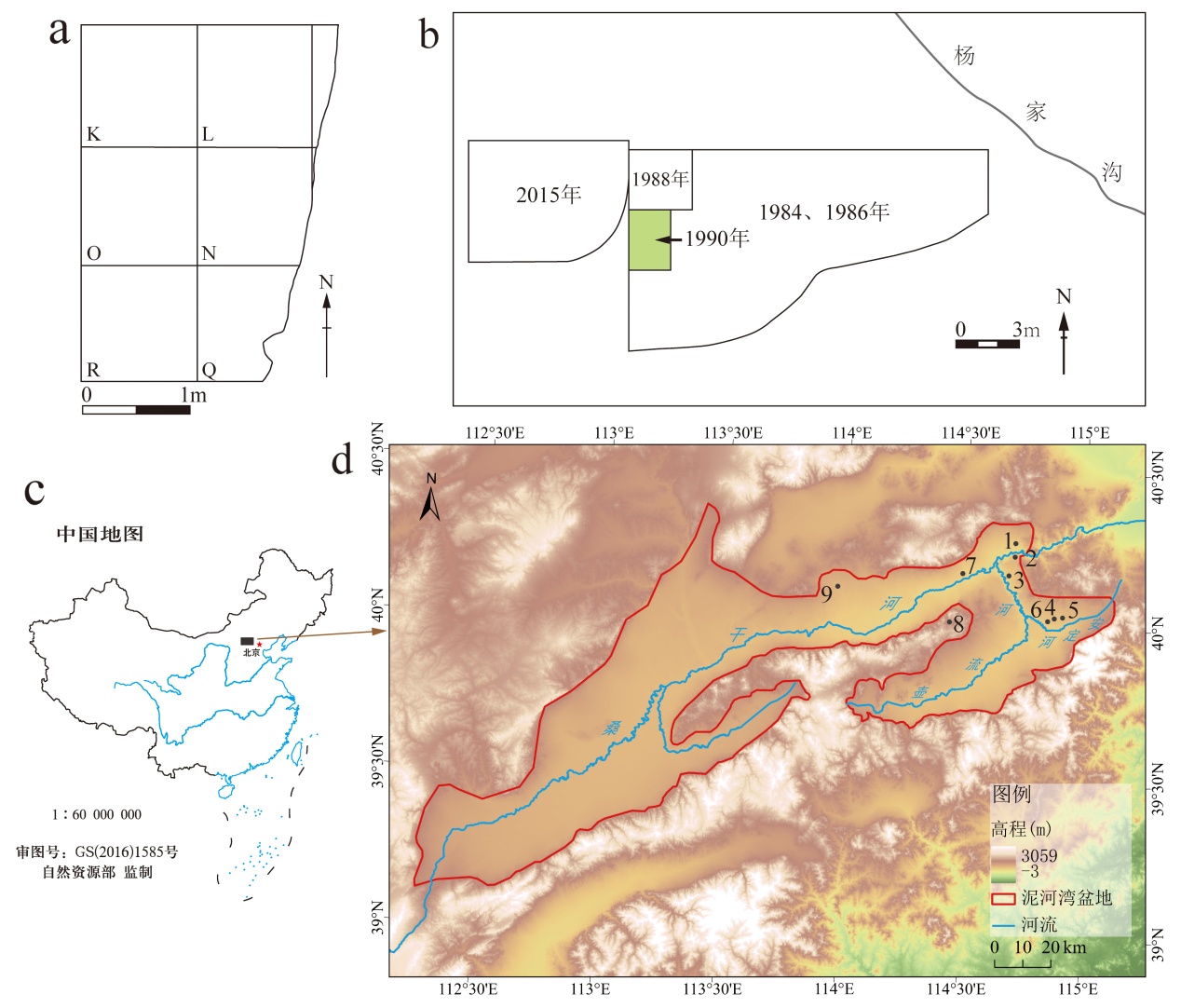
板井子是泥河湾盆地晚更新世早期的重要遗址,本文针对该遗址第1地点1990年发掘的2535件石制品开展了较系统的类型学与技术学研究。研究显示,周家山燧石原料在石制品生产中占据主导。石核剥片以简单石核石片技术为主,有少量盘状石核技术;21%的普通石核在台面局部纵向打击大疤来修整台面,22件石片暗示石核台面剥片缘存在悬突处理行为。92.8%的石片为长度小于40 mm的宽薄型,有10件长石片。石器以各类刮削器为主,凹缺器、锥钻器和锯齿刃器等次之,显示出类型的多样性。13.5%的石器表现出陡刃厚边的修理特征,可能与区域性特殊功能需求相关。35件再修理石片显示存在少量石器刃缘再修理与维护的现象。部分标本有刃缘修形、修理持握部位及折断的情况。板井子遗址第1地点出土的石制品展现出一定的技术创新,佐证传统上所认为的中国北方小型石片石器组合的复杂性和多样性,为深入理解中更新世晚期至晚更新世早期中国北方早期人类的技术行为与人类演化提供了重要材料。
任进成 , 鹿瑶 , 陈福友 , 王法岗 , 李锋 . 板井子遗址第1地点1990年出土的石制品[J]. 人类学学报, 2026 , 45(05) : 948 -964 . DOI: 10.16359/j.1000-3193/AAS.2026.0059
This paper presents a detailed technological analysis of the lithic assemblage recovered from the 1990 excavation at Locality 1 of the Banjingzi site, Nihewan Basin, dated to 90-80 ka. Based on the examination of 2535 artifacts, this study investigates raw material utilization, core reduction strategies, debitage characteristics, and tool typology to characterize the technological behaviors of early Late Pleistocene hominins in northern China.
The assemblage demonstrates a highly selective raw material economy, overwhelmingly dominated by chert sourced from the local Zhoujiashan area (94.64% of all artifacts). This indicates a focused exploitation strategy targeting the most suitable lithic resource available in the immediate landscape, with minimal use of other raw material types like dolomite, quartz. Core reduction was primarily based on simple and expedient strategies, utilizing small chert blocks and fragments. A distinctive technical feature is the common practice of localized, longitudinal trimming of core platforms. In addition to this dominant approach, a small but consistent presence of discoid cores (6% of total cores) signifies the application of a more structured, centripetal flaking method. The resulting debitage consists predominantly of small, wide-thin flakes, about 92.8% of which have a length of less than 40 mm. Although 10 longer flakes were produced—often by exploiting natural ridges on core surfaces—there is no evidence for systematic blade production. The formal tool component is substantial and typologically diverse. Scrapers of various forms (e.g. side scrapers, double scrapers, convergent scrapers, and transversal scrapers) constitute the dominant group, accompanied by notable frequencies of notches, borers, and denticulates, etc. A defining characteristic is the manufacture of “steep-edged” tools, primarily over 65 specimens of scrapers, which were produced through intensive, invasive retouch on thick blanks. This resulted in durable working edges with steep angles (commonly 60°~90°), suggesting a deliberate design for heavy-duty processing activities. Evidence of limited tool resharpening flakes and the strategic selection of blanks with natural backs further reflects planned technological behaviors related to tool maintenance and prehension.
The Banjingzi assemblage provides a well-dated and analytically robust benchmark for the early Late Pleistocene in northern China. While the industry aligns with the broader regional small flake-tool tradition, it exhibits distinct local technological signatures, including specific core platform management, the low-frequency but persistent use of discoid technology, and the standardized production of steep-edged tools. These features illustrate adaptive complexity and regional innovation, contributing to a more nuanced understanding of technological variability and hominin behavioral adaptations during this key transitional period in East Asia.
| [1] | Ren JC, Li F, Chen FY, et al. Lithic technology at Banjingzi Locality 1: Implications for the Middle Paleolithic in northern China[J]. Journal of Archaeological Science: Reports, 2025, 65: 105193 |
| [2] | 李炎贤, 谢飞, 石金鸣. 河北阳原板井子石制品的初步研究[A].见:中国科学院古脊椎动物与古人类研究所参加第四纪大会论文选[C]. 北京: 科学出版社, 1991, 74-99 |
| [3] | 石金鸣. 板井子石工业探折[J]. 山西大学学报(哲学社会科学版), 1992, 4: 15-18 |
| [4] | 谢飞, 李珺, 刘连强. 泥河湾旧石器文化[M]. 石家庄: 花山文艺出版社, 2006 |
| [5] | 山西博物院, 河北省文物研究所. 河北阳原板井子旧石器时代遗址1988年发掘报告[A].见:河北省文物研究所(编). 河北省考古文集(五)[C]. 北京: 科学出版社, 2014, 1-28 |
| [6] | 任进成, 李锋, 王晓敏, 等. 河北阳原县板井子旧石器时代遗址2015年发掘简报[J]. 考古, 2018, 11: 3-14+2 |
| [7] | Guo YJ, Li B, Zhang JF, et al. Luminescence ages for three ‘Middle Palaeolithic’ sites in the Nihewan Basin, northern China, and their archaeological and palaeoenvironmental implications[J]. Quaternary Research, 2016, 85(3): 456-470 |
| [8] | 卫奇. 石制品观察格式探讨[A].见:邓涛,王原(主编).第八届古脊椎动物学术年会文集[C]. 北京: 海洋出版社, 2001, 209-218 |
| [9] | Bo?da E. Le débitage disco?de et le débitage Levallois récurrent centripède[J]. Bulletin de la Société Préhistorique Fran-?aise, 1993, 90(6): 392-404 |
| [10] | Vaquero M, Carbonell E. A temporal perspective on the variability of the discoid method in the Iberian Peninsula[A]. In: Peresani M (Ed.). Discoid Lithic Technology: advances and implications[C]. BAR International Series 1120, Oxford: Archaeopress, 2003, 67-82 |
| [11] | Picin A, Vaquero M, Weniger G, et al. Flake morphologies and patterns of core configuration at the Abric Romaní rock-shelter: A geometric morphometric approach[J]. Quaternary International, 2014, 350: 84-93 |
| [12] | Yee MK. The Middle Palaeolithic in China: a review of current interpretations[J]. Antiquity, 2012, 86: 619-626 |
| [13] | Li F. Fact or fiction: the Middle Palaeolithic in China[J]. Antiquity, 2014, 88: 1303-1309 |
| [14] | Li H, Li ZY, Gao X, et al. Technological behavior of the early Late Pleistocene archaic humans at Lingjing (Xuchang, China)[J]. Archaeological and Anthropological Sciences, 2019, 11(7): 3477-3490 |
| [15] | Sherratt A. Climatic cycles and behavioural revolutions: the emergence of modern humans and the beginning of farming[J]. Antiquity, 1997, 71(272): 271-287 |
| [16] | Bar-Yosef O, Kuhn SL. The big deal about blades: laminar technologies and human evolution[J]. American Anthropologist, 1999, 101: 322-338 |
| [17] | Johnson CR, McBrearty S. 500000 year old blades from the Kapthurin Formation, Kenya[J]. Journal of Human Evolution, 2010, 58(2): 193-200 |
| [18] | Fontana F, Moncel MH, Nenzioni G, et al. Widespread diffusion of technical innovations around 300,000 years ago in Europe as a reflection of anthropological and social transformations? New comparative data from the western Mediterranean sites of Orgnac (France) and Cave dall’Olio (Italy)[J]. Journal of Anthropological Archaeology, 2013, 32(4): 478-498 |
| [19] | Li F, Kuhn SL, Olsen JW, et al. Disparate stone age technological evolution in North China: Lithic technological variability and relations between populations during MIS 3[J]. Journal of Anthropological Research, 2014, 70(1): 35-67 |
| [20] | 李锋, 陈福友, 汪英华, 等. 晚更新世晚期中国北方石叶技术所反映的技术扩散与人群迁移[J]. 中国科学:地球科学, 2016, 46(7): 891-905 |
| [21] | 加藤真二. 中国的石叶技术[J]. 人类学学报, 2006, 25(4): 343-351 |
| [22] | 王法岗. 侯家窑遗址综合研究[D].博士学位论文, 石家庄: 河北师范大学, 2016 |
| [23] | Turq A. Raw material and technological studies of the Quina Mousterian[A]. In: Dibble HL, Mellars P(Eds.). The Middle Palaeolithic: Adaptation, Behavior, and Variability[C]. Philadelphia: University of Pennsylvania, 1992, 75-85 |
| [24] | Delpiano D, Zupancich A, Bertola S, et al. Flexibility within Quina lithic production systems and tool-use in Northern Italy: implications on Neanderthal behavior and ecology during early MIS 4[J]. Archaeological and Anthropological Sciences, 2022, 14(12): 219 |
| [25] | Hiscock P, Turq A, Faivre JP. et al. Quina procurement and tool production[A]. In: Adams B, Blades BS(Eds.). Lithic Materials and Paleolithic Societies[C]. Chichester: Wiley-Blackwell, 2009, 232-246 |
| [26] | Agam A, Zupancich A. Interpreting the Quina and demi-Quina scrapers from Acheulo-Yabrudian Qesem Cave, Israel: Results of raw materials and functional analyses[J]. Journal of Human Evolution, 2020, 144: 102798 |
| [27] | Ruan QJ, Li H, Xiao PY, et al. Quina lithic technology indicates diverse Late Pleistocene human dynamics in East Asia[J]. Proceedings of the National Academy of Sciences, 2025, 122(14): e2418029122 |
| [28] | Bourguignon L, Soriano S, Claud E, et al. The presence of Quina lithic technology in China 50 to 60 ka ago remains a hypothesis[J]. Proceedings of the National Academy of Sciences, 2025, 122(40): e2518182122 |
| [29] | 刘武. 二十一世纪中国人类演化研究的发现、认识与理论探索[J]. 人类学学报, 2024, 43(6): 881-899 |
| [30] | Fu QM, Bai F, Rao HY, et al. The proteome of the late Middle Pleistocene Harbin individual[J]. Science, 2025, 389(6761): 704-707 |
/
| 〈 |
|
〉 |
 京ICP证05002819号-3