| [1] |
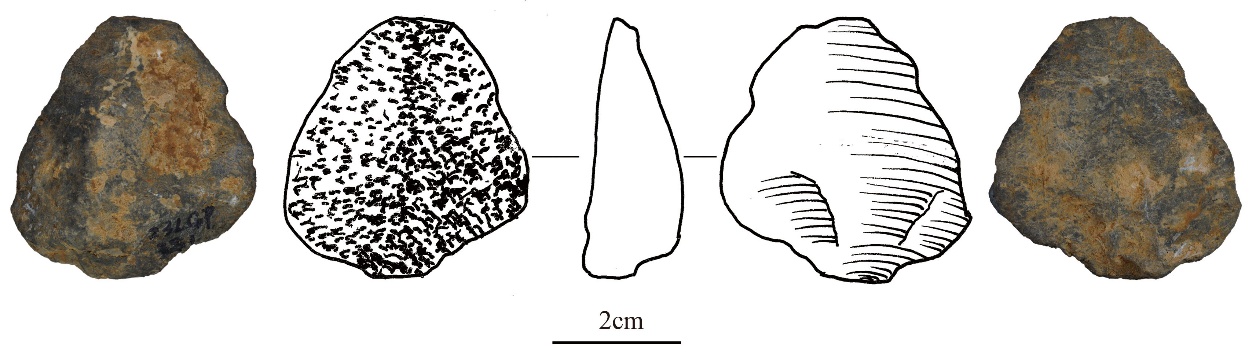
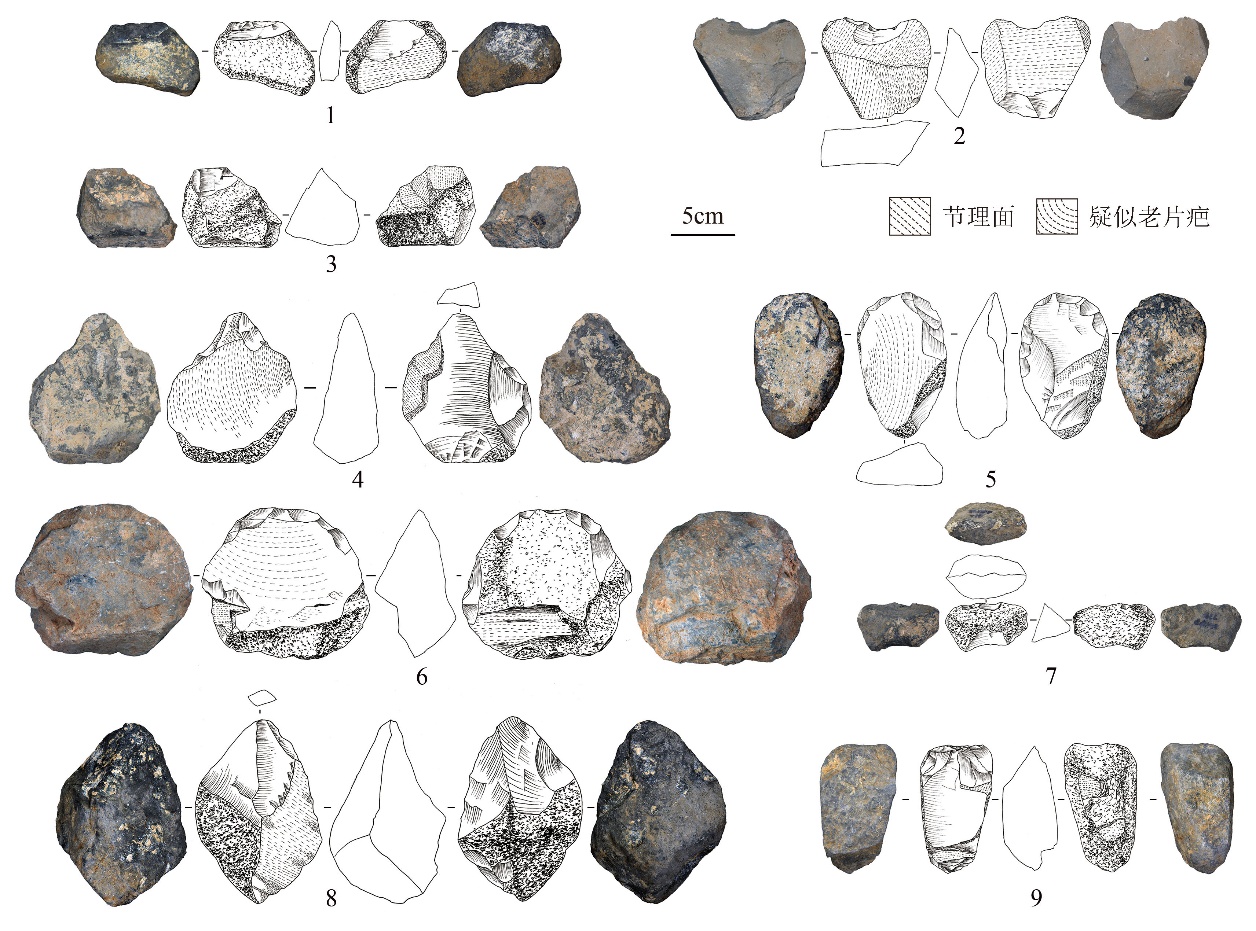
刘连强, 蒲昱晓, 侯佳岐, 等. 泥河湾盆地马圈沟遗址鱼咀沟1号地点2017-2018年发掘出土的石制品[J]. 人类学学报, 2024, 1: 40-54
|
| [2] |
Zhu RX, Potts R, Pan YX, et al. Early evidence of the genus Homo in East Asia[J]. Journal of Human Evolution, 2008, 55(6): 1075-1085
|
| [3] |
Zhu ZY, Dennell R, Huang WW, et al. New dating of the Homo erectus cranium from Lantian (Gongwangling), China[J]. Journal of Human Evolution, 2015, 78144-157
|
| [4] |
Cappellini E, Welker F, Pandolfi L, et al. Early Pleistocene enamel proteome from Dmanisi resolves Stephanorhinus phylogeny[J]. Nature, 2019, 574(7776): 103-107
|
| [5] |
Larick R, Ciochon RL, Zaim Y, et al. Early Pleistocene 40Ar/39Ar ages for Bapang Formation hominins, Central Jawa, Indonesia[J]. Proceedings of the National Academy of Sciences, 2001, 98(9): 4866-4871
|
| [6] |
Harmand S, Lewis JE, Feibel CS, et al. 3.3-million-year-old stone tools from Lomekwi 3, West Turkana, Kenya[J]. Nature, 2015, 521(7552): 310-315
|
| [7] |
Braun DR, Aldeias V, Archer W, et al. Earliest Known Oldowan Artifacts at >2.58 Ma From Ledi-Geraru, Ethiopia, Highlight Early Technological Diversity[J]. Proceedings of the National Academy of Sciences of the United States of America, 2019, 116(24): 11712-11717
|
| [8] |
Stout D, Semaw S, Rogers MJ, et al. Technological Variation in the Earliest Oldowan From Gona, Afar, Ethiopia[J]. Journal of Human Evolution, 2010, 58(6): 474-491
|
| [9] |
Campisano CJ. Geological summary of the Busidima Formation (Plio-Pleistocene) at the Hadar paleoanthropological site, Afar Depression, Ethiopia[J]. Journal of Human Evolution, 2012, 62(3): 338-352
|
| [10] |
Delagnes A, Galland A, Gravina B, et al. Long-term behavioral adaptation of Oldowan toolmakers to resource-constrained environments at 2.3 Ma in the lower Omo Valley (Ethiopia)[J]. Scientific Reports, 2023, 13: 14350
|
| [11] |
Delagnes A, Roche H. Late Pliocene hominid knapping skills: the case of Lokalalei 2C, West Turkana, Kenya[J]. Journal of Human Evolution, 2005, 48(5): 435-472
|
| [12] |
Granger DE, Gibbon RJ, Kuman K, et al. New cosmogenic burial ages for Sterkfontein Member 2 Australopithecus and Member 5 Oldowan[J]. Nature, 2015, 522(7554): 85-88
|
| [13] |
Shen G, Wang Y, Tu H, et al. Isochron 26Al/10Be burial dating of Xihoudu: Evidence for the earliest human settlement in northern China[J]. L'anthropologie, 2020, 124(5): 102790
|
| [14] |
Cauche D, Malassé AD, Singh M, et al. Pre-Quaternary Hominin Settlements in Asia: Archaeology, Bio-Lithostratigraphy and Magnetostratigraphy Evidences at Masol, Siwaliks, Northwestern India[J]. L'anthropologie, 2021, 125(1): 102846
|
| [15] |
Shchelinsky VE, Gurova M, Tesakov AS, et al. The Early Pleistocene site of Kermek in western Ciscaucasia (southern Russia): Stratigraphy, biotic record and lithic industry (preliminary results)[J]. Quaternary International, 2016, 393(30): 51-69
|
| [16] |
Rendell H, Dennell RW. Dated Lower Palaeolithic Artefacts From Northern Pakistan[J]. Current Anthropology, 1985, 26(3): 393
|
| [17] |
黄万波, 方其仁. 巫山猿人遗址[M]. 北京: 海洋出版社, 1991, 1-15
|
| [18] |
Wanpo H, Ciochon R, Yumin G, et al. Early Homo and associated artefacts from Asia[J]. Nature, 1995, 378(6554): 275-278
|
| [19] |
金昌柱, 刘金毅. 安徽繁昌人字洞——早期人类活动遗址[M]. 北京: 科学出版社, 2009, 1-21
|
| [20] |
张森水, 韩立刚, 金昌柱, 等. 繁昌人字洞旧石器遗址 1998 年发现的人工制品[J]. 人类学学报, 2000, 19(3): 169-183
|
| [21] |
金昌柱, 郑龙亭, 董为, 等. 安徽繁昌早更新世人字洞古人类活动遗址及其哺乳动物群[J]. 人类学学报, 2000, 19(3): 184-198
|
| [22] |
Li H, Li CR, Kuman K. Longgudong, an Early Pleistocene site in Jianshi, South China, with stratigraphic association of human teeth and lithics[J]. Science China Earth Sciences, 2017, 60(3): 452-462
|
| [23] |
Han F, Bahain J, Shao Q, et al. Coupled Esr and U-Series Dating of the Northernmost Evidence of Gigantopithecus From Jianshi Longgudong Site, China[J]. Quaternary Geochronology, 2024, 83(101573)
|
| [24] |
Zhu Z, Dennell R, Huang W, et al. Hominin occupation of the Chinese Loess Plateau since about 2.1 million years ago[J]. Nature, 2018, 559(7715): 608-612
|
| [25] |
Wang W, Potts R, Hou Y, et al. Early Pleistocene hominid teeth recovered in Mohui cave in Bubing Basin, Guangxi, South China[J]. Chinese Science Bulletin, 2005, 50: 2777-2782
|
| [26] |
Key A, Proffitt T. Revising the oldest Oldowan: Updated optimal linear estimation models and the impact of Nyayanga (Kenya)[J]. Journal of Human Evolution, 2024, 186(103468)
|
| [27] |
Boëda E, Hou Y. Étude Du Site De Longgupo-Synthèse[J]. L'anthropologie, 2011, 115(1): 176-196
|
| [28] |
侯亚梅, 徐自强, 黄万波. 龙骨坡遗址 1998 年第 8 水平层若干石制品新研究[J]. 龙骨坡史前文化志,2002, 4: 1-10
|
| [29] |
侯亚梅, 徐自强, 黄万波. 龙骨坡遗址 1997 年新发现的石制品[J]. 龙骨坡史前文化志, 1999, 1: 69-80
|
| [30] |
刘椿, 金增信, 朱日祥, 等. 中国最早人类化石地层年龄的测定—巫山下更新统磁性地层学研究[J]. 第四纪研究, 1991, 3: 221-228
|
| [31] |
王谦. 巫山龙骨坡人类门齿的归属问题[J]. 人类学学报, 1996, 15(4): 320-323
|
| [32] |
陈铁梅, 杨全, 陈琪, 等. 巫山县龙骨坡地层的电子自旋共振测年[J]. 人类学学报, 2000, 19(1): 17-20
|
| [33] |
吴新智. 巫山龙骨坡似人下颌属于猿类[J]. 人类学学报, 2000, 19(1):1-10
|
| [34] |
侯亚梅, 李英华, 黄万波, 等. 龙骨坡遗址第 7 水平层石制品新材料[J]. 第四纪研究, 2006, 26(4): 555-561
|
| [35] |
武仙竹. 论龙骨坡遗址[J]. 华夏考古, 2018, 3: 38-44
|
| [36] |
Wei G, Huang W, Chen S, et al. Paleolithic culture of Longgupo and its creators[J]. Quaternary International, 2014, 354(15): 154-161
|
| [37] |
Rasse M, Huang W, Boëda É. Le Site De Longgupo Dans Son Environnement Géologique Et Géomorphologique[J]. L'anthropologie, 2011, 115(1): 23-39
|
| [38] |
Han F, Bahain JJ, Deng C, et al. The earliest evidence of hominid settlement in China: Combined electron spin resonance and uranium series (ESR/U-series) dating of mammalian fossil teeth from Longgupo cave[J]. Quaternary International, 2017, 434: 75-83
|