

主管:中国科学院
主办:中国科学院古脊椎动物与古人类研究所
出版:科学出版社
主办:中国科学院古脊椎动物与古人类研究所
出版:科学出版社
人类学学报 ›› 2026, Vol. 45 ›› Issue (05): 926-938.doi: 10.16359/j.1000-3193/AAS.2025.0081cstr: 32091.14.j.1000-3193/AAS.2025.0081
陈世韬( ), 罗亚平(), 赵雅彬
收稿日期:2025-03-26
修回日期:2025-05-26
出版日期:2026-10-15
发布日期:2026-10-16
通讯作者:
罗亚平,教授,主要从事痕迹检验技术研究。E-mail: luoyaping@ppsuc.edu.cn
作者简介:陈世韬,博士研究生,主要从事形态类物证检验研究。E-mail: chenshitao@stu.ppsuc.edu.cn
基金资助:
CHEN Shitao(), LUO Yaping(), ZHAO Yabin
Received:2025-03-26
Revised:2025-05-26
Online:2026-10-15
Published:2026-10-16
摘要:
传统指纹分类体系对特殊或复杂形态指纹的精细分类及生物学机制阐释存在局限性,制约了指纹在多学科的深入研究及全面应用。本研究基于中国东北地区161个家系(共626人)的手印样本,首次系统整合了类叶纹型的概念,具体包括半叶形箕、全叶形箕、半叶形斗和全叶形斗等四类,并通过形态观察和统计分析等方法探究其形态规律、遗传模式及进化机制。结果表明:1)类叶纹型在箕型纹和斗型纹中的占比分别为12.00%和19.28%,且其在环指的出现率远高于其他四指(平均约为其余指位的1.93倍);2)母系在类叶纹型传递中可能具有较显著的作用,母亲与子代相关性(r=0.227, P<0.01)及回归解释力(调整后R²=0.046)均高于父亲;3)基于指纹嵴纹计数统计比较结果可知,类叶纹型的指纹形态复杂程度介于非叶形箕与非叶形斗之间。经左右对应手指纹类型组合格局分析发现,类叶纹型在同型组合中具有亲和性,而与复杂程度较低的弓型纹和非叶形箕不相容。本研究为指纹分类体系提供了新的分析维度,有助于以新视角深入理解人类指纹形态规律及演化机制,为人类学、法庭科学及医学的广泛应用补充理论基础。
中图分类号:
陈世韬, 罗亚平, 赵雅彬. 类叶纹型的形态规律及演化机制初探[J]. 人类学学报, 2026, 45(05): 926-938.
CHEN Shitao, LUO Yaping, ZHAO Yabin. A preliminary investigation on the morphology and evolutionary mechanisms of leaf-like patterns[J]. Acta Anthropologica Sinica, 2026, 45(05): 926-938.
| 分析指标Analysis index | 仅有儿子的家系 Families with son only | 仅有女儿的家系Families with daughter only | 有儿有女的家系Families with both son and daughter | 所有家系 All families | |
|---|---|---|---|---|---|
| 家系数量Number of families (n) | 62 | 35 | 64 | 161 | |
| 男性数量Number of males (n) | 150 | 35 | 153 | 338 | |
| 女性数量Number of females (n) | 62 | 82 | 144 | 288 | |
| 类叶纹型的均值±标准差Mean±SD of leaf-like patterns | 父亲Father’s | 1.26±1.07 | 1.91±2.11 | 1.52±1.75 | 1.50±1.63 |
| 母亲Mother’s | 1.39±1.59 | 1.69±1.64 | 1.58±1.76 | 1.53±1.67 | |
| 子代Offspring’s | 1.40±1.54 | 1.32±1.38 | 1.47±1.45 | 1.42±1.46 | |
| 取值范围Range of leaf-like patterns | 0~7 | 0~8 | 0~7 | 0~8 | |
| 方差Variance of leaf-like patterns (n2) | 2.04 | 2.91 | 2.51 | 2.43 | |
| 变异系数Coefficient of variation | 105.51% | 106.22% | 105.45% | 105.86% | |
表1 161个家系类叶纹型的描述性统计分析结果
Tab.1 Descriptive statistical analysis results of leaf-like patterns from 161 families
| 分析指标Analysis index | 仅有儿子的家系 Families with son only | 仅有女儿的家系Families with daughter only | 有儿有女的家系Families with both son and daughter | 所有家系 All families | |
|---|---|---|---|---|---|
| 家系数量Number of families (n) | 62 | 35 | 64 | 161 | |
| 男性数量Number of males (n) | 150 | 35 | 153 | 338 | |
| 女性数量Number of females (n) | 62 | 82 | 144 | 288 | |
| 类叶纹型的均值±标准差Mean±SD of leaf-like patterns | 父亲Father’s | 1.26±1.07 | 1.91±2.11 | 1.52±1.75 | 1.50±1.63 |
| 母亲Mother’s | 1.39±1.59 | 1.69±1.64 | 1.58±1.76 | 1.53±1.67 | |
| 子代Offspring’s | 1.40±1.54 | 1.32±1.38 | 1.47±1.45 | 1.42±1.46 | |
| 取值范围Range of leaf-like patterns | 0~7 | 0~8 | 0~7 | 0~8 | |
| 方差Variance of leaf-like patterns (n2) | 2.04 | 2.91 | 2.51 | 2.43 | |
| 变异系数Coefficient of variation | 105.51% | 106.22% | 105.45% | 105.86% | |
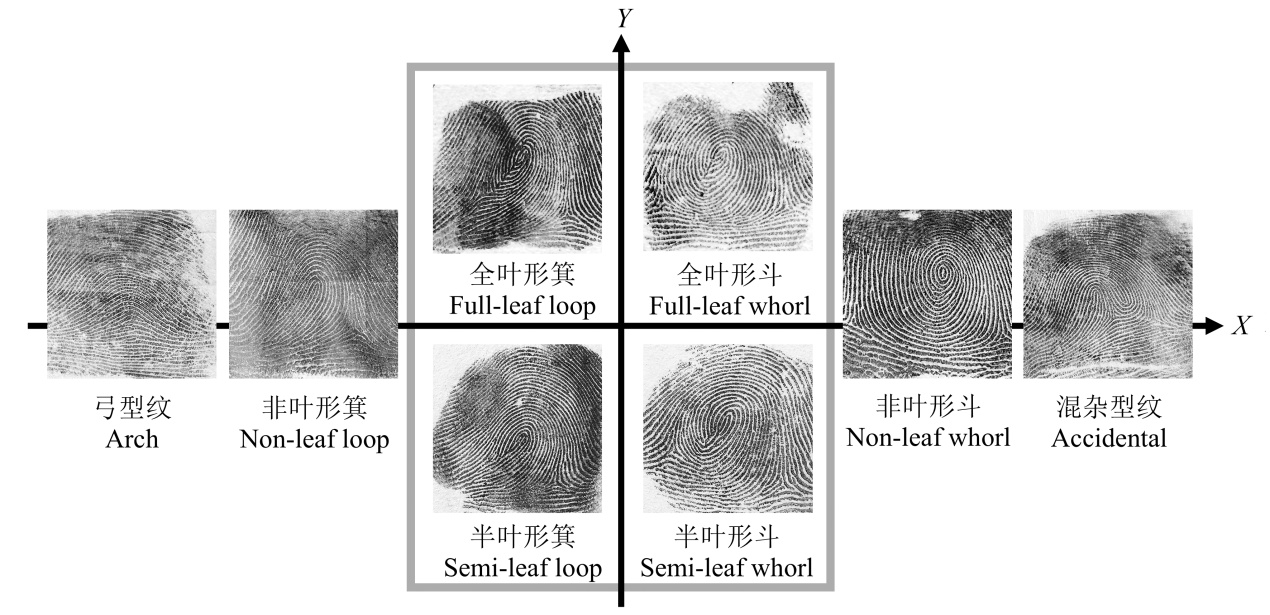
图1 类叶纹型的指纹形态复杂程度示意图 注:X轴正方向及Y轴正方向均表示指纹形态由简单到复杂的方向 the positive directions of the X-axis and Y-axis both indicate the progression from simple to complex fingerprint morphological features
Fig.1 Schematic diagram illustrating complexity degrees of fingerprint morphological features of leaf-like patterns
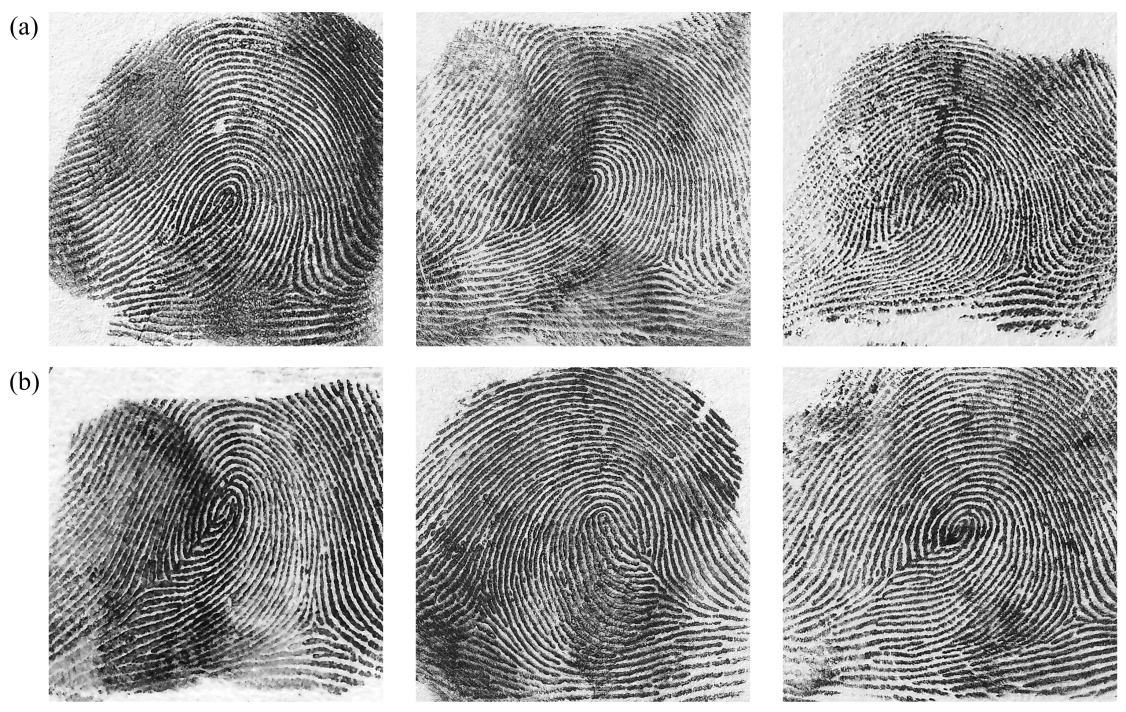
图2 箕型纹中的类叶纹型 a.半叶形箕Semi-leaf loops;b.全叶形箕Full-leaf loops
Fig.2 leaf-like patterns of loops
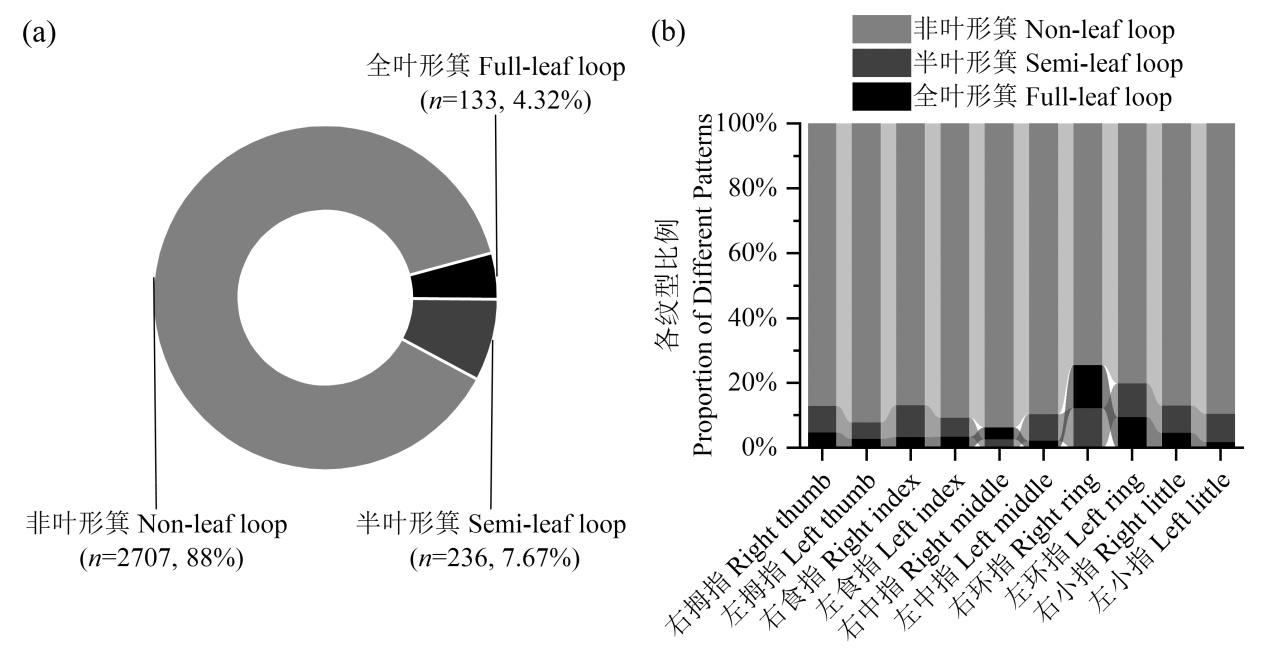
图3 各类箕型纹及其指位占比统计分布 a.箕型纹中类叶纹型的频数和频率分布Frequency counts and relative frequency distribution of leaf-like patterns in loops; b.各指位箕型纹中类叶纹型的占比分布 Percentage distribution of leaf-like patterns in loops across digits
Fig.3 Statistical distribution of different loops and their proportions across digits
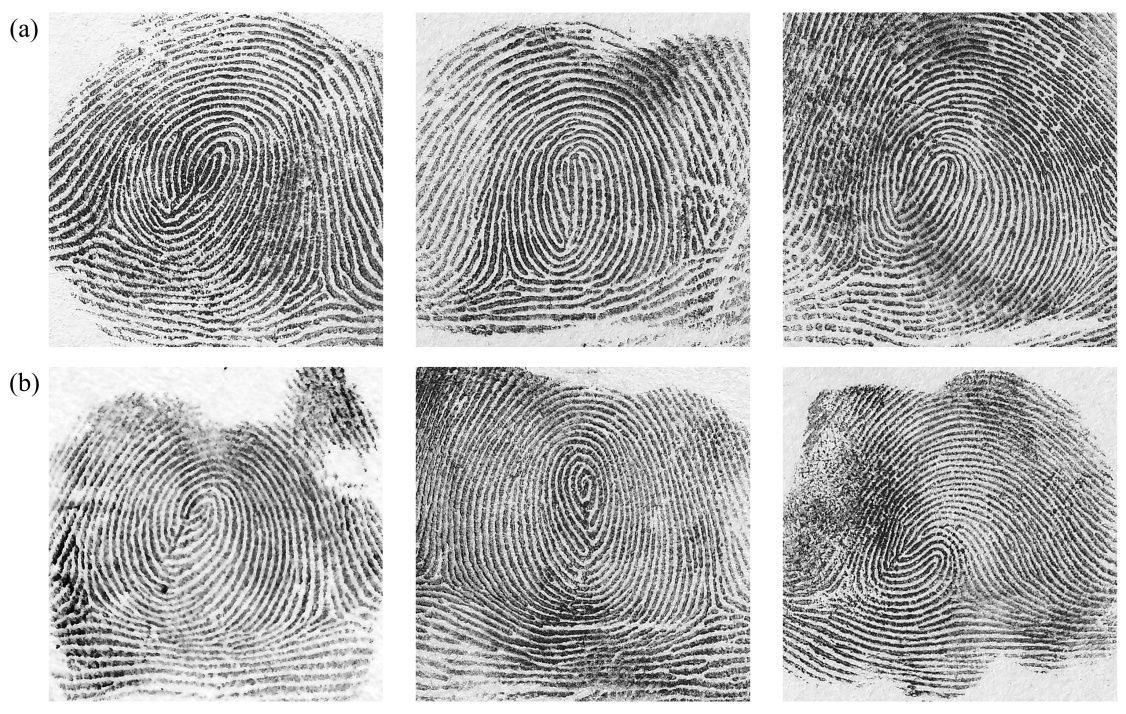
图4 斗型纹中的类叶纹型 a.半叶形斗 Semi-leaf whorls;b.全叶形斗 Full-leaf whorls
Fig.4 Leaf-like patterns of whorls
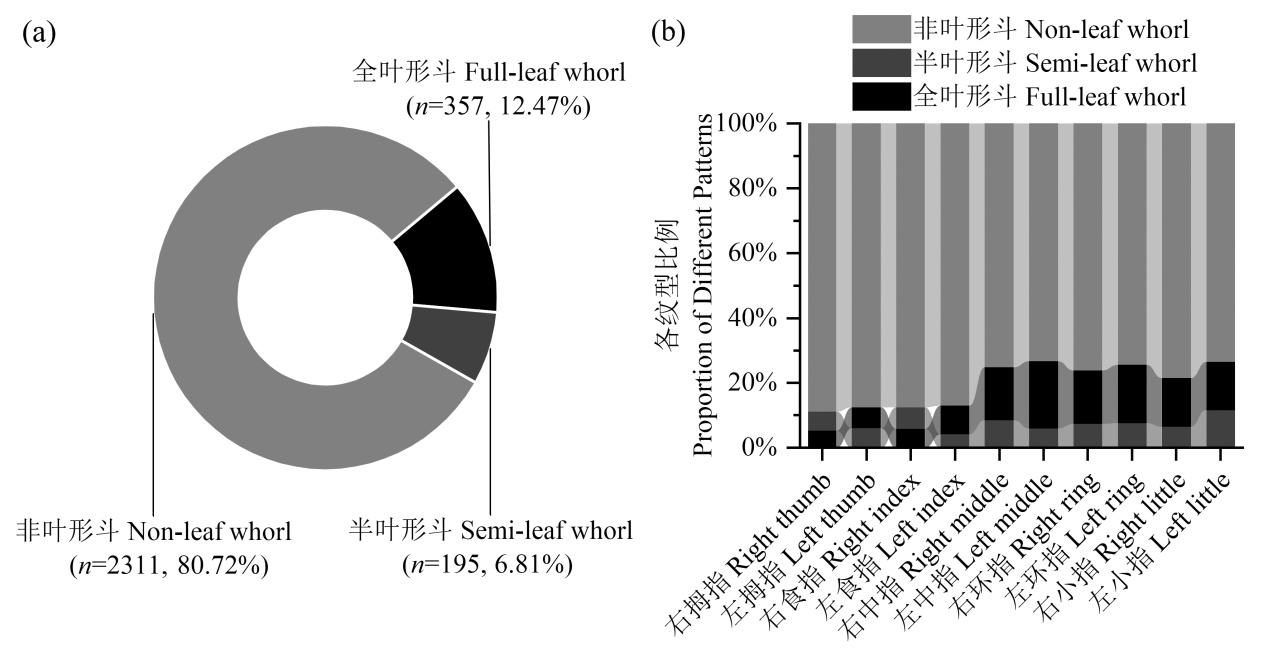
图5 各类斗型纹及其指位占比统计分布 a.斗型纹中类叶纹型的频数和频率分布 Frequency counts and relative frequency distribution of leaf-like patterns in whorls;b.各指位斗型纹中类叶纹型的占比分布 Percentage distribution of leaf-like patterns in whorls across digits
Fig.5 Statistical distribution of different whorls and proportions across digits
| 类叶纹型Leaf-like pattern | 频数(枚)Frequency count (n) | 频率总计Total frequency | |||||||||
|---|---|---|---|---|---|---|---|---|---|---|---|
| 右拇指 Right thumb | 左拇指 Left thumb | 右食指Right index | 左食指Left index | 右中指 Right middle | 左中指 Left middle | 右环指 Right ring | 左环指 Left ring | 右小指 Right little | 左小指 Left little | ||
| 半叶形箕 Semi-leaf loop | 19 | 13 | 27 | 17 | 10 | 29 | 24 | 23 | 34 | 40 | 25.62% |
| 全叶形箕 Full-leaf loop | 11 | 7 | 9 | 10 | 14 | 8 | 26 | 21 | 19 | 8 | 14.44% |
| 半叶形斗 Semi-leaf whorl | 22 | 20 | 19 | 11 | 18 | 14 | 31 | 30 | 13 | 17 | 21.17% |
| 全叶形斗 Full-leaf whorl | 20 | 21 | 17 | 23 | 35 | 49 | 69 | 71 | 30 | 22 | 38.76% |
表2 类叶纹型在各指位的频数及频率分布
Tab.2 Frequency counts and relative frequency distributions of leaf-like patterns across digits
| 类叶纹型Leaf-like pattern | 频数(枚)Frequency count (n) | 频率总计Total frequency | |||||||||
|---|---|---|---|---|---|---|---|---|---|---|---|
| 右拇指 Right thumb | 左拇指 Left thumb | 右食指Right index | 左食指Left index | 右中指 Right middle | 左中指 Left middle | 右环指 Right ring | 左环指 Left ring | 右小指 Right little | 左小指 Left little | ||
| 半叶形箕 Semi-leaf loop | 19 | 13 | 27 | 17 | 10 | 29 | 24 | 23 | 34 | 40 | 25.62% |
| 全叶形箕 Full-leaf loop | 11 | 7 | 9 | 10 | 14 | 8 | 26 | 21 | 19 | 8 | 14.44% |
| 半叶形斗 Semi-leaf whorl | 22 | 20 | 19 | 11 | 18 | 14 | 31 | 30 | 13 | 17 | 21.17% |
| 全叶形斗 Full-leaf whorl | 20 | 21 | 17 | 23 | 35 | 49 | 69 | 71 | 30 | 22 | 38.76% |
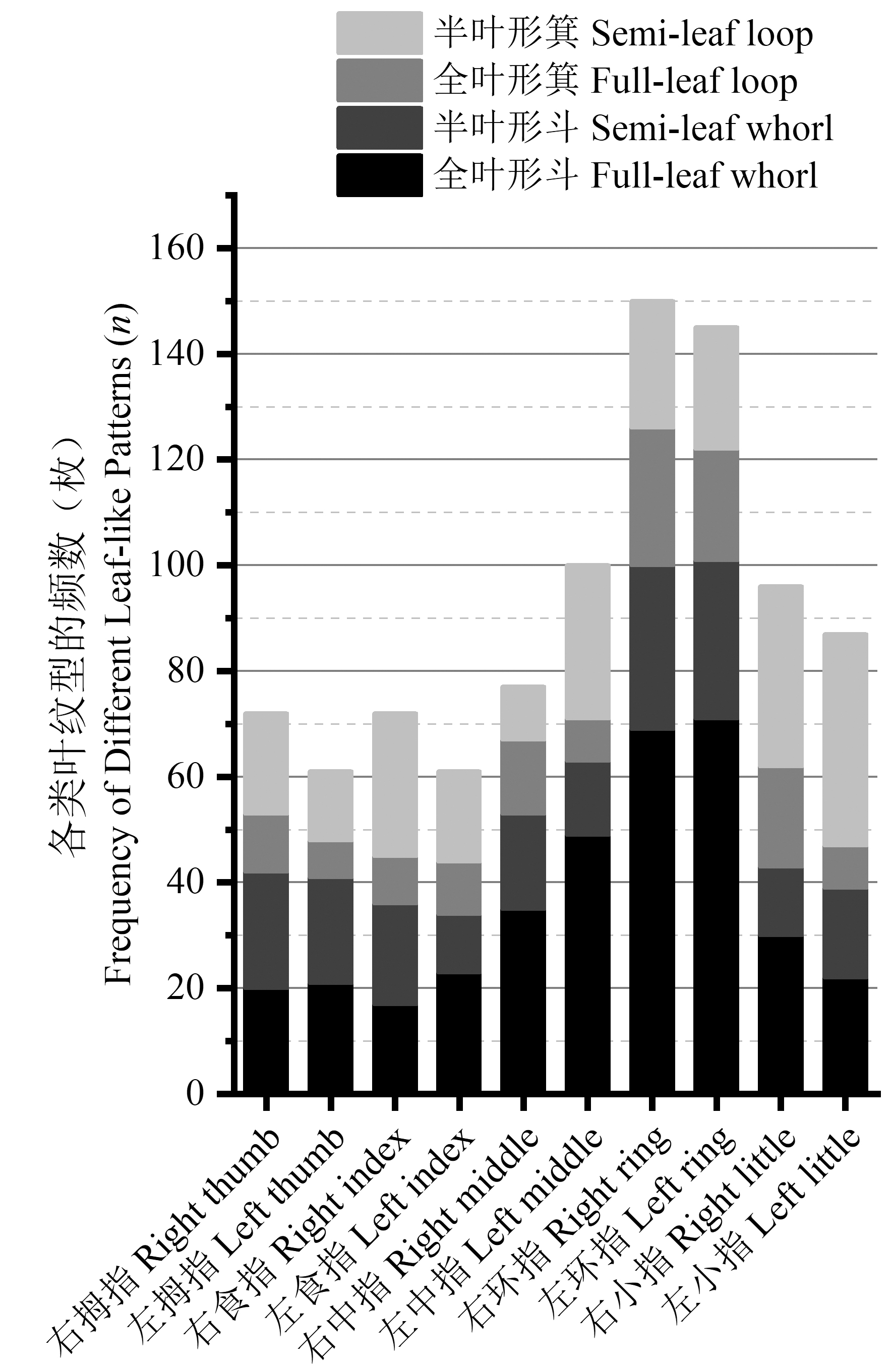
图6 类叶纹型在各指位的频数分布
Fig.6 Frequency distribution of leaf-like patterns across digits
| 父亲Father | 母亲Mother | 中亲值Midparent | ||
|---|---|---|---|---|
| 儿子Son | 相关系数 Correlation coefficient | 0.136 | 0.177 | 0.220 |
| P值 P-value | 0.128 | <0.05 | <0.05 | |
| 家系数 Number of families (n) | 126 | 126 | 126 | |
| 女儿Daughter | 相关系数 Correlation coefficient | 0.113 | 0.311 | 0.299 |
| P值 P-value | 0.264 | <0.01 | <0.01 | |
| 家系数Number of families (n) | 99 | 99 | 99 | |
| 子代Offspring | 相关系数Correlation coefficient | 0.120 | 0.227 | 0.250 |
| P值 P-value | 0.128 | <0.01 | <0.01 | |
| 家系数Number of families (n) | 161 | 161 | 161 |
表3 父母与子代类叶纹型的相关分析
Tab.3 Correlation analysis of leaf-like patterns between parents and offspring
| 父亲Father | 母亲Mother | 中亲值Midparent | ||
|---|---|---|---|---|
| 儿子Son | 相关系数 Correlation coefficient | 0.136 | 0.177 | 0.220 |
| P值 P-value | 0.128 | <0.05 | <0.05 | |
| 家系数 Number of families (n) | 126 | 126 | 126 | |
| 女儿Daughter | 相关系数 Correlation coefficient | 0.113 | 0.311 | 0.299 |
| P值 P-value | 0.264 | <0.01 | <0.01 | |
| 家系数Number of families (n) | 99 | 99 | 99 | |
| 子代Offspring | 相关系数Correlation coefficient | 0.120 | 0.227 | 0.250 |
| P值 P-value | 0.128 | <0.01 | <0.01 | |
| 家系数Number of families (n) | 161 | 161 | 161 |
| 自变量-因变量Independent variable-dependent variable | 回归方程 Regression equation | R2 | 调整后R2/Adjusted R2 | 标准误差Standard error of estimate (n) | 样本量Sample size | F值 F-value | P值 P-value |
|---|---|---|---|---|---|---|---|
| 父亲-儿子 Father-Son | Y=0.118X+1.269 | 0.019 | 0.011 | 1.252 | 126 | 2.351 | 0.128 |
| 父亲-女儿 Father-Daughter | Y=0.088X+1.223 | 0.013 | 0.003 | 1.455 | 99 | 1.261 | 0.264 |
| 父亲-子代 Father-Offspring | Y=0.091X+1.257 | 0.014 | 0.008 | 1.231 | 161 | 2.339 | 0.128 |
| 母亲-儿子 Mother-Son | Y=0.133X+1.235 | 0.031 | 0.024 | 1.244 | 126 | 4.025 | <0.05 |
| 母亲-女儿 Mother-Daughter | Y=0.264X+0.941 | 0.097 | 0.087 | 1.391 | 99 | 10.373 | <0.01 |
| 母亲-子代 Mother-Offspring | Y=0.169X+1.137 | 0.052 | 0.046 | 1.207 | 161 | 8.677 | <0.01 |
| 中亲值-儿子 Midparent-Son | Y=0.245X+1.081 | 0.048 | 0.041 | 1.233 | 126 | 6.287 | <0.05 |
| 中亲值-女儿Midparent-Daughter | Y=0.348X+0.798 | 0.089 | 0.080 | 1.397 | 99 | 9.492 | <0.01 |
| 中亲值-子代Midparent-Offspring | Y=0.268X+0.989 | 0.062 | 0.056 | 1.200 | 161 | 10.569 | <0.01 |
| 父亲Father X1、母亲MotherX2-儿子Son | Y=0.113X1+0.130X2+1.083 | 0.048 | 0.033 | 1.238 | 126 | 3.133 | <0.05 |
| 父亲Father X1、母亲Mother X2-女儿Daughter | Y=0.097X1+0.268X2+0.774 | 0.112 | 0.094 | 1.386 | 99 | 6.071 | <0.01 |
| 父亲Father X1、母亲Mother X2-子代Offspring | Y=0.095X1+0.171X2+0.991 | 0.068 | 0.056 | 1.201 | 161 | 5.719 | <0.01 |
表4 父母与子代类叶纹型的回归分析
Tab.4 Regression analysis of leaf-like patterns between parents and offspring
| 自变量-因变量Independent variable-dependent variable | 回归方程 Regression equation | R2 | 调整后R2/Adjusted R2 | 标准误差Standard error of estimate (n) | 样本量Sample size | F值 F-value | P值 P-value |
|---|---|---|---|---|---|---|---|
| 父亲-儿子 Father-Son | Y=0.118X+1.269 | 0.019 | 0.011 | 1.252 | 126 | 2.351 | 0.128 |
| 父亲-女儿 Father-Daughter | Y=0.088X+1.223 | 0.013 | 0.003 | 1.455 | 99 | 1.261 | 0.264 |
| 父亲-子代 Father-Offspring | Y=0.091X+1.257 | 0.014 | 0.008 | 1.231 | 161 | 2.339 | 0.128 |
| 母亲-儿子 Mother-Son | Y=0.133X+1.235 | 0.031 | 0.024 | 1.244 | 126 | 4.025 | <0.05 |
| 母亲-女儿 Mother-Daughter | Y=0.264X+0.941 | 0.097 | 0.087 | 1.391 | 99 | 10.373 | <0.01 |
| 母亲-子代 Mother-Offspring | Y=0.169X+1.137 | 0.052 | 0.046 | 1.207 | 161 | 8.677 | <0.01 |
| 中亲值-儿子 Midparent-Son | Y=0.245X+1.081 | 0.048 | 0.041 | 1.233 | 126 | 6.287 | <0.05 |
| 中亲值-女儿Midparent-Daughter | Y=0.348X+0.798 | 0.089 | 0.080 | 1.397 | 99 | 9.492 | <0.01 |
| 中亲值-子代Midparent-Offspring | Y=0.268X+0.989 | 0.062 | 0.056 | 1.200 | 161 | 10.569 | <0.01 |
| 父亲Father X1、母亲MotherX2-儿子Son | Y=0.113X1+0.130X2+1.083 | 0.048 | 0.033 | 1.238 | 126 | 3.133 | <0.05 |
| 父亲Father X1、母亲Mother X2-女儿Daughter | Y=0.097X1+0.268X2+0.774 | 0.112 | 0.094 | 1.386 | 99 | 6.071 | <0.01 |
| 父亲Father X1、母亲Mother X2-子代Offspring | Y=0.095X1+0.171X2+0.991 | 0.068 | 0.056 | 1.201 | 161 | 5.719 | <0.01 |
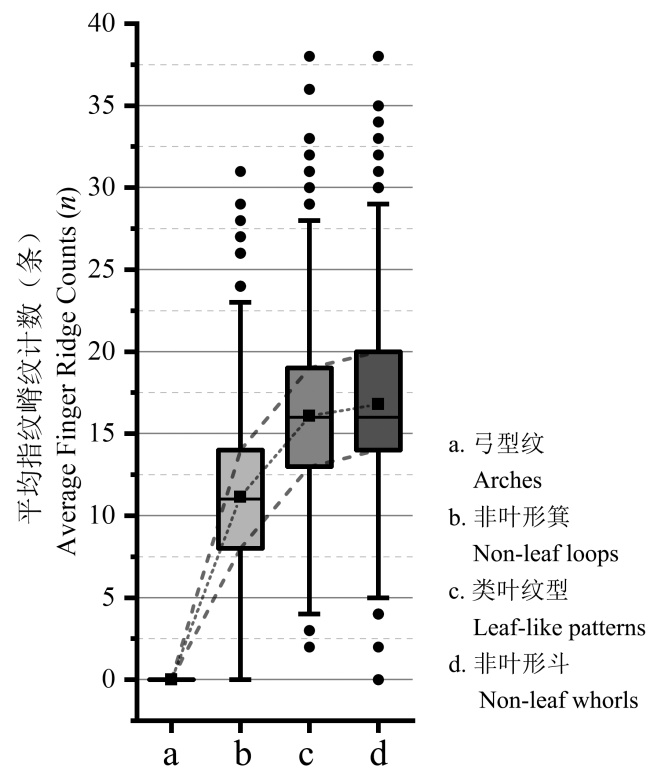
图7 平均指纹嵴纹计数对比箱线图
Fig.7 Comparative box plot of average finger ridge counts
| 指纹类型组合格局Fingerprint combination | 观察频率Observed frequency | 期望频率 Expected frequency | 卡方检验Chi-square Test | |||||||
|---|---|---|---|---|---|---|---|---|---|---|
| 拇指 Thumb | 食指 Index | 中指 Middle | 环指 Ring | 小指 Little | 平均 Mean | 卡方值 Chi-square | P值 P-value | |||
| A/A | 1.44% | 5.91% | 1.92% | 0.96% | 1.92% | 2.43% | 0.21% | 681.667 | <0.001 | |
| A/NLL & NLL/A | 3.51% | 7.19% | 5.43% | 1.12% | 2.08% | 3.87% | 3.98% | 0.133 | 0.715 | |
| A/LLP & LLP/A | 0.16% | 0.32% | 0.00% | 0.00% | 0.00% | 0.10% | 1.35% | 36.707 | <0.001 | |
| A/NLW & NLW/A | 0.64% | 1.12% | 0.00% | 0.16% | 0.00% | 0.38% | 3.45% | 88.383 | <0.001 | |
| NLL/NLL | 23.16% | 24.92% | 42.33% | 16.93% | 50.00% | 31.47% | 18.70% | 336.373 | <0.001 | |
| NLL/LLP & LLP/NLL | 5.11% | 8.63% | 9.58% | 8.63% | 11.02% | 8.59% | 12.72% | 47.903 | <0.001 | |
| NLL/NLW & NLW/NLL | 15.02% | 14.22% | 8.79% | 8.15% | 9.27% | 11.09% | 32.38% | 648.997 | <0.001 | |
| LLP/LLP | 2.40% | 1.60% | 3.99% | 9.74% | 5.91% | 4.73% | 2.16% | 96.208 | <0.001 | |
| LLP/NLW & NLW/LLP | 11.18% | 9.11% | 10.70% | 19.01% | 6.39% | 11.28% | 11.02% | 0.208 | 0.648 | |
| NLW/NLW | 37.38% | 27.00% | 17.25% | 35.30% | 13.42% | 26.07% | 14.02% | 376.573 | <0.001 | |
表5 左右对应手指纹类型组合格局分析
Tab.5 Analysis of different combinations of fingerprints on left and right corresponding fingers
| 指纹类型组合格局Fingerprint combination | 观察频率Observed frequency | 期望频率 Expected frequency | 卡方检验Chi-square Test | |||||||
|---|---|---|---|---|---|---|---|---|---|---|
| 拇指 Thumb | 食指 Index | 中指 Middle | 环指 Ring | 小指 Little | 平均 Mean | 卡方值 Chi-square | P值 P-value | |||
| A/A | 1.44% | 5.91% | 1.92% | 0.96% | 1.92% | 2.43% | 0.21% | 681.667 | <0.001 | |
| A/NLL & NLL/A | 3.51% | 7.19% | 5.43% | 1.12% | 2.08% | 3.87% | 3.98% | 0.133 | 0.715 | |
| A/LLP & LLP/A | 0.16% | 0.32% | 0.00% | 0.00% | 0.00% | 0.10% | 1.35% | 36.707 | <0.001 | |
| A/NLW & NLW/A | 0.64% | 1.12% | 0.00% | 0.16% | 0.00% | 0.38% | 3.45% | 88.383 | <0.001 | |
| NLL/NLL | 23.16% | 24.92% | 42.33% | 16.93% | 50.00% | 31.47% | 18.70% | 336.373 | <0.001 | |
| NLL/LLP & LLP/NLL | 5.11% | 8.63% | 9.58% | 8.63% | 11.02% | 8.59% | 12.72% | 47.903 | <0.001 | |
| NLL/NLW & NLW/NLL | 15.02% | 14.22% | 8.79% | 8.15% | 9.27% | 11.09% | 32.38% | 648.997 | <0.001 | |
| LLP/LLP | 2.40% | 1.60% | 3.99% | 9.74% | 5.91% | 4.73% | 2.16% | 96.208 | <0.001 | |
| LLP/NLW & NLW/LLP | 11.18% | 9.11% | 10.70% | 19.01% | 6.39% | 11.28% | 11.02% | 0.208 | 0.648 | |
| NLW/NLW | 37.38% | 27.00% | 17.25% | 35.30% | 13.42% | 26.07% | 14.02% | 376.573 | <0.001 | |
| [1] | 钟新文, 张忠良. 手印学(2版)[M]. 北京: 中国人民公安大学出版社, 2019, 11-35 |
| [2] | 马慰国, 杨汉民. 实用医学皮纹学[M]. 北京: 科学技术文献出版社, 2008, 28-93 |
| [3] | 宋焕庭, 唐玮, 张丽梅, 等. 指纹与年龄相关性的量化分析[J]. 人类学学报, 2022, 41(6): 1047-1057 |
| [4] |
李康, 陈世韬, 罗亚平. 指纹证据似然比评价数据库的构建与评估[J]. 刑事技术, 2024, 49(6): 566-573
doi: 10.16467/j.1008-3650.2024.0003 |
| [5] | 陆国芳, 李树宁, 高丽荣, 等. 抑郁症患者的皮纹特征[J]. 人类学学报, 2012, 31(2): 202-206 |
| [6] | 张海国. 中国肤纹表型组的研究现状与对策[J]. 人类学学报, 2024, 43(4): 675-686 |
| [7] | 韩均良. 手印检验技术图解[M]. 北京: 中国人民公安大学出版社, 2011, 48-49 |
| [8] | 赵向欣. 指纹技术[M].中国刑事科学技术大全. 北京: 中国人民公安大学出版社, 2003, 115-769 |
| [9] | 刘持平. 试述指纹遗传中的数学特性[J]. 证据科学, 2008, 16(4): 487-494 |
| [10] | 涂知明, 解梦霞, 黄贻凤, 等. 皮纹遗传规律的研究与现状[J]. 中国优生与遗传杂志, 1996, 4(2): 110-111 |
| [11] |
Logan M. Finger or toe: the molecular basis of limb identity[J]. Development, 2003, 130(26): 6401-6410
pmid: 14660539 |
| [12] | Muller-Ford CS. Analysis of dermatoglyphic heritability: A study of phenotypic relationships[D]. MA Thesis, Missoula: The University of Montana, 2004, 25-27 |
| [13] |
Cheng X, Li H, Gupta S, et al. Dermatoglyphic changes during the population admixture between Kam and Han Chinese[J]. HOMO, 2009, 60(2): 143-157
doi: 10.1016/j.jchb.2008.07.002 pmid: 19167708 |
| [14] |
Xiao Y, Jin XJ, Zhou YX, et al. Genetic rules for the dermatoglyphics of human fingertips and their role in spouse selection: a preliminary study[J]. SpringerPlus, 2016, 5(1): 1396
doi: 10.1186/s40064-016-3072-x pmid: 27610315 |
| [15] |
Martin NG, Loesch DZ, Jardine R, et al. Evidence for directional non-additivity in the genetics of finger ridge counts[J]. Annals of Human Biology, 1982, 9(3): 253-263
pmid: 7201774 |
| [16] | 罗桐秀. 人类指纹的进化研究[J]. 中国优生与遗传杂志, 2002, 10(1): 16-17 |
| [17] | 李力, 黄镇国. 指纹亲子遗传规律探查[J]. 中国刑警学院学报, 2005, 23(2): 26-28 |
| [18] |
Rautian GS. Bilateral asymmetry as a source of information on the evolutionary trends, using dermatoglyphics of Talyshes as an example[J]. Paleontological Journal, 2014, 48(12): 1309-1314
doi: 10.1134/S0031030114120089 URL |
| [19] | 张海国, 王伟成, 许玲娣, 等. 中国人肤纹研究(I):汉族10项肤纹参数正常值的测定[J]. 遗传学报, 1981, 8(1): 27-35 |
| [20] | Maceo AV. Qualitative assessment of skin deformation: A pilot study[J]. Journal of Forensic Identification, 2009, 59(4): 390-440 |
| [21] |
de Jongh A, Rodriguez CM. Performance evaluation of automated fingerprint identification systems for specific conditions observed in casework using simulated fingermarks[J]. Journal of Forensic Sciences, 2012, 57(4): 1075-1081
doi: 10.1111/j.1556-4029.2012.02114.x pmid: 22458701 |
| [1] | 侯侃. 国内外古人口学研究进展述评[J]. 人类学学报, 2026, 45(01): 1-17. |
| [2] | 李欣, 姜帅, 黄婷, 钟华, 温有锋. 内蒙古与新疆达斡尔族头面部特征比较[J]. 人类学学报, 2024, 43(04): 586-596. |
| [3] | 祝海歌, 乔辉, 杨晨, 管海娟, 张航, 文少卿, 夏斌, 谭婧泽. 中国汉族、回族、蒙古族、苗族和维吾尔族的牙齿形态[J]. 人类学学报, 2024, 43(04): 613-628. |
| [4] | 曾浩然, 刘康康, 罗亚平. 指纹皱纹研究的现状及展望[J]. 人类学学报, 2024, 43(03): 518-528. |
| [5] | 许竞文, 浣发祥, 杨石霞. 旧石器时代考古中出土的赭石及相关遗物的研究方法[J]. 人类学学报, 2024, 43(02): 331-343. |
| [6] | 倪喜军. 人类起源研究中的哲学问题[J]. 人类学学报, 2023, 42(06): 709-720. |
| [7] | 何嘉宁, 冉智宇. 中国史前人类的头骨变形[J]. 人类学学报, 2023, 42(05): 575-589. |
| [8] | 孙蕾, 李彦桢, 武志江. 河南郑州站马屯遗址仰韶晚期人骨的颅面形态[J]. 人类学学报, 2023, 42(03): 331-341. |
| [9] | 王邦彦, 王久存, 文少卿. 古代强直性脊柱炎的诊断标准及国内研究回顾[J]. 人类学学报, 2023, 42(03): 422-434. |
| [10] | 付卫伟, 王晓卫, 杨晨希, 王程亮, 贺树军, 李保国. 非人灵长类早期发育阶段行为偏侧的研究进展[J]. 人类学学报, 2023, 42(03): 435-444. |
| [11] | 李海军, 翁敏洁, 段琬琪, 刘力铭. 人类口唇部形态变异的研究进展[J]. 人类学学报, 2023, 42(01): 137-148. |
| [12] | 刘鑫, 张兴华, 宇克莉, 刘艳霞, 包金萍, 郑连斌. 生物电阻抗法测定广西京族的体成分[J]. 人类学学报, 2022, 41(06): 1028-1036. |
| [13] | 沙仁高娃, 程慧珍, 韦兰海. 达斡尔语分支早期在蒙古语族中的地位[J]. 人类学学报, 2022, 41(06): 1037-1046. |
| [14] | 宋焕庭, 唐玮, 张丽梅, 张忠良, 张嘉宇, 陈世韬. 指纹与年龄相关性的量化分析[J]. 人类学学报, 2022, 41(06): 1047-1057. |
| [15] | 邢松. 现代人出现和演化的化石证据[J]. 人类学学报, 2022, 41(06): 1069-1082. |
| 阅读次数 | ||||||
|
全文 |
|
|||||
|
摘要 |
|
|||||
 京ICP证05002819号-3
