人类学学报 ›› 2026, Vol. 45 ›› Issue (04): 639-650.doi: 10.16359/j.1000-3193/AAS.2025.0053cstr: 32091.14.j.1000-3193/AAS.2025.0053

• 研究论文 • 上一篇    下一篇

山西怀仁鹅毛口遗址的再调查与研究

兰智雄1(), 李云飞2, 李君1()   

  1. 1 山西大学考古文博学院太原030006
    2 韩国釜山大学考古学系釜山 46241, 韩国
  • 收稿日期:2024-11-21 修回日期:2025-03-13 出版日期:2026-08-15 发布日期:2026-08-12
  • 通讯作者: 李君,教授,主要从事史前考古学研究。E-mail: 469447067@qq.com
  • 作者简介:兰智雄,博士研究生,主要从事旧石器时代考古学研究。E-mail: Lanzhixiong083@163.com
  • 基金资助:
    国家社会科学基金重点项目(18ZDA224)

Further investigation and research on the Emaokou site in Huairen, Shanxi

LAN Zhixiong1(), LI Yunfei2, LI Jun1()   

  1. 1 School of Archaeology and Museology, Shanxi University, Taiyuan 030006
    2 Department of Archaeology, Pusan National University, Pusan 46241, Republic of Korea
  • Received:2024-11-21 Revised:2025-03-13 Online:2026-08-15 Published:2026-08-12

摘要:

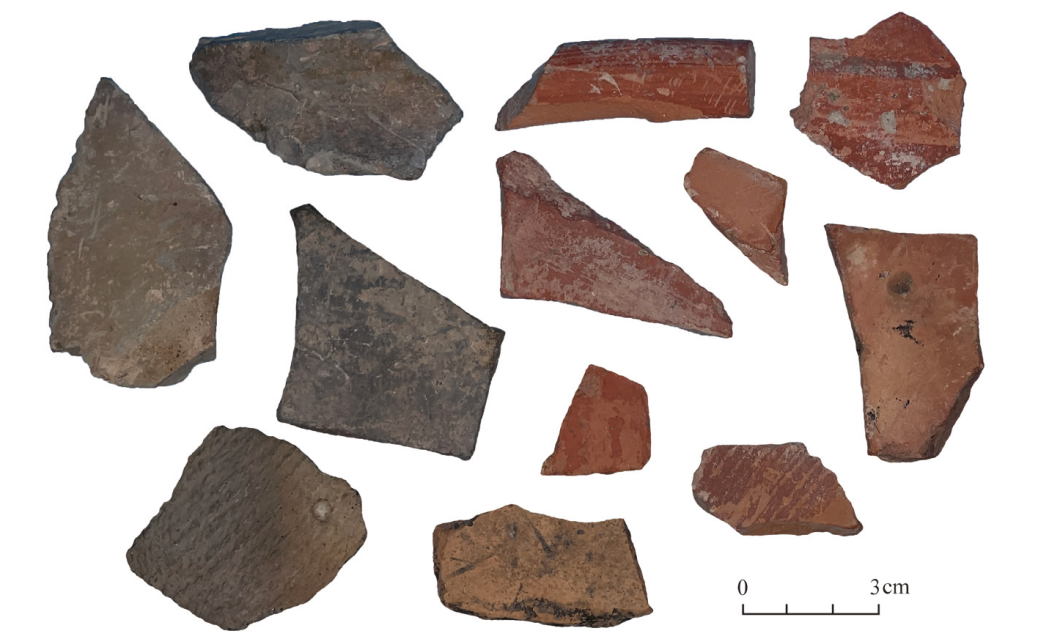
鹅毛口遗址发现于1963年,贾兰坡先生对遗址进行过调查研究。2016、2022、2024年山西大学考古文博学院再次对鹅毛口遗址进行调查,共采集石制品103件、陶片12件;石制品中半成品最具特色,也最有代表性。本文通过定量定性分析对鹅毛口遗址的性质进行研究,进而对其时代进行探讨,推测鹅毛口遗址可能从旧石器时代晚期就开始被使用,一直延续到新石器时代晚期。鹅毛口遗址在不同时代可能扮演着不同的角色:旧石器时代晚期,鹅毛口遗址具有石器制造场和居住地双重性质;新石器时代早期,鹅毛口遗址是居住在周边人群加工石器的场所,可能与早期农业有关;至新石器时代中晚期,鹅毛口遗址的性质仍为石器加工场所,同时作为生活在周边的先民进行生产生活的临时性场所。

关键词: 鹅毛口, 石器制造场, 打制石器, 半成品, 新石器时代

Abstract:

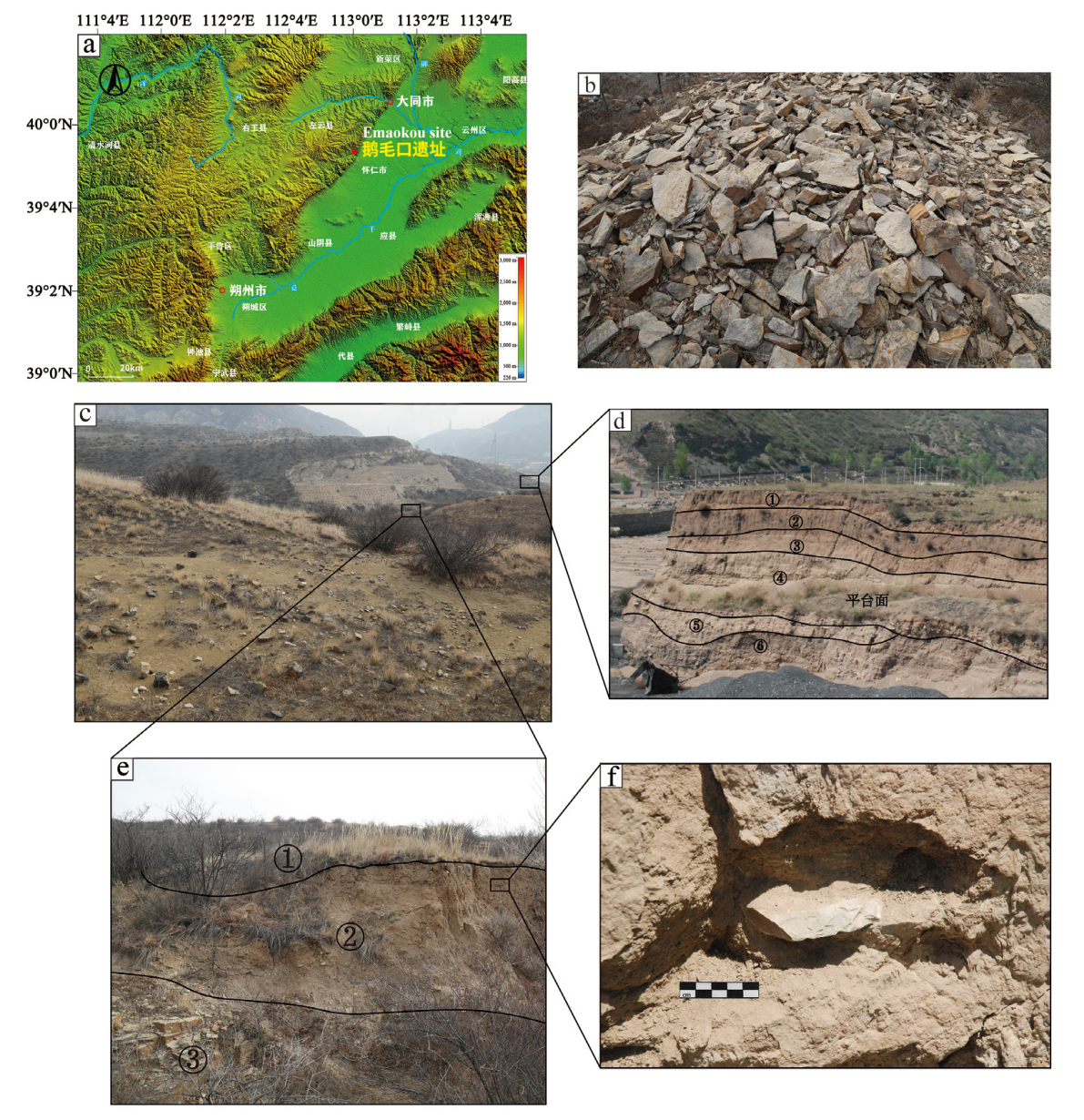
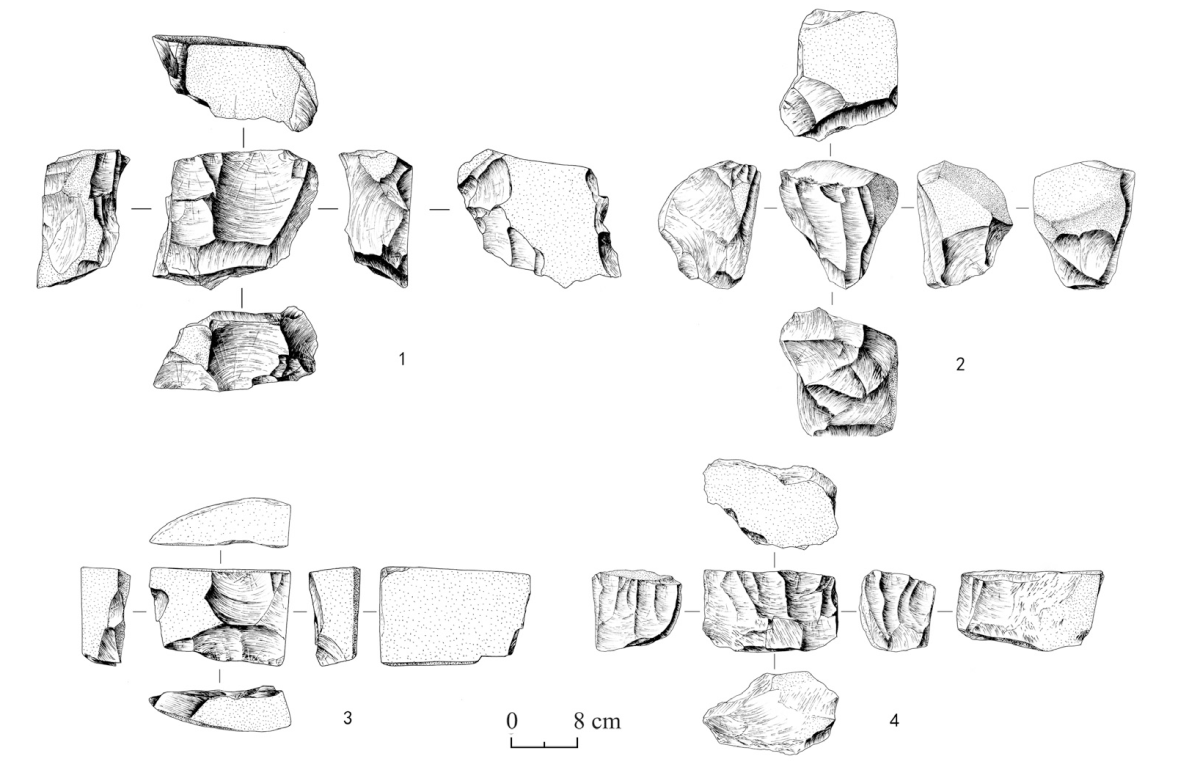
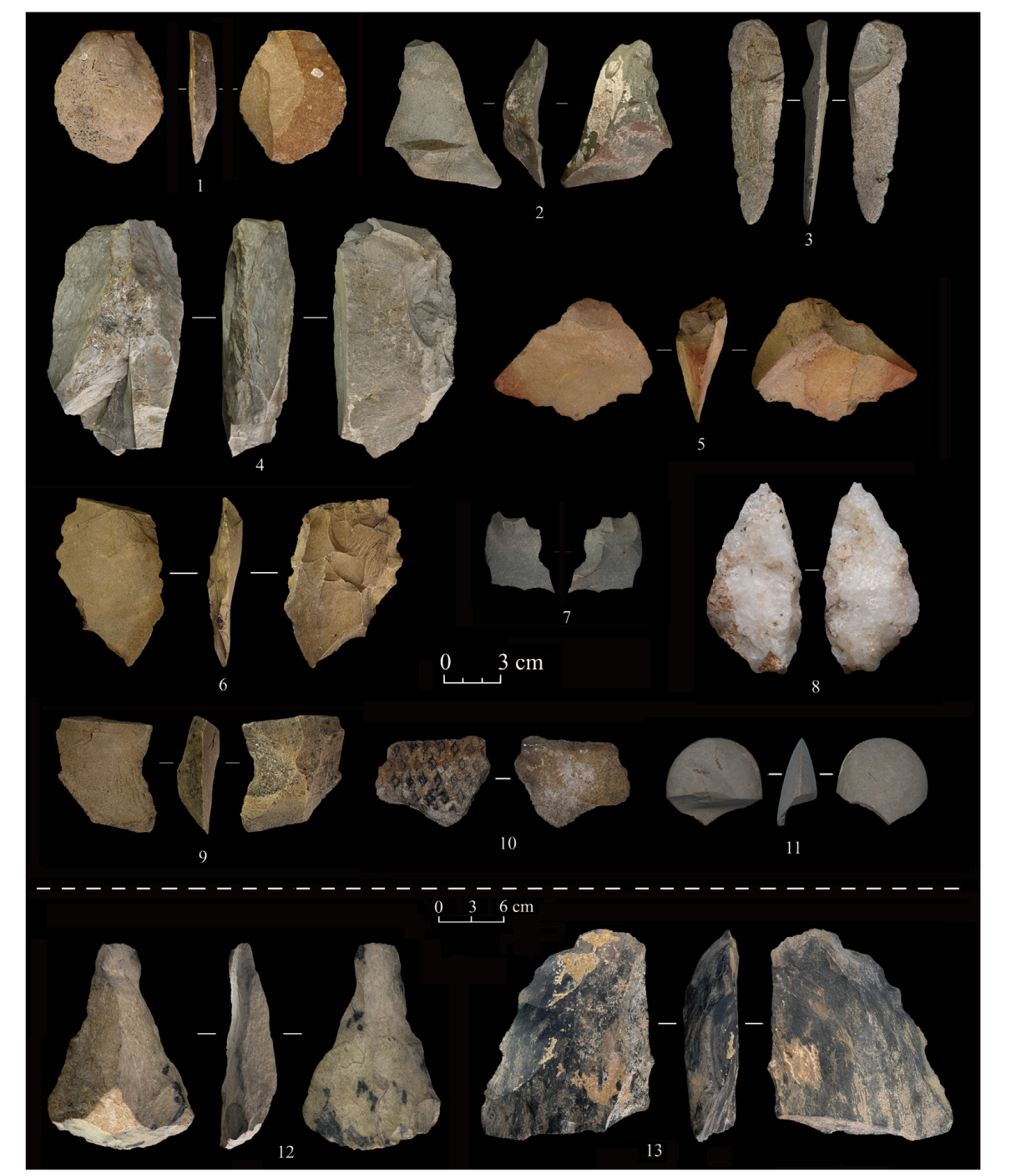
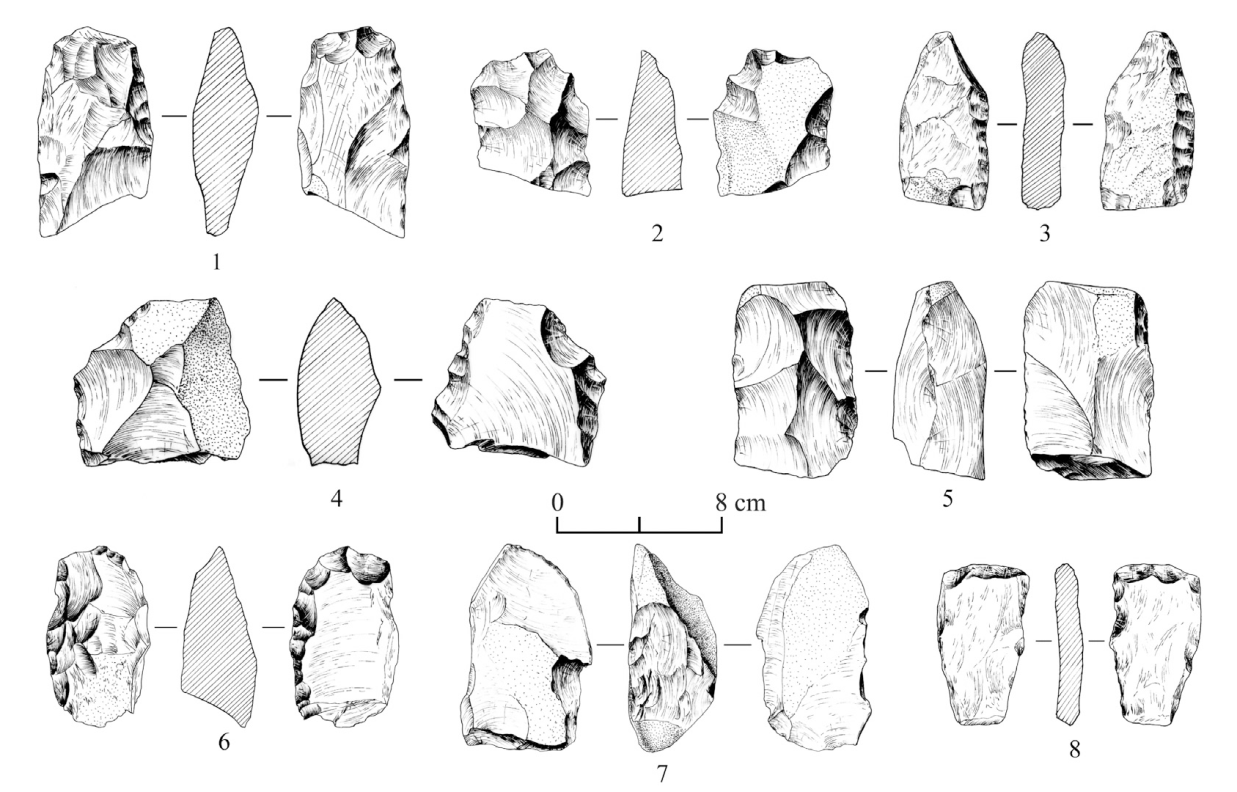
The Emaokou site is located in Emaokou Village, Huairen City, Shuozhou City, Shanxi Province, occupying the western edge of the Datong Basin on the first and second terraces of the Emaokou River, a tributary of the Sanggan River. Discovered in 1963 during investigations by Prof. Jia Lanpo, the site underwent subsequent surveys by the School of Archaeology and Museology Shanxi University in 2016, 2022 and 2024. These investigations yielded a total of 103 stone artifacts and 12 pottery sherds. Among these, semi-finished artifacts constitute the most distinctive and representative category. Through quantitative and qualitative analyses, this study aims to clarify the functional nature of the site and establish its chronological framework. The stone artifacts at Emaokou predominantly utilized tuff and basalt, with raw material analysis suggesting local collection. The core reduction process utilized direct hard-hammer percussion devoid of preparatory platform modification or ventral surface regularization, indicative of an expedient reduction strategy, while core exploitation predominantly adhered to multidirectional rotation patterns. Flakes are predominantly irregular. The tools include finished tools made from medium-to-large flakes, dominated by scrapers and choppers, as well as larger tools with Neolithic characteristics, such as stone axes, hoes, sickles, and shovels. Notably, there are numerous semi-finished artifacts, mainly axe-shaped implements, which require further polishing.

Functioning as a lithic workshop, the Emaokou site spans from the Late Paleolithic to the Late Neolithic periods. Diachronic analysis reveals evolving functional roles: during the Late Paleolithic, it served as a tool-manufacturing station and habitation site. During the Early Neolithic, the Emaokou site functioned as a lithic processing center for surrounding inhabitants, potentially linked to early agricultural development. By the Middle-Late Neolithic, it persisted as a manufacturing center while simultaneously functioning as a temporary production and daily activity locus for surrounding inhabitants. The standardized reduction sequences evident in semi-finished artifacts imply the existence of a large-scale Neolithic settlement site in the vicinity. The integrated techno-typological analysis of lithic assemblages from the Emaokou site provides novel perspectives on the Neolithic cultural chronology of the Sanggan River Basin within the Datong Basin. Furthermore, it also offers important information for exploring the behavioral activities and adaptive survival strategies of the Holocene inhabitants in the region.

Key words: Emaokou, lithic manufacturing site, knapped artifacts, semi-finished artifacts, Neolithic

中图分类号: