人类学学报 ›› 2026, Vol. 45 ›› Issue (05): 839-850.doi: 10.16359/j.1000-3193/AAS.2025.0102cstr: 32091.14.j.1000-3193/AAS.2025.0102

• 研究论文 • 上一篇    下一篇

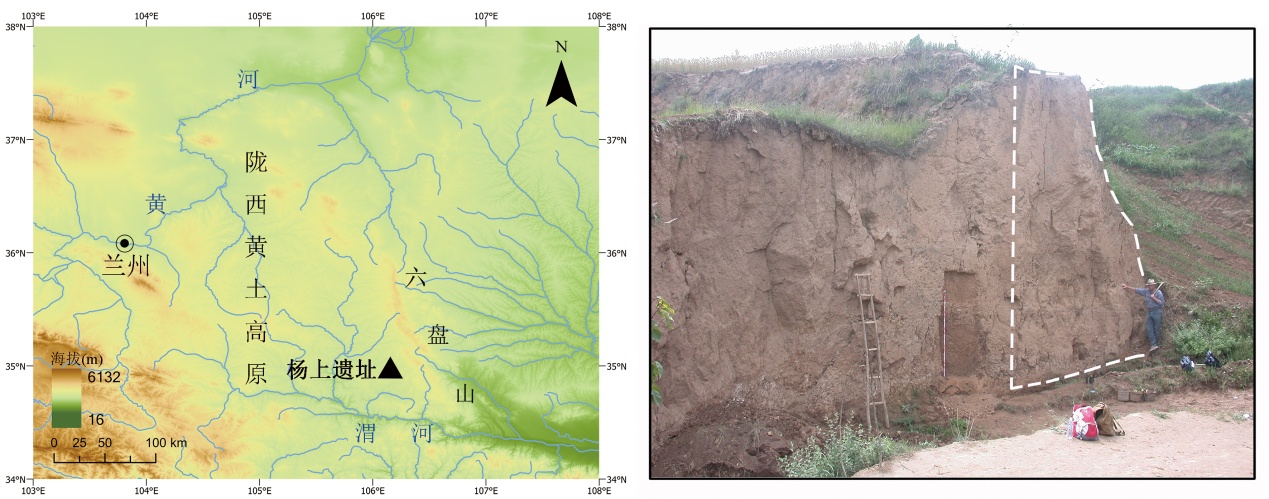
甘肃杨上旧石器遗址的形成过程

赵宇超1,2(), 李锋3,4,5(), 周静6, 陈福友2, 廖丽姗7, 邵新雅7, 高星2,8   

  1. 1 内高尼综合研究中心, 菲尔德自然历史博物馆, 芝加哥 60605, 美国
    2 中国科学院古脊椎动物与古人类研究所, 中国科学院脊椎动物演化与人类起源重点实验室, 北京 100044
    3 北京大学中国考古学研究中心, 北京 100871
    4 北京大学考古文博学院, 北京 100871
    5 北京大学考古科学教育部重点实验室, 北京 100871
    6 甘肃省文物考古研究所, 兰州 730000
    7 山东大学考古学院, 山东大学环境与社会考古国际合作联合实验室, 青岛 266237
    8 中国科学院大学, 北京 100049
  • 收稿日期:2024-06-03 修回日期:2025-05-30 出版日期:2026-10-15 发布日期:2026-10-16
  • 通讯作者: 李锋,研究员,主要从事旧石器考古研究。E-mail: fengli@pku.edu.cn
  • 作者简介:赵宇超,副研究员,主要从事旧石器考古研究。E-mail: yzhao@fieldmuseum.org
  • 基金资助:
    国家社会科学基金青年项目(23CKG001);国家自然科学基金(42372010);全国考古人才振兴计划资助(2025-191)

Formation processes of the Yangshang Paleolithic site, Gansu

ZHAO Yuchao1,2(), LI Feng3,4,5(), ZHOU Jing6, CHEN Fuyou2, LIAO Lishan7, SHAO Xinya7, GAO Xing2,8   

  1. 1 Negaunee Integrative Research Center, Field Museum of Natural History, Chicago, IL 60605, USA
    2 Key Laboratory of Vertebrate Evolution and Human Origins of Chinese Academy of Sciences, Institute of Vertebrate Paleontology and Paleoanthropology, Chinese Academy of Sciences, Beijing 100044
    3 Center for the Study of Chinese Archaeology, Peking University, Beijing 100871
    4 School of Archaeology and Museology, Peking University, Beijing 100871
    5 Key Laboratory of Archaeological Science, Ministry of Education, Peking University, Beijing 100871
    6 Gansu Provincial Institute of Cultural Relics and Archaeology, Lanzhou 730000
    7 School of Archaeology, Joint International Research Laboratory of Environmental and Social Archaeology, Shandong University, Qingdao 266237
    8 University of Chinese Academy of Sciences, Beijing 100049
  • Received:2024-06-03 Revised:2025-05-30 Online:2026-10-15 Published:2026-10-16

摘要:

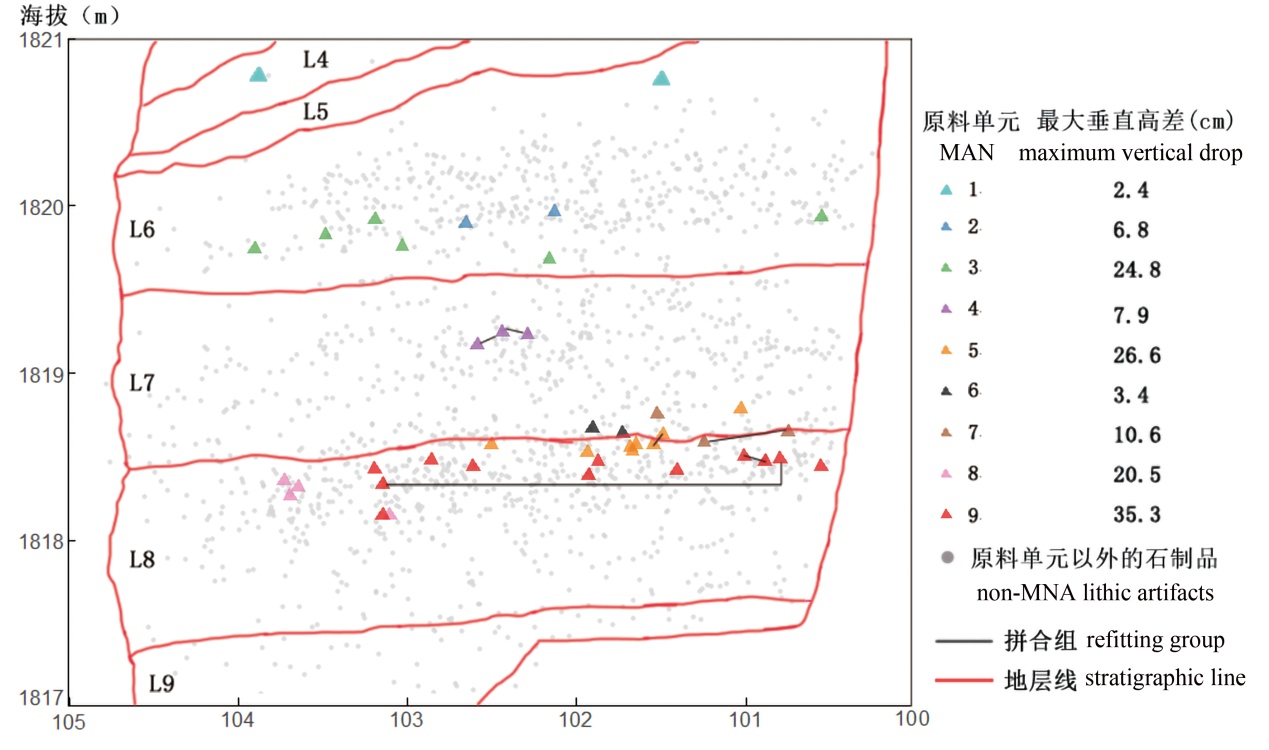
本文采用地学研究方法和出土遗物埋藏学参数对杨上遗址形成过程中自然营力改造强度进行评估。研究表明,遗址中下部地层(L6~L9)基本属于原地缓慢沉积的埋藏,没有受到显著的自然营力影响。在光释光年代框架下,L6~L9的土质土色、粒度组成和磁化率值的特征基本能够与黄土高原典型的黄土-古土壤序列相匹配,L6以上的堆积则表现出搬运、侵蚀和大规模的二次沉积现象。文化遗存空间分布特征揭示了古人类活动强度与大尺度的气候波动存在耦合关系:MIS 7间冰期(L9~L8)古人类活动呈现渐进强化态势,并于L8上部形成首个高密度遗物分布区;至MIS 6冰期(L7~L6),L7遗物的散布特征及L7/L6交界区遗物分布几乎中断的现象,可能反映了资源斑块化导致古人类流动性增强,人类在杨上遗址活动的持续性下降;直至L6古土壤发育期(MIS 6间冰阶)遗址古人类活动强度才再度增加。

关键词: 遗址形成, 黄土-古土壤序列, 冰期-间冰期, 杨上遗址

Abstract:

The Quaternary “loess-paleosol” sequence on the Loess Plateau preserves a complete record of global glacial-interglacial cycles and a continuous chronological framework, making it an essential reference for studying Paleolithic archaeological site formation processes in terms of chronology and paleoclimate. Research on snail fossils, phytoliths, pollen, grain size, and magnetic susceptibility within the loess strata also provides effective indicators of sedimentary environments. The Yangshang site, one of the earliest Middle Pleistocene sites in the western Loess Plateau, spans a human activity period of from 220 to 104 ka BP. This study employs geoarchaeological methods and taphonomic analysis of unearthed artifacts to evaluate the intensity of natural modifications during the formation of the Yangshang site.

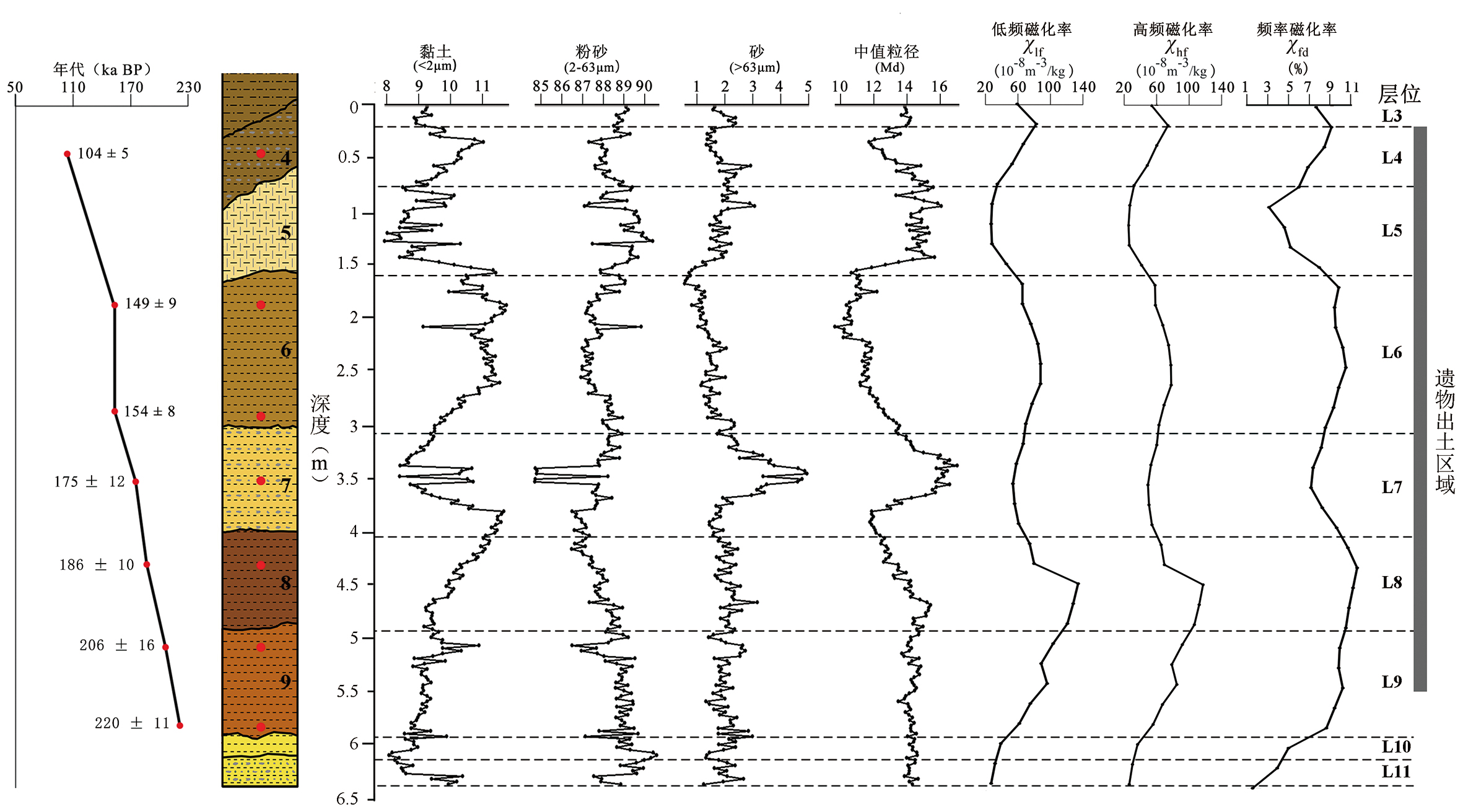
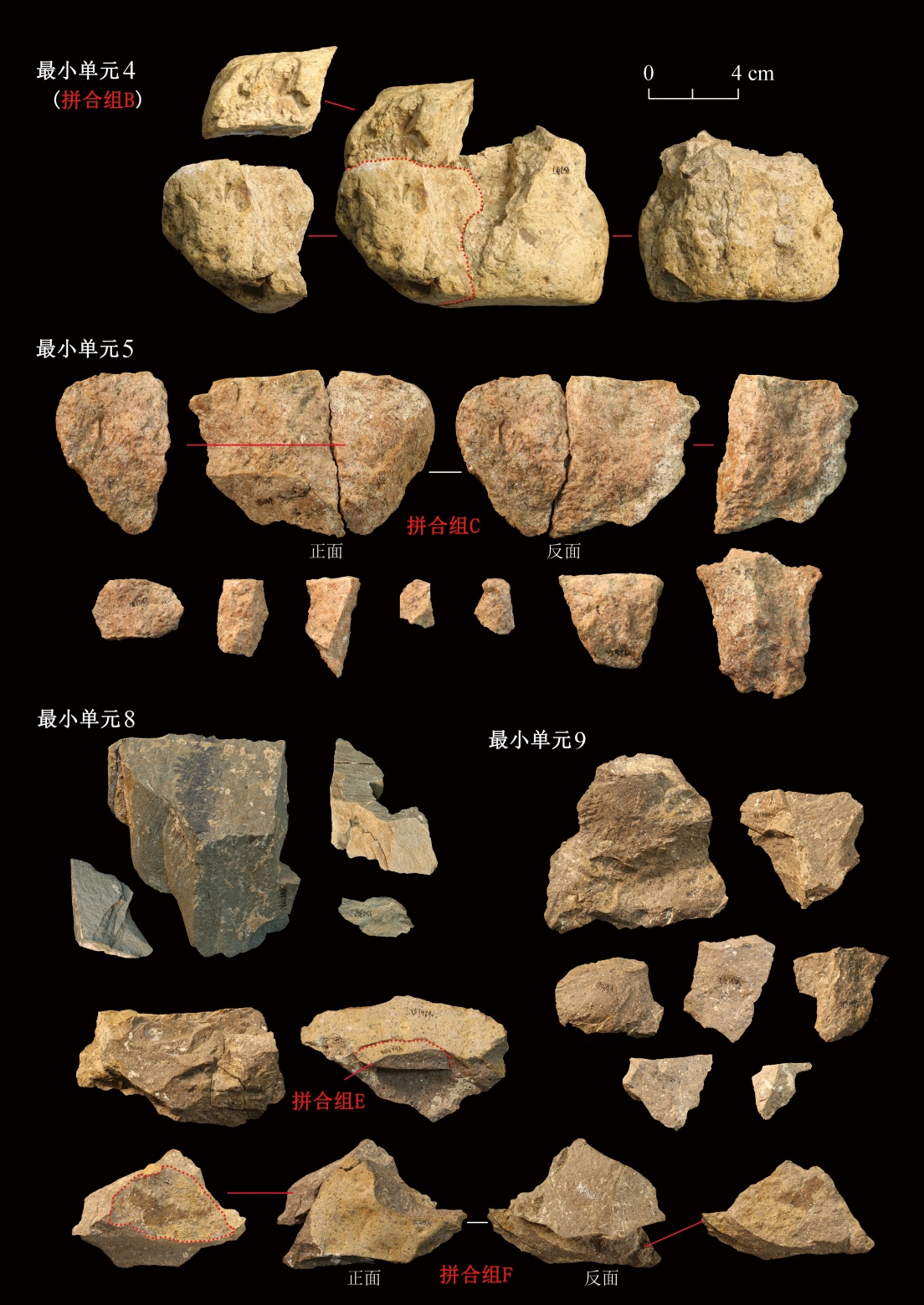
The results indicate that the lower to middle stratigraphic layers (L6~L9) primarily represent in situ slow sedimentation with minimal post-depositional disturbance. The brownish-red paleosol layers of L9 and L8, characterized by their high fine-grained particle content and elevated magnetic susceptibility (MS) values, indicate that the utilization of the site began during the warm and humid MIS 7 interglacial period, with the sediments belonging to the S2 layer of the loess-paleosol sequence. In contrast, L7, which corresponds to the MIS 6 glacial period, exhibits a yellowish soil color, with peak values in sand content and median grain size, alongside a significant decline in MS, classifying it as part of the L2 layer of the loess-paleosol sequence. Although L6 also falls within MIS 6, its soil color, grain size, and MS point to a strong pedogenic environment, distinguishing it from typical loess. This may be attributed to smaller-scale climatic fluctuations within the glacial period, L6 could represent a weakly developed paleosol formed during an interstadial phase of MIS 6. In contrast, the overlying deposits (above L6) exhibit severe tilting, uneven thickness, and unconformable contacts between layers, indicating that the late cultural deposits of the site have undergone significant erosion, transport, and large-scale secondary sedimentation.

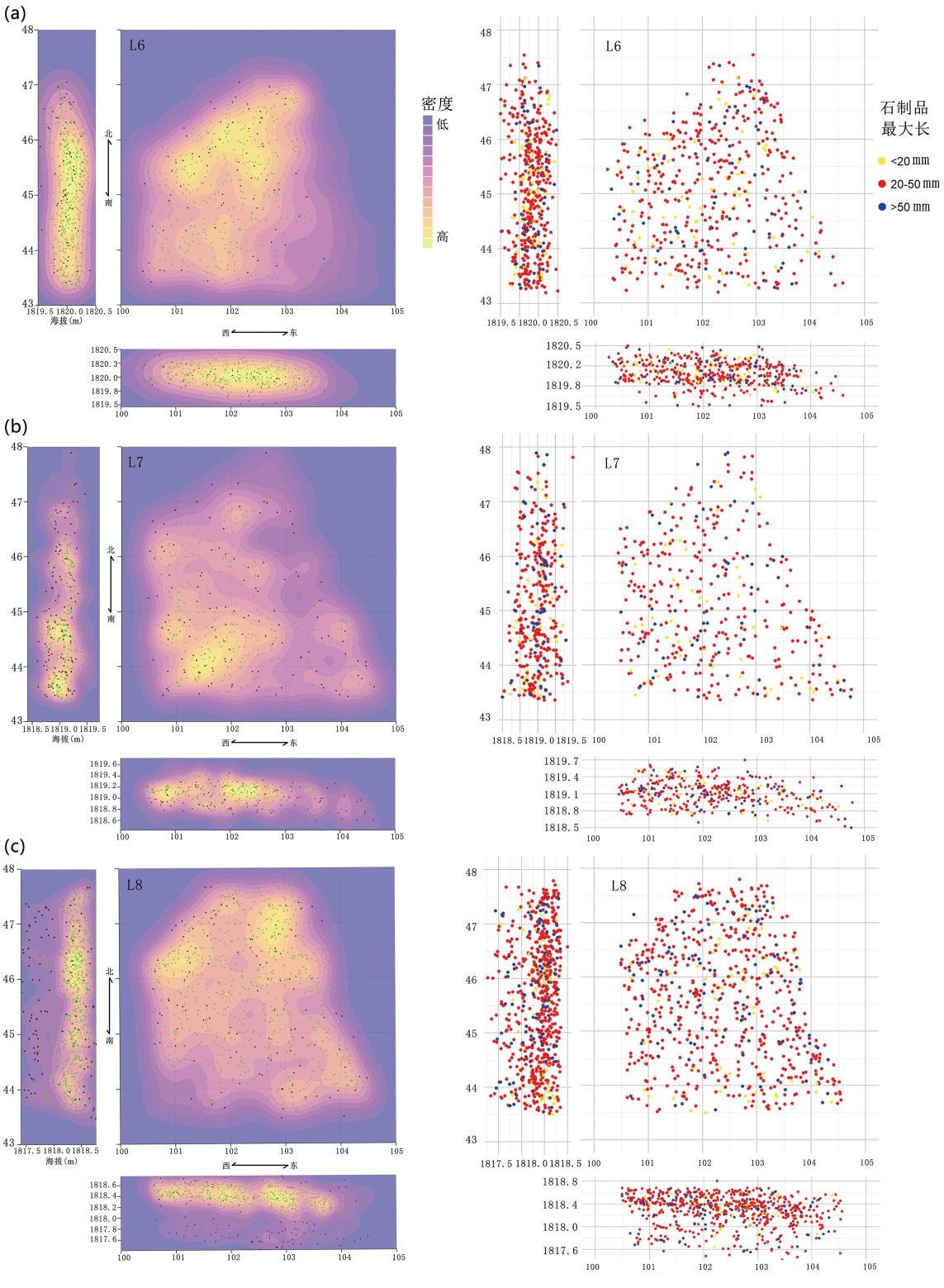
Spatial distribution patterns of artifacts reveal a strong correlation between hominin activity intensity and large-scale climatic fluctuations. During the MIS 7 interglacial (L9~L8), hominin occupation gradually intensified, culminating in the formation of the first high-density artifact concentration zone in the upper part of L8. However, the transition into the MIS 6 glacial period (L7~L6) is marked by dispersed artifact distributions in L7 and a near-absence of cultural materials at the L7/L6 boundary, suggesting increased mobility of site occupants due to increased resource patchiness and a consequent decline in site occupation continuity. It was not until the subsequent pedogenic enhancement during the MIS 6 interstadial (L6) that hominin activity at the Yangshang site regained intensity.

Key words: Site formation, Loess-Paleosol sequence, Glacial-interglacial period, Yangshang site

中图分类号: