人类学学报 ›› 2025, Vol. 44 ›› Issue (04): 556-567.doi: 10.16359/j.1000-3193/AAS.2024.0082cstr: 32091.14.j.1000-3193/AAS.2024.0082

• 研究论文 • 上一篇    下一篇

泥河湾盆地奶奶庙沟遗址2015年出土的石制品

徐建炜1(), 刘连强1, 成小雨2, 赵永胜1, 侯佳岐3(), 王法岗1   

  1. 1.河北省文物考古研究院,石家庄 050031
    2.阳原县文物保护管理服务中心,张家口 075899
    3.吉林大学考古学院,长春 130012
  • 收稿日期:2024-04-26 接受日期:2024-07-22 出版日期:2025-08-15 发布日期:2025-08-07
  • 通讯作者: 侯佳岐
  • 作者简介:徐建炜,文博馆员,主要从事旧石器时代考古学与考古技术研究。E-mail: xujianwei2008@aliyun.com
  • 基金资助:
    国家重点研发计划项目(2020YFC1521500)

Stone artifacts unearthed from the Nainaimiaogou site of Nihewan Basin in 2015

XU Jianwei1(), LIU Lianqiang1, CHENG Xiaoyu2, ZHAO Yongsheng1, HOU Jiaqi3(), WANG Fagang1   

  1. 1. Hebei Provincial Institute of Cultural Relics and Archaeology, Shijiazhuang 050031
    2. Yangyuan County Cultural Relics Protection and Management Service Center, Zhangjiakou 075899
    3. School of Archaeology, Jilin University, Changchun 130012
  • Received:2024-04-26 Accepted:2024-07-22 Online:2025-08-15 Published:2025-08-07
  • Contact: HOU Jiaqi

摘要:

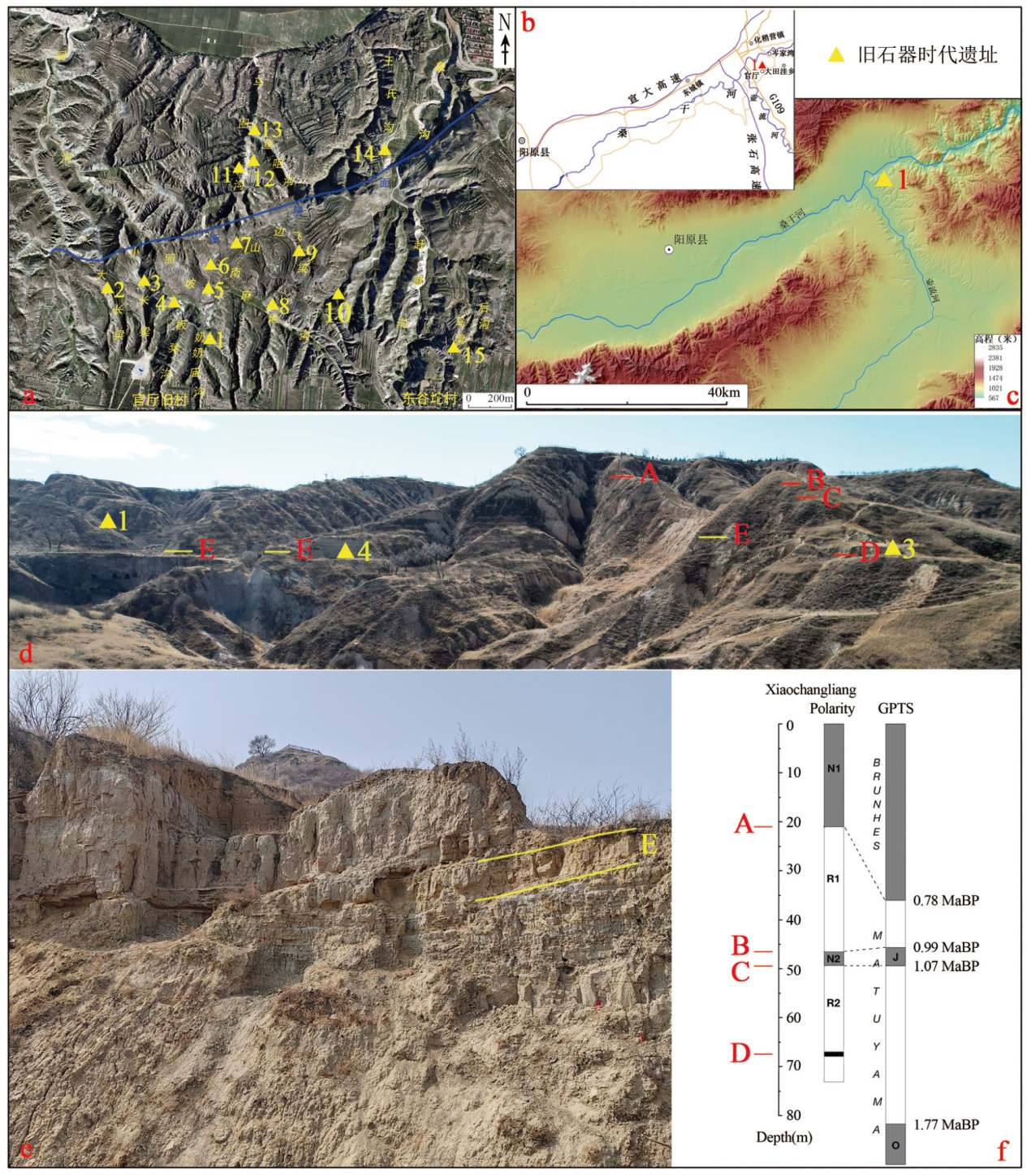
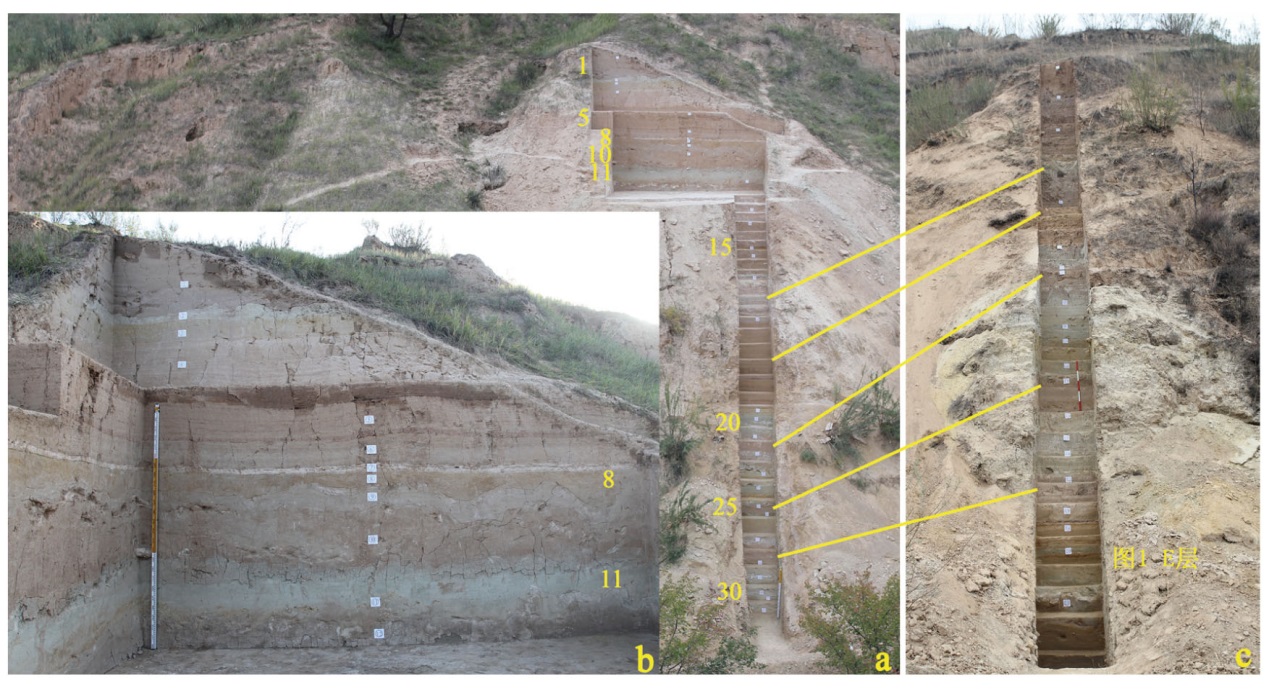
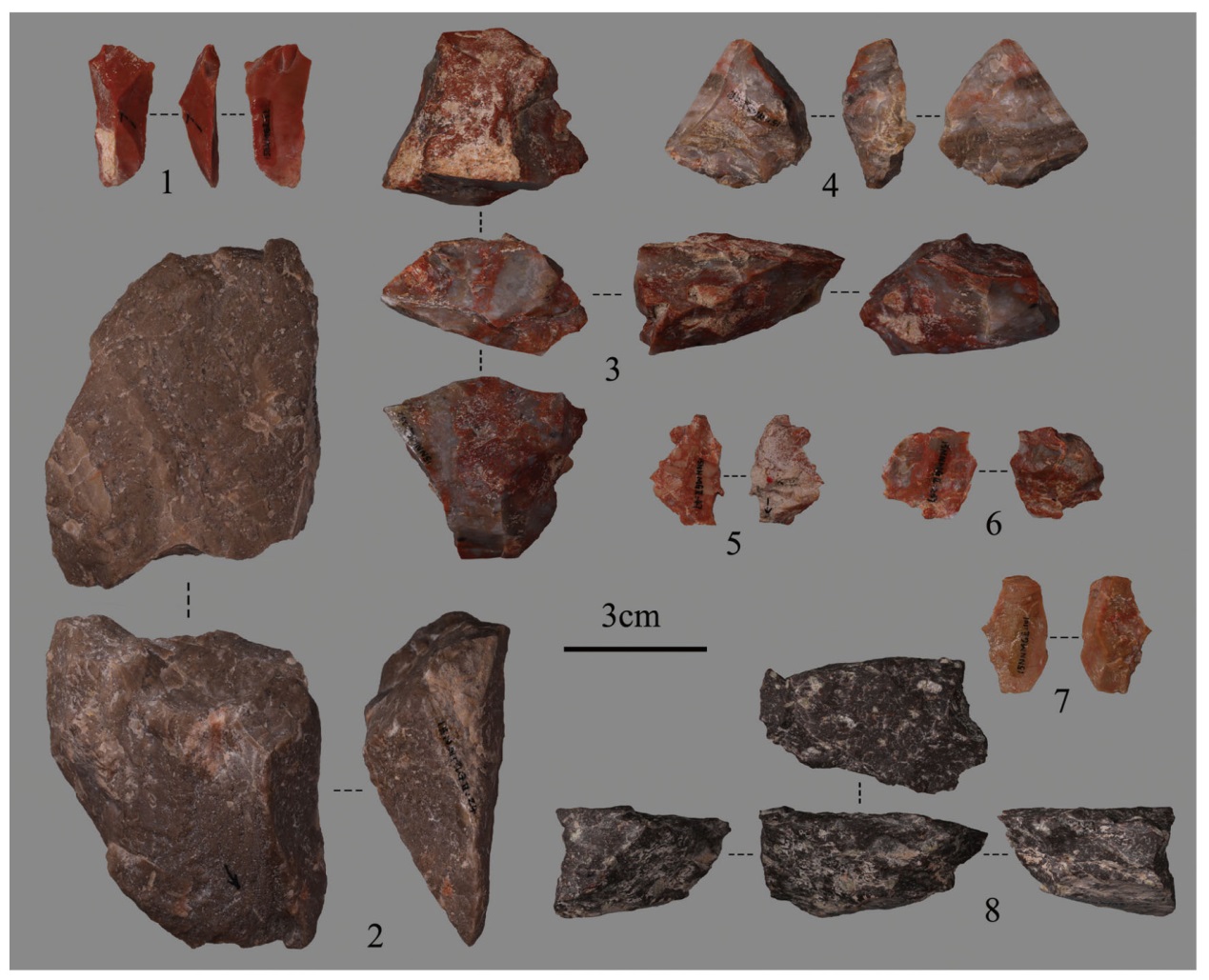
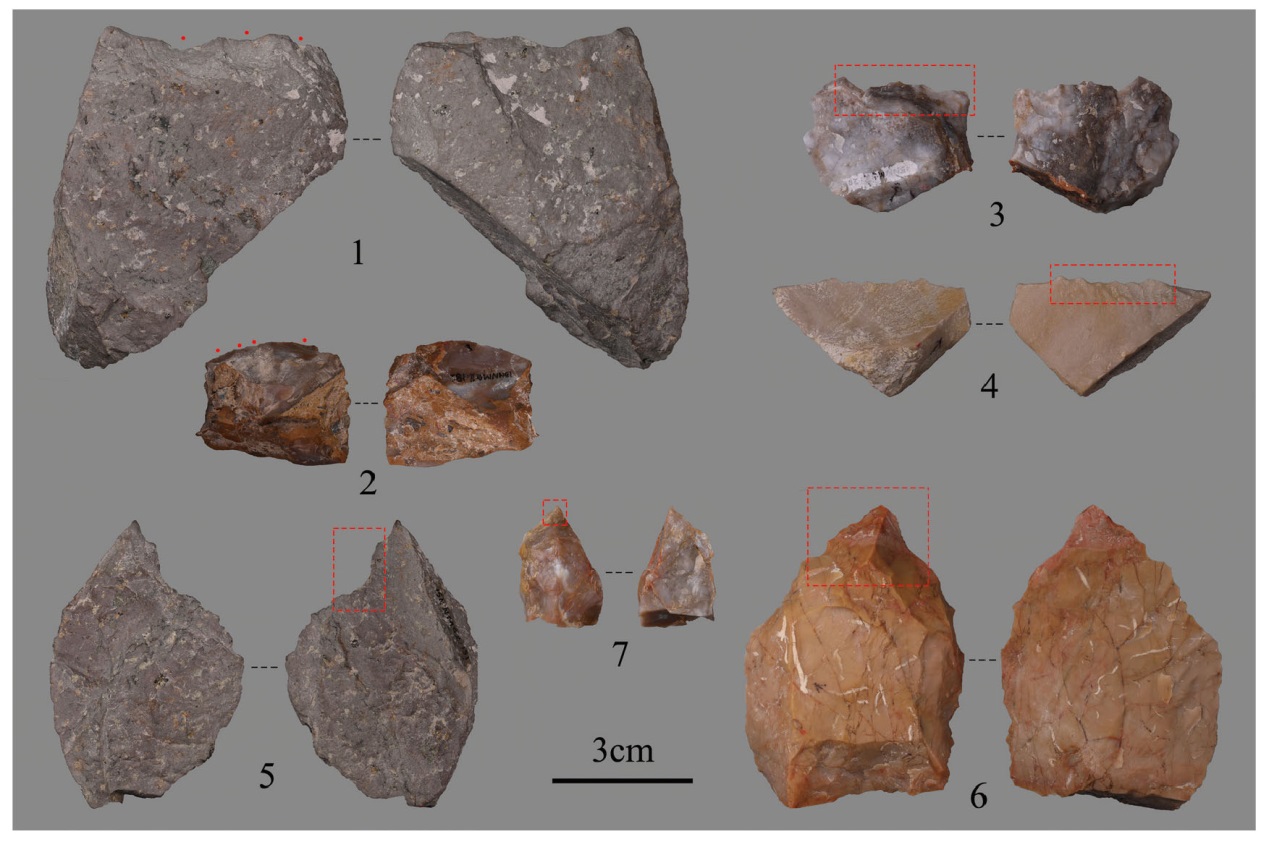
奶奶庙沟遗址位于泥河湾盆地东缘,河北省文物研究所于2015年调查时发现,在两个层位发现石制品229件、动物化石153件。石制品磨蚀风化程度较低,小型石制品数量多,原地埋藏的特征明显。石制品原料主要有燧石、火山熔岩、白云岩、凝灰岩、石英等,应为就地取材。类型有石核、石片、石器、备料、断块等。剥片以锤击法为主,少量砸击产品,石片、石器以小型的数量最多,石器比例较低,类型有刮削器、锯齿刃器、尖状器、凹缺器和石钻等,属于中国北方以小石器为主的主工业类型。奶奶庙沟遗址与小长梁、大长梁、山神庙咀等遗址处于同一沉积单元,层位明显要高,很可能相当于贾拉米洛事件或者上下的层位,年代在距今1.0 Ma前后,与该区域的霍家地或东谷坨遗址的年代相当。

关键词: 泥河湾盆地, 奶奶庙沟遗址, 石制品, 早更新世, 小石器工业

Abstract:

The Nainaimiaogou paleolithic site, located in the north of Datianwa platform on the eastern edge of Nihewan Basin, was discovered and excavated the area 24 m2 by the research team from the Hebei Provincial Institute of Cultural Relics and Archaeology in 2015. In these excavations, 229 pieces of stone artifacts and 153 pieces of fossils were found within two cultural layers. The stone artifacts exhibit slight abrasion, and numerous small artifacts are clearly visible. These features suggest that the artifacts were buried in their original location The raw materials for the stone artifacts mainly include chert, volcanic lava, dolomite, tuff, quartz and other similar materials, all of which are found in the exposed bedrock and river alluvium near the site, suggesting they were sourced locally. The stone artifacts were categorized into cores, flakes, tools, stocks, chunks. Hammering was the primary method for flaking, with a small number of artifacts specifically designed for bipolar technology. Most of the flakes and tools are small, with relatively few tools such as scrapers, serrations, points, notched pieces, and borers. These characteristics are closely linked to the long-standing tradition of core-flake technology prevalent in Northern China. The Nainaimiaogou Paleolithic site exhibits numerous technological similarities to the nearby Xiaochangliang site. Buried within the Early Pleistocene Nihewan beds, the site shares the same sedimentary unit as Xiaochangliang, Dachangliang, and Shanshenmiaozui sites. However, its stratigraphic position is significantly higher. It likely corresponds to the Jaramillo or adjacent strata, dating back to approximately 1.0 million years ago, aligning with the chronology of the Huojiadi and Donggutuo sites in the region. The site comprises two closely cultural layers, one above the other. The northern region of the Datianwa platform has a long history of Paleolithic archaeological work, including thorough investigations, excavations, and research. Over 50 Paleolithic sites from various stages of the Early Pleistocene have been uncovered in this region, establishing it as the densest and most culturally comprehensive locale for human cultural relics dating back over one million years in East Asia. The discovery of the Nainaimiaogou Paleolithic site has significantly enhanced the understanding of the cultural context of Early Pleistocene paleoanthropological artifacts in the Nihewan Basin. It offers crucial insights into tracing paleoanthropological activities within the same region and stratigraphic layer, thereby expanding the existing knowledge of behavioral patterns and habitation styles during this period. Furthermore, the discovery and research of this site and surrounding archaeological sites possess academic value in advancing the understanding of human evolution and cultural development during the Early Pleistocene.

Key words: Nihewan basin, Nainaimiaogou Paleolithic site, stone artifacts, Early Pleistocene, core-flake industry

中图分类号: