人类学学报 ›› 2025, Vol. 44 ›› Issue (06): 1120-1130.doi: 10.16359/j.1000-3193/AAS.2025.0088cstr: 32091.14.j.1000-3193/AAS.2025.0088

• 华南区域考古 • 上一篇    

2022年浙江安吉上白塘遗址发掘简报

刘亚林1(), 魏天旭2(), 时萧1, 王春雪3, 孙雪峰4, 邱宏亮5   

  1. 1.浙江省文物考古研究所杭州 310014
    2.湖北大学历史文化学院武汉 430062
    3.吉林大学考古学院长春 130012
    4.南京大学地理与海洋科学学院南京 210023
    5.安吉县博物馆安吉 313300
  • 收稿日期:2024-12-19 接受日期:2025-05-28 出版日期:2025-12-15 发布日期:2025-12-15
  • 通讯作者: 魏天旭,讲师,主要从事旧石器时代考古学研究。E-mail: weitianxu0817@163.com
  • 作者简介:刘亚林,文博馆员,主要从事旧石器时代考古学研究。E-mail: 844213533@qq.com
  • 基金资助:
    国家资助博士后研究人员计划(GZC20251158);全国考古人才振兴计划资助(2025-197);“浙江文化研究工程”系列研究项目——浙江考古与中华文明第二辑(23WH32ZD)

A preliminary report of 2022 excavation of Shangbaitang site in Anji County, Zhejiang Province

LIU Yalin1(), WEI Tianxu2(), SHI Xiao1, WANG Chunxue3, SUN Xuefeng4, QIU Hongliang5   

  1. 1. Zhejiang Provincial Institute of Cultural Relics and Archaeology, Hangzhou 310014
    2. School of History and Culture, Hubei University, Wuhan 430062
    3. School of Archaeology, Jilin University, Changchun 130012
    4. School of Geography and Ocean Science, Nanjing University, Nanjing 210023
    5. Anji County Museum, Anji 313300
  • Received:2024-12-19 Accepted:2025-05-28 Online:2025-12-15 Published:2025-12-15

摘要:

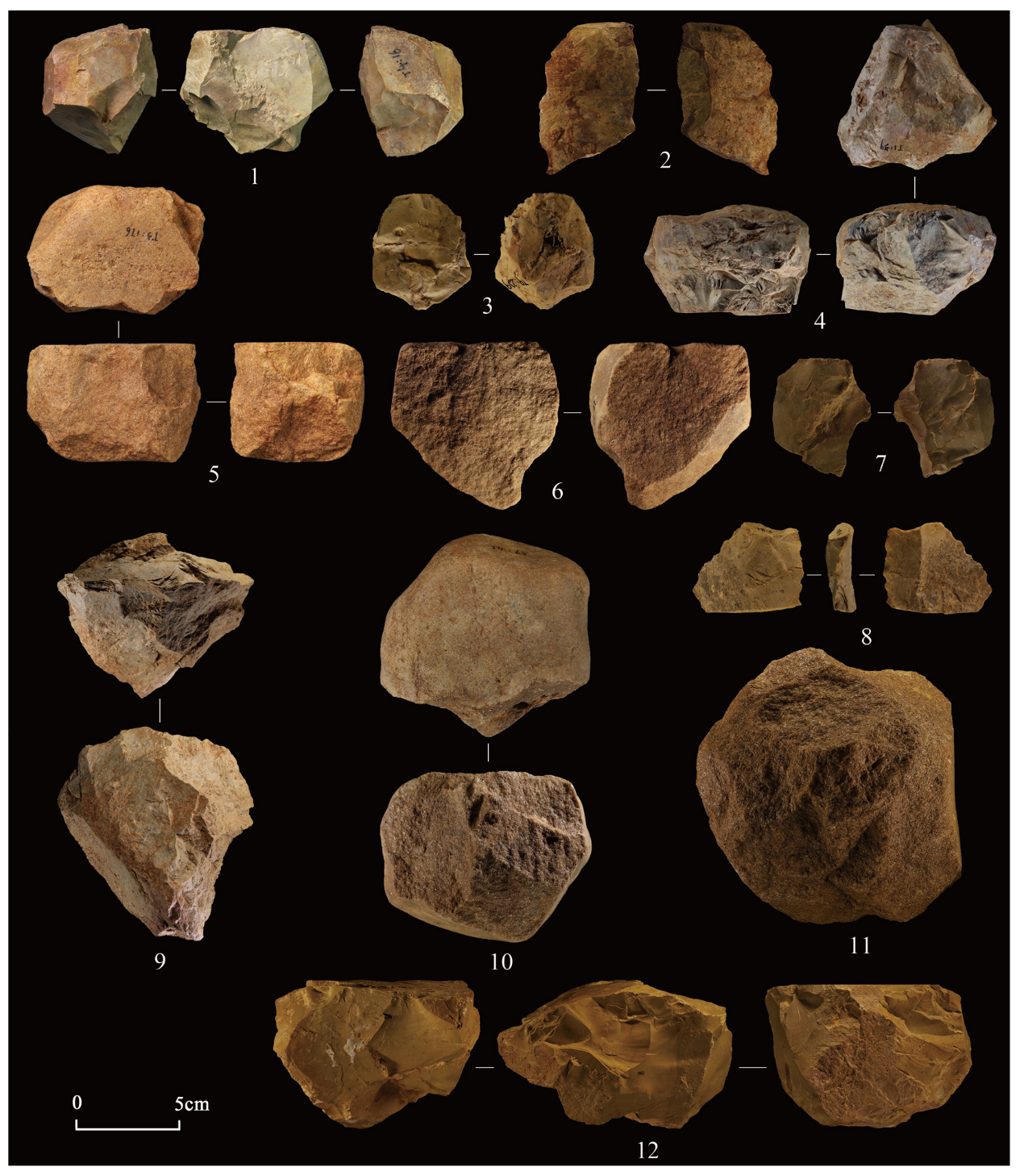
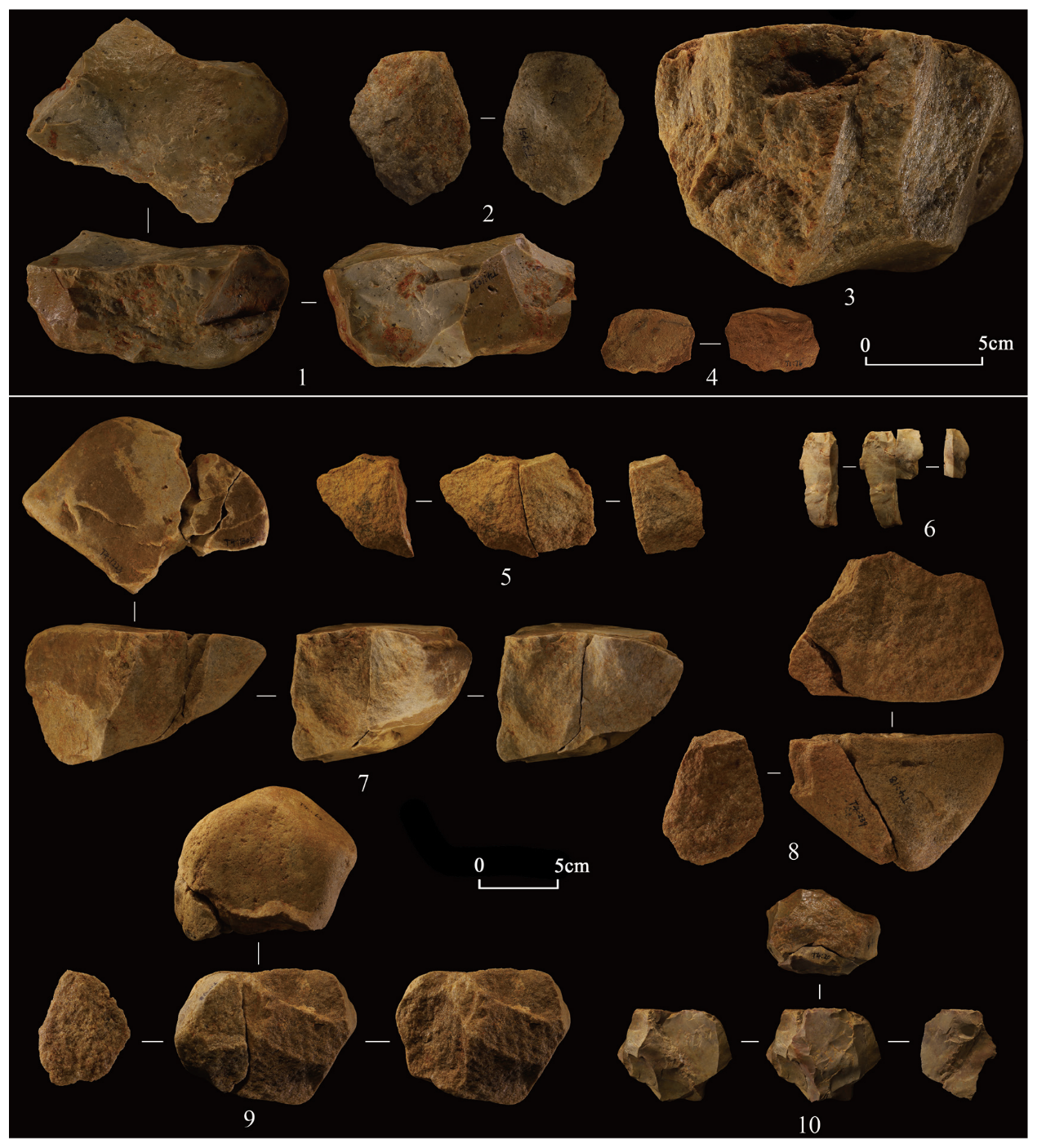
上白塘遗址埋藏于浙江湖州安吉县西苕溪流域的红色黏土堆积中,于2019年调查时发现。2022年浙江省文物考古研究所联合安吉县博物馆对上白塘遗址进行了发掘,发掘面积1100 m2,采集和出土石制品共889件,遗物主要集中分布于第3层。石制品类型包括石核、石片、石器、断块和碎片。原料采自遗址附近的砾石,岩性以石英砂岩和硅质岩为主;石核剥片采用徒手锤击,多数缺乏预制程序,但存在少量盘状石核和似棱柱状石核;石片大多为中小型;石器类型较少,主要是刮削器,另有少量砍砸器、石球和石锤等;石器毛坯以石片为主,修理程度有限。初步光释光测年结果显示,第3层的年代为3.5万~8.8万年。上白塘遗址的发掘,为认识MIS 5阶段以来中国南方地区尤其是长江下游地区晚更新世早中期砾石工业石片化和小型化等问题提供了重要材料。

关键词: 上白塘遗址, 石制品, 晚更新世, 石核石片工业

Abstract:

The Shangbaitang site is located in Anji County, Huzhou City, Zhejiang Province. The site is buried in red clay deposits within the Xitiaoxi River basin. In 2022, the Zhejiang Provincial Institute of Cultural Relics and Archaeology and the Anji County Museum carried out excavations at the Shangbaitang site, covering an area of 1100 m2. Stone artifacts were unearthed in layer 3 and layer 4. Layer 3 is a homogeneous red soil layer, and stone products were mainly unearthed in this layer. Layer 4 is a reticulated red soil layer, and just unearthed a small amount of stone artifacts. According to the dating results, the age of layer 3 is 35~88 ka before present, and the age of layer 4 is more than 100 ka before present. A total of 889 stone artifacts were founded at this site, including 817 from Layer 3 and 47 from Layer 4, along with 25 collected from ground survey. The artifacts include stone cores, flakes, tools, broken blocks and fragments. Preliminary analysis indicates that the raw materials were mainly local gravels, primarily quartz sandstone and a high proportion of siliceous cobbles. Stone cores were percussed through freehand hammering without a prepared process, but the presence of discoidal and prismatic cores suggests some degree of organization in the reduction sequence, reflecting a progressive aspect of core-flake industry. Flakes were predominantly small. There is a low proportion of tools. Scraper was the dominant tool type, along with a small number of choppers, spheriods, and hammers. Tool blanks were mostly flakes with limited retouching, and finely retouched tools were almost absent. Additionally, 18 refitted groups of artifacts were identified, indicating minimal post-depositional disturbance. The early and middle Late Pleistocene was a crucial phase in human evolutionary history. During this period, the majority of sites in northern South China transformed into a lithic industry dominated by flake tools, but the cultural landscape of the lower Yangtze River region during this period remains unclear. Shangbaitang is a rare site that has undergone scientific excavation and dating, and has yielded a large number of stone artifacts. Compared to the Middle Pleistocene, the raw materials, sizes, and types of stone artifacts at this site have undergone significant changes. The proportion of small and medium-sized flake tools is significantly higher than that of large pebble tools, making it a typical representative site of the miniaturization and flaking of the pebble industry. In conclusion, the chronological data and lithic assemblages from the Shangbaitang site provide crucial materials for understanding the emergence and development of small flake tool industries in southern China.

Key words: Shangbaitang site, stone artifacts, Late Pleistocene, core-flake industry

中图分类号: