人类学学报 ›› 2026, Vol. 45 ›› Issue (04): 753-763.doi: 10.16359/j.1000-3193/AAS.2025.0084cstr: 32091.14.j.1000-3193/AAS.2025.0084

• 简报/发掘报告 • 上一篇    下一篇

山西昔阳虎窑洞旧石器遗址调查简报

袁文明1,3(), 史永红2, 李磊3, 海青3, 李占扬1()   

  1. 1 山东大学文化遗产研究院青岛 266237
    2 昔阳县文物所晋中030600
    3 山西省考古研究院太原030001
  • 收稿日期:2025-01-13 修回日期:2025-06-10 出版日期:2026-08-15 发布日期:2026-08-12
  • 通讯作者: 李占扬,教授,主要从事旧石器时代考古学研究。E-mail:lizhanyang2621@sina.com
  • 作者简介:袁文明,博士研究生,主要从事旧石器时代考古学研究。E-mail:yuanwenming118@163.com

A preliminary report of the Huyao Cave site in Xiyang, Shanxi

YUAN Wenming1,3(), SHI Yonghong2, LI Lei3, HAI Qing3, LI Zhanyang1()   

  1. 1 Institute of Cultural Heritage, Shandong University, Qingdao 266237
    2 Xiyang Municipal Cultural Heritage Bureau, Jinzhong 030600
    3 Shanxi Provincial Institute of Archaeology, Taiyuan 030001
  • Received:2025-01-13 Revised:2025-06-10 Online:2026-08-15 Published:2026-08-12

摘要:

虎窑洞遗址位于山西省昔阳县河上村东南。2022年对该遗址调查时,采集石制品321件,骨器、装饰品5件,以及大量动物骨骼、烧骨、鸵鸟蛋壳碎片等。石制品原料以脉石英为主,另有少量硅质岩、石英岩。砸击剥片和锤击剥片并重。石器类型多样,以刮削器为主,其次为凹缺器、尖状器和锯齿状器等。修理方式以硬锤反向修理为主,呈现较强的权宜性。骨器均为刮削器,另见少量带有刻划痕迹的骨片及骨制装饰品。石器工业以北方传统的小石片工业为主,时代属于旧石器时代晚期早段,处于现代人起源与扩散的关键时段,虎窑洞遗址的发掘与调查对于研究我国北方现代人的出现与扩散等具有较为重要的意义。

关键词: 虎窑洞遗址, 石器工业, 旧石器时代晚期

Abstract:

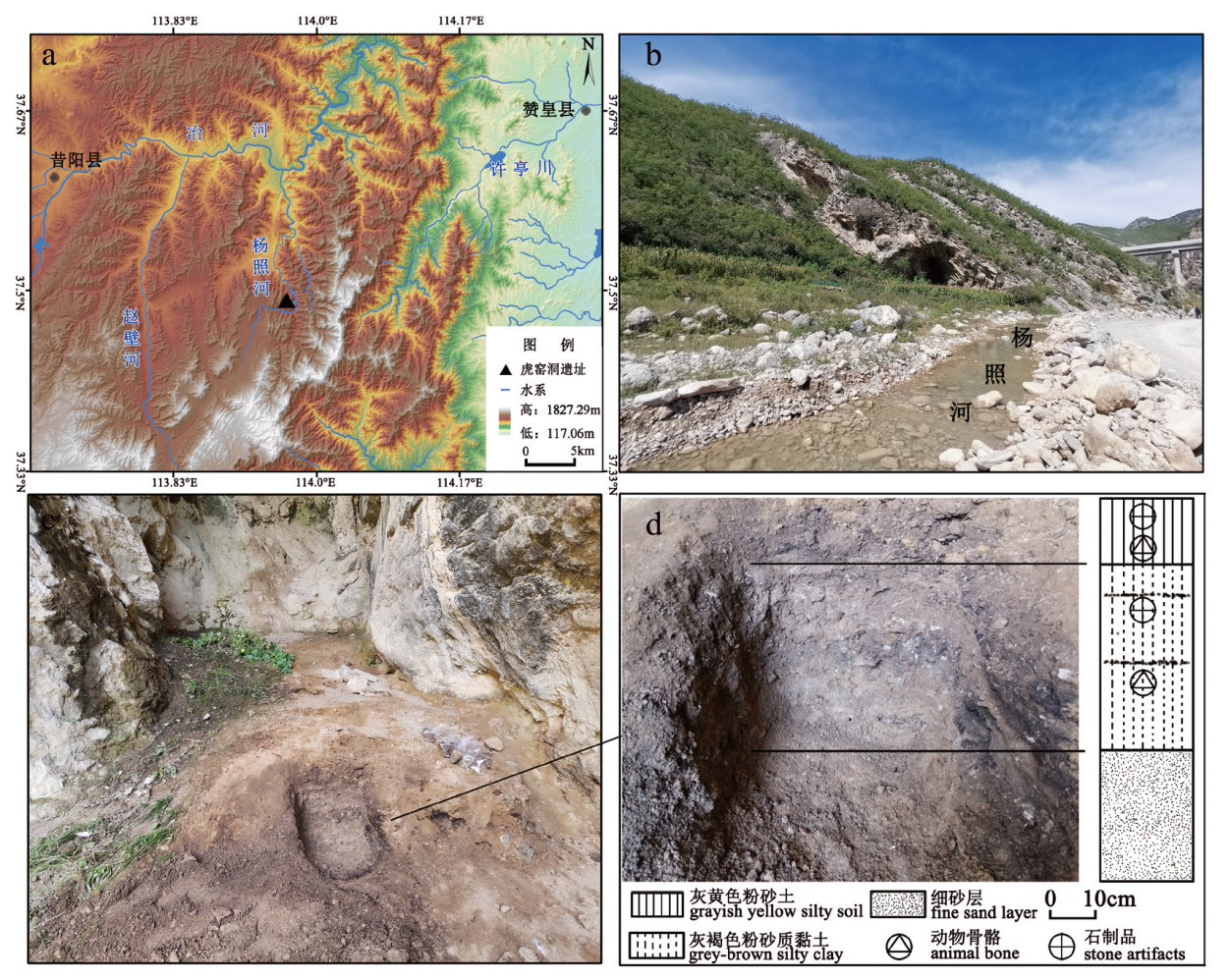
The Huyao cave site is situated in Xiyang County, Shanxi Province, approximately 1 km to the southeast of the village of Heshang, in the foothills of the Yangzhao River on the west bank. It is located in a narrow gully within the transition zone of a small basin, within a limestone cave. The cave entrance is oriented in a southeast direction, with an outward-facing opening that is nearly arched in shape. The roof of the cave exhibits a gradual decrease in height from the exterior to the interior. The entrance to the cave is situated at the front of the structure, which is relatively flat and open. The surface is covered by modern sediments and scattered with huge collapsed limestone hills. The posterior aspect of the formation can be subdivided into two regions, namely the eastern and western sectors. Additionally, two minor depressions are discernible in the western portion of the hillock. The western accumulation is primarily composed of yellow powdery sandy clay with hard soil, sandstone, limestone, quartz, and other gravels. No cultural remains were observed, which may have been transported by the Yangzhao River. The eastern section of the site represents the primary area of human activity, exhibiting a slightly thicker deposit. The upper portion of this deposit is a modern deposit, approximately 5 cm in thickness, while the lower portion is a greyish-brown chalky sandy clay, interspersed with multiple layers of ash. This deposit contains a substantial quantity of stone artifacts, animal bones, burnt bones, and other materials. The site was first identified in 1986, and in the same year, Chen Zheying and colleagues conducted a preliminary excavation, recovering 39 stone artifacts from the cave and uncovering a limited number of animal and burnt bone fragments.

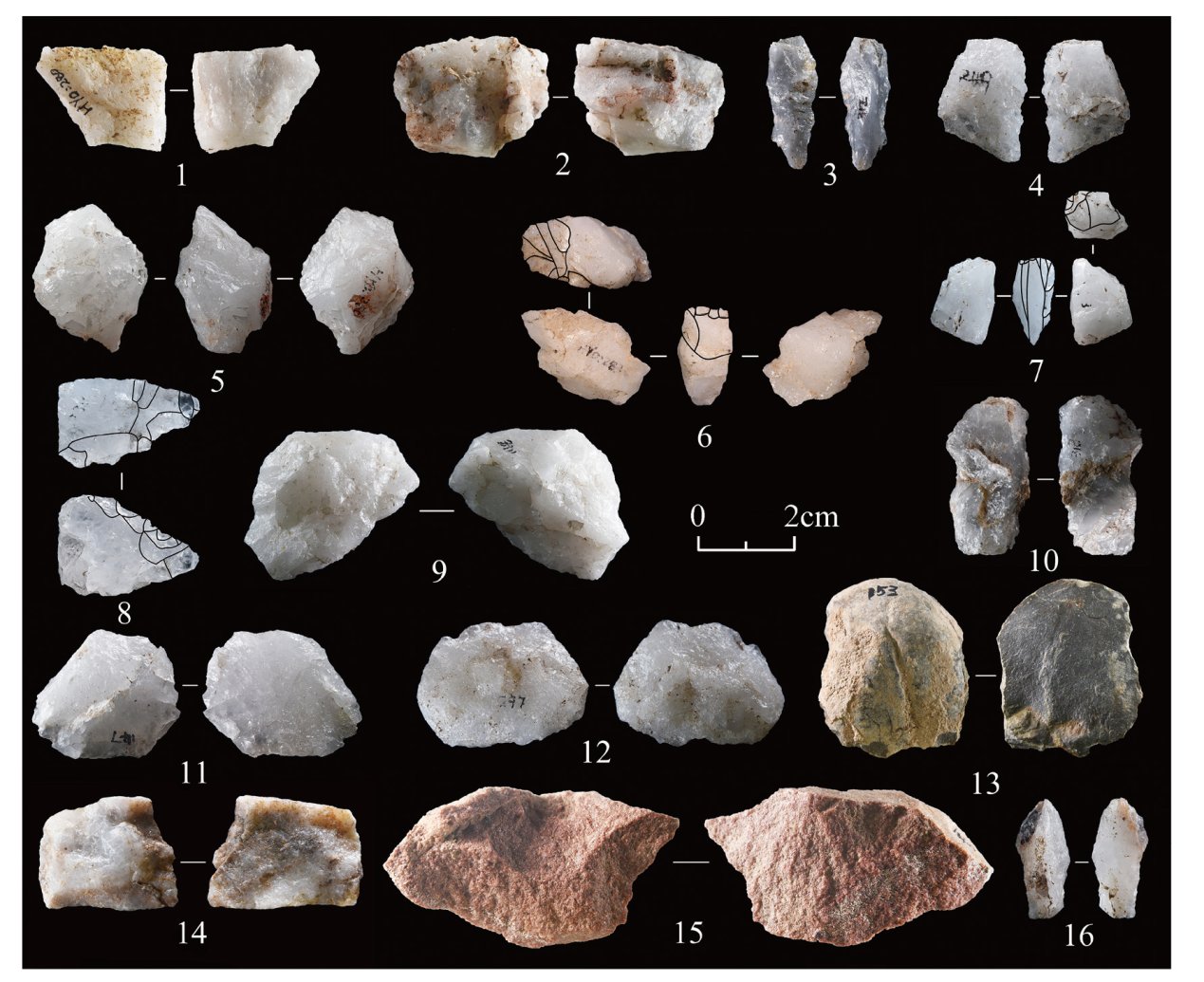
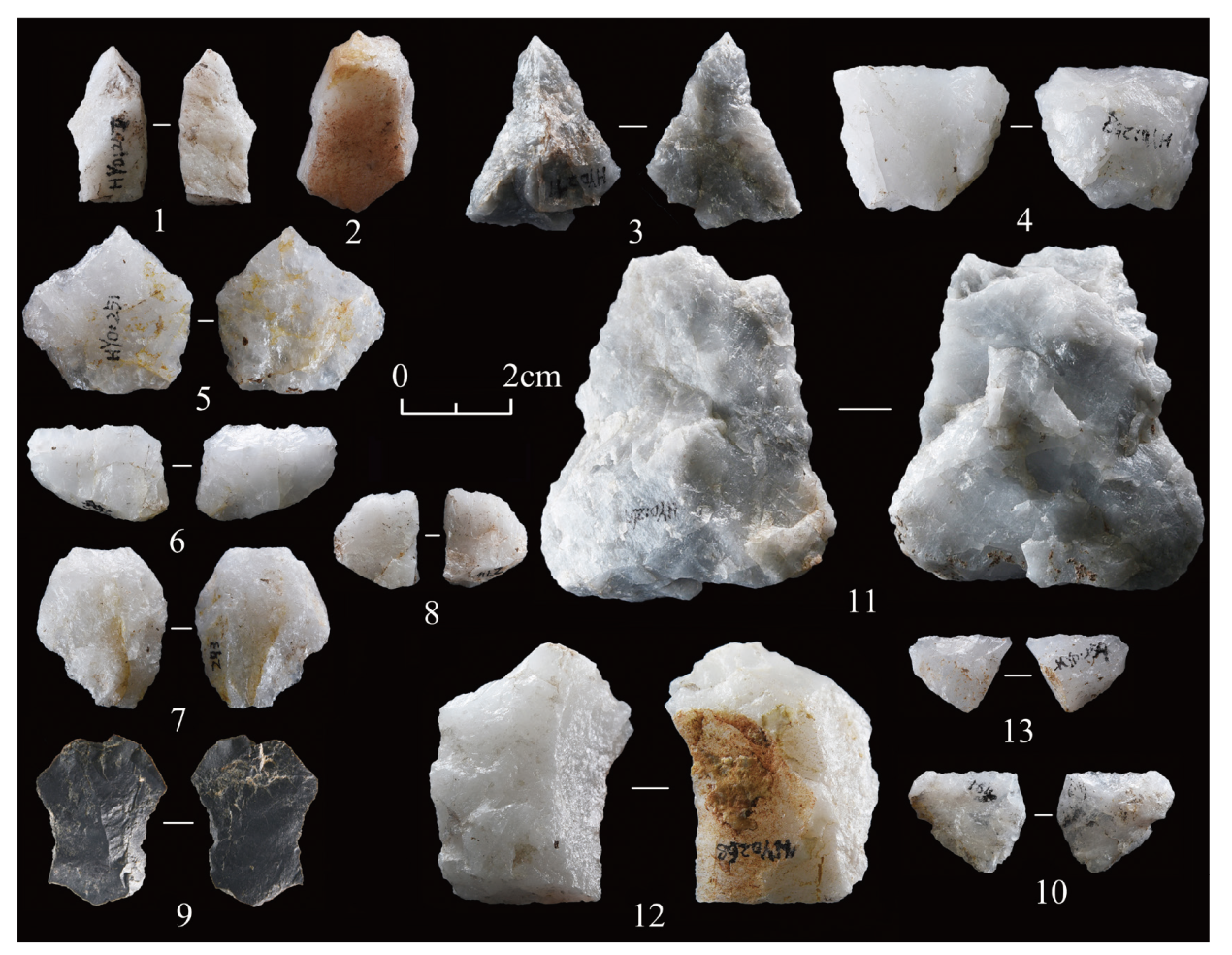
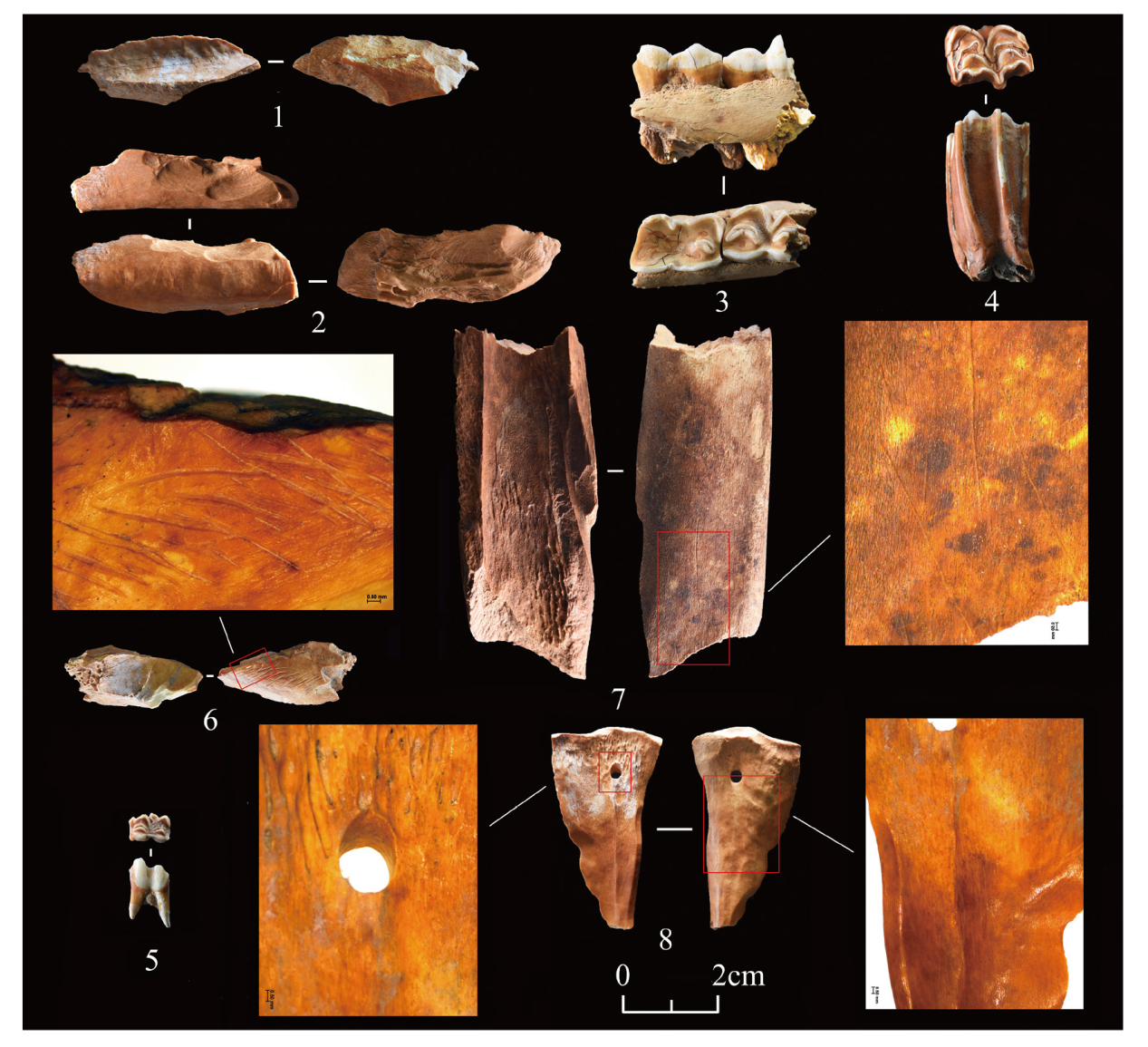
In the course of the investigation conducted in 2022, a total of 321 stone products, five bone artifacts and decorations, and a considerable quantity of animal bone fragments, burnt bones, and ostrich egg shell fragments were collected. The raw material of the stone artifacts is predominantly veined quartz, with a minor component of siliceous rock and quartzite also present. The hammering and smashing methods of flaking are both significant techniques. A variety of tool types are present, the majority of tools are scrapers, followed by notches, points, denticulates and so forth. The repair method is based on the hard hammer reverse repair, which is an example of an expedient technique. The bone tools are all scrapers, and a small number of bone fragments with incised marks and bone ornaments are also present. The lithic industry is characterized by the traditional small flake industry observed in the northern region. The two animal bones accompanying the stone artifacts were subjected to 14C dating, which yielded a date of 42440~41557 BP and 35255~34421 BP. These dates are indicative of the early Upper Paleolithic. Bone fragments with engraved marks, perforated decorations, and other elements of modern human behavior with spiritual symbols unearthed at the site have enriched the landscape of modern human remains, and are of greater significance in exploring the emergence and spread of modern humans in China.

Key words: Huyao Cave site, stone industry, Late Paleolithic

中图分类号: