人类学学报 ›› 2026, Vol. 45 ›› Issue (03): 600-608.doi: 10.16359/j.1000-3193/AAS.2025.0030cstr: 32091.14.j.1000-3193/AAS.2025.0030

• 研究论文 • 上一篇    下一篇

河北怀来盆地珠窝堡遗址出土的石制品

刘尔凡1(), 高佳璇1, 牛东伟1,2,3()   

  1. 1 河北师范大学历史文化学院考古学系石家庄 050024
    2 河北省东方人类起源与文明探源重点实验室石家庄 050024
    3 吉林大学生物考古实验室长春 130012
  • 收稿日期:2024-09-02 接受日期:2024-12-17 出版日期:2026-06-15 发布日期:2026-06-12
  • 通讯作者: 牛东伟,教授,主要从事旧石器时代考古学研究。E-mail: ndw1986@163.com
  • 作者简介:刘尔凡,硕士研究生,主要从事旧石器时代考古学研究。E-mail: liuerfan0207@qq.com
  • 基金资助:
    国家重点研发计划(2020YFC1521500);“吉林大学生物考古实验室”开放基金

Stone artifacts from the Zhuwobu site in Huailai Basin of Hebei

LIU Erfan1(), GAO Jiaxuan1, NIU Dongwei1,2,3()   

  1. 1 Department of Archaeology, College of History and Culture, Hebei Normal University, Shijiazhuang 050024
    2 Hebei Key Laboratory of East Asian Human Origin and Civilization Research, Hebei Normal University, Shijiazhuang 050024
    3 Bioarchaeology Laboratory, Jilin University, Changchun 130012
  • Received:2024-09-02 Accepted:2024-12-17 Online:2026-06-15 Published:2026-06-12

摘要:

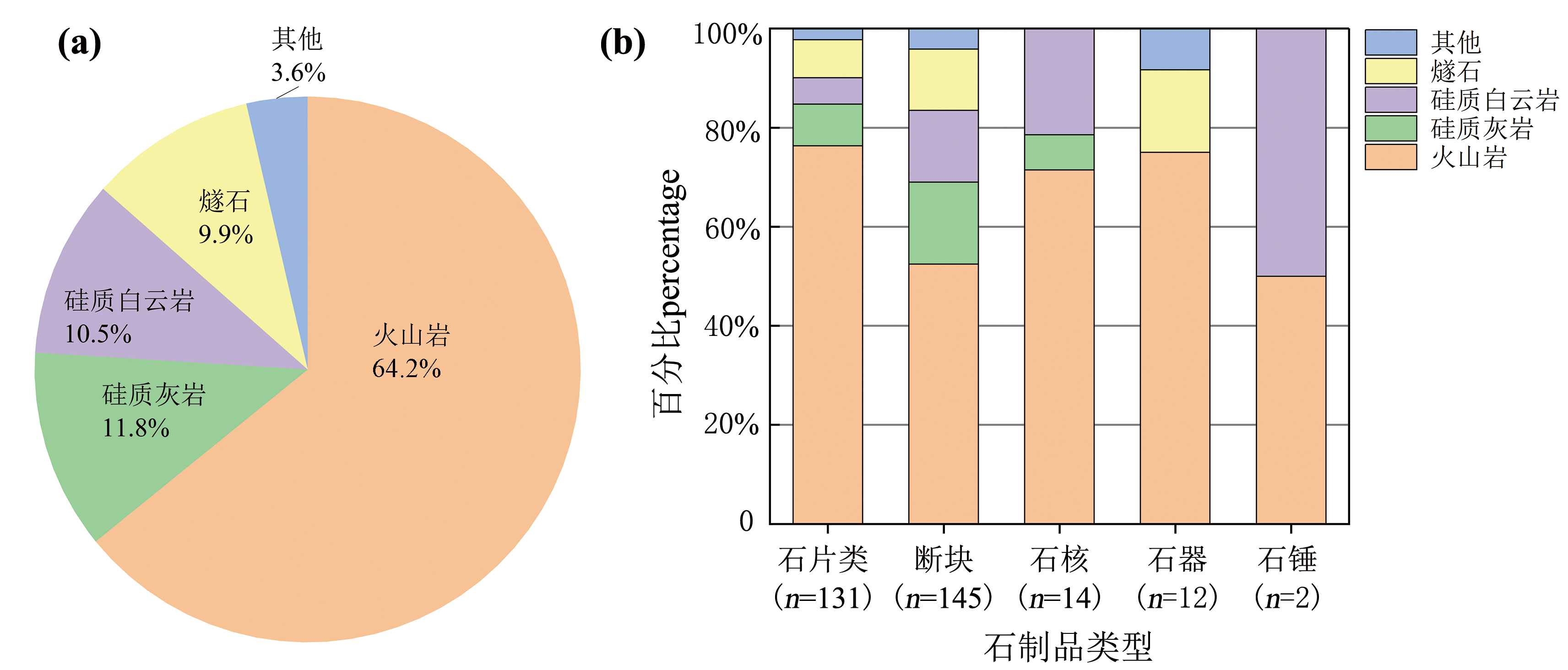
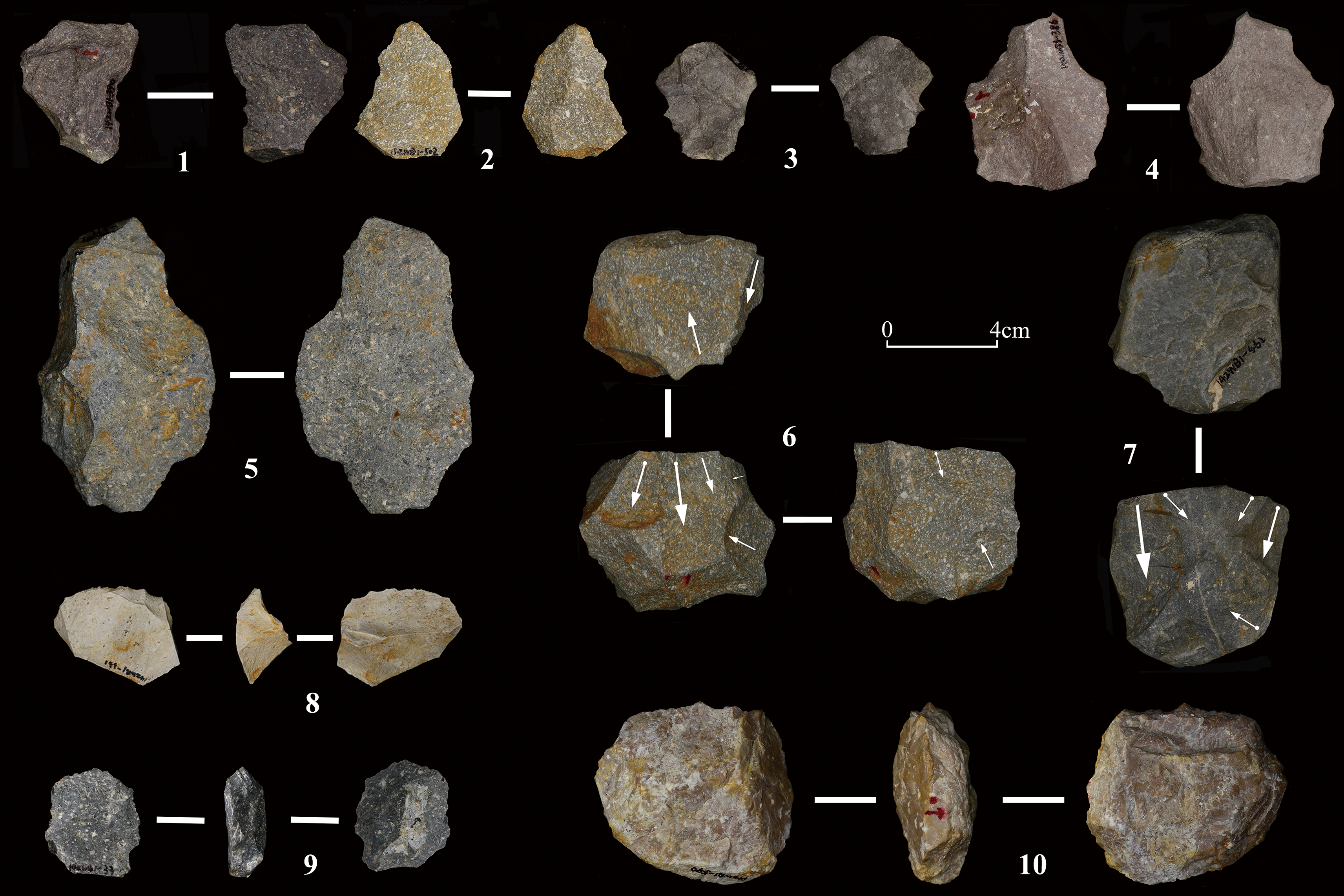
作为广义泥河湾盆地的重要组成部分,怀来盆地是更新世期间古人类迁徙扩散以及技术演变的重要地区。珠窝堡遗址埋藏于永定河右岸第三级阶地,光释光测年显示古人类活动时间在中更新世晚期,是怀来盆地内目前年代最早的旧石器遗址。2014年与2017年发掘出土石制品304件。本文选取该遗址出土石制品材料为研究对象,从原料利用、剥片技术和石器修理策略三个方面进行分析。研究结果表明,古人类采用因地制宜的方式获取遗址周边的原料,主要岩石类型为火山岩、硅质灰岩和硅质白云岩等。硬锤锤击法是石核剥片的主要技术,尽管石核剥片无预制过程,但石核原料利用率较高,剥片策略主要是寻求合适的台面和剥片面尽可能多地获取石片。石器以片状毛坯为主,修理技术为锤击法,类型多为刮削器,修理程度相对简单。珠窝堡遗址的石制品组合显示中国北方常见的石核-石片技术体系。本研究对丰富怀来盆地古人类石器技术特点、探究泥河湾盆地中更新世人类生存行为具有重要意义。

关键词: 珠窝堡遗址, 中更新世晚期, 石制品, 石核-石片技术体系, 怀来盆地

Abstract:

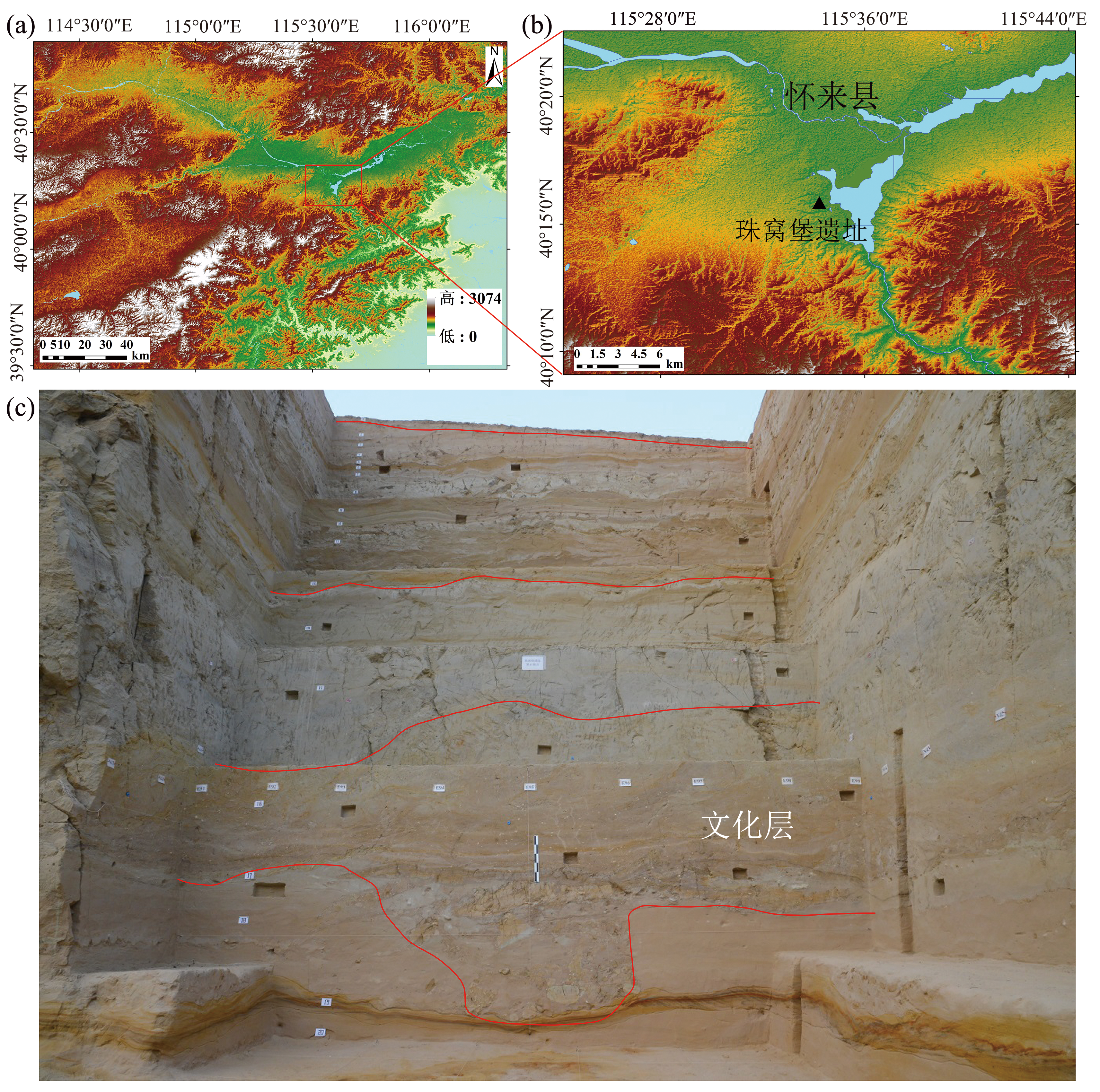
As an important part of the Nihewan Basin (senso lato), the Huailai Basin is also an important area for exploring early human dispersal and technological evolution during the Pleistocene, althoughthe initiation of Paleolithic archaeological work in the Huailai Basin has been relatively late. Several systematic Paleolithic surveys have been conducted since 2014 by a joint team from the Hebei Normal University and the Huailai Museum, and a series of Middle and Late Pleistocene sites were discovered, providing valuable insights into the prehistoric human activities and environmental adaptations in this area. As one important site discovered in 2014, the Zhuwobu site, which was buried in the third terrace of the right bank of the Yongding River, offers a crucial window into the ancient human occupation in the Huailai Basin.

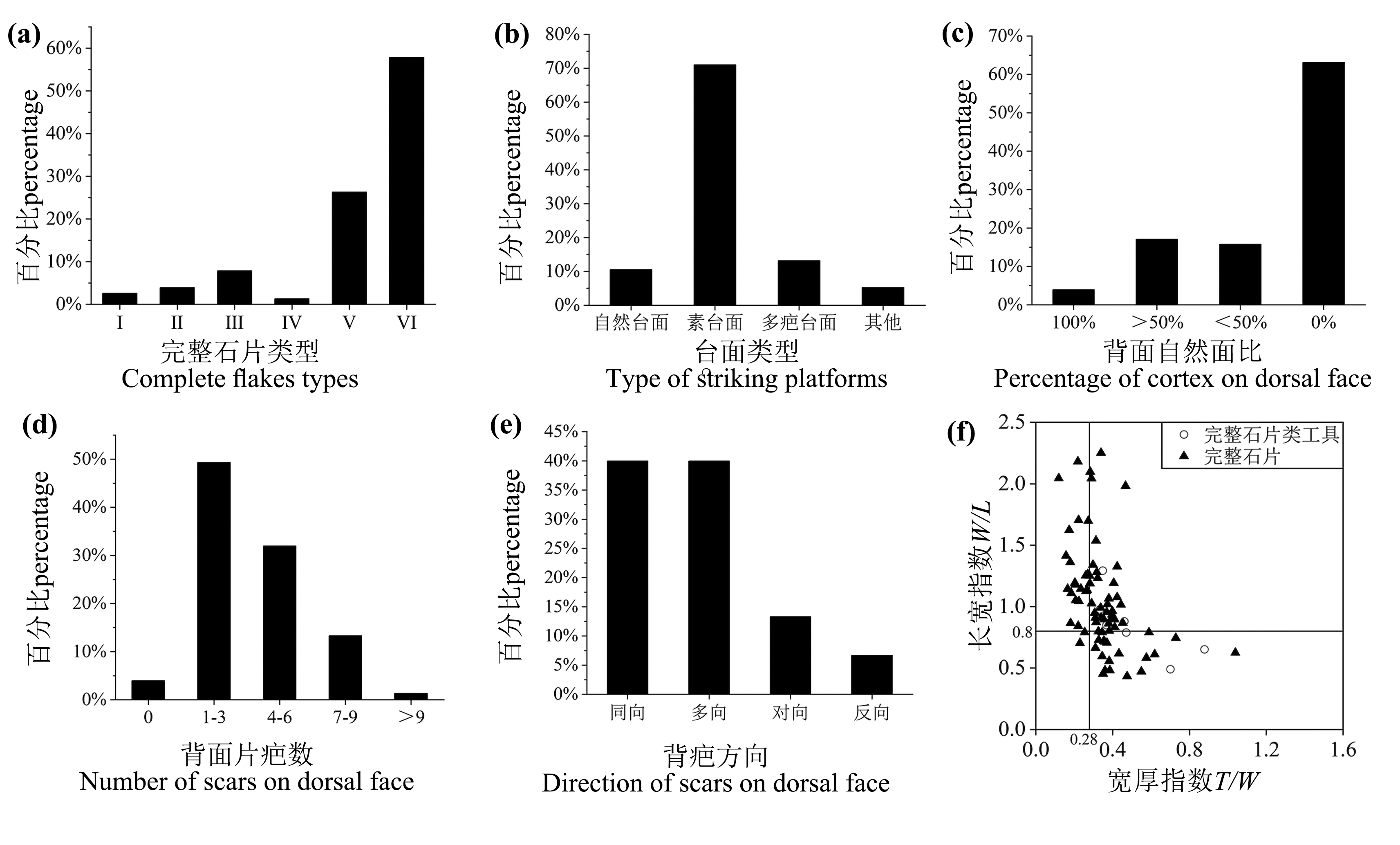
OSL dating indicates that human occupied the site most probably took place during late Middle Pleistocene (280 kaBP), which could be the earliest Paleolithic site in the Huailai Basin. The excavation was conducted in 2014 and 2017, 304 stone artifacts were unearthed. This study analyzes the stone artifacts from three aspects: the exploitation and utilization of raw materials, the strategy of cores reduction as well as the strategy of retouched patterns. The lithic raw materials were procured from the archaeological landscape closed to the site, lava, siliceous dolomite and siliceous limestone dominate the rock types, which reflect the strategy for exploiting and utilizing of locally available raw materials. The flaking technique was the direct hard-hammer percussion. Additionally, an bipolar core demonstrates the use of bipolar techniques. Although absence of core prepared, the high utilization of raw materials during the knapping sequence was identified. The major flaking strategy of core reduction was to select a suitable platform and flaking surface to obtain flakes. The majority of complete flakes obtained are in a secondary stage of reduction. Most of the retouched pieces are scrapers which were made by hard hammer percussion. Complete flakes were mostly be used as blanks for retouching, and there appears to have been an intentional selection of larger-sized blanks for tool production, and all the retouched pieces were modified simply and casually. It can be concluded that the Zhuwobu stone assemblage can be assigned to the core and flake technological tradition in North China.

This study presents a systematic analysis of the raw materials and technology of the lithic artifacts from the Zhuwobu site, showing the characteristics of lithic industry and their technological behavioral patterns. As the first scientifically excavated and chronologically earliest site in the Huailai Basin, the Zhuwobu site enrich the lithic technological feature of Huailai Basin and also make significance for exploring the human adapted behaviors during Middle Pleistocene in the Nihewan Basin.

Key words: Zhuwobu site, late Middle Pleistocene, stone artifacts, core and flake technology, Huailai Basin

中图分类号: