

主管:中国科学院
主办:中国科学院古脊椎动物与古人类研究所
出版:科学出版社
主办:中国科学院古脊椎动物与古人类研究所
出版:科学出版社
人类学学报 ›› 2025, Vol. 44 ›› Issue (03): 529-544.doi: 10.16359/j.1000-3193/AAS.2025.0013cstr: 32091.14.j.1000-3193/AAS.2025.0013
• • 上一篇
范窅彬( ), 王伟()
收稿日期:2024-08-02
修回日期:2024-09-24
出版日期:2025-06-15
发布日期:2025-06-15
通讯作者:
王伟,教授,博士生导师,主要从事古人类旧石器考古学的研究。E-mail: 作者简介:范窅彬,博士研究生,主要从事第四纪哺乳动物群研究。E-mail: fanyaobin11@mail.sdu.edu.cn
基金资助:
FAN Yaobin(), WANG Wei()
Received:2024-08-02
Revised:2024-09-24
Online:2025-06-15
Published:2025-06-15
摘要:
华南洞穴群中产出丰富的第四纪哺乳动物化石,特别是广西布兵盆地和崇左地区,近年来发现大量更新世不同时期的哺乳动物群,为了解更新世哺乳动物群的演化奠定了基础。根据对广西布兵盆地中山岩厦遗址(14,523~8,472 BP cal)出土哺乳动物牙齿化石的详细鉴定可知,该动物群共6目17科31种,以大中型哺乳动物为主,其中灵长目和偶蹄目在动物群中占主体地位。布兵盆地内以中山岩厦遗址为代表的更新世末期-全新世初期动物群的主要特征是完全让位于现生物种。自早更新世以来,布兵盆地的一系列洞穴动物群呈现出灭绝种比例渐次下降、现生种比例逐渐增长的趋势。对中山岩厦遗址动物群的研究,填补了更新世化石动物群向全新世现代动物群过渡的生物年代序列空白,为研究华南第四纪哺乳动物群的演化建立了一个重要基点。遗址内丰富的灵长目和鹿类化石类型和数量,反映了以森林为主的多样化生态景观,暗示了末次冰期后盆地内植被的恢复,为人类活动提供了优质的环境资源。
中图分类号:
范窅彬, 王伟. 广西布兵盆地中山岩厦遗址的哺乳动物群[J]. 人类学学报, 2025, 44(03): 529-544.
FAN Yaobin, WANG Wei. Mammalian fauna of the Zhongshan rock shelter site in Bubing Basin, Guangxi[J]. Acta Anthropologica Sinica, 2025, 44(03): 529-544.
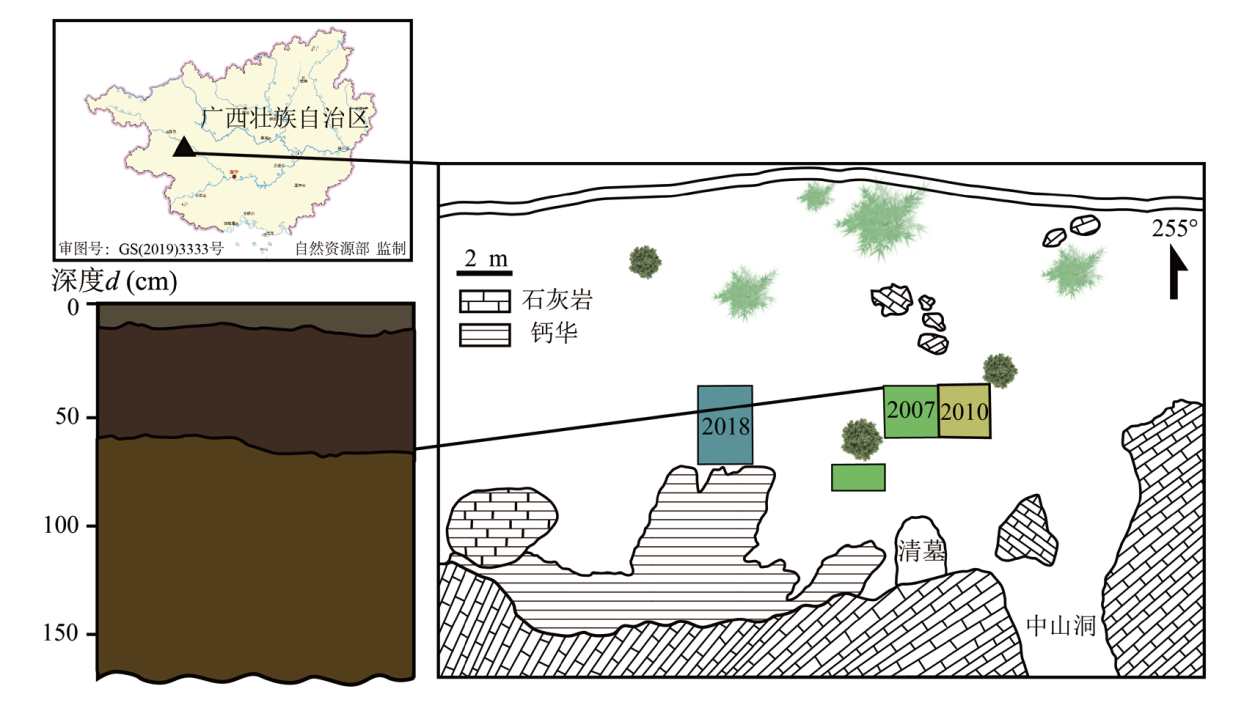
图1 中山岩厦遗址平面图 注:2007年发掘范围2 m×2 m和2 m×1 m,2010年发掘2 m×2 m,2018年发掘2 m×3 m。
Fig.1 The plane graph of the Zhongshan rock shelter site The excavation area was 2 m×2 m and 2 m×1 m in 2007, 2 m×2 m in 2010 and 2 m×3 m in 2018.
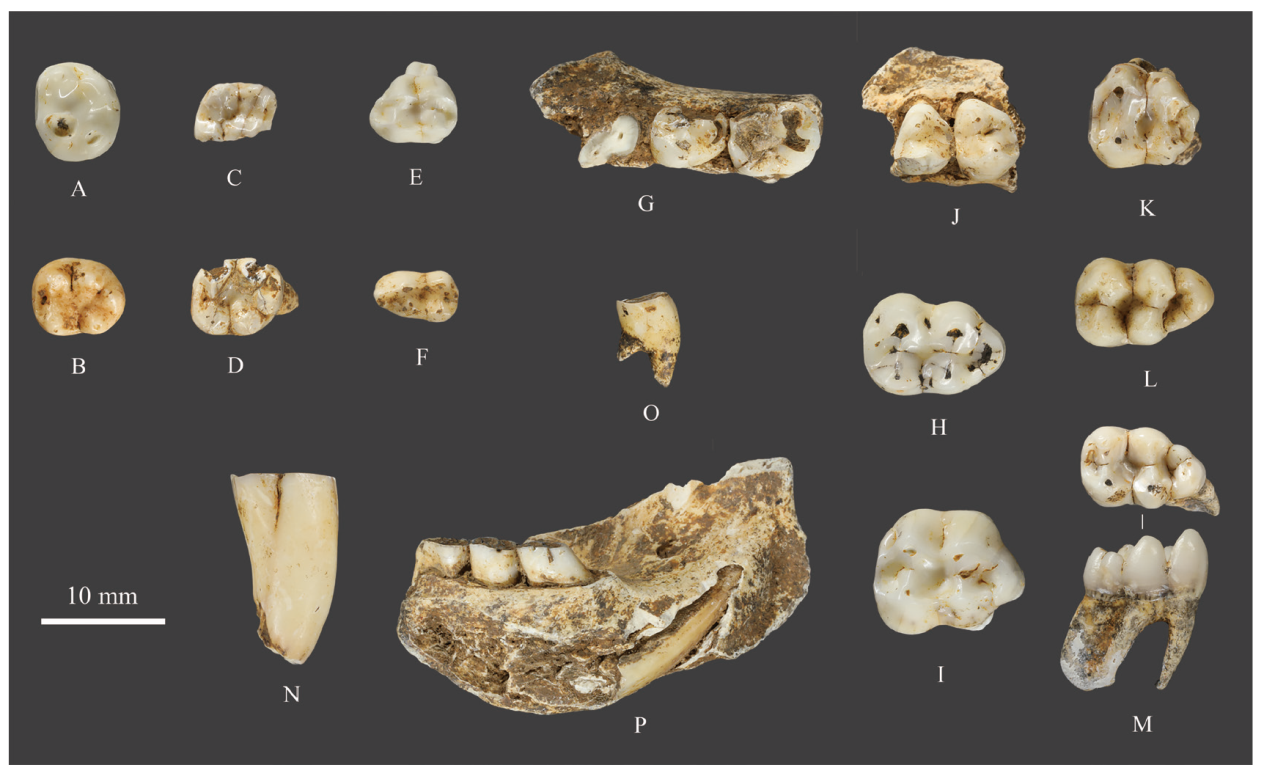
图2 中山岩厦遗址灵长目和啮齿目牙齿化石 黑长臂猿(未定种)Nomascus sp.:A. ZSDW263, 左侧M1/2,B. ZSDW244, 右侧m2/3;长臂猿(未定种)Hylobates sp.:C. ZSDW318, 右侧M1/2,D. ZSDW021, 左侧m1/2;猕猴未定种Macaca sp.:E. ZSDW314, 右侧DP3,F. ZSDW186, 右侧dp3,H. ZSDW324, 右侧m3,I. ZSDW254, 右侧M3;乌叶猴未定种Trachypithecus sp.:G. ZSDW208, 左侧下颌残;白臀叶猴(未定种)Pygathrix sp.:J. ZSDW151, 右侧上颌残,K. ZSDW260, 右侧M3,L. ZSDW041, 右侧m3,M. ZSDW274, 左侧m3;华南豪猪Hystrix subcristata:N. ZSDW135, 左侧m1/2;帚尾豪猪(未定种)Atherurus sp.:O. ZSDW160, 左侧M1/2,中华竹鼠Rhizomys sinensis:P. ZSDW004,右侧下颌残。A-L:冠面视,M:冠面视和舌侧视,N:颊侧视,O:近中侧视,P:舌侧视
Fig.2 The tooth fossils of Primates and Rodentia in the Zhongshan rock shelter site
| 猕猴Macaca | 金丝猴Rhinopithecus | 白臀叶猴Pygathrix | 乌叶猴Trachypithecus | 长臂猿Hylobates | 黑长臂猿Nomascus | |||||||||||||
|---|---|---|---|---|---|---|---|---|---|---|---|---|---|---|---|---|---|---|
| 最小值 Min | 最大值 Max | 最小值 Min | 最大值 Max | 最小值 Min | 最大值 Max | 最小值 Min | 最大值 Max | 最小值 Min | 最大值 Max | 最小值 Min | 最大值 Max | |||||||
| P3 | 长L | 4.59 | 5.95 | / | / | 4.78 | 4.78 | 4.18 | 4.66 | 4.71 | 4.71 | / | / | |||||
| 宽W | 4.45 | 6.94 | / | / | 5.98 | 5.98 | 5.21 | 5.51 | 4.68 | 4.68 | / | / | ||||||
| P4 | 长L | 4.96 | 6.53 | / | / | 5.08 | 5.08 | / | / | 4.67 | 4.67 | / | / | |||||
| 宽W | 4.72 | 7.85 | / | / | 6.24 | 6.24 | / | / | 6.36 | 6.36 | / | / | ||||||
| M1/2 | 长L | 6.84 | 10.01 | 7.62 | 8.33 | 6.70 | 7.73 | 6.51 | 7.06 | / | / | 6.87 | 6.87 | |||||
| 宽W | 6.56 | 9.56 | 7.67 | 8.10 | 6.44 | 7.77 | 6.41 | 6.90 | / | / | 8.00 | 8.00 | ||||||
| M3 | 长L | 8.78 | 11.70 | 8.06 | 9.47 | 7.49 | 8.31 | 6.87 | 6.87 | / | / | / | / | |||||
| 宽W | 7.77 | 9.76 | 7.91 | 8.18 | 6.80 | 7.94 | 6.73 | 6.73 | / | / | / | / | ||||||
| p3 | 长L | 7.62 | 9.13 | / | / | / | / | 7.34 | 8.19 | / | / | / | / | |||||
| 宽W | 4.40 | 5.07 | / | / | / | / | 4.26 | 4.57 | / | / | / | / | ||||||
| p4 | 长L | 6.87 | 7.02 | / | / | / | / | 5.61 | 6.26 | / | / | / | / | |||||
| 宽W | 5.09 | 5.46 | / | / | / | / | 4.56 | 4.89 | / | / | / | / | ||||||
| m1/2 | 长L | 7.32 | 10.62 | 7.27 | 8.75 | 7.26 | 7.68 | 6.49 | 7.00 | 7.35 | 7.35 | 7.33 | 7.33 | |||||
| 宽W | 5.58 | 7.75 | 5.80 | 6.96 | 5.82 | 7.11 | 4.78 | 5.62 | 6.24 | 6.24 | 6.19 | 6.19 | ||||||
| m3 | 长L | 10.86 | 12.76 | 10.54 | 10.95 | 9.64 | 10.64 | 9.03 | 9.60 | 7.32 | 7.32 | / | / | |||||
| 宽W | 7.04 | 8.09 | 6.34 | 7.10 | 6.13 | 6.79 | 6.01 | 6.50 | 6.06 | 6.06 | / | / | ||||||
表1 中山岩厦灵长目牙齿尺寸统计
Tab.1 The tooth sizes of Primates in Zhongshan rock shelter (mm)
| 猕猴Macaca | 金丝猴Rhinopithecus | 白臀叶猴Pygathrix | 乌叶猴Trachypithecus | 长臂猿Hylobates | 黑长臂猿Nomascus | |||||||||||||
|---|---|---|---|---|---|---|---|---|---|---|---|---|---|---|---|---|---|---|
| 最小值 Min | 最大值 Max | 最小值 Min | 最大值 Max | 最小值 Min | 最大值 Max | 最小值 Min | 最大值 Max | 最小值 Min | 最大值 Max | 最小值 Min | 最大值 Max | |||||||
| P3 | 长L | 4.59 | 5.95 | / | / | 4.78 | 4.78 | 4.18 | 4.66 | 4.71 | 4.71 | / | / | |||||
| 宽W | 4.45 | 6.94 | / | / | 5.98 | 5.98 | 5.21 | 5.51 | 4.68 | 4.68 | / | / | ||||||
| P4 | 长L | 4.96 | 6.53 | / | / | 5.08 | 5.08 | / | / | 4.67 | 4.67 | / | / | |||||
| 宽W | 4.72 | 7.85 | / | / | 6.24 | 6.24 | / | / | 6.36 | 6.36 | / | / | ||||||
| M1/2 | 长L | 6.84 | 10.01 | 7.62 | 8.33 | 6.70 | 7.73 | 6.51 | 7.06 | / | / | 6.87 | 6.87 | |||||
| 宽W | 6.56 | 9.56 | 7.67 | 8.10 | 6.44 | 7.77 | 6.41 | 6.90 | / | / | 8.00 | 8.00 | ||||||
| M3 | 长L | 8.78 | 11.70 | 8.06 | 9.47 | 7.49 | 8.31 | 6.87 | 6.87 | / | / | / | / | |||||
| 宽W | 7.77 | 9.76 | 7.91 | 8.18 | 6.80 | 7.94 | 6.73 | 6.73 | / | / | / | / | ||||||
| p3 | 长L | 7.62 | 9.13 | / | / | / | / | 7.34 | 8.19 | / | / | / | / | |||||
| 宽W | 4.40 | 5.07 | / | / | / | / | 4.26 | 4.57 | / | / | / | / | ||||||
| p4 | 长L | 6.87 | 7.02 | / | / | / | / | 5.61 | 6.26 | / | / | / | / | |||||
| 宽W | 5.09 | 5.46 | / | / | / | / | 4.56 | 4.89 | / | / | / | / | ||||||
| m1/2 | 长L | 7.32 | 10.62 | 7.27 | 8.75 | 7.26 | 7.68 | 6.49 | 7.00 | 7.35 | 7.35 | 7.33 | 7.33 | |||||
| 宽W | 5.58 | 7.75 | 5.80 | 6.96 | 5.82 | 7.11 | 4.78 | 5.62 | 6.24 | 6.24 | 6.19 | 6.19 | ||||||
| m3 | 长L | 10.86 | 12.76 | 10.54 | 10.95 | 9.64 | 10.64 | 9.03 | 9.60 | 7.32 | 7.32 | / | / | |||||
| 宽W | 7.04 | 8.09 | 6.34 | 7.10 | 6.13 | 6.79 | 6.01 | 6.50 | 6.06 | 6.06 | / | / | ||||||
| 中国黑熊 Ursus thibetanus | 马来熊相似种Ursus cf. malayanus | 大猪獾 Arctonyx collaris | 小爪水獭 Amblonyx cinereus | 花面狸 Paguma larvata | 椰子狸 Paradoxurus hermaphroditus | 豺 Cuon alpinus | ||
|---|---|---|---|---|---|---|---|---|
| P4 | 长L | / | / | / | / | / | / | 19.50 |
| 宽W | / | / | / | / | / | / | 10.58 | |
| M1 | 长L | 21.30 | 17.08 | 15.31 | 8.03 | 7.21 | / | / |
| 宽W | 16.34 | 13.06 | 13.69 | 10.27 | 8.15 | / | / | |
| p4 | 长L | / | / | / | / | 7.90 | / | / |
| 宽W | / | / | / | / | 6.12 | / | / | |
| m1 | 长L | / | / | / | 12.44 | 10.55 | 9.12 | / |
| 宽W | / | / | / | 7.41 | 7.19 | 6.22 | / | |
| m2 | 长L | 18.57 | / | / | / | / | / | / |
| 宽W | 11.84 | / | / | / | / | / | / | |
表2 中山岩厦食肉目牙齿尺寸统计
Tab.2 The tooth sizes of Carnivora in Zhongshan rock shelter (mm)
| 中国黑熊 Ursus thibetanus | 马来熊相似种Ursus cf. malayanus | 大猪獾 Arctonyx collaris | 小爪水獭 Amblonyx cinereus | 花面狸 Paguma larvata | 椰子狸 Paradoxurus hermaphroditus | 豺 Cuon alpinus | ||
|---|---|---|---|---|---|---|---|---|
| P4 | 长L | / | / | / | / | / | / | 19.50 |
| 宽W | / | / | / | / | / | / | 10.58 | |
| M1 | 长L | 21.30 | 17.08 | 15.31 | 8.03 | 7.21 | / | / |
| 宽W | 16.34 | 13.06 | 13.69 | 10.27 | 8.15 | / | / | |
| p4 | 长L | / | / | / | / | 7.90 | / | / |
| 宽W | / | / | / | / | 6.12 | / | / | |
| m1 | 长L | / | / | / | 12.44 | 10.55 | 9.12 | / |
| 宽W | / | / | / | 7.41 | 7.19 | 6.22 | / | |
| m2 | 长L | 18.57 | / | / | / | / | / | / |
| 宽W | 11.84 | / | / | / | / | / | / | |
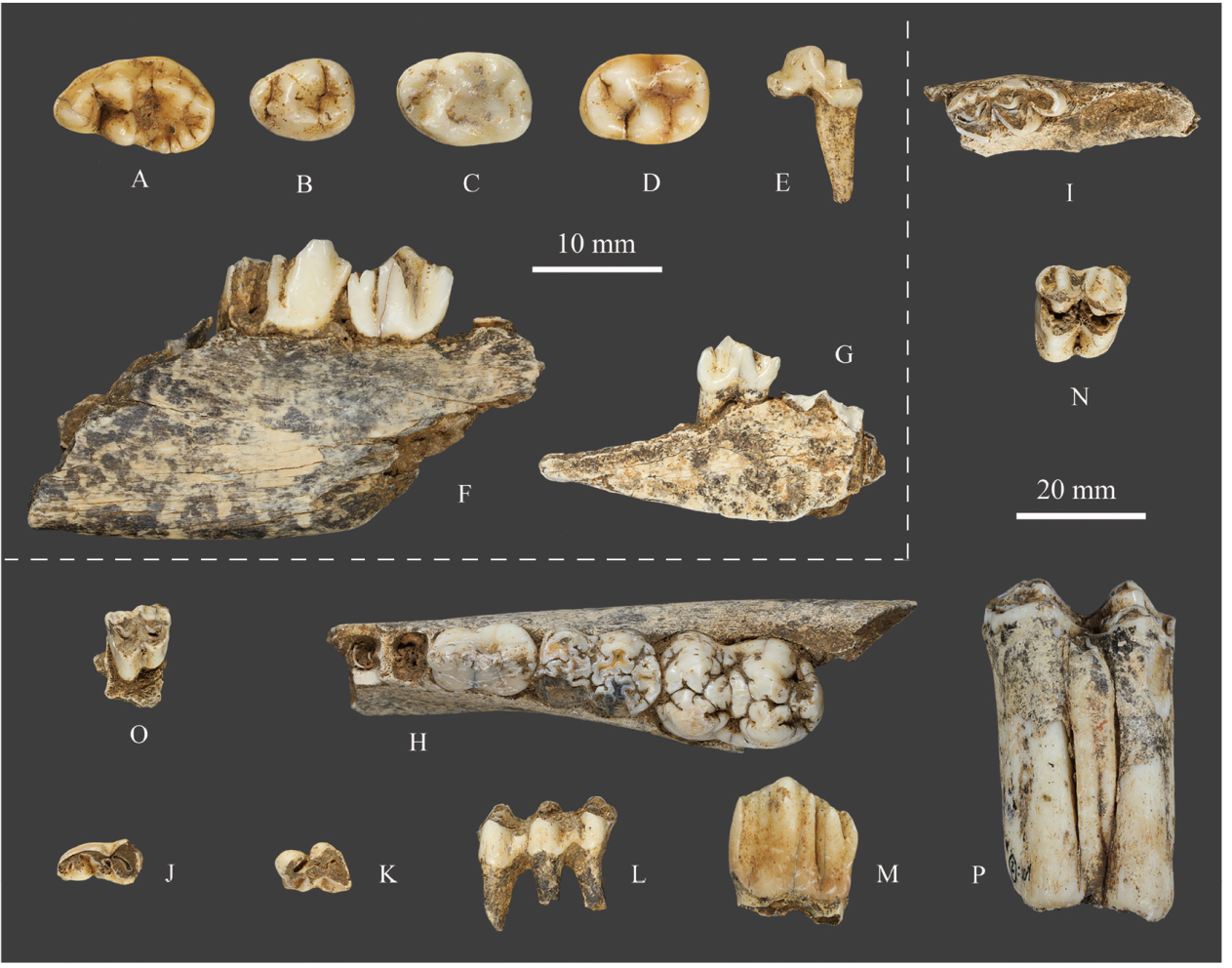
图3 中山岩厦遗址食肉目和偶蹄目牙齿化石
Fig.3 The tooth fossils of Carnivora and Artiodactyla in the Zhongshan rock shelter site
| 水鹿Cervus (Rusa) unicolor | 梅花鹿Cervus nippon | 赤麂Muntiacus muntjak | 小麂Muntiacus reevesi | 麝Moschus sp. | 野猪Sus scrofa | |||||||||||||
|---|---|---|---|---|---|---|---|---|---|---|---|---|---|---|---|---|---|---|
| 最小值Min | 最大值Max | 最小值 Min | 最大值 Max | 最小值 Min | 最大值 Max | 最小值 Min | 最大值 Max | 最小值 Min | 最大值 Max | 最小值Min | 最大值 Max | |||||||
| dp3 | 长L | / | / | 12.39 | 12.39 | 11.04 | 11.04 | / | / | / | / | / | / | |||||
| 宽W | / | / | 7.03 | 7.03 | 5.43 | 5.43 | / | / | / | / | / | / | ||||||
| dp4 | 长L | 22.10 | 24.40 | / | / | 15.37 | 15.37 | / | / | / | / | / | / | |||||
| 宽W | 10.84 | 11.61 | / | / | 7.32 | 7.32 | / | / | / | / | / | / | ||||||
| P2 | 长L | 14.14 | 17.16 | / | / | 10.35 | 11.69 | 6.47 | 7.85 | / | / | / | / | |||||
| 宽W | 15.41 | 16.73 | / | / | 10.71 | 10.80 | 6.12 | 8.72 | / | / | / | / | ||||||
| P3 | 长L | 14.08 | 16.40 | / | / | 8.35 | 10.60 | / | / | / | / | / | / | |||||
| 宽W | 15.87 | 17.19 | / | / | 8.89 | 12.51 | / | / | / | / | / | / | ||||||
| P4 | 长L | 13.12 | 13.66 | / | / | 8.28 | 9.86 | / | / | / | / | 12.62 | 12.86 | |||||
| 宽W | 15.73 | 17.70 | / | / | 11.18 | 12.59 | / | / | / | / | 14.36 | 14.55 | ||||||
| M1/2 | 长L | 17.69 | 23.71 | 13.40 | 16.04 | 11.49 | 14.42 | / | / | / | / | 16.51 | 22.68 | |||||
| 宽W | 16.80 | 26.01 | 16.14 | 17.90 | 11.77 | 15.28 | / | / | / | / | 14.13 | 18.08 | ||||||
| M3 | 长L | / | / | 20.20 | 20.20 | 12.89 | 14.10 | 9.20 | 11.23 | 7.71 | 7.71 | / | / | |||||
| 宽W | / | / | 17.69 | 17.69 | 13.90 | 15.05 | 8.72 | 13.27 | 6.91 | 6.91 | / | / | ||||||
| p2 | 长L | 12.43 | 12.55 | 11.46 | 11.47 | 7.49 | 9.56 | / | / | 6.15 | 6.15 | / | / | |||||
| 宽W | 6.48 | 8.38 | 6.12 | 6.88 | 4.14 | 5.50 | / | / | 3.37 | 3.37 | / | / | ||||||
| p3 | 长L | 17.06 | 17.06 | 12.93 | 13.05 | 9.11 | 10.61 | / | / | 7.09 | 7.09 | 11.94 | 14.00 | |||||
| 宽W | 10.29 | 10.29 | 7.05 | 8.01 | 5.32 | 6.31 | / | / | 3.59 | 3.59 | 5.85 | 7.78 | ||||||
| p4 | 长L | 17.73 | 18.98 | 13.24 | 15.90 | 10.26 | 10.26 | / | / | / | / | 12.95 | 15.00 | |||||
| 宽W | 10.43 | 12.56 | 8.89 | 10.01 | 6.62 | 6.62 | / | / | / | / | 6.35 | 10.21 | ||||||
| m1/2 | 长L | 19.58 | 22.24 | 16.12 | 18.09 | 10.42 | 14.33 | / | / | / | / | 17.46 | 21.73 | |||||
| 宽W | 12.85 | 17.17 | 10.58 | 11.24 | 7.22 | 9.45 | / | / | / | / | 13.35 | 15.33 | ||||||
| m3 | 长L | 29.25 | 31.68 | / | / | 16.76 | 18.62 | 13.72 | 13.92 | / | / | / | / | |||||
| 宽W | 14.09 | 16.48 | / | / | 8.41 | 8.84 | 6.55 | 6.69 | / | / | / | / | ||||||
表3 中山岩厦偶蹄目牙齿尺寸统计
Tab.3 The tooth sizes of Artiodactyla in Zhongshan rock shelter (mm)
| 水鹿Cervus (Rusa) unicolor | 梅花鹿Cervus nippon | 赤麂Muntiacus muntjak | 小麂Muntiacus reevesi | 麝Moschus sp. | 野猪Sus scrofa | |||||||||||||
|---|---|---|---|---|---|---|---|---|---|---|---|---|---|---|---|---|---|---|
| 最小值Min | 最大值Max | 最小值 Min | 最大值 Max | 最小值 Min | 最大值 Max | 最小值 Min | 最大值 Max | 最小值 Min | 最大值 Max | 最小值Min | 最大值 Max | |||||||
| dp3 | 长L | / | / | 12.39 | 12.39 | 11.04 | 11.04 | / | / | / | / | / | / | |||||
| 宽W | / | / | 7.03 | 7.03 | 5.43 | 5.43 | / | / | / | / | / | / | ||||||
| dp4 | 长L | 22.10 | 24.40 | / | / | 15.37 | 15.37 | / | / | / | / | / | / | |||||
| 宽W | 10.84 | 11.61 | / | / | 7.32 | 7.32 | / | / | / | / | / | / | ||||||
| P2 | 长L | 14.14 | 17.16 | / | / | 10.35 | 11.69 | 6.47 | 7.85 | / | / | / | / | |||||
| 宽W | 15.41 | 16.73 | / | / | 10.71 | 10.80 | 6.12 | 8.72 | / | / | / | / | ||||||
| P3 | 长L | 14.08 | 16.40 | / | / | 8.35 | 10.60 | / | / | / | / | / | / | |||||
| 宽W | 15.87 | 17.19 | / | / | 8.89 | 12.51 | / | / | / | / | / | / | ||||||
| P4 | 长L | 13.12 | 13.66 | / | / | 8.28 | 9.86 | / | / | / | / | 12.62 | 12.86 | |||||
| 宽W | 15.73 | 17.70 | / | / | 11.18 | 12.59 | / | / | / | / | 14.36 | 14.55 | ||||||
| M1/2 | 长L | 17.69 | 23.71 | 13.40 | 16.04 | 11.49 | 14.42 | / | / | / | / | 16.51 | 22.68 | |||||
| 宽W | 16.80 | 26.01 | 16.14 | 17.90 | 11.77 | 15.28 | / | / | / | / | 14.13 | 18.08 | ||||||
| M3 | 长L | / | / | 20.20 | 20.20 | 12.89 | 14.10 | 9.20 | 11.23 | 7.71 | 7.71 | / | / | |||||
| 宽W | / | / | 17.69 | 17.69 | 13.90 | 15.05 | 8.72 | 13.27 | 6.91 | 6.91 | / | / | ||||||
| p2 | 长L | 12.43 | 12.55 | 11.46 | 11.47 | 7.49 | 9.56 | / | / | 6.15 | 6.15 | / | / | |||||
| 宽W | 6.48 | 8.38 | 6.12 | 6.88 | 4.14 | 5.50 | / | / | 3.37 | 3.37 | / | / | ||||||
| p3 | 长L | 17.06 | 17.06 | 12.93 | 13.05 | 9.11 | 10.61 | / | / | 7.09 | 7.09 | 11.94 | 14.00 | |||||
| 宽W | 10.29 | 10.29 | 7.05 | 8.01 | 5.32 | 6.31 | / | / | 3.59 | 3.59 | 5.85 | 7.78 | ||||||
| p4 | 长L | 17.73 | 18.98 | 13.24 | 15.90 | 10.26 | 10.26 | / | / | / | / | 12.95 | 15.00 | |||||
| 宽W | 10.43 | 12.56 | 8.89 | 10.01 | 6.62 | 6.62 | / | / | / | / | 6.35 | 10.21 | ||||||
| m1/2 | 长L | 19.58 | 22.24 | 16.12 | 18.09 | 10.42 | 14.33 | / | / | / | / | 17.46 | 21.73 | |||||
| 宽W | 12.85 | 17.17 | 10.58 | 11.24 | 7.22 | 9.45 | / | / | / | / | 13.35 | 15.33 | ||||||
| m3 | 长L | 29.25 | 31.68 | / | / | 16.76 | 18.62 | 13.72 | 13.92 | / | / | / | / | |||||
| 宽W | 14.09 | 16.48 | / | / | 8.41 | 8.84 | 6.55 | 6.69 | / | / | / | / | ||||||
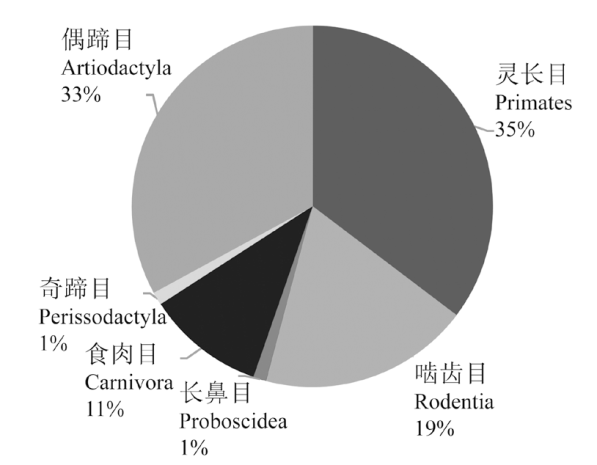
图4 中山岩厦动物群最小个体数比重统计
Fig.4 The proportions of MNI for the Zhongshan rock shelter fauna
| 早更新世Early Pleistocene | 中更新世晚期 late Middle Pleistocene | 晚更新世Late Pleistocene | 晚更新世-全新世Late Pleistocene-Holocene | |||||||||
|---|---|---|---|---|---|---|---|---|---|---|---|---|
| 吹风洞Chuifeng | 么会洞 Mohui | 感仙洞Ganxian | 中山洞Zhongshan | 瀑布上洞 Upper Pubu | 陆那洞 Luna | 宝来洞 Baolai | 中山岩厦 Zhongshan rock shelter | |||||
| 灭绝种Extinct species | 数量n | 18 | 18 | 8 | 5 | 3 | 2 | 2 | 0 | |||
| 比例% | 64.30% | 66.70% | 29.60% | 15.20% | 12.50% | 22.20% | 10.50% | 0 | ||||
| 现生种Extant species | 数量n | 10 | 9 | 19 | 28 | 21 | 7 | 17 | 27 | |||
| 比例% | 35.70% | 33.30% | 70.40% | 84.80% | 87.50% | 77.80% | 89.50% | 100% | ||||
表4 布兵盆地第四纪大型哺乳动物群演化情况
Tab.4 The evolutionary sequence of Quaternary large mammal fauna in Bubing Basin
| 早更新世Early Pleistocene | 中更新世晚期 late Middle Pleistocene | 晚更新世Late Pleistocene | 晚更新世-全新世Late Pleistocene-Holocene | |||||||||
|---|---|---|---|---|---|---|---|---|---|---|---|---|
| 吹风洞Chuifeng | 么会洞 Mohui | 感仙洞Ganxian | 中山洞Zhongshan | 瀑布上洞 Upper Pubu | 陆那洞 Luna | 宝来洞 Baolai | 中山岩厦 Zhongshan rock shelter | |||||
| 灭绝种Extinct species | 数量n | 18 | 18 | 8 | 5 | 3 | 2 | 2 | 0 | |||
| 比例% | 64.30% | 66.70% | 29.60% | 15.20% | 12.50% | 22.20% | 10.50% | 0 | ||||
| 现生种Extant species | 数量n | 10 | 9 | 19 | 28 | 21 | 7 | 17 | 27 | |||
| 比例% | 35.70% | 33.30% | 70.40% | 84.80% | 87.50% | 77.80% | 89.50% | 100% | ||||
| [1] | 裴文中. 广西柳城巨猿洞及其他山洞的第四纪哺乳动物[J]. 古脊椎动物与古人类, 1962, 6: 211-218 |
| [2] | 裴文中. 柳城巨猿洞的发掘和广西其他山洞的探察[J]. 中国科学院古脊椎动物与古人类甲种专刊第 7 号[C]. 北京: 科学出版社, 1965, 1-35 |
| [3] | 周明镇. 华南第三纪和第四纪初期哺乳动物群的性质和对比[J]. 科学通报, 1957, 13: 394-399 |
| [4] | 卡尔克 HD. 关于中国南方剑齿象—熊猫动物群和巨猿的时代[J].译者:胡长康. 古脊椎动物与古人类, 1961, 2: 83-108 |
| [5] | 计宏祥. 华南第四纪哺乳动物群的划分问题[J]. 古脊椎动物与古人类, 1977, 15(4): 271-277 |
| [6] | 金昌柱, 董为, 高星, 等. 中国南方早更新世主要哺乳动物群层序对比和动物地理[J]. 人类学学报, 2008, 27(4): 304-317 |
| [7] | Jin CZ, Wang Y, Deng CL, et al. Chronological sequence of the early Pleistocene Gigantopithecus faunas from cave sites in the Chongzuo, Zuojiang River area, South China[J]. Quaternary International, 2014, 354: 4-14 |
| [8] | Liang H, Liao W, Shao Q, et al. New discovery of a late Middle Pleistocene mammalian fauna in Ganxian Cave, Southern China[J]. Historical Biology, 2022, doi: 10.1080/08912963.2022.2139180 |
| [9] | Fan Y, Yao Y, Bacon AM, et al. The late Middle Pleistocene Zhongshan cave fauna from the Bubing Basin, southern China[J]. Quaternary International, 714: 109587 |
| [10] | Zhang Y, Fan Y, Yao Y, et al. Variation in the Quaternary Stegodon-Ailuropoda Faunal Complex in Southern China: Upper Pubu Cave (Bubing Basin, Guangxi)[J]. Quaternary Science Review, 346: 109082 |
| [11] | Fan Y, Shao Q, Bacon AM, et al. Late Pleistocene large-bodied mammalian fauna from Mocun cave in south China: palaeontological, chronological and biogeographical implications[J]. Quaternary Science Review, 2022, 294: 107741 |
| [12] | 邹松林, 陈曦, 张贝, 等. 江西萍乡上栗县晚更新世哺乳动物化石发现[J]. 人类学学报, 2016, 35: 109-120 |
| [13] | 陆成秋. 湖北建始杨家坡洞晚更新世哺乳动物群[A].见:董为(编). 第十二届中国古脊椎动物学学术年会论文集[C]. 北京: 海洋出版社, 2010, 97-120 |
| [14] | 陈君, 王頠, 李大伟, 等. 广西田东中山遗址洞外岩厦出土动物骨骼的初步研究[J]. 人类学学报, 2017, 36(4): 527-536 |
| [15] | Tian C, Liao W, Yao YY, et al. New lithic evidence from Terminal Pleistocene-Early Holocene Zhongshan Rockshelter, Guangxi, southern China[J]. Journal of Archaeological Science: Reports, 2023, 49: 103916 |
| [16] | 张颖奇, 金昌柱, 王元, 等. 广西崇左更新世长臂猿化石新材料[J]. 古脊椎动物学报, 2018, 56(3): 248-263 |
| [17] | 倪喜军. 灵长目[A]. 见:李传夔(主编). 中国古脊椎动物志(第 3 卷)[M]. 北京: 科学出版社, 2015, 302-389 |
| [18] | Swindler DR. Primate Dentition: An Introduction to the Teeth of Non-human Primates[M]. Cambridge: Cambridge University Press, 2002, 1-296 |
| [19] | Pan Y, Zhan Y, Yang L, et al. Preliminary description of a late Middle Pleistocene mammalian fauna prior to the extinction of Gigantopithecus blacki from the Yixiantian Cave, Guangxi ZAR, South China[J]. The Anatomical Record, 2023, 1-26 |
| [20] | 同号文. 周口店田园洞古人类化石点的无颈鬃豪猪(Hystrix subcristata)[J]. 古脊椎动物学报, 2005, 43(2): 135-150 |
| [21] | Tong HW. Quaternary Hystrix (Rodentia, Mammalia) from North China: Taxonomy, stratigraphy and zoogeography, with discussions on the distribution of Hystrix in Palearctic Eurasia[J]. Quaternary International, 2008, 179(1): 126-134 |
| [22] | Jiangzuo QG, Liu JY, Wagner J, et al. axonomical revision of “Arctonyx” fossil remains from the Liucheng Gigantopithecus Cave (South China) by means of morphotype and morphometrics, and a review of Late Pliocene and Early Pleistocene Meles fossil records in China[J]. Palaeoworld, 2018, 28: 282-300 |
| [23] |
Jiangzuo QG, Liu JY, Chen J. Morphological homology, evolution, and proposed nomenclature for bear dentition[J]. Acta Palaeontologica Polonica, 2019, 64 (4): 693-710
doi: 10.4202/app.00629.2019 |
| [24] | 董为, 金昌柱, 王元, 等. 广西崇左三合大洞的早更新世猪属新材料[J]. 人类学学报, 2013, 32(1): 63-76 |
| [25] | Zhang B, Chen X, Tong HW. Tooth remains of Late Pleistocene moschid and cervid (Artiodactyla, mammalia) from Yangjiawan and Fuyan Caves of southern China[J]. Quaternary International, 2018, 490: 21-32 |
| [26] | Suraprasit K, Jaeger JJ, Chaimanee Y, et al. The middle Pleistocene vertebrate fauna from Khok Sung (Nakhon Ratchasima, Thailand): biochronological and paleobiogeographical implications. ZooKeys, 2016, 613: 1-157 |
| [27] | Ortiz A, Pilbrow V, Villamil CI, et al. The taxonomic and phylogenetic affinities of Bunopithecus sericus, a fossil hylobatid from the Pleistocene of China[J]. PLoS ONE, 2015, 10: e0131206 |
| [28] | 顾玉珉. 我国更新世长臂猿化石的初步研究[J]. 人类学学报, 1986, 5(3): 208-219 |
| [29] | Liao W, Liang H, Li J, et al. Early Pleistocene large-mammal assemblage associated with Gigantopithecus at Chuifeng Cave, Bubing Basin, South China[J]. Historical Biology, 2023, DOI: 10.1080/08912963.2022.2161381 |
| [30] | Fooden J. The bear macaque Macaca arctoides: A systematic review[J]. Journal of Human Evolution, 1990, 19: 607-686 |
| [31] | Wang W, Liao W, Li D, et al. Early Pleistocene large-mammal fauna associated with Gigantopithecus at Mohui Cave, Bubing Basin, South China[J]. Quaternary International, 2014, 354: 122-130 |
| [32] |
Kay RF. The evolution of molar occlusion in the Cercopithecidae and early catarrhines[J]. American Journal of Physical Anthropology, 1977, 46: 327-52
pmid: 848569 |
| [33] | Kay RF, Hylander WL. The dental structure of mammalian folivores with special reference to primates and Phalangeroidea (Marsupialia)[A]. In: Montgomery G(Ed). The Biology of Arboreal Folivores[M]. Washington DC: Smithsonian Institution Press, 1978, 173-191 |
| [34] |
Kay RF. The functional adaptations of primate molar teeth[J]. American Journal of Physical Anthropology, 1975, 43: 195-216
pmid: 810034 |
| [35] | Takai M, Zhang Y, Kono RT. Changes in the composition of the Pleistocene primate fauna in southern China[J]. Quaternary International, 2014, 354:75-85 |
| [36] |
Sheng G, Hu J, Tong H, et al. Ancient DNA of northern China Hystricidae sub-fossils reveals the evolutionary history of old world porcupines in the Late Pleistocene[J]. BMC Evolutionary Biology, 2020, 20: 88
doi: 10.1186/s12862-020-01656-x pmid: 32682389 |
| [37] | 郑绍华. 建始人遗址[M]. 北京: 科学出版社, 2004 |
| [38] | Jiangzuo QG, Liu J, Wagner J, et al. Taxonomical revision of fossil Canis in Middle Pleistocene sites of Zhoukoudian, Beijing, China and a review of fossil records of Canis mosbachensis variabilis in China[J]. Quaternary International, 2018, 482: 93-108 |
| [39] | Colbert EH, Hooijer DA. Pleistocene mammals from the limestone fissures of Szechwan, China[J]. Bulletin of theAmerican Museum of Natural History, 1953, 102: 1-134 |
| [40] | Helgen KM, Lim NTL, Helgen LE. The hog-badger is not an edentate: systematics and evolution of the genus Arctonyx (Mammalia: Mustelidae). Zoological Journal of the Linnean Society, 2008, 154: 353-385 |
| [41] | 陈曦, 伍苏明, 王宣波, 等. 江苏沭阳唐代江獭的发现—兼论江獭分布变迁[J]. 第四纪研究, 2023, 43: 868-877 |
| [42] | Kruuk H. Otters:Ecology, Behaviour and Conservation[M]. New York: Oxford University Press, 2006: 1-265 |
| [43] | 吴名川, 高耀亭. 广西林麝生态考察和麝资源的消长[J]. 动物学杂志, 1990, 25: 49-53 |
| [44] | 王晓敏, 许春华, 同号文. 湖北郧西白龙洞古人类遗址的大额牛化石[J]. 人类学学报, 2015, 34: 338-352 |
| [45] | Bae CJ, Wang W, Zhao J, et al. Modern human teeth from Late Pleistocene Luna Cave (Guangxi, China)[J]. Quaternary International, 2014, http://dx.doi.org/10.1016/j.quaint.2014.06.051 |
| [46] | Fan Y, Li J, Gong R, et al. Taphonomy and biochronology of the Late Pleistocene mammalian fauna at Baolai cave, in Bubing Basin, southern China[J]. Historical Biology, 2022, DOI: 10.1080/08912963.2022.2145561 |
| [47] | 李炎贤. 我国南方第四纪哺乳动物群的划分和演变[J]. 古脊椎动物与古人类, 1981, 19: 67-76 |
| [48] | 马安成, 汤虎良. 浙江金华全新世大熊猫-剑齿象动物群的发现及其意义[J]. 古脊椎动物学报, 1992, 30: 295-312 |
| [49] | 黄万波, 计宏祥. 江西万年仙人洞全新世洞穴堆积[J]. 古脊椎动物与古人类, 1962, 7: 263-272 |
| [50] | 李有恒, 韩德芬. 广西桂林甑皮岩遗址动物群[J]. 古脊椎动物与古人类, 1978, 16: 244-254 |
| [51] | 魏丰, 吴维棠, 张明华, 等. 浙江余姚河姆渡新石器时代遗址动物群[M]. 北京: 海洋出版社, 1990 |
| [52] | 宋艳波, 谢光茂, 赵文丫. 广西隆安娅怀洞遗址出土动物遗存初步研究[J]. 第四纪研究, 2020, 40(2): 343-353 |
| [1] | 裴树文, 牛东伟, 马东东. 泥河湾盆地蔚县中更新世古人类活动遗址的发现与科学价值[J]. 人类学学报, 2026, 45(03): 403-418. |
| [2] | 单佳璐, 李怡晓, 王法岗, 郭玉杰, 李锋. 泥河湾盆地新庙庄遗址2号地点2018年发现材料初步研究[J]. 人类学学报, 2026, 45(03): 447-461. |
| [3] | 沈柯, 李锋, 王晓敏, 王法岗, 郭北姮, 高星. 板井子遗址第2地点2023~2024年发掘报告[J]. 人类学学报, 2026, 45(03): 462-477. |
| [4] | 耿帅杰, 裴树文, 杜雨薇, 徐静玥, 叶芷, 刘子仪. 泥河湾盆地蔚县蔡家沟遗址A地点发掘简报[J]. 人类学学报, 2026, 45(03): 500-514. |
| [5] | 叶芷, 裴树文, 马东东, 贾真秀, 王法岗, 杨海勇. 泥河湾盆地蔚县前上营遗址B地点发掘报告[J]. 人类学学报, 2026, 45(03): 515-531. |
| [6] | 刘子仪, 耿帅杰, 丁馨, 徐静玥, 叶芷, 牛东伟, 裴树文. 泥河湾盆地蔚县北官堡遗址B地点的埋藏过程[J]. 人类学学报, 2026, 45(03): 556-569. |
| [7] | 杜雨薇, 耿帅杰, 徐静玥, 叶芷, 张乐, 马东东, 裴树文. 泥河湾盆地蔡家沟遗址A和B地点动物骨骼的埋藏学观察[J]. 人类学学报, 2026, 45(03): 570-585. |
| [8] | 刘尔凡, 高佳璇, 牛东伟. 河北怀来盆地珠窝堡遗址出土的石制品[J]. 人类学学报, 2026, 45(03): 600-608. |
| [9] | 姚艳燕, 艾婉婷, 胡敏航, 付琼耀, 李国山, 钟洁美, 胡鹏程, 黄胜敏, 田淳, 梁华, 廖卫, 王伟, 易智星. 广西崇左岩利1号洞早-中更新世过渡期的巨猿化石[J]. 人类学学报, 2026, 45(02): 199-209. |
| [10] | 姚艳燕, 廖卫, 李炬平, 易智星, 田淳, 钟洁美, 高超, 王伟, 梁华. 广西崇左岩利2号洞发现中更新世早期的猩猩牙齿化石[J]. 人类学学报, 2026, 45(02): 210-223. |
| [11] | 王思元, 李金燕, 梁华, 谢耀樟, 廖卫, 王伟. 广西西部新发现的猩猩牙齿化石及其分类演化意义[J]. 人类学学报, 2026, 45(02): 224-235. |
| [12] | 杜抱朴, 刘丽, 祝彤, 于洛嘉, 景朋, 杜靖, 高艳. 中国北方全新世中晚期人群的颅骨性状[J]. 人类学学报, 2026, 45(01): 128-139. |
| [13] | 李意愿. 湖南道水流域条头岗遗址燧石原料的开发利用[J]. 人类学学报, 2025, 44(06): 1047-1059. |
| [14] | 邓婉文, 刘锁强. 石器的陡向加工技术与华南中至晚更新世人群的适应及扩散[J]. 人类学学报, 2025, 44(06): 1060-1071. |
| [15] | 杜瑞妍, 吉学平, 周振宇, 关莹, 张茂林, 周晓燕, 邢松. 云南马鹿洞和塘子沟遗址古人类牙齿残留物中的淀粉粒[J]. 人类学学报, 2025, 44(06): 1072-1082. |
| 阅读次数 | ||||||
|
全文 |
|
|||||
|
摘要 |
|
|||||
 京ICP证05002819号-3