人类学学报 ›› 2026, Vol. 45 ›› Issue (03): 462-477.doi: 10.16359/j.1000-3193/AAS.2026.0040cstr: 32091.14.j.1000-3193/AAS.2026.0040

• 研究论文 • 上一篇    下一篇

板井子遗址第2地点2023~2024年发掘报告

沈柯1,2(), 李锋3,4,5(), 王晓敏6, 王法岗7, 郭北姮1,2, 高星1,2   

  1. 1 中国科学院古脊椎动物与古人类研究所中国科学院脊椎动物演化与人类起源重点实验室北京 100044
    2 中国科学院大学北京 100049
    3 北京大学中国考古学研究中心北京 100871
    4 北京大学考古文博学院北京 100871
    5 考古科学教育部重点实验室(北京大学)北京 100871
    6 湖北大学历史文化学院武汉 430062
    7 河北省文物考古研究院石家庄 050031
  • 收稿日期:2026-02-27 接受日期:2026-04-25 出版日期:2026-06-15 发布日期:2026-06-12
  • 通讯作者: 李锋,研究员,主要从事旧石器时代考古研究。E-mail: fengli@pku.edu.cn
  • 作者简介:沈柯,博士研究生,主要从事旧石器时代考古研究。E-mail: shenke@ivpp.ac.cn
  • 基金资助:
    国家重点研发计划(2023YFF0905700);国家自然科学基金(42372010);全国考古人才振兴计划(2025-191)

Preliminary report on the 2023-2024 excavation of Banjingzi Locality 2 in Nihewan Basin, North China

SHEN Ke1,2(), LI Feng3,4,5(), WANG Xiaomin6, WANG Fagang7, GUO Beiheng1,2, GAO Xing1,2   

  1. 1 Key Laboratory of Vertebrate Evolution and Human Origins, Institute of Vertebrate Paleontology and Paleoanthropology, Chinese Academy of Sciences, Beijing 100044
    2 University of Chinese Academy of Sciences, Beijing 100049
    3 Center for the Study of Chinese Archaeology, Peking University, Beijing 100871
    4 School of Archaeology and Museology, Peking University, Beijing 100871
    5 Key Laboratory of Archaeological Science, Ministry of Education, Peking University, Beijing 100871
    6 School of History and Culture, Hubei University, Wuhan 430062
    7 Hebei Provincial Institute of Cultural Relics and Archaeology, Shijiazhuang 050031
  • Received:2026-02-27 Accepted:2026-04-25 Online:2026-06-15 Published:2026-06-12

摘要:

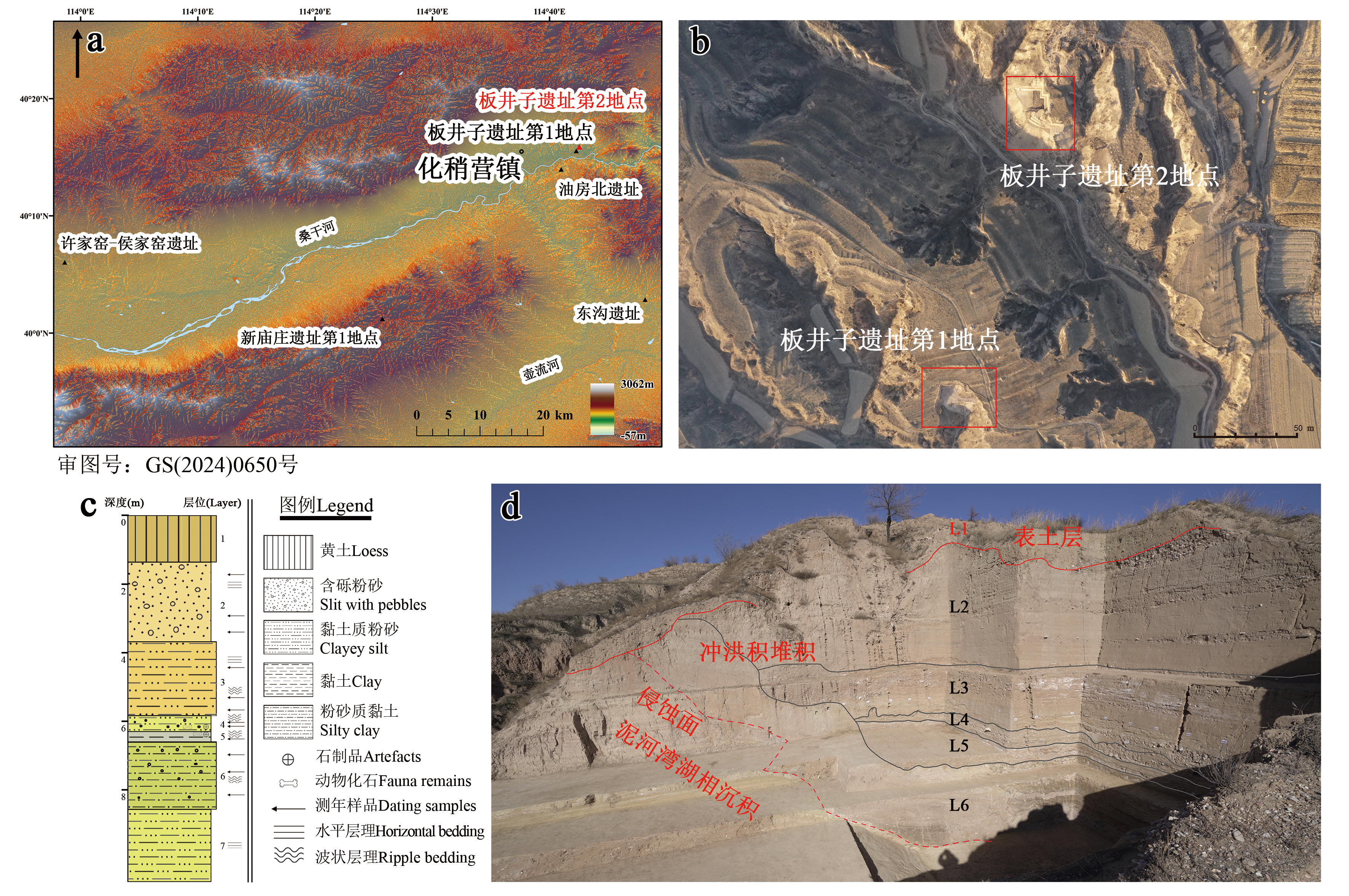
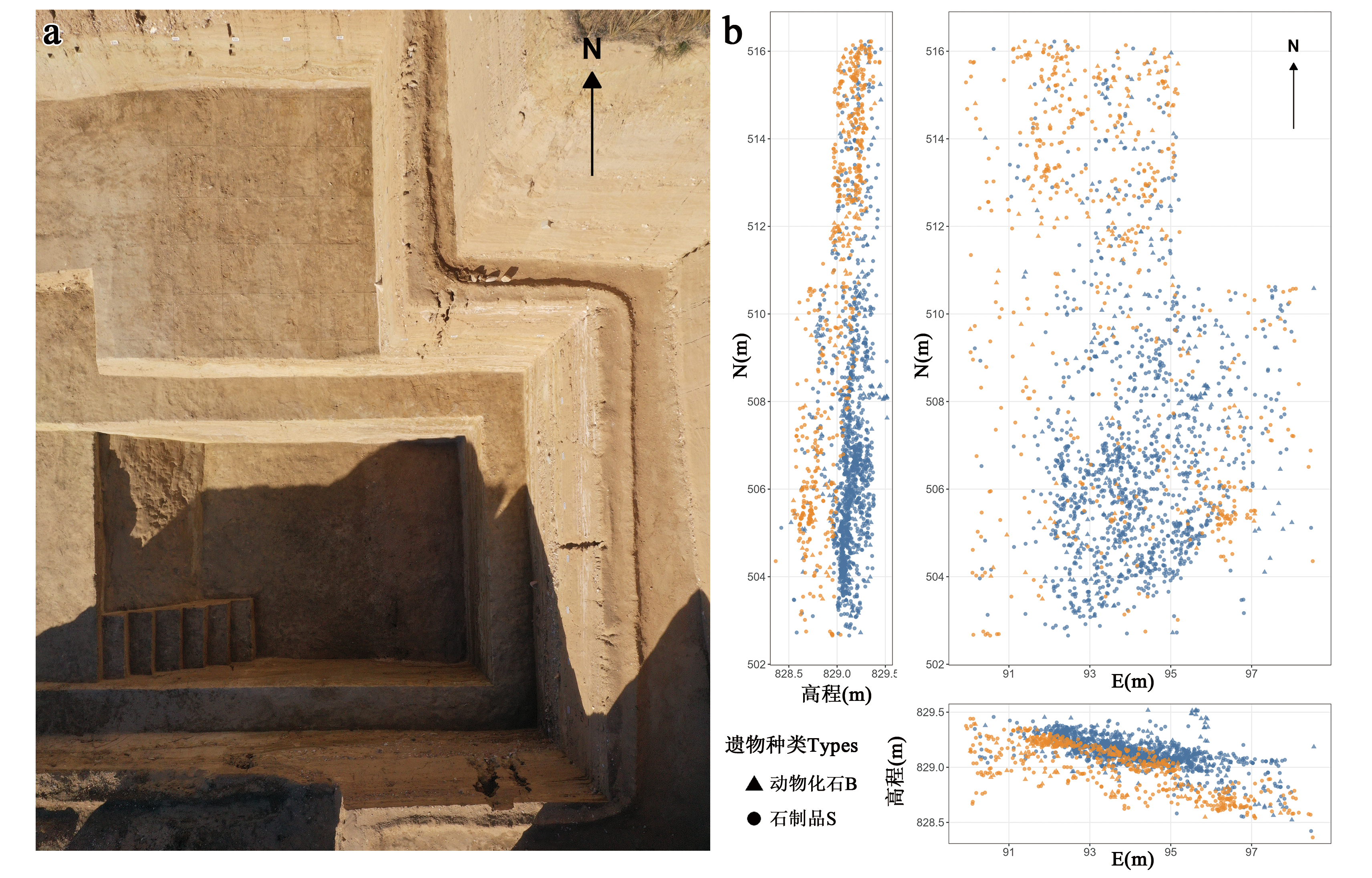
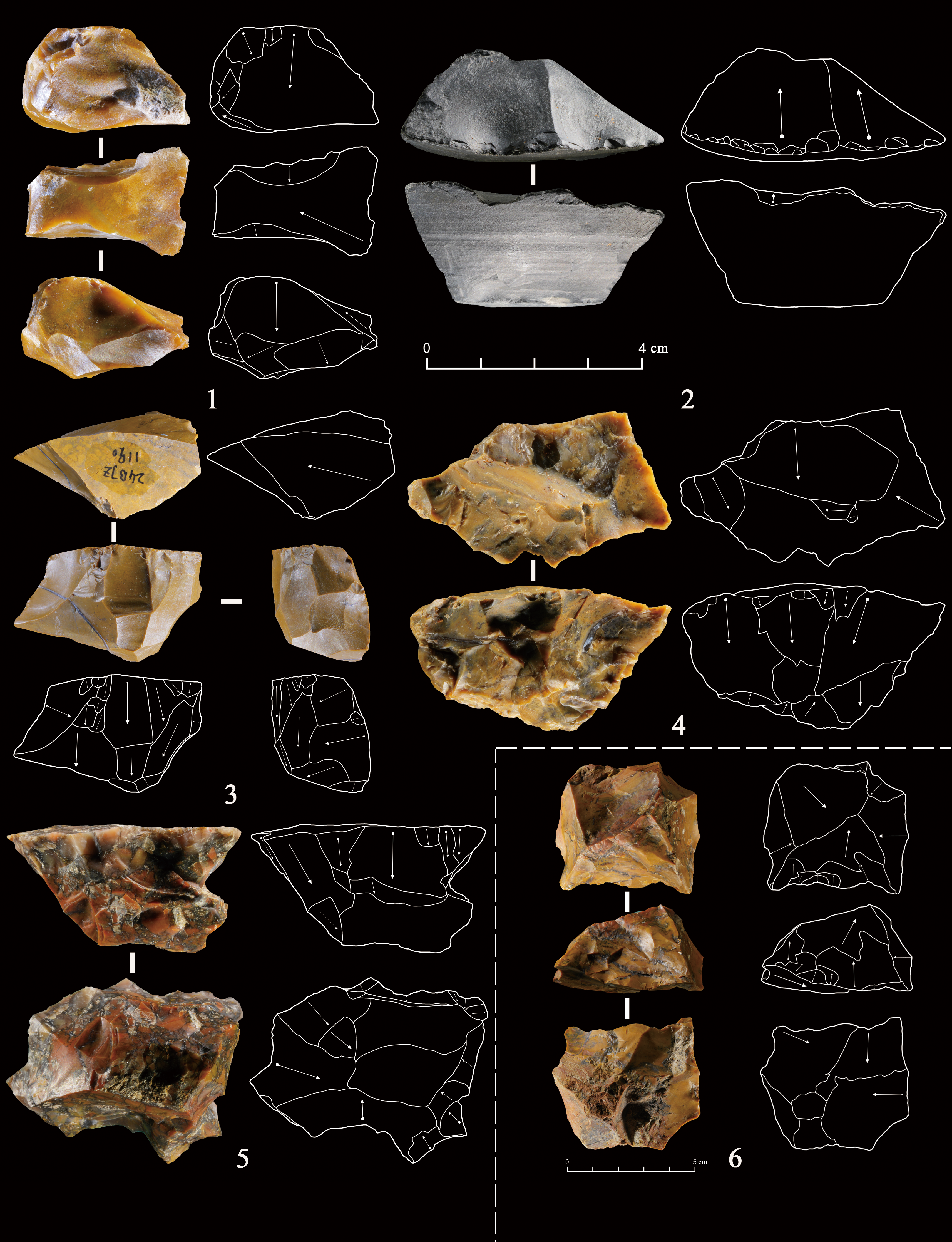
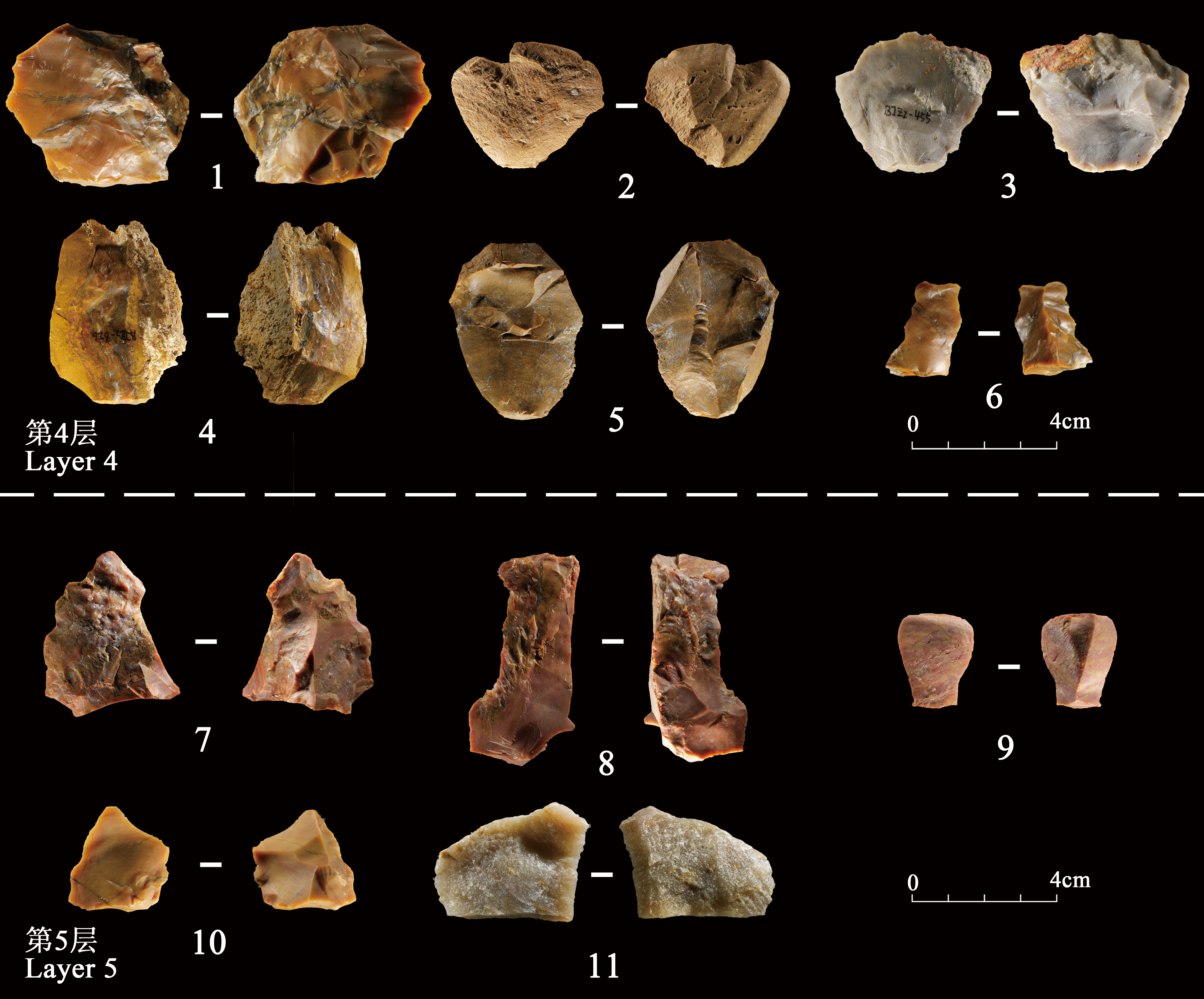
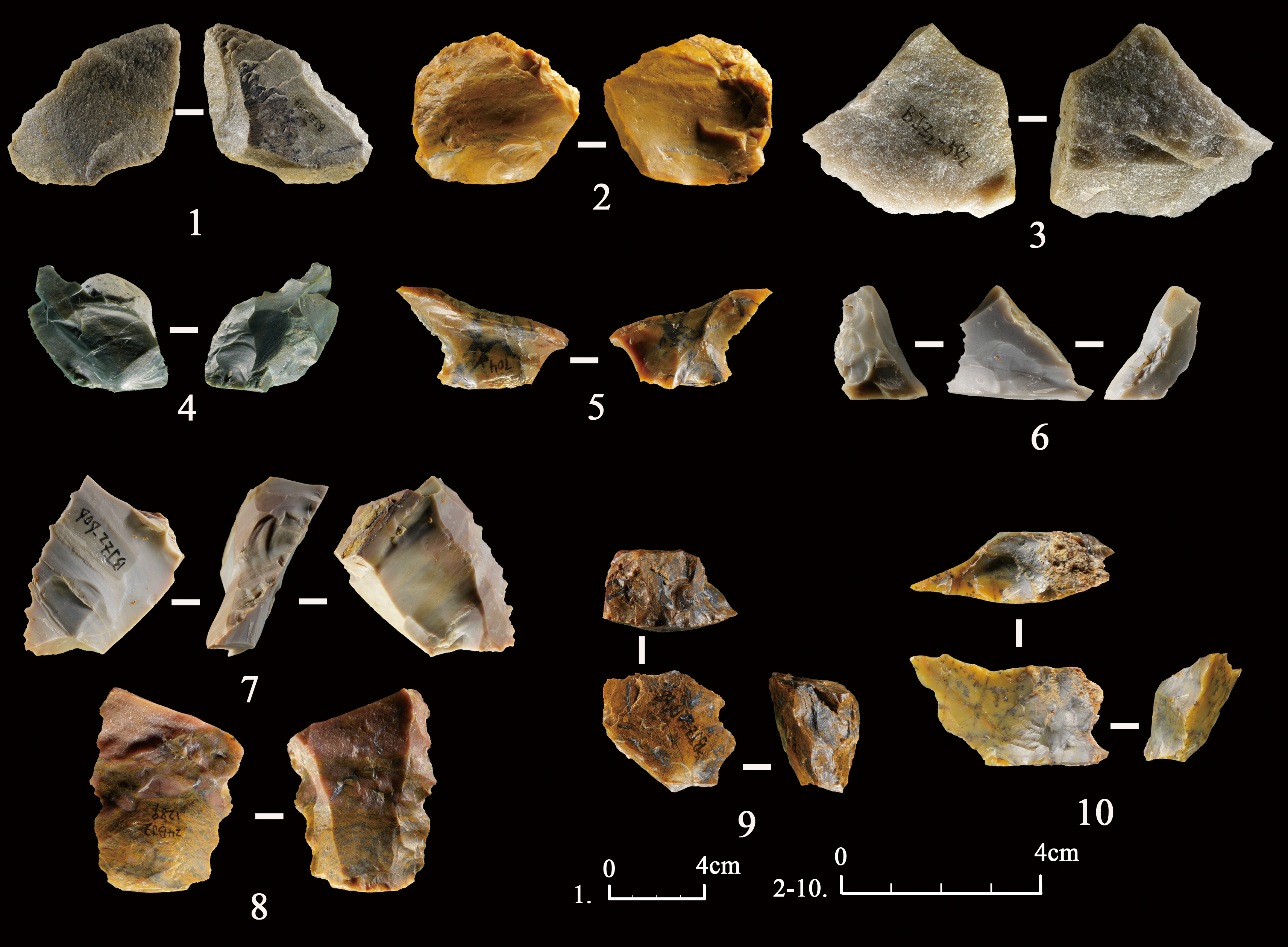
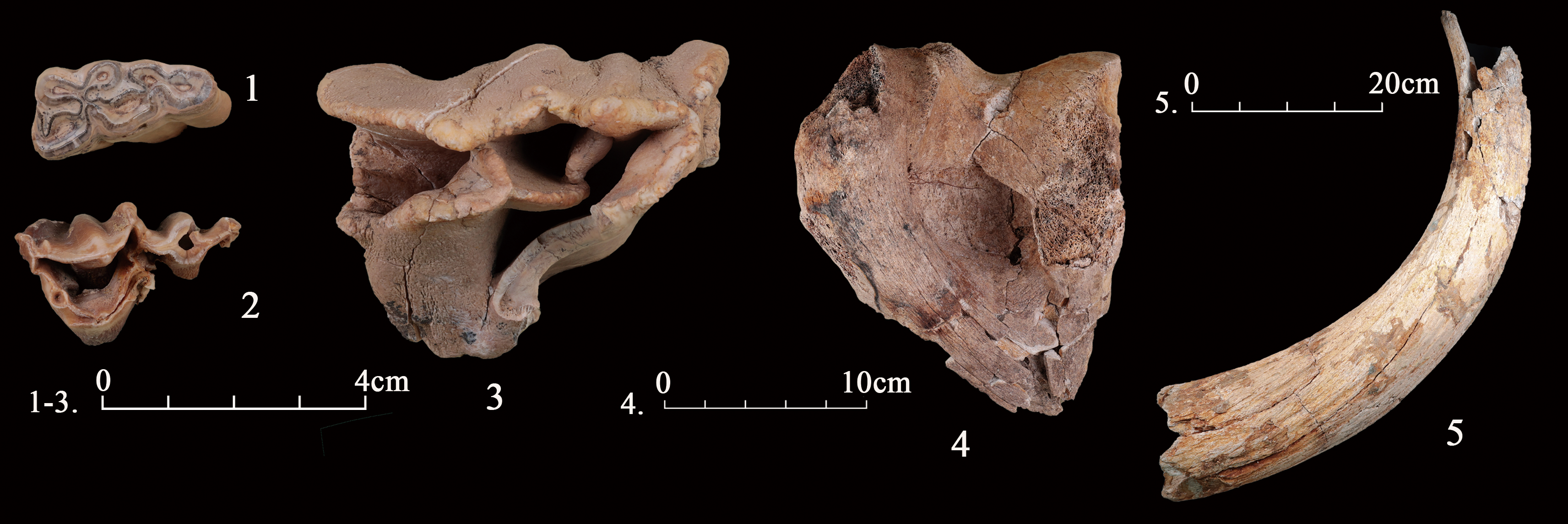
板井子遗址第2地点地处泥河湾盆地东缘,2023~2024年度的发掘揭露了该遗址完整的地层与文化序列,共出土编号遗物2008件,初步测年结果表明遗址文化层形成于距今112~86 ka,属于晚更新世早期。遗址文化堆积形成于泥河湾大湖消亡和桑干河形成之间,遗物埋藏于一套上覆于泥河湾层的冲洪积物中。石制品以燧石为主要原料,体现出明确的选择性;剥片以锤击法为主,石核剥片具有较强的计划性,多采用单向陡钝单面剥片;石器以刮削器和锯齿刃器为主,多以完整石片为毛坯正向修理。动物化石包含普氏野马、蒙古野驴和披毛犀等,反映了半干旱草原或荒漠环境。板井子遗址第1、第2地点石制品组合的相似程度较高,均体现出对A类燧石的策略性选择和较远距离的定向获取,石器技术亦体现出一定的计划性和复杂性。本次发掘为研究泥河湾盆地晚更新世早期的石器技术演变、古人类生存适应策略以及重建古人类行为背景提供了重要的实物资料。

关键词: 泥河湾盆地, 板井子遗址, 晚更新世早期, 石器技术

Abstract:

Banjingzi Locality 2, located in the Yangjiagou valley on the eastern margin of the Nihewan Basin, North China, is a crucial archaeological site for understanding the cultural stage and the behavioral strategies of early Late Pleistocene hominins. To further investigate its rich cultural deposits, a new round of systematic archaeological excavation was conducted by the Institute of Vertebrate Paleontology and Paleoanthropology and the Hebei Provincial Institute of Cultural Relics and Archaeology from 2023 to 2024. The excavation covered a maximum area of 200 square meters and exposed a stratigraphic profile exceeding 10 meters in depth, which is divided into seven layers. The primary cultural remains were discovered within a fluvial “cut-and-fill” sequence overlying Nihewan beds. This specific depositional environment indicates that the hominin occupation happened after the decline of the ancient Nihewan lake but early than the formation of the stable Sanggan River terrace system. 15 Optically Stimulated Luminescence (OSL) samples were systematically collected from the east profile of the site to receive a precise chronological framework, which dated between 86~112 ka.

During the excavation, a total of 2008 specimens were unearthed, including 1745 lithic artifacts and 263 faunal remains from Layer 4 and Layer 5. The lithic assemblages from both cultural layers shows high similarity. Hominins showed clear selectivity in raw material procurement, with Chert A dominating the assemblage (71.46%), followed by vein quartz and Chert B. Cherts were likely collected from the Zhoujiashan area near the Youfang site, 3.6 kilometers away. This shows a well-planned resource exploitation strategy. Technological analysis reveals that the core reduction strategy was based on direct hard-hammer percussion. The core assemblage indicates a high percentage of single and double platform cores, and a smaller ratio of discoids. Hominins frequently selected blanks without cortex, using former fracture planes as striking platforms. The flaking process was organized and planned to a certain extent. The whole flakes are morphologically standardized, mostly exhibiting triangular or lenticular cross-sections with flat or slightly curved ventral surfaces, shows good control over inner platform angles and exterior platform angles.

The retouched pieces are mainly scrapers and denticulates, with very few notches. Tools were primarily made on complete flakes. And using single-edged, direct retouch method on the flat ventral surfaces. The retouching scars are typically single-layered and scalar. The faunal remain assemblage includes Equus przewalskii, Equus hemionus, Coelodonta antiquitatis, Cervus elaphus, and Bos primigenius. The composition of this fauna shows a cold- and drought-adapted feature, suggesting that the hominins at Banjingzi Locality 2 occupied a semi-arid steppe or desert environment during the early Late Pleistocene.

Key words: Nihewan Basin, Banjingzi site, early Late Pleistocene, lithic technology

中图分类号: