人类学学报 ›› 2026, Vol. 45 ›› Issue (05): 939-947.doi: 10.16359/j.1000-3193/AAS.2026.0053cstr: 32091.14.j.1000-3193/AAS.2026.0053

• 简报/发掘报告 • 上一篇    下一篇

泥河湾盆地武家梁1号旧石器地点发掘简报

马超1(), 铁卫冬2, 裘文雁3, 薛峰3, 牛东伟3,4(), 侯佳岐5, 王法岗1   

  1. 1 河北省文物考古研究院, 石家庄 050031
    2 青海省文物考古研究院, 西宁 810000
    3 河北师范大学历史文化学院, 石家庄 050024
    4 河北省东方人类起源与文明探源重点实验室, 石家庄 050024
    5 内蒙古师范大学历史文化学院, 呼和浩特 010022
  • 收稿日期:2026-01-28 修回日期:2026-05-28 出版日期:2026-10-15 发布日期:2026-10-16
  • 通讯作者: 牛东伟,教授,主要从事旧石器时代考古学研究。E-mail: ndw1986@163.com
  • 作者简介:马超,副研究馆员,主要从事史前考古研究。E-mail: 512294997@qq.com
  • 基金资助:
    国家社会科学基金青年项目(25CKG001)

A preliminary report on the excavation of Wujialiang Paleolithic Locality 1 in the Nihewan Basin, North China

MA Chao1(), TIE Weidong2, QIU Wenyan3, XUE Feng3, DEMIANA YG Rishmawi3, NIU Dongwei3,4(), HOU Jiaqi5, WANG Fagang1   

  1. 1 Hebei Provincial Institute of Cultural Relics and Archaeology, Shijiazhuang 050031
    2 Qinghai Institute of Cultural Relics and Archaeology, Xining 810000
    3 College of History and Culture, Hebei Normal University, Shijiazhuang 050024
    4 Hebei Key Laboratory of East Asian Human Origin and Civilization Research, Shijiazhuang 050024
    5 School of History and Culture, Inner Mongolia Normal University, Hohhot 010022
  • Received:2026-01-28 Revised:2026-05-28 Online:2026-10-15 Published:2026-10-16

摘要:

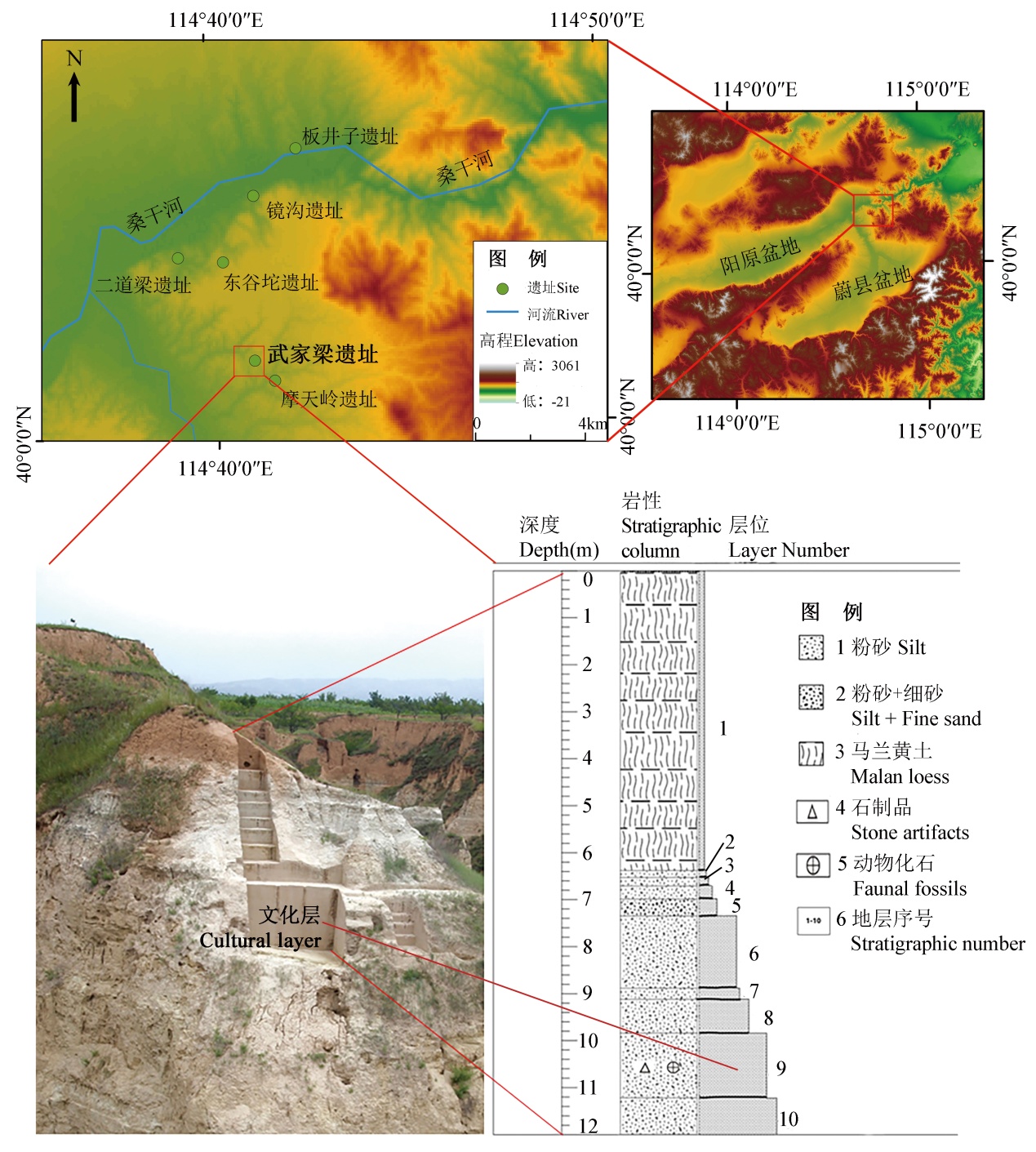
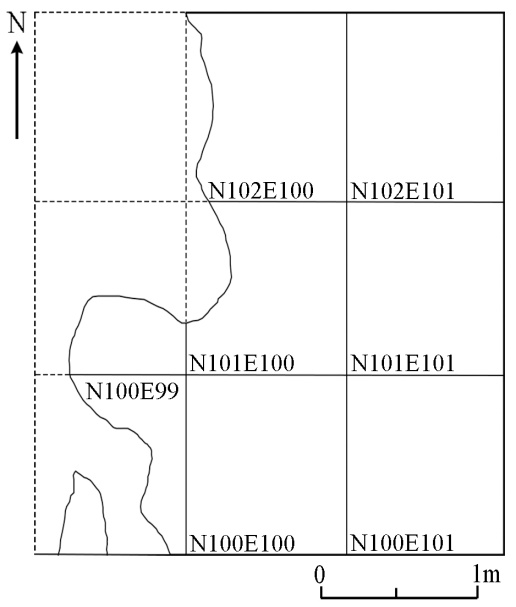
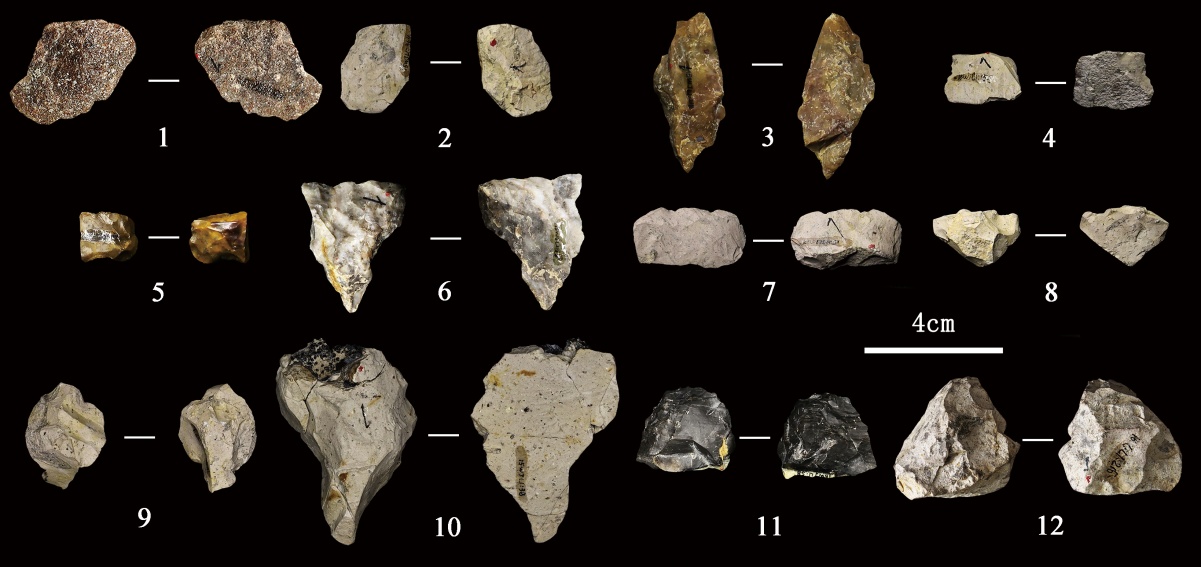
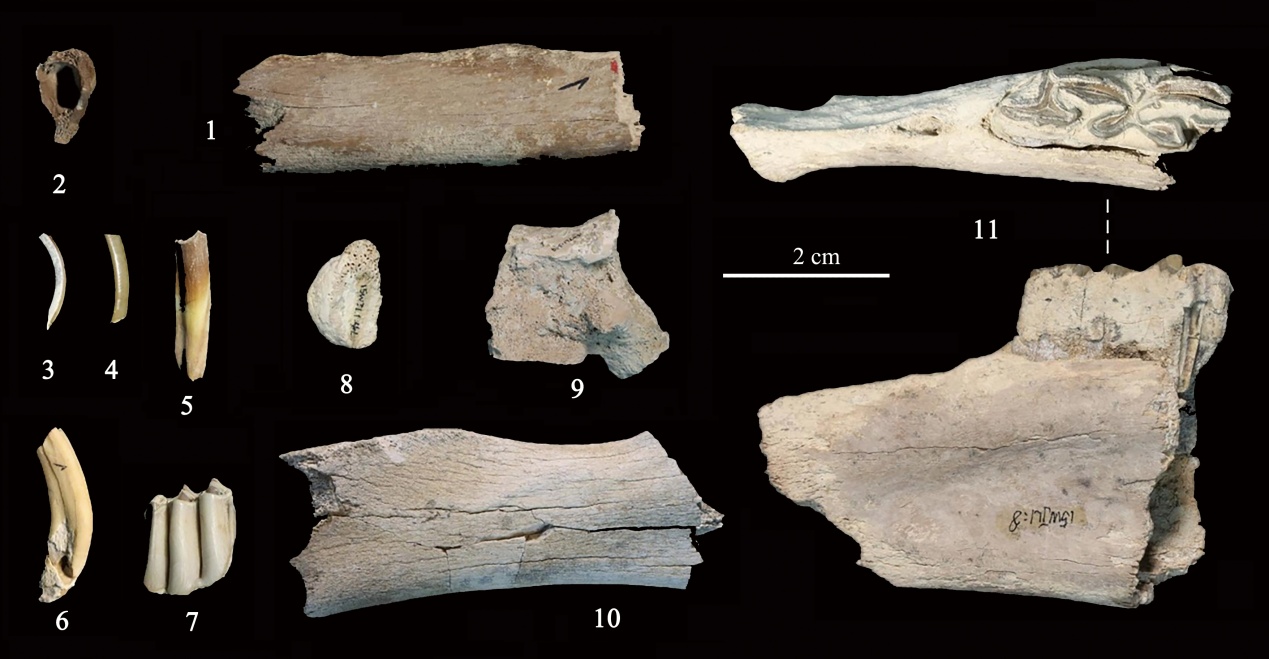
武家梁1号地点属于泥河湾盆地山兑遗址群的重要遗址点,位于盆地东缘大田洼台地的南部,首次发现于1992年,并在2015年进行了小面积的发掘工作,揭露文化层面积约7 m2,出土包含石制品和动物化石在内的编号文化遗物共计372件。石制品原料以流纹岩、硅质白云岩和燧石为主,主要为就地取材。石制品尺寸总体以小型为主,类型包括普通锤击石核、砸击石核、废片和石器;石核剥片以硬锤锤击法为主,辅以砸击法,石制品的类型和技术总体显示石片石器技术特征。动物化石保存状况不佳,初步鉴定的动物种类包括啮齿类、小型食肉类、马科、犀科与原羚。光释光测年结果显示,该地点文化层的年代为距今37.8万~35.9万年,地质时代属于中更新世中期晚段。武家梁1号地点的发现和发掘,为完善泥河湾盆地中更新世石器技术演化序列、系统探究该区域古人类生存行为的多样性具有重要意义。

关键词: 武家梁1号地点, 石片石器技术, 泥河湾盆地, 中更新世

Abstract:

As a key area to explore the origin and evolution of human beings in the world, Nihewan Basin is renowned for the continuity of Quaternary sediments and the richness of ancient human occupations. Wujialiang Locality 1 (WJL 1) is an important site of the Shandui Site cluster, located in the southern part of Datianwa platform on the eastern edge of Nihewan Basin. It was first discovered in 1992, and a small area of archaeological excavation was carried out in 2015. The site is buried in the upper part of Nihewan bed, and the stratigraphic sequence is complete. The cultural layer is well preserved, and a large number of cultural remains such as stone artifacts and animal fossils have been unearthed. It is estimated by the OSL dating that the age of this site is between 378 ka BP—359 ka BP, which belongs to the middle Middle Pleistocene.

It could be inferred from the geomorphological environment, the lithic assemblages and their preservation conditions that Wujialiang Locality 1 belongs to an in-situ burial type of archaeological site, with ancient human activities being the primary cause of cultural artifact accumulation and deposition at the site. Analysis of lithic raw materials reveals that ancient humans mainly utilized locally abundant materials such as rhyolite, flint, and siliceous limestone for lithic core reduction and tool fabrication. Lithic technological analysis indicates that ancient humans primarily employed the hard hammer percussion method for core reduction, supplemented by bipolar technique; cores were not systematically prepared before flake removal, primarily utilizing core rotation to obtain more flake products, resulting in mostly wide and thin flakes with irregular shape. Tool types mainly consist of small scrapers, with blanks predominantly being large-sized flakes, indicating a preference for the unifacial development and utilization of tool edges by ancient humans.

Overall, based on the types and technological characteristics of lithic artifacts, the lithic technology at Wujialiang Locality 1 belongs to the predominant flake tool technology system in northern China. The features of lithic industry at the Shandui site cluster are relatively consistent, representing the inheritance and development of earlier stages of lithic industry in this region.

Key words: WJL 1, flake tool technology, Nihewan Basin, Middle Pleistocene

中图分类号: